

BPSC AEDO · Module 7 · standard depth · 14 min
Beyond the frontiers: Nepal, Burma, Afghanistan and the Indian Ocean
What BPSC AEDO asks from this chapter
Syllabus lines this chapter covers:
- Paper 2: General Studies · Salient features of the history of India and of Bihar
BPSC AEDO questions from this module are being sorted into our bank.
Cut to standard depth for BPSC AEDO. 3 deeper paragraphs are in the full chapter.
Start from zero: why would a ruler of India fight in Burma or Kabul?
Imagine you own a shop that has just become very rich. You start worrying about two things: where to buy cheap goods, and how to keep robbers away from your doors and roads. Soon you are paying guards far beyond your own street.
The East India Company felt the same way once it held India. Its most profitable trade was with China, and its ships sailed past Burma, Malaya and the islands of the Indian Ocean. It also feared that a European rival, France or later Russia, might attack India from the north-west.
So between 1757 and 1857 the Company pushed out from India in every direction: to Nepal, Burma, Afghanistan, Sri Lanka, Mauritius, Penang and Singapore. The key point for exams is who paid. The Indian treasury and Indian sepoys bore the cost, while most of the profit went to Britain.
The story at a glance
| Where | When | What happened | What Britain gained |
|---|---|---|---|
| Sri Lanka | 1796; Crown colony 1798 | Taken from the Dutch during the wars in Europe | The harbour of Trincomali on the China route |
| Mauritius | 1810 | Minto's expedition removed the French base | Safety for Company ships |
| Nepal | 1814-16; Sagauli 1815 | Hastings's war against the Gorkhas | Garhwal, Kumaon, the Sutlej hills, a Resident |
| Singapore | 1819 | Raffles obtained it from the Sultan of Johore | The leading port of the Straits |
| Burma | 1824-26, 1852-53, 1885 | Three wars ending in full annexation | Coast, timber, rice, then the whole country |
| Afghanistan | 1838-42 | Shah Shuja installed, then a rising and a disastrous retreat | Nothing lasting; a lesson to stay behind the frontier |
Read the table as a pattern. In the islands and the Straits, the aim was trade and sea routes. On land, in Nepal, Burma and Afghanistan, it was frontier security mixed with resources such as forests, timber and rice.
Why look beyond India? The China connection
Tea needed silver. Europe loved Chinese tea, silk and nankeens (a cotton cloth from Nanking), and the Company held the English monopoly of this trade. But the Chinese sold mostly for silver, and that silver had come largely from Bengal. By the 1770s Bengal had been milked dry, the Company was making losses, and it had to ask Parliament for a loan.
Opium and spices replace silver. So the Company paid China with opium grown in Malwa and tried to obtain costly spices from South-East Asia to sell in China and Europe. The search for spices and for safe ports on the China route pulled the Company into the Malay world. You can see the Indian side of this story in the chapter on the colonial economy.
Two big motives, two small ones. The first big motive was markets and supplies: outlets for Indian goods, goods to trade with China, and supplies for British forces in Asia. The second was strategy: guarding the Indian empire and the trade routes to China. Two smaller pushes came from British foreign policy in Europe and the ambitions of officials in India.
Ports and islands: Penang, Java, Singapore, Sri Lanka and Mauritius
Penang. As the China trade grew, Company ships needed a safe port in the eastern seas where they could shelter and be repaired. Francis Light obtained Penang from the Sultan of Kedah, and after the Sultan failed to retake it, a 1791 treaty handed it over for an annual payment. Penang became a presidency in 1805, and its officers' salaries and deficits were paid from the Bengal treasury.
Java, taken and returned. When the Dutch joined Napoleon, the Board of Control told Governor-General Minto in 1810 to expel them from Java. More than a hundred ships and 12,000 men from India were used. After peace returned in Europe the British kept Sri Lanka and Penang for strategy, but gave the Dutch back their other colonies in the islands.
Singapore. Stamford Raffles, who had governed Java, feared the Dutch would shut the English out of South-East Asia. With Governor-General Hastings's support he got permission from the Sultan of Johore in February 1819 to set up a garrison and factories on Singapore. The Dutch protested, but by 1825 Singapore handled about two-thirds of the trade through the Straits, and the whole island was ceded in 1824.
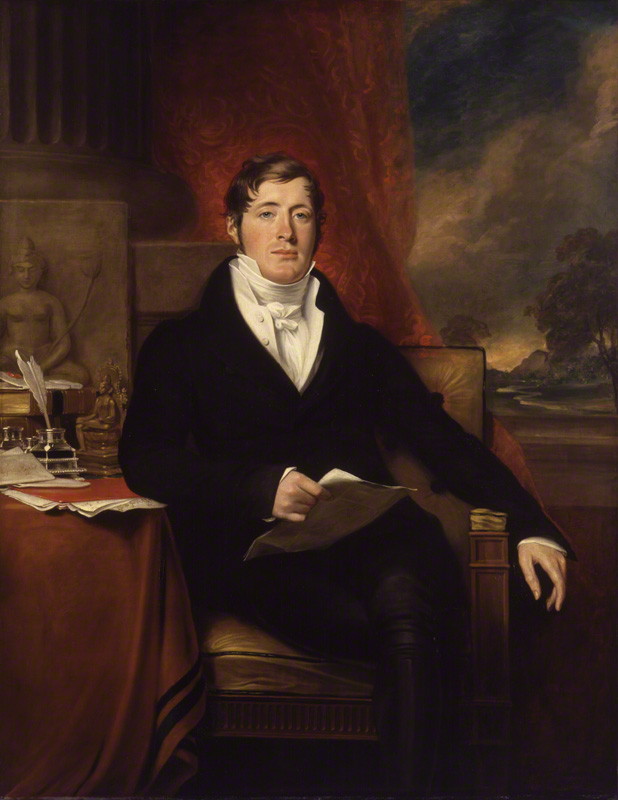
From India's burden to Britain's colony. In 1867 Penang, Malacca and Singapore, the Straits Settlements, were separated from Indian administration and placed directly under Britain. India had supplied the men and money and even paid Penang's losses. But the profits made at Singapore went to England, not to India.
Sri Lanka, Mauritius and the Andamans. Sri Lanka passed from the Dutch to the English in February 1796 and became a Crown colony in 1798, run from London, not by the Company. Mauritius, a French naval base that had raided Company ships, was taken by Minto's expedition in 1810 and also became a Crown colony. A settlement at Port Blair in the Andamans, founded in 1789, was abandoned in 1796 and refounded in 1857 as a penal colony.
Burma: three wars and an annexation
Why Burma? Burma exported costly goods such as tin, pepper and ivory. More importantly, it supplied timber for the shipbuilding and repair industry at Calcutta, and the Irrawaddy delta sent rice to Bengal and the new settlements in South-East Asia. An early settlement at Negrais (1753) ended in 1759, when King Alaungpaya, accusing the English of helping rebels, had all of them killed.
The First Anglo-Burmese War (1824-26). In 1823-24 Burmese forces chasing rebels occupied Assam and Manipur and prepared to attack Chittagong, all areas the English claimed. The British attacked mainly from the sea, though three Bengal regiments mutinied rather than march into Arakan. The war used 40,000 men of the British Indian army, of whom 15,000 died, and it was very costly.
The Treaty of Yandabo (24 February 1826). Burma gave up Assam, Manipur, Arakan, Tavoy and Mergui, losing most of its coast. The king had to accept a British Resident at his capital and pay an indemnity of one million pounds. This is how Assam and Manipur first came under British rule, a fact that links this chapter to the history of the North-East.
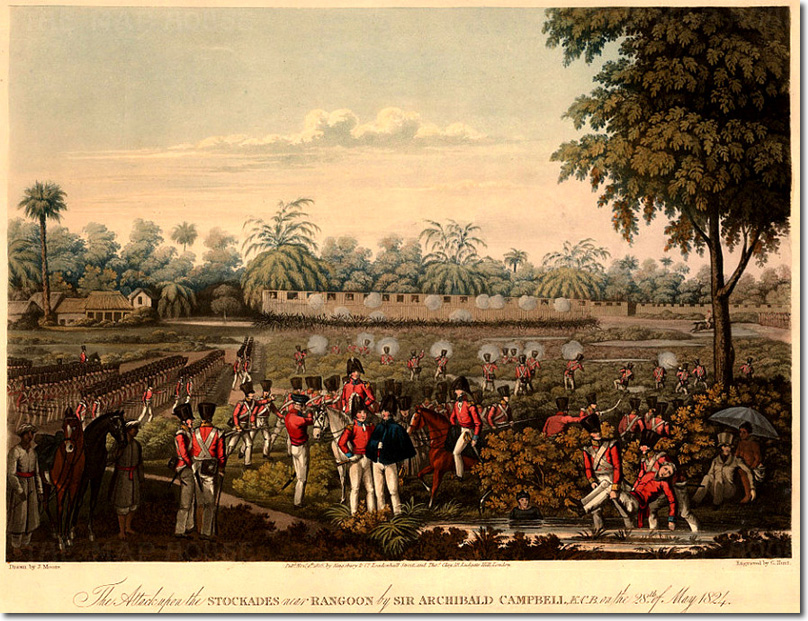
The Second Anglo-Burmese War (1852-53). The Resident left in 1839, complaining of poor treatment. By then the British needed easier access to Burmese timber and Irrawaddy rice, so in 1852 Dalhousie attacked on the pretext of restoring British dignity. By 1853 Pegu was annexed, King Mindon Min moved his capital to Mandalay, and Britain held the whole coast of the Bay of Bengal.
The final step (1885). In 1885 the British annexed the rest of Burma, accusing King Thibaw of tyranny and of intriguing with the French, who were then in Vietnam. Burma was made a province of British India. So Burma was swallowed in three bites, each justified by a different excuse.
Nepal: the Gorkha war and the Treaty of Sagauli
Early contacts. The Company first became involved in Nepal in 1767, when the Gorkha chief Prithvi Narayan Shah was attacking the Nepal valley and disrupting trade with Patna. The Company sent Captain Kinloch from Patna against him, but the Gorkhas drove the attack back, and Prithvi Narayan Shah became king of Nepal. A commercial treaty followed in 1792, and an October 1801 treaty admitted a British Resident, who had to withdraw in March 1803 because of Nepalese hostility.
The Nepal War (1814-16). The two sides shared a border of about 1,100 km, and quarrels over border villages kept flaring up. In October 1814 Governor-General Hastings started the war, with generals including Ochterlony attacking all along the border. The British had underestimated the hill soldiers, and it took more than a year to defeat Nepal.
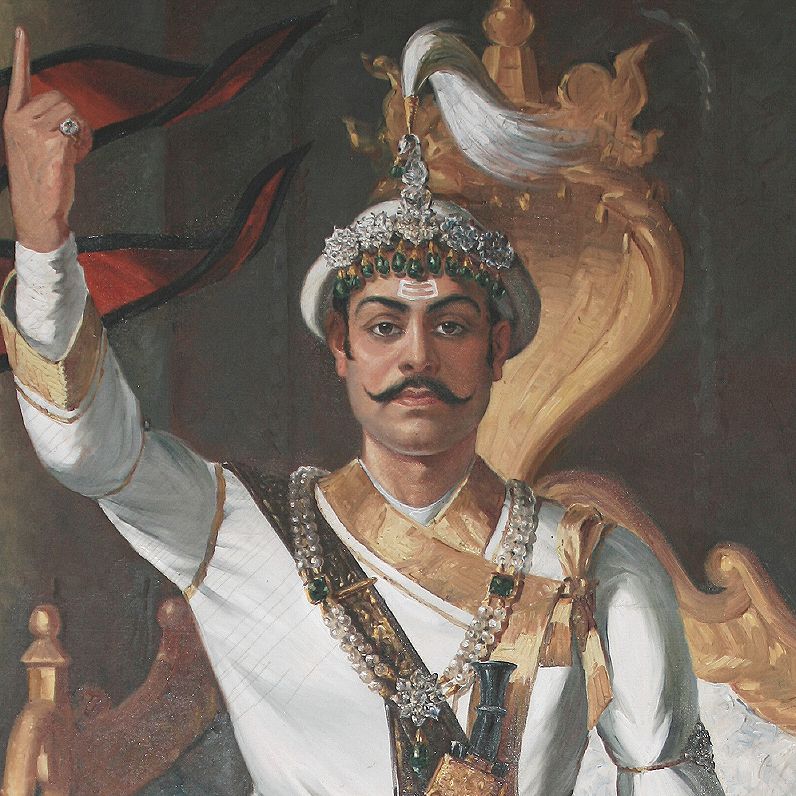
The Treaty of Sagauli (December 1815). Nepal gave up the Sutlej hills, Garhwal and Kumaon and again accepted a Resident at Kathmandu. With the rich Terai forests in hand, the British decided Nepal served no further purpose and showed little interest in it afterwards. This is why Nepal stayed independent while much of the region was annexed.
Afghanistan: the first Afghan war, 1838-42
A buffer against Russia. Through the 1830s Company officers argued that Afghanistan was an important buffer against France and, above all, Tsarist Russia. In 1836 the Afghan ruler Dost Muhammad offered friendship if the British helped him recover the Peshawar valley, which Ranjit Singh had taken. Governor-General Auckland refused and instead demanded that the Afghans promise not to ally with Russia, France or Turkey, so Dost Muhammad began to show friendship towards Russia.
The Tripartite Treaty (26 June 1838). Auckland now decided to remove Dost Muhammad by force. The Tripartite Treaty joined the Company, Ranjit Singh and Shah Shuja, a former Afghan ruler, to put Shah Shuja on the throne. You met Ranjit Singh's kingdom in the chapter on building an empire.
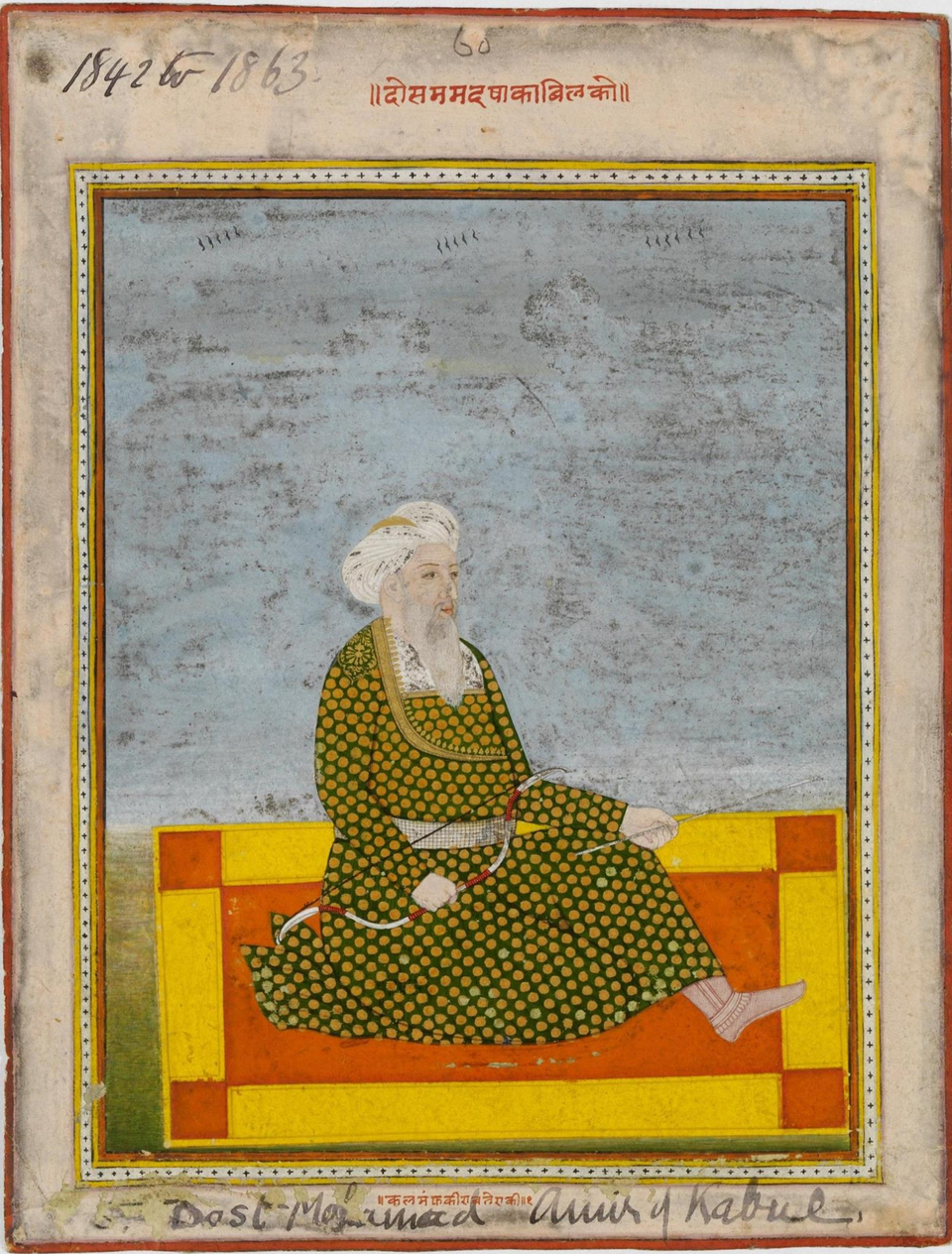
Easy victory, hard occupation. The "Army of the Indus" took Kandahar in April 1839 and Ghazni in July, Dost Muhammad fled, and Shah Shuja was made ruler. Instead of going home, British troops garrisoned Kabul, Jalalabad, Kandahar and Ghazni. Dost Muhammad tried again in 1840 but surrendered in November 1840 and was sent to Calcutta as a prisoner.
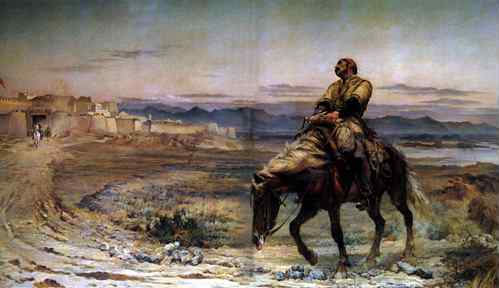
The disaster of 1841-42. In 1841 popular anger turned into open rebellion: the British in Kabul were killed or besieged, and the same happened at Ghazni, Jalalabad and Kandahar. In December 1841 the British agreed to leave Afghanistan within three days, and the retreating force was attacked in the snow-covered passes and almost wiped out. Reinforced from India, the British retook Kabul in September 1842, but only to withdraw.
What the war taught. The war cost huge sums of Indian money and many lives. It proved that British Indian armies were not invincible and could be beaten by hill fighters using the right tactics. After it, the British decided to stay within the North-West Frontier and not venture into Afghanistan militarily.
Quick revision
- The Company expanded beyond India for China trade, spices and safe ports, and for frontier security, and India paid the cost.
- Penang came through Francis Light (treaty of 1791), Singapore through Raffles (1819), and the Straits Settlements became a Crown colony in 1867.
- Sri Lanka (taken 1796, Crown colony 1798) and Mauritius (taken 1810) were Crown colonies, not Company territory.
- The Anglo-Nepal War (1814-16) under Hastings ended with the Treaty of Sagauli (1815): Garhwal, Kumaon and the Sutlej hills.
- The First Anglo-Burmese War ended with the Treaty of Yandabo (1826): Assam, Manipur, Arakan, Tavoy, Mergui and a £1 million indemnity.
- Dalhousie's Second Burmese War (1852-53) took Pegu, and the rest of Burma was annexed in 1885 under King Thibaw.
- The Tripartite Treaty (1838) of the Company, Ranjit Singh and Shah Shuja led to the First Afghan War, the 1841 rising and the disastrous retreat.