

BPSC Auditor, Panchayati Raj Dept · Module 63 · standard depth · 18 min
Sculpture after the Mauryas: Shunga yakshas and the Gandhara, Mathura and Amaravati schools
What BPSC Auditor, Panchayati Raj Dept asks from this chapter
Syllabus lines this chapter covers:
- Mains: General Studies I · Modern history and culture of India
BPSC Auditor, Panchayati Raj Dept questions from this module are being sorted into our bank.
Cut to standard depth for BPSC Auditor, Panchayati Raj Dept. 6 deeper paragraphs are in the full chapter.
Start from zero: when the Buddha got a face
Imagine three artists, each asked to carve the same person. One has studied Greek statues, one grew up carving local village gods, and one works in a busy river town of the south. Their statues will look quite different, even though the subject is the same.
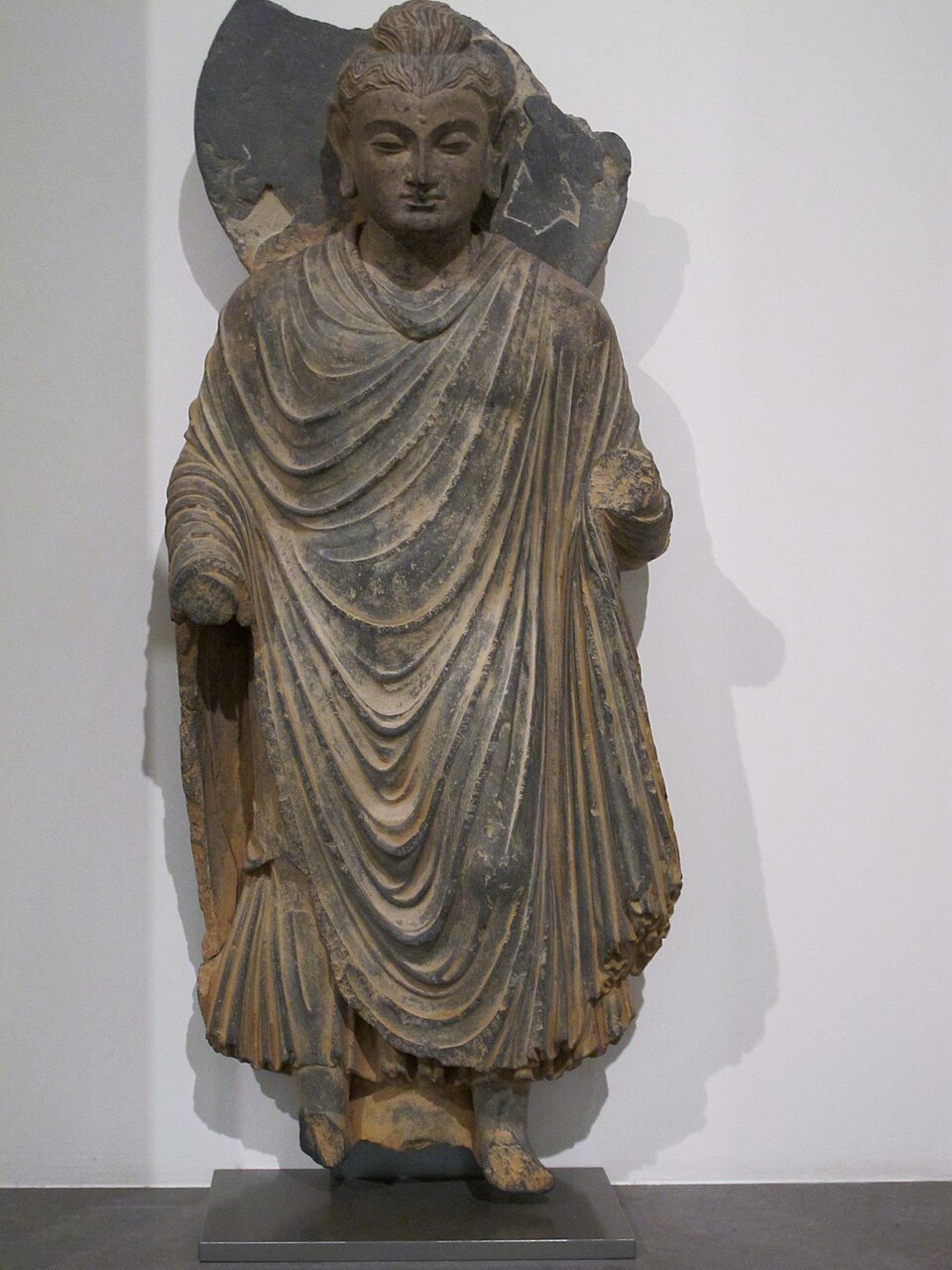
That is roughly what happened to the image of the Buddha about 2,000 years ago. In the stupa chapter, you saw that early Buddhist art showed him only through symbols: a tree, an empty seat, a wheel or footprints. Between about 200 BCE and 300 CE, artists began to show him for the first time as a human figure.
Three great centres led this change. Gandhara in the north-west, Mathura on the Yamuna and Amaravati in the Krishna valley each gave the Buddha a different face. Before them, the Shunga period had already filled stupas and towns with carved yakshas and yakshis.
This chapter teaches you to recognise each school, to explain why it looks the way it does, and to see how these styles fed the classical art of the Guptas, which follows in the next chapter.
Why a human image now?
From teacher to saviour. In the early stage, the Buddha was honoured as a teacher who had shown a path and then passed beyond the world. A symbol was enough to remind followers of him. As Mahayana ideas grew, followers began to worship him and the Bodhisattvas with devotion, and devotion needs a face to look at.
Image worship spreads. The change was not only Buddhist. In the same centuries, Jain tirthankaras and Brahmanical gods such as Shiva, Vishnu, Surya and Lakshmi also took shape as images. Temples and shrines built around such images grew out of this period.
Royal support. The Kushanas ruled from Central Asia to the Ganga plain, and their king Kanishka was a famous patron of Buddhism. His gold coins carry a figure of the Buddha, which shows how the human image had become an accepted symbol of the faith. The Satavahanas in the Deccan played a similar role for the south.
Why it matters. Sculpture changed because belief changed. This link between religion and art is a favourite Mains theme: a good answer explains the shift from symbol to image through the growth of devotion (bhakti) and of Mahayana Buddhism.
Before the schools: Shunga yakshas and the Heliodorus pillar
Yakshas everywhere. After the Mauryas, the Shungas ruled the Ganga plain and central India in the 2nd-1st century BCE. Their sculpture, found at Vidisha, Mathura, Ahichchhatra, Kaushambi, Ayodhya and Pataliputra, is mostly of yakshas and yakshis, the nature spirits people prayed to for wealth and children. The best known is the Kubera Yaksha from Vidisha, with a dhoti, belt, turban and heavy jewellery.
Stories on railings. In this period, carved reliefs became part of the stupa itself. The railings of Bharhut and of Sanchi Stupa 2 carry lotuses, elephants, riders, yakshas, yakshis and Jataka roundels. You studied these in the stupa chapter; here, note that the Buddha himself was still never shown in human form.
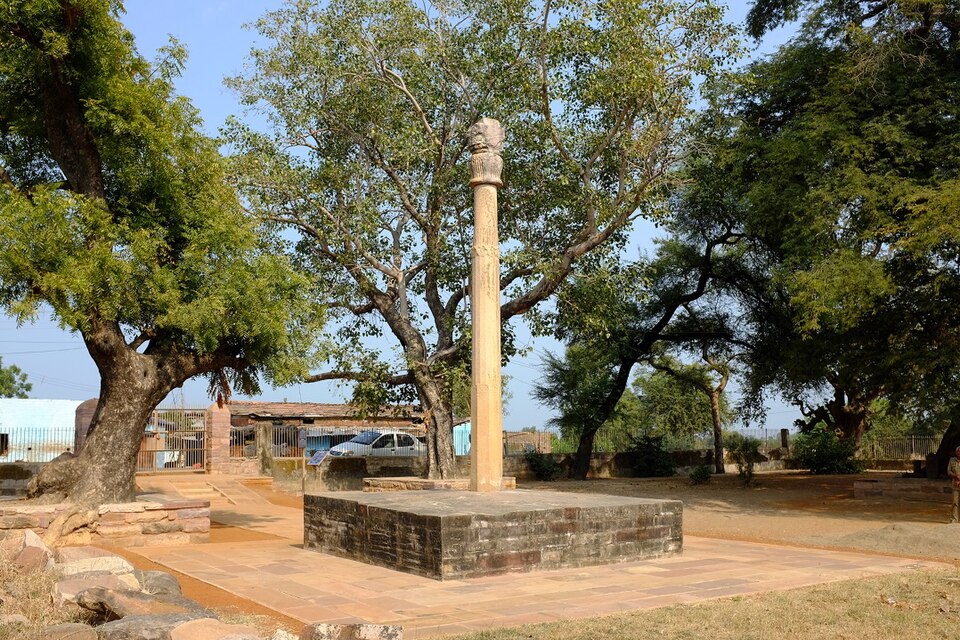
The Heliodorus pillar. At Besnagar, near Vidisha, stands a stone pillar set up around 113 BCE by Heliodorus, a Greek envoy sent by an Indo-Greek king to a Shunga court. Its seven-line Brahmi inscription calls it a Garuda-dhvaja, a pillar with Garuda on top, raised in honour of Vasudeva by a follower of the Bhagavata cult. It is the first known Vaishnava inscription and one of the earliest records of a Greek adopting an Indian faith.
How it differs from Ashoka's pillars. It is about half the size of a Mauryan pillar, and its shaft is not polished. It carries garland and geese motifs and a capital shaped like an upturned lotus. These differences help you tell a Shunga pillar from a Mauryan one in a picture question.
Why it matters. The Heliodorus pillar shows that Vaishnavism had deep roots well before the Guptas, and that foreigners could join Indian faiths. It is a classic example of cultural exchange, and examiners love its date, place and the word "Garuda-dhvaja".
Gandhara: where India met the Greek world
Where and why here? Gandhara lay in the north-west, on both banks of the Indus, covering the Peshawar valley, Swat and Taxila. It sat on trade routes to the Mediterranean world and to China. It was ruled in turn by Indo-Greeks, Shakas, Parthians and Kushanas, so its art mixed Indian, Greek and West Asian elements, with the Shakas and Kushanas as chief patrons.
The look. The Gandhara Buddha looks like a figure from Greek art, with a Mediterranean face, wavy or curly hair and a robe falling in heavy, realistic folds. Standing figures often rest weight on one leg, with the other slightly bent, a pose borrowed from Greek statues. Muscles, nails and hair are shown in detail, and some figures even have moustaches.
The material. The early works were carved in soft blue-grey schist. Later, especially at sites such as Hadda in Afghanistan, artists turned to stucco, a lime plaster that can be modelled. This change in material appears in the next chapter as part of the Gupta-age story.
But the meaning is Indian. The Gandhara Buddha keeps the mudras, such as abhaya (fear not) and dana (giving). He has the marks of a great being: the ushnisha (a bump on the head), the urna (a small circle between the brows), long ears from the heavy earrings of his royal past and a plain halo. When seated, he always sits cross-legged in the Indian manner.
Bodhisattvas and stories. Gandhara Bodhisattvas are dressed like princes, with dhoti, shawl, rich hair and heavy jewellery, which fits their role as beings still living in the world. Gandhara reliefs tell the life of the Buddha, such as his birth, enlightenment, first sermon and death, more than the Jataka stories. Famous finds include the bronze Kanishka casket from Shah-ji-ki-Dheri, the gold Bimaran reliquary and the ivory plaques from Begram.
Why it matters. Gandhara is the best example of foreign technique serving Indian ideas. Its position on the routes to Central Asia also put it on the road along which Buddhism travelled north to Central Asia and China.
Mathura: an Indian answer
A home-grown school. Mathura stood on the Uttarapatha, the great northern road, and was the second capital of the Kushanas. It had a long tradition of carving yakshas and local gods, and its sculptors built on that indigenous tradition. They used the local spotted red sandstone from nearby Sikri, which makes Mathura pieces easy to recognise.
The early Mathura Buddha. The early Buddha of Mathura looks like a yaksha turned holy man. He has a shaven head with a single lock of hair, a stout, strong body, and he stands straight without a bend. He wears a dhoti and shawl with no jewellery, and his halo is only lightly decorated.
The Katra Buddha. One of the oldest examples is the seated Buddha from Katra in Mathura. He sits under the Bodhi tree with his right hand raised in abhaya mudra, and his palms and soles carry the wheel (dharmachakra) and the triratna symbol. Attendants and a parasol surround him, showing royal honour.
Exported far and wide. Mathura workshops sent images to other places, such as a standing Bodhisattva of Kanishka's time found at Sarnath but made at Mathura. Many scholars think the earliest Buddha images were carved here at about the same time as in Gandhara. So the safe answer is that the Buddha image grew in both centres, each in its own way.
Mathura for every faith: Jain and Brahmanical images
Kankali Tila: a Jain treasure. Mathura was sacred to the Jains, and the mound of Kankali Tila was their main site. It yielded many ayagapatas, square stone slabs of worship with a Jina in the centre surrounded by auspicious signs such as the swastika and twin fish. Tirthankaras appear on these slabs before Kushana times, and regular Jina images became common under the Kushanas.
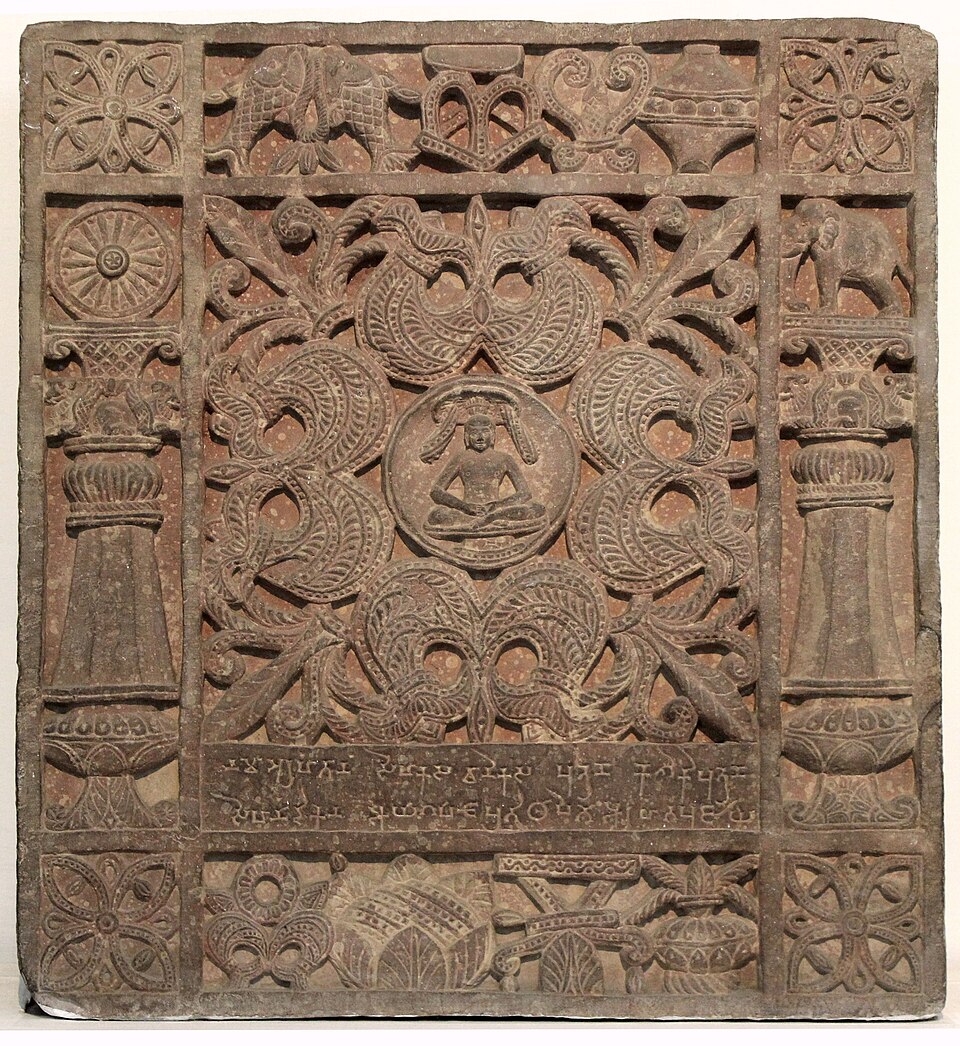
How to read a Jina. A standing Jina stands stiff and straight with arms reaching down to the knees, a pose called kayotsarga. A seated Jina sits in padmasana with hands in dhyana mudra. Since all 24 tirthankaras look alike, each is told apart by an emblem: a lion for Mahavira, a bull for Rishabhanatha and a snake-hood for Parshvanatha.
Brahmanical gods take shape. Mathura also made some of the earliest images of Shiva, Lakshmi, Surya and Balarama, and in Kushana times added Karttikeya, Vishnu, Sarasvati and Kubera. Shiva appears as a four-faced linga (chaturmukha). Surya rides a chariot with two horses, wearing a heavy coat, trousers and boots, which is Central Asian dress, and Sarasvati sits with a rosary and a manuscript.
Why it matters. One city served three faiths, often from the same workshops. This is strong evidence of a shared artistic culture in early India, and it is useful for Mains answers on religious coexistence. Surya in boots is also a vivid sign of Kushana influence on Indian gods.
Kings in stone: the Kushana royal shrine at Mat
A shrine for rulers. At Mat, near Mathura, the Kushanas built a devakula, a shrine that held portrait statues of kings. The idea of such shrines came from Central Asia. A similar shrine has been found at Surkh Kotal in Afghanistan.
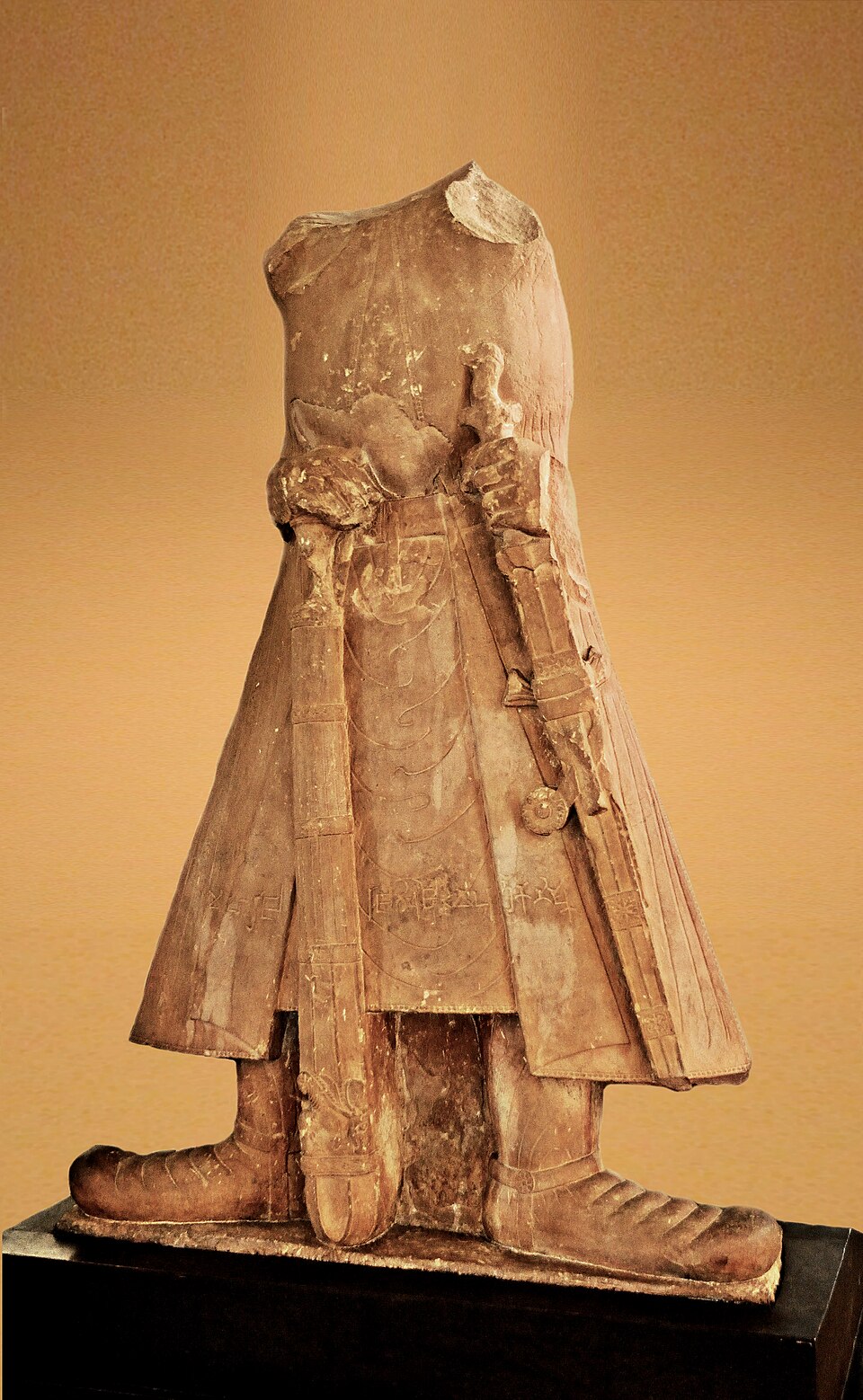
Who is there? The statues include Vima Kadphises, Kanishka and Chashtana. Vima sits on a lion throne, dressed in a Scythian tunic and high boots, and an inscription names him. The famous headless standing Kanishka, now in the Mathura Museum, wears a tunic and boots and holds a sword in one hand and a mace in the other.
Why make such statues? These shrines gave the rulers a divine status, so that revolting against the king could feel like revolting against a god. Unlike the calm Buddha images, these statues stress military power and royal authority. They show that Kushana art served politics as well as religion.
Why it matters. The Mat statues are among the earliest royal portrait sculptures in India. They are good evidence for questions on Kushana kingship and the link between art and power, which also connects to the History chapter on the Kushanas.
Amaravati: stories in white stone
The southern centre. The Amaravati school grew in the lower Krishna valley in present Andhra Pradesh. Its patrons were first the Satavahanas and then the Ikshvakus, whose capital was Nagarjunakonda. Other centres include Jaggayyapeta, Goli and Ghantasala.
White "marble". Amaravati artists worked in a white or cream limestone that looks like marble, so the panels are often called the "Amaravati marbles". Many of them are now in the British Museum in London and the Government Museum in Chennai. You met the great stupa they decorated in the stupa chapter.
Relief over round figures. Amaravati's strength is the narrative relief: crowded panels and round medallions telling the Buddha's life and the Jatakas. The figures are slender and lively, with a flowing linear grace, and scenes of dance and music show a joy of life. The Satavahana-period reliefs are deeply carved, and some scholars see Roman influence, which fits the region's busy trade with the Roman world.
The Amaravati Buddha. Late in the Satavahana period, free-standing Buddhas were carved at Goli, Amaravati and Nagarjunakonda. They wear the robe like a toga over the left shoulder only, have short ring-like curls, and raise the right hand in abhaya while the left holds the robe's hem. Unlike in Gandhara and Mathura, Bodhisattva images are rare here.
Why it matters. Amaravati proves that the south was a creative centre in its own right, not a follower of the north. Its slim, graceful figures later shaped the sculpture of the Pallavas, and Gupta art is said to have taken its elegance from Amaravati.
The three schools side by side
This is the "recognise it" table for this chapter. Learn the rows as a set: where, patrons, material, influence, subjects and the Buddha's look.
| Feature | Gandhara | Mathura | Amaravati |
|---|---|---|---|
| Region | It lies in the north-west, around Peshawar, Swat and Taxila. | It lies on the Yamuna in present Uttar Pradesh. | It lies in the lower Krishna valley of Andhra. |
| Patrons | Shakas and Kushanas supported it. | Kushanas supported it. | Satavahanas and then Ikshvakus supported it. |
| Material | Artists used blue-grey schist and later stucco. | Artists used spotted red sandstone from Sikri. | Artists used white limestone. |
| Influence | It blends Greek, West Asian and Indian elements. | It is indigenous and grows from the yaksha tradition. | It is indigenous, with possible Roman touches. |
| Faiths | It is mainly Buddhist. | It serves Buddhist, Jain and Brahmanical faiths. | It is mainly Buddhist. |
| Buddha's look | He has wavy hair, heavy folds and a Greek face. | He has a shaven head, a stout body and a light robe. | He has ring curls and a robe over the left shoulder. |
| Best at | It excels in Buddha's life scenes and princely Bodhisattvas. | It excels in round images and royal portraits. | It excels in narrative reliefs and medallions. |
One quick test. If a question mentions Greek influence or schist, think Gandhara. If it mentions red sandstone, Jain images or royal statues, think Mathura. If it mentions white limestone, medallions or the Krishna valley, think Amaravati.
Quick revision
- Between about 200 BCE and 300 CE, the Buddha moved from symbol to human image, and Kanishka's coins carry his figure.
- Shunga sculpture is mostly yakshas and yakshis, such as the Kubera Yaksha of Vidisha.
- The Heliodorus pillar at Besnagar (c. 113 BCE) is a Garuda-dhvaja and the first known Vaishnava inscription.
- Gandhara used blue-grey schist and later stucco, mixing Greek looks with Indian mudras, ushnisha and urna.
- Mathura used red sandstone from Sikri and served three faiths, with the Katra Buddha and Kankali Tila ayagapatas.
- The Mat devakula held statues of Vima, Kanishka and Chashtana, and the headless Kanishka holds a sword and mace.
- Amaravati used white limestone for narrative reliefs, and its Buddhas wear the robe over the left shoulder.