

BPSC CCE · Module 46 · Mains depth · 17 min
Ex-situ conservation and species programmes: the safety net and the rescue missions
What BPSC CCE asks from this chapter
BPSC CCE has asked 2 questions from this chapter (2023); 12 from its whole module.
Read at full depth: basics, the standard layer and the Mains analysis.
Start from zero: a lifeboat, not a ship
Imagine a ship in a storm. The best plan is to keep the ship afloat, because it carries everyone and everything they need. But a wise captain also keeps lifeboats ready, in case the ship cannot be saved.
Conservation works the same way. Protecting species in the wild is the ship: it keeps whole communities together and lets evolution continue. Ex-situ conservation is the lifeboat. It takes species, or their seeds, eggs and sperm, out of danger and keeps them under human care, so they are not lost if the wild population fails.
Lifeboats save lives, but no one wants to live in one for ever. In the same way, ex-situ conservation is a back-up and a supplement, not a replacement for wild habitats. Its real aim is often to breed enough animals or plants to return them to the wild.
This chapter covers the main ex-situ tools, from botanical gardens and zoos to seed banks and modern reproductive science, the rules for moving animals to new homes, and India's major species rescue programmes.
What ex-situ can and cannot do
What it offers. Ex-situ conservation can save a species when its wild population is tiny or its habitat is collapsing. It keeps a living stock that can later be returned to the wild. Research on captive animals and plants also teaches us about their biology, breeding and diseases, which helps wild conservation.
Its limits. Captivity cannot recreate the whole habitat. It cannot hold a species' full genetic variation, its partner species such as pollinators or gut microbes, or the conditions that help it adapt over time. Small captive groups tend to inbreed and lose genetic diversity, and animals may fail to adapt or face new diseases and pests. Space is limited, surplus animals are a problem and the work is costly, needing steady funds for many years.
The verdict. For these reasons, ex-situ conservation is rarely enough on its own to save a species. It should be used as a last resort or a supplement to in-situ conservation, ideally as part of a plan that ends with animals or plants back in the wild.
Botanical gardens and zoos: from display to conservation
Botanical gardens. The world's roughly 1,500 botanic gardens, together with arboreta and national plant collections, hold the largest range of plant diversity outside nature. Individuals of an estimated 12,000 to 15,000 threatened plant species are already grown in such collections. With better facilities, these gardens could keep back-up stocks of most of the world's endangered plants, and they also serve as centres for research and education.
Zoos. The first public zoos opened about two hundred years ago, mostly to entertain visitors. Today the purpose has changed. Modern zoological parks, including aquaria, bird parks and safari parks, aim to be centres of ex-situ conservation and environmental education, building a bond between people and the living world rather than serving as picnic spots.
Captive breeding. The heart of modern zoo work is captive breeding of endangered species, with the aim of keeping a healthy population and, where possible, releasing animals into the wild. Several species survive today only because of zoos and breeding centres.
Why this matters. Gardens and zoos reach millions of visitors, so they shape how people think about nature. In answers, they can be presented both as conservation tools and as places to build public support for protecting wild habitats.
Seed banks, tissue culture and reproductive science
Seed banks. Seeds naturally go dormant, which lets them survive for long periods with little damage if kept in the right conditions. Seed banks, also called gene banks, store dormant seeds of rare and endangered plants as a kind of "genetic insurance". Storage is cheap and saves space, keeps large, genetically varied samples and supplies material for research without disturbing wild plants.
Tissue culture. Plant tissue culture grows whole plants in the laboratory from single cells, tissues or organs. It lets scientists multiply rare plants quickly from very little material, and it supports plant breeding and propagation.
Artificial insemination and embryo transfer. For animals, sperm can be frozen and used later, or sent to another breeding centre to add new genes to a captive group. Embryo transfer and artificial insemination, first developed for farm animals, can raise the breeding success of rare species. A cheetah cub has been born after artificial insemination.
Cloning. Somatic cell cloning can, in principle, produce new animals from one or a few survivors of a nearly extinct species. It has already rescued a rare breed of cattle reduced to a single old female, whose body cells were used to produce a calf genetically identical to her.
Fostering extra eggs. Many birds and reptiles lay more eggs than they can raise. Conservationists collect the extra eggs, hatch them and rear the young with foster parents, then release them to boost wild numbers. This worked so well for the peregrine falcon that the programme was phased out, and the whooping crane recovered from just 21 birds in 1941 to several hundred.
Moving animals: reintroduction and introduction
Sometimes conservation means moving animals, from the wild or from captivity, to another place. This is called translocation. It must be handled with extreme care, because a badly planned move can kill the animals or harm the place they are moved to.
Reintroduction. A reintroduction releases a species into an area within its historical range, where it once lived. It may boost a small surviving population or restore a population that had died out. Bringing a species back to a former home restores a missing piece of the ecosystem.
Introduction. An introduction releases a species outside its historical range, where it never lived. The species then becomes exotic in that area, with all the risks of an invasive species. This is riskier and needs even more caution.
What both need. Before any move, scientists must study the habitat, the species' behaviour and its social organisation, to make sure it has a good chance of adapting. Prey, water, space, disease and the attitudes of local people all matter. A move that ignores them may simply shift the problem elsewhere.
Why this matters. India's cheetah project and plans to move lions to a second home are both translocations. Answers on such projects should judge them against these tests: is the area within the historical range, is the habitat ready, and are local people on board?
India's species programmes: crocodiles, elephants and cheetahs
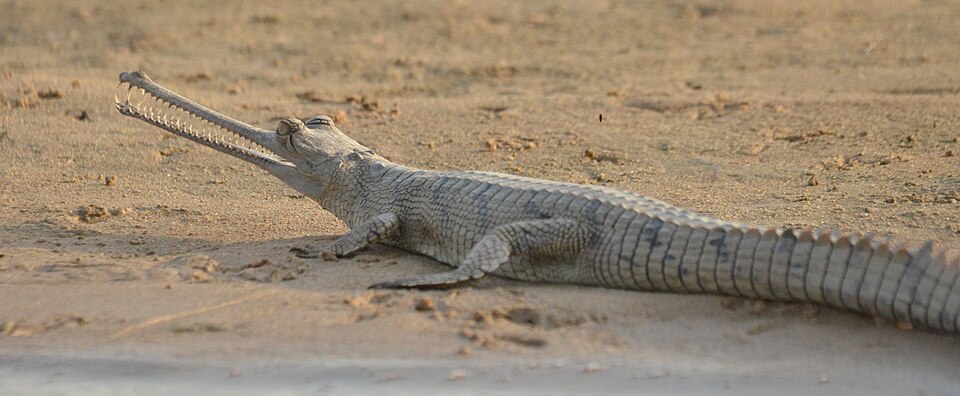
Crocodiles. In 1976, India started the Crocodile Breeding and Management Project to save three crocodilians: the freshwater crocodile (mugger), the saltwater crocodile and the gharial. Thousands were reared at 16 centres, and many were released into the wild. Eleven sanctuaries were declared specially for crocodiles, including the National Chambal Sanctuary. This programme is a classic example of ex-situ breeding feeding back into in-situ protection.
Elephants in forest camps. Captive breeding works best when animals are kept in semi-natural conditions. In the forest camps of southern India, elephants of all ages mix freely and are left in the forest at night to feed. Here they breed regularly, and some camp populations have sustained themselves without adding elephants from the wild.
Birds. The endangered white-winged wood duck was bred in captivity and released into protected areas of the north-east under an Indo-British collaboration. Captive breeding has also supported other birds and reptiles.
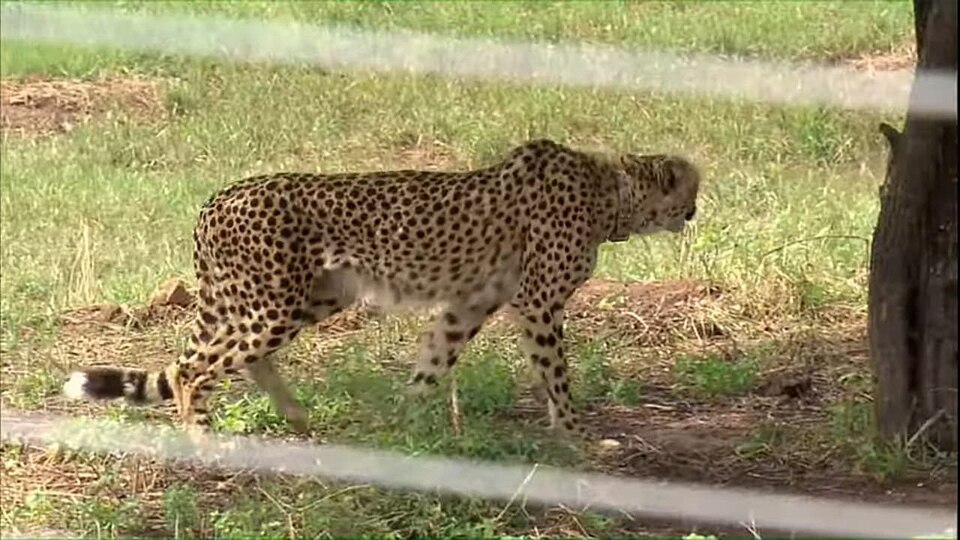
Project Cheetah. The cheetah went extinct in India in the twentieth century. Project Cheetah, launched on 17 September 2022, brought eight cheetahs from Namibia to Kuno National Park in Madhya Pradesh, followed by twelve from South Africa in February 2023. More than 350 local "Cheetah Mitras" support the project, and new sites such as Gandhisagar Sanctuary and the Banni grasslands have been identified.
Why this matters. These programmes show that species can recover when breeding, habitat protection and local support come together. They also show the trade-offs: translocations are costly and risky, and their success depends on habitat and people as much as on the animals.
Recovery stories: lions, rhinos, dolphins and big cats
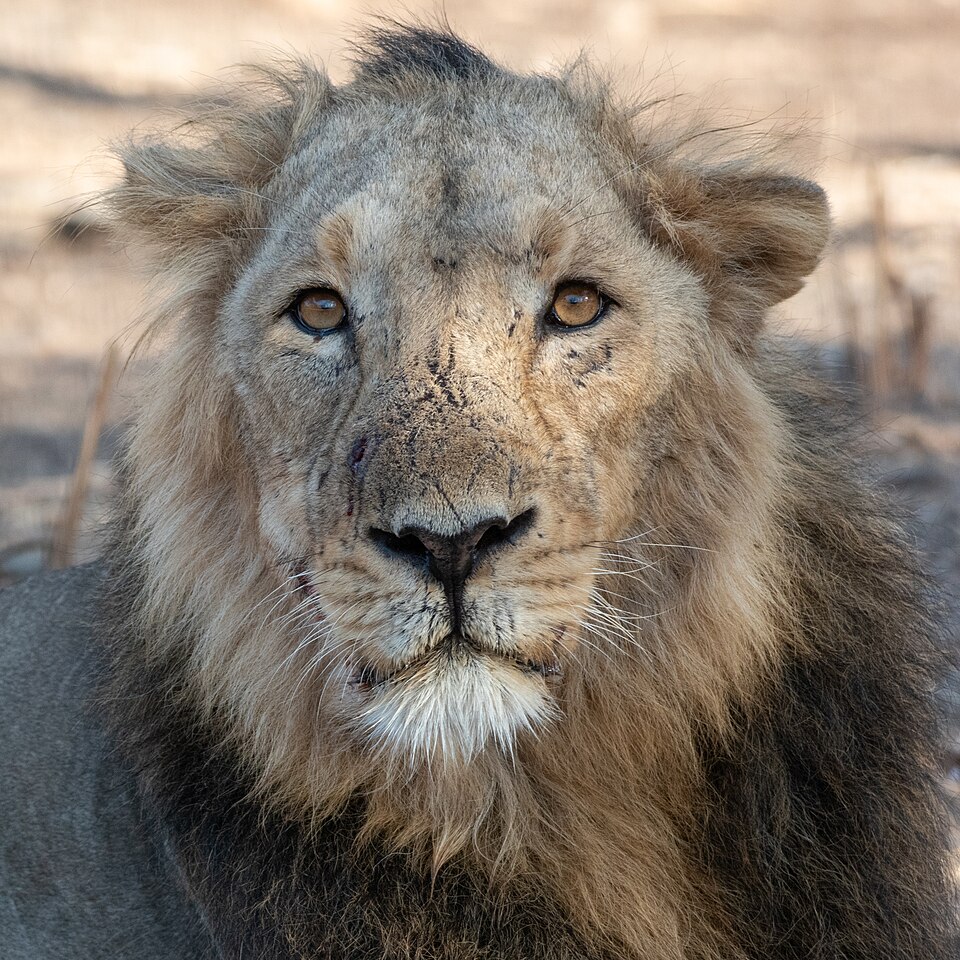
Asiatic lion. The Asiatic lion survives in the wild only in Gujarat. Careful protection has steadily raised its numbers: 411 in 2010, 523 in 2015 and 674 in 2020. Its recovery led the IUCN to move it from Critically Endangered to Endangered in 2008. Because all wild Asiatic lions live in one region, a single epidemic or disaster could still devastate them, which is why a second home is often discussed.
Greater one-horned rhinoceros. Kaziranga in Assam held 2,613 rhinos as of 2022, and Assam is home to about 68% of the world's population of this species. Strong anti-poaching work turned a species once close to extinction into a conservation success.
River dolphins. Project Dolphin, launched on 15 August 2020, protects river and marine dolphins and their habitats. In December 2024, a Ganges river dolphin was fitted with a satellite tag for the first time to study its movements. The 2022 amendment to the wildlife law also recognised the Ganges and Indus river dolphins as distinct species under its highest protection schedule.
Big cats beyond India. India helped set up the International Big Cat Alliance to protect the world's seven big cats, including the tiger, lion, leopard, snow leopard, cheetah, jaguar and puma. The alliance became a treaty-based body on 23 January 2025.
Why this matters. Each of these species was once in serious danger, and each recovery came from long-term protection rather than a one-off campaign. In answers, they show what works: strong field protection, community support, science and steady funding.
Mains lens: judging rescue programmes
Questions often ask you to evaluate a programme, so balanced judgement matters more than listing facts. Four arguments help.
1. Ex-situ as part of a chain. The crocodile project worked because captive breeding fed into protected sanctuaries. Captive breeding with no wild habitat to return to only delays extinction. Use this to judge any breeding programme.
2. The translocation test. For Project Cheetah or a second home for lions, ask three questions: is the site within the historical range, is the habitat and prey base ready, and are local people supportive? This gives a structured, fair evaluation.
3. Genetic insurance. Seed banks and gene banks protect crop and wild plant diversity against disasters and climate change. They support food security answers and India's role as a centre of crop origin.
4. Single-site risk. The Asiatic lion's recovery is a success, but having all wild lions in one region creates risk. This illustrates the general principle of spreading populations to avoid losing everything to one disaster.
Mains practice: six questions, six angles
These are practice questions written by us, not past papers. Past questions from each exam appear in the PYQ panel of this module.
| Angle | Question | Key points to cover |
|---|---|---|
| Concept | What is ex-situ conservation? Discuss its methods and limitations. | Cover gardens, zoos, seed banks, tissue culture and assisted reproduction. Then explain inbreeding, cost and the loss of habitat links, and conclude that it is a supplement. |
| Translocation | Distinguish between reintroduction and introduction of a species. Evaluate Project Cheetah in this light. | Define both in relation to the historical range. Then give the 2022 and 2023 batches and Kuno, and judge habitat, prey, local support and risks. |
| Plants | How do seed banks and tissue culture help conserve plant genetic resources? | Explain dormancy and the idea of genetic insurance, and how tissue culture multiplies rare plants. Then link this to food security and wild crop relatives. |
| Programmes | Assess the contribution of species-specific programmes to wildlife conservation in India. | Use the crocodile project, Project Tiger, lions, rhinos and Project Dolphin with their numbers. Then discuss their limits, such as single-site risk and focus on charismatic species. |
| Global | What is the International Big Cat Alliance? How does it reflect India's role in global conservation? | Name the seven big cats and the treaty status from 23 January 2025. Then link this to India's tiger success and South-South cooperation. |
| Way forward | "Ex-situ conservation is a lifeboat, not a ship." Discuss with reference to India. | Explain why in-situ comes first and when ex-situ is needed. Then give Indian examples and argue for linking every breeding programme to habitat restoration and release. |
How to use this table: each answer should first explain the what, then give the why from this chapter, and end with a way forward.
Quick revision
- Ex-situ = conservation outside the natural habitat; it is a supplement or last resort, limited by inbreeding, cost and loss of habitat links.
- About 1,500 botanic gardens hold the largest plant diversity outside nature; modern zoos aim at conservation and education.
- Seed banks are genetic insurance; tissue culture grows whole plants from cells or tissues.
- Assisted reproduction: artificial insemination, embryo transfer, cloning and fostering of extra eggs (whooping crane: 21 birds in 1941).
- Reintroduction = within the historical range; introduction = outside it (the species becomes exotic).
- Crocodile project (1976): mugger, saltwater crocodile and gharial; 16 centres; 11 sanctuaries including National Chambal.
- Project Cheetah (17 Sep 2022): 8 from Namibia and 12 from South Africa (Feb 2023) to Kuno.
- Asiatic lion: 674 (2020), moved CR → EN (2008); Kaziranga: 2,613 rhinos (2022); Project Dolphin: 15 Aug 2020; IBCA became treaty-based on 23 Jan 2025.
BPSC CCE questions from this chapter
Which State Government launched the State-Level Committee for Vulture Conservation (SLCVC), proposed by the national action for the protection of vultures in India?
- (a) Tamil Nadu
- (b) Sikkim
- (c) Assam
- (d) Meghalaya
Show answer
(a) Tamil Nadu · our answer; official key awaited
Consider the following statements regarding the 'Gangetic Dolphin' : 1. The Gangetic River Dolphin has been categorized as 'endangered' under the IUCN's Red List. 2. It does not have a crystalline eye lens rendering it effectively blind. 3. Navigation and hunting are carried out using echolocation. 4. It has been recognized as India's National Aquatic Animal. Which of the above statements are correct?
- (a) Only 1, 2 and 4
- (b) Only 2, 3 and 4
- (c) Only 1, 3 and 4
- (d) All of the above
Show answer
(d) All of the above · our answer; official key awaited