

BPSC CCE · Module 3 · Mains depth · 24 min
The Sangam age: megaliths, chiefdoms, trade and Tamil literature
What BPSC CCE asks from this chapter
Syllabus lines this chapter covers:
- Prelims: General Studies · History of India and broad features of Bihar history
BPSC CCE has asked 1 question from this chapter (2024); 15 from its whole module.
Read at full depth: basics, the standard layer and the Mains analysis.
Start from zero: the far south enters history
In the last chapter we saw the Satavahanas build the first state in the Deccan. Further south, in the land the Tamils called Tamilaham, a different story was unfolding. Here there was no great king with a bureaucracy and regular taxes. Instead there were chiefs, big and small, who raided each other, rewarded their poets and traded pepper with ships from Rome.
We know this world through two very different sources. One is archaeology: the megaliths, burials marked by huge stones, that dot the south. The other is poetry: the old Tamil poems we call Sangam literature, sung by wandering bards in praise of their patrons.
Think of the Sangam poems as a family photo album. They do not give exact dates, but they show how people lived, loved, fought and made a living. The megaliths are like the family's old tools stored in the attic; together, album and attic tell the story.
Why study this? This chapter explains how the south moved from the Iron Age into history, why its politics differed from the north's, and how Roman trade touched its ports. Exams ask about megaliths, the five tinais, the muvendar, Sangam texts and Indo-Roman trade. Mains asks whether Tamilaham had states or chiefdoms, and what trade did to its society.
The Sangam age at a glance
| Theme | Key facts |
|---|---|
| Iron in the south | About 1100 BC (Hallur) |
| Megaliths | Stone-marked burials; black-and-red ware; iron goods |
| Region | Tamilaham: Venkatam hills to Kanyakumari |
| Eco-zones | Five tinais: kurinji, mullai, marutam, neytal, palai |
| Big chiefs | Muvendar: Cheras, Cholas, Pandyas |
| Other chiefs | Velir (hill chiefs), kizar (village headmen) |
| Roman trade | From late 1st century BC; monsoon route; gold coins |
| Literature | Ettuttogai, Pattuppattu; later Tolkappiyam, Tirukkural |
The three crowned houses and their seats:
| House | Inland centre | Port |
|---|---|---|
| Cheras | Karur | Muziris |
| Cholas | Uraiyur | Puhar (Kaveripumpattinam) |
| Pandyas | Madurai | Korkai |
Each crowned house had an inland centre and a port. This shows that both farming and sea trade were the bases of their power.
Before the poems: the megalith builders
When iron came south. Iron came into use in south India around 1100 BC, according to radiocarbon dates from Hallur in Karnataka. At many sites, such as Brahmagiri, Maski and Piklihal, the earlier Neolithic-Chalcolithic farming villages simply carried on into the Iron Age. Change came gradually, not as a sudden break.
What is a megalith? 'Megalith' means big stone. Most of what we know about the south Indian Iron Age comes from graves marked by large stones, usually in cemeteries away from the villages. They began around the end of the second or the start of the first millennium BC, and many date from the fifth to the first century BC.
Many kinds of graves. Sometimes the bones of the dead were collected in large urns and buried in a pit marked by a stone circle or a capstone. Elsewhere we find cist graves made of granite slabs, rock-cut chambers in Kerala, and rows of standing stones. Megaliths are found around Nagpur in Maharashtra, at Maski in Karnataka, at Nagarjunakonda in Andhra, at Adichanallur in Tamil Nadu and in Kerala.
What was buried with the dead? The typical pottery is black-and-red ware. Iron objects are everywhere: axes, hoes, sickles, ploughshares, swords, daggers, arrowheads, tridents and lamps. There is also horse equipment such as bits, and copper or bronze bells, beads and gold.
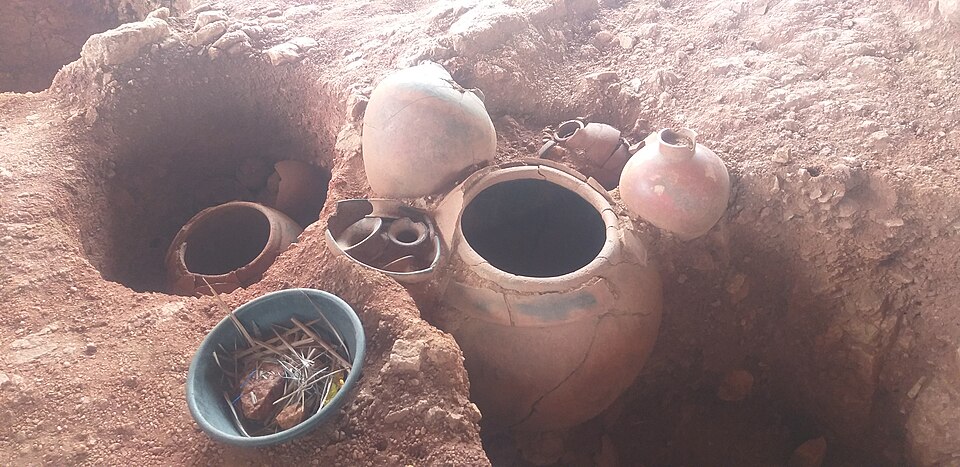
A network of iron workers. Strikingly, the same types of iron tools are found from Junapani near Nagpur to Adichanallur, nearly 1,500 km apart. One view is that a tightly knit group of skilled iron workers moved across the region and traded their goods. Another sees these people as nomadic pastoralists who relied on sheep and goats.
Where did the custom come from? The megaliths are best seen as a mix of influences. Some burials grew out of local Neolithic-Chalcolithic customs, while horse burials, horse equipment and some pottery shapes point to contact with the north-west. Attempts to label the megaliths as simply 'Aryan' or 'Dravidian' are not accepted.
From graves to history. These agro-pastoral people entered the historical phase in the early centuries AD, and they appear in Sangam poetry. Some graves even contain Roman coins, showing that they had joined wide trade networks.
Five landscapes, five ways of life
The land of Tamilaham. Tamilaham stretched from the Venkatam hills to Kanyakumari, covering modern Tamil Nadu and Kerala. It had forested hills, pastures, dry zones, wet river valleys and a long coast. Tamil poets turned this variety into a famous idea: the five tinais, or eco-zones.
Kurinji, the hills. In the hills and forests lived hunters called kuravar and vetar. They hunted, gathered honey, bamboo rice and roots, and practised slash-and-burn farming of millets and pulses. Pepper and other spices grew well in these hill tracts.
Mullai and marutam. In the mullai pastures, cowherds reared cattle, traded dairy products and practised shifting cultivation. The marutam, the fertile river valleys, was the land of the plough, where paddy and sugarcane were grown. Everyone else depended on the marutam for rice, the staple food.
Neytal and palai. On the neytal coast, fishermen called paratavar fished, dived for pearls and made salt. The palai, the dry zone, was partly seasonal: in scorching summers, hills and pastures dried out. Some people there turned to robbery and cattle lifting, and salt caravans passing through were often plundered.
Why the tinais matter. No zone was self-sufficient, so people exchanged goods. Hill folk brought honey, meat and fruit, herders brought dairy, and coastal people brought fish and salt, all seeking the rice of the marutam. Through this exchange, small zones grew into a larger, connected society.
Uneven development. The more productive zones, especially the marutam, developed a sharper division of labour. The poorer zones remained simpler, organised in clans. So Tamil society was a mix of unevenly developed parts that shared a common culture.
Farming spreads. Over time, settlements moved from the uplands to the river valleys. The iron ploughshare, bullocks yoked to the plough, and irrigation from rivers and tanks made this possible. The remains of an ancient reservoir have been found near Kaveripattinam.
Who worked the land? The uzhavar were ploughmen and the vellalar were 'masters of the soil', the landholders. Adiyor, probably slaves, and vinaivalar, wage workers, also laboured in the fields. Village settlements could support blacksmiths, carpenters, bards, dancers, priests and monks.
Chiefs, not kings: politics in Tamilaham
State or chiefdom? A state has a central authority over a territory, regular taxes, an organised army and a body of officials. A chiefdom is a society of hereditary status ruled by a chief whose power rests on kinship with his people, with only occasional voluntary payments. Early Tamilaham, unlike the Satavahana Deccan, had chiefdoms, not yet a state.
Three levels of chiefs. At the bottom were the kizar, headmen of small villages, often named after their village. In the middle were the velir, mostly hill chieftains, of whom about fifteen were important; famous ones included Pari of Parambumalai. At the top were the vendar, the three crowned houses called the muvendar: the Cheras, Cholas and Pandyas.
The muvendar and their bases. The Cheras held the Western Ghats towards the sea, with Karur inland and the port of Muziris. The Cholas controlled the Kaveri area from Uraiyur, with the port of Puhar. The Pandyas held the south-central area from Madurai, with the port of Korkai.
An old lineage. These houses were not new. Asoka's edicts already mention the Cholas, Pandyas, Keralaputras and Satiyaputras as neighbours outside his empire. The Satiyaputras, linked with the Adigaiman chiefs, were of velir status.
Power over people, not land. There was no idea of a precisely marked territory. Authority meant control over people, such as the hill clans of kuravar or vetar, who held land collectively. Big chiefs took tribute (tirai) from lesser ones, and a more regular due called irai is also mentioned, but there was no regular system of taxation.
How the big absorbed the small. The muvendar tried to subdue the velir by war and by marriage, often taking brides from velir families. Sometimes the weak were destroyed, as when the three kings ended the domain of Pari. Subdued kizar served the big chiefs in their campaigns, and were rewarded with control over the people of conquered villages.
Plunder and gift. The heart of this politics was the plunder raid. Chiefs raided for cattle and grain because local resources were too thin. They then gave gifts (kodai) to warriors, bards, dancers and kin, and the Purananuru praises chiefs above all for generosity and bravery.
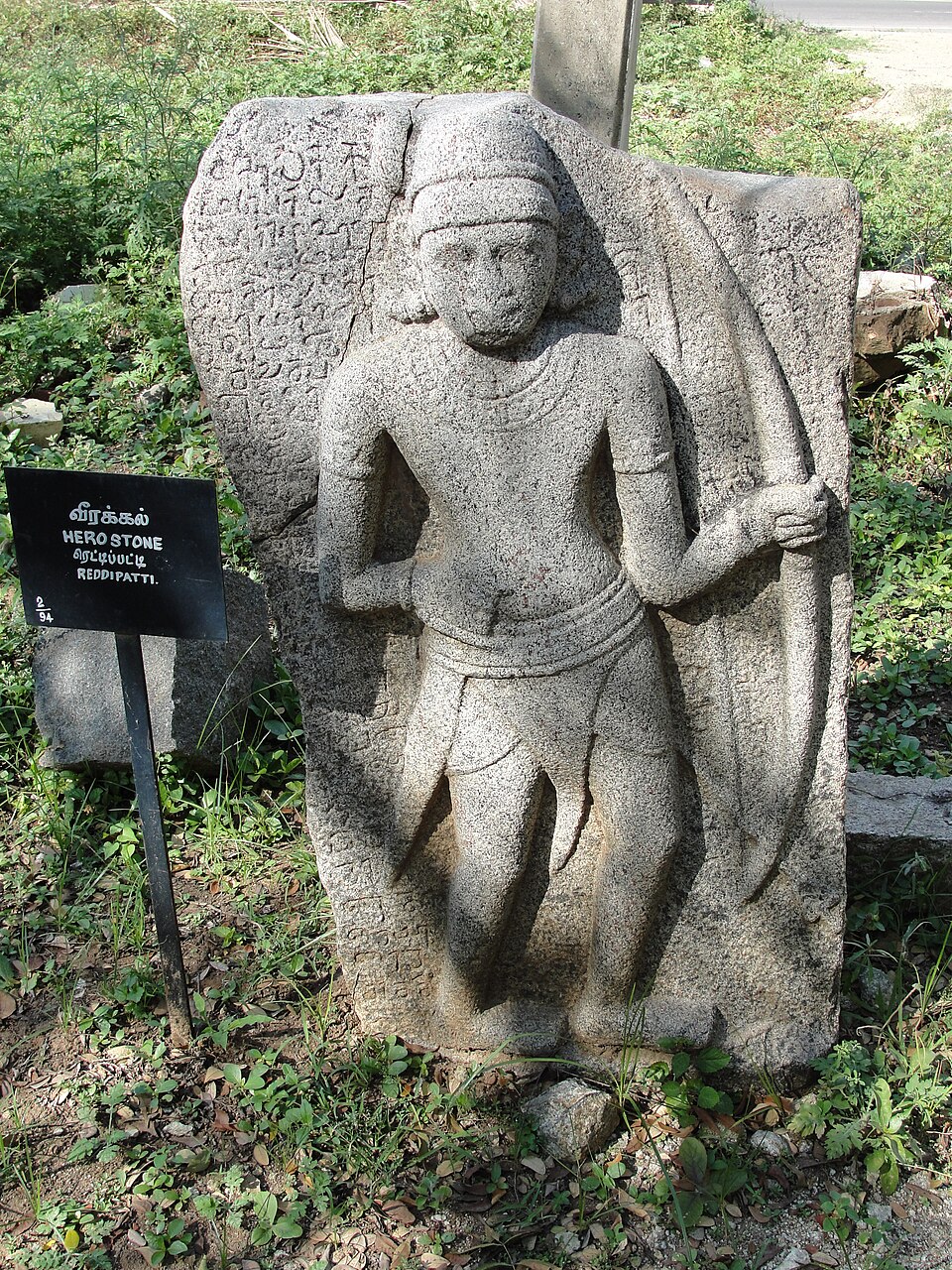
A poor chief's lance. One poem shows how thin a chief's means could be. When a bard came asking for a gift, the chief Urtur-kizar called his blacksmith for a new lance, so that he could go raiding and earn something to give. Gift-giving was the chief's first duty, and raiding paid for it.
The dark side of glory. Raids burned villages, ruined harvests and turned gardens into waste. Yet war was glorified, and the memorial stones of fallen heroes became objects of worship. This was a built-in contradiction: raiding was needed to share wealth, but it also destroyed wealth.
Assemblies. Daily affairs in each settlement were handled by an assembly of elders meeting at the manram or podiyil, a raised seat around the foot of a tree. The chief had a council called the avai. Bodies called the 'five great groups' and 'eight great groups' probably developed later, after the third century AD.
Pepper for gold: trade and port-towns
Barter at home. Most local trade was barter. Salt was swapped for paddy, paddy for milk and ghee, honey for fish oil.
Salt and paddy were the only goods with a fixed rate: a measure of salt for an equal measure of paddy. Salt merchants called umanar moved in family caravans with bullock carts.
Links with the north. The dakshinapatha, the southern route praised in the Arthasastra, linked the Ganga valley to the south. Along it came silver punch-marked coins, found in large hoards across the south, and fine NBP ware, found in the Pandya country. A fine silk from Kalinga was a prized gift to Tamil bards.
The Roman connection. From the close of the first century BC, the Roman world came into direct contact with the south. Earlier, the Arabs had acted as middlemen and kept their knowledge of the winds secret. The 'discovery' of the monsoon winds, attributed to a navigator named Hippalus, let ships cross the Arabian Sea directly.
What India sold. India sent west pepper and other spices, medicinal herbs, beryl, agate, carnelian and other stones, pearls, ivory, teak, ebony and sandalwood, coloured cotton cloth and muslin, and dyes such as indigo. Only beads and textiles were finished goods; most exports were raw materials.
What Rome sent. The Romans brought copper, tin, lead, coral and glass, along with fine wine, fine cloth, ornaments and pottery. Above all they paid in gold. Tamil poems speak of Yavana ships bringing gold to buy pepper.
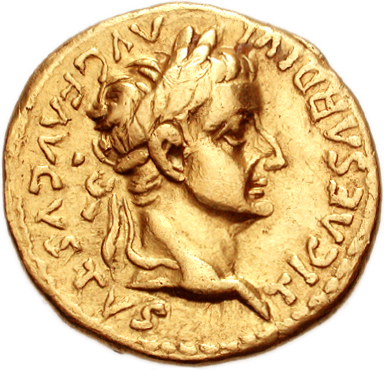
Roman gold in Indian soil. Large hoards of Roman coins, mostly gold and silver from the first century BC to the third century AD, have been found in Andhra, Karnataka, Tamil Nadu and Kerala. The emperor Tiberius complained to the Senate in AD 22 that Rome's wealth was draining away for trifles, and Pliny complained of the same. Some scholars think the gold was valued as bullion or ornament rather than as money.
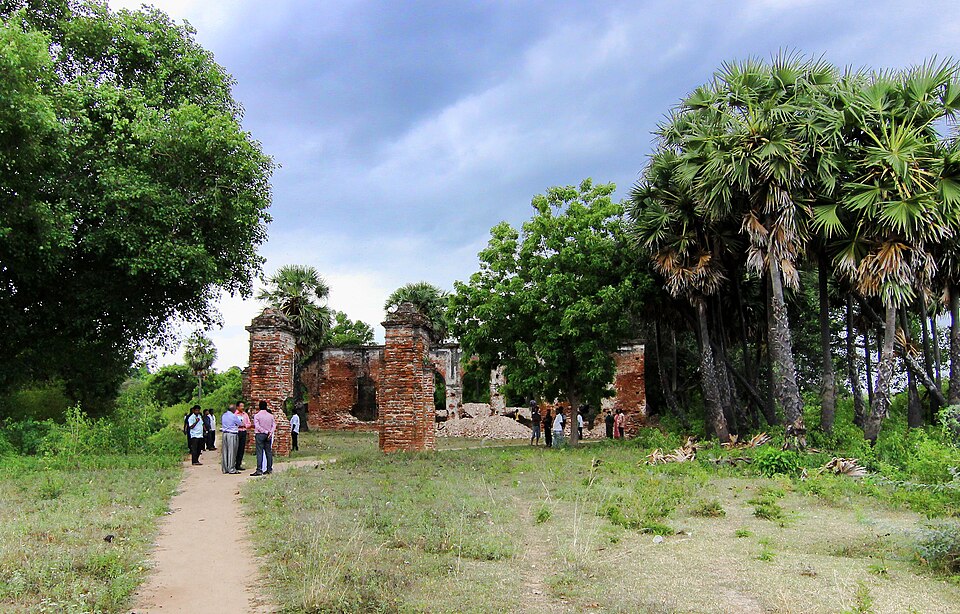
The port-towns. On the east coast lay Puhar (Kaveripumpattinam) of the Cholas, Arikamedu, and Korkai of the Pandyas. On the west coast lay Muziris and Tyndis of the Cheras. Arikamedu had a settlement of Yavanas, and Muziris was crowded with ships, warehouses and markets.
Chiefs and trade. Tamil chiefs encouraged sea trade with lighthouses, wharves and warehouses. At Puhar, Chola agents stamped goods with the tiger emblem and collected toll, called ulku. Scholars call this a rudimentary form of 'administered trade'.
Why trade changed the Deccan more. In the Deccan, guilds acted as banks, local traders joined in long-distance trade, and their wealth shows in gifts to Buddhist monasteries. In Tamilaham, traders worked through families, not guilds, and luxury imports stayed with chiefs and their kin. The Tamil port-towns remained 'pockets of foreign trade' and dwindled when that trade declined.
Sangam literature: the voice of the bards
How old is Tamil? Tamil had become a literary language with its own writing by at least the third century BC. The earliest written evidence is short Tamil Brahmi label inscriptions in Jaina and Buddhist caves around Madurai, at places like Arittappatti and Karungalakkudi. These labels name donors and include Tamil adaptations of Sanskrit and Prakrit words brought by northern monks.
Why 'Sangam'? The poems are called Sangam literature because they were collected and classified by the Sangam, an academy of scholars. But the poems are much older than the academy, so the name is something of a misnomer. Tradition speaks of three Sangams, of which only the last one's works survive.
Who composed them? Most poems came from the folk tradition of wandering bards, the panar, who sang the praises of their patron chiefs. Others were composed by scholarly poets, the pulavar, who followed the bardic style. Well-known poets include Kapilar, Paranar, Avvaiyar and Gautamanar.
The collections. The heroic poems survive in two groups of anthologies. The Ettuttogai, or eight collections, include Narrinai, Kuruntogai, Ainkurunuru, Patirruppattu, Akananuru and Purananuru. The Pattuppattu, or ten idylls, include Mullaippattu, Maduraikkanji and Kurinjippattu.
Akam and puram. Every poem belongs to one of two genres. Akam ('inner') poems deal with love and personal feeling; each of the five tinais is linked with a mood of love, as palai is with separation. Puram ('outer') poems deal with war, raids and public life; they could choose among nine situations and sixty-three contexts.
Later works. Two other groups are counted in the classified corpus, though they came later. The Tolkappiyam is a treatise on Tamil grammar, not earlier than the third century AD in its present form.
The Patinenkilkanakku, eighteen didactic texts, include Tiruvalluvar's Tirukkural. The twin epics Silappadikaram and Manimekalai belong to a much later period.
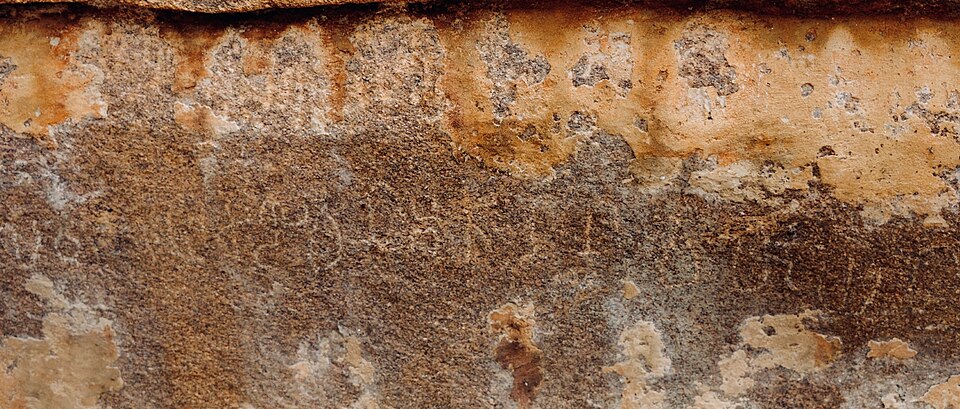
How the poems were made. The poems were oral compositions, built from stock phrases shared by all bards, such as 'warrior of the victorious lance' or 'chief of swift steeds'. This is how oral poetry works around the world. It also makes the poems hard to date, because old memories are carried in phrases repeated across generations.
Three layers of dates. Students must keep three dates apart. The poems were composed and sung from about the second century BC to the third century AD. They were codified into anthologies between about the sixth and ninth centuries, and the commentaries came even later, not before the thirteenth or fourteenth century.
Tamil and Sanskrit. Tamil literature is a tradition parallel to and independent of Sanskrit, but it did not grow in isolation. The poems mention Vedic sacrifices (velvi), some bards like Kapilar and Paranar were brahmanas, and Mayon, 'the dark god', is the Tamil counterpart of Krishna. Northern ideas enriched Tamil without replacing what was distinctly its own.
Mains lens: chiefdoms on the road to the state
The old view. Older histories often called the Cheras, Cholas and Pandyas 'kingdoms' with courts, armies and taxes, much like northern states. The bards themselves called the muvendar 'crowned kings' who owned all of Tamilaham. But a crown in a poem is not proof of a state.
Why historians now say 'chiefdom'. The marks of a state, a standing army, regular taxation, a bureaucracy and local administrative bodies, had not yet evolved. Authority rested on kinship and on control of people, not on a territory with fixed borders. Wealth moved through raids and gifts, not through a treasury.
But change was under way. The muvendar were steadily absorbing lesser chiefs through war and marriage. Agrarian marutam chiefs began claiming descent from the solar and lunar lines, as northern kshatriyas did.
The varna idea was taking root, with the Tolkappiyam placing traders among vaisyas. Gifts of villages to brahmanas created brahmana settlements.
The role of trade. Roman trade added wealth and gave chiefs a reason to control ports and routes, and some velir grew strong by holding strategic points. Yet the benefits stayed with a small elite, and the port-towns did not take root in the local economy. Trade strengthened chiefs but did not by itself create a state.
North and south compared. In the Deccan, the Satavahanas built a state with officials, districts, guilds and land grants. In the far south, a unified political system was 'still in the making'. Comparing the two shows that state formation followed different paths in different regions, shaped by ecology, resources and contact.
How to write it. Define state and chiefdom first. Then describe the three levels of chiefs, the plunder-gift economy and the role of trade. End by showing the signs of change that pointed towards later kingdoms.
Mains practice: the Sangam age
| Angle | Question | Key points to cover |
|---|---|---|
| Polity | Were the Cheras, Cholas and Pandyas of the Sangam age states or chiefdoms? Discuss. | Define state and chiefdom; kizar, velir, vendar; kinship, control of people; tirai, no regular tax; plunder and gift; manram, avai; signs of change. |
| Trade | Assess the impact of Indo-Roman trade on the economy and society of early south India. | Monsoon, Hippalus; exports and imports; Roman gold hoards; Tiberius, Pliny; ports, Arikamedu; administered trade; Deccan guilds vs Tamil families; pockets of foreign trade. |
| Sources | How far can Sangam literature be used as a source for the history of early Tamilaham? | Oral bardic poems, stock phrases; akam and puram; dating layers; misnomer; corroboration by megaliths, Tamil Brahmi, Roman coins; Sanskrit influences; limits. |
These are practice questions written by us, not past papers. Past questions from your exam appear in the PYQ panel.
How to use this table: each answer should explain the what, then the why, and end with what it led to.
Quick revision
- Iron in the south c. 1100 BC (Hallur). Megaliths: stone circles, cists, dolmens, menhirs, rock-cut chambers (Kerala); black-and-red ware; iron tools, horse gear; many 5th-1st century BC.
- Same iron tools from Junapani to Adichanallur (~1,500 km); mixed local and north-western influences; not simply 'Aryan' or 'Dravidian'; some graves hold Roman coins.
- Tamilaham: Venkatam to Kanyakumari. Five tinais: kurinji (hills), mullai (pasture), marutam (wet valleys, paddy), neytal (coast, salt), palai (arid, raiders).
- Muvendar: Cheras (Karur, Muziris), Cholas (Uraiyur, Puhar), Pandyas (Madurai, Korkai); velir (~15, e.g. Pari); kizar (village heads). Named in Asoka's edicts.
- Chiefdoms, not states: kinship, control of people; tirai (tribute), irai; no regular tax, army, bureaucracy. Plunder and gift (kodai); hero stones; manram/podiyil, avai.
- Land: iron ploughshare; uzhavar (ploughmen), vellalar (landholders), adiyor, vinaivalar. Tolkappiyam: four varnas, traders as vaisyas.
- Trade: barter, salt = paddy; umanar salt caravans; dakshinapatha, punch-marked coins, NBP; monsoon/Hippalus; pepper, beryl, muslin, teak for Roman gold.
- Roman coins (1st century BC-3rd century AD); Tiberius AD 22, Pliny; ports Puhar, Arikamedu (Yavanas), Korkai, Muziris, Tyndis; Chola tiger stamp; toll ulku.
- Tamil Brahmi cave labels near Madurai; poems c. 2nd century BC-3rd century AD, codified c. 6th-9th century; three Sangams (last survives); name a misnomer.
- Ettuttogai (8, incl. Akananuru, Purananuru), Pattuppattu (10); later Tolkappiyam, Patinenkilkanakku incl. Tirukkural; akam (love), puram (war); epics much later; Mayon = Krishna.
BPSC CCE questions from this chapter
Which of the following was the capital of Chera dynasty ?
- (a) Kuravur/Karur
- (b) Kanchipuram
- (c) Madurai
- (d) More than one of the above
Show answer
(a) Kuravur/Karur · our answer; official key awaited