

BPSC LDC · Module 15 · basic depth · 13 min
Folk and tribal painting: Madhubani, Warli, Gond, Pattachitra, Phad and more
What BPSC LDC asks from this chapter
Syllabus lines this chapter covers:
- Paper 2: General Knowledge (General Studies, General Science and Mathematics, Mental Ability) · India and neighbouring countries: history of neighbouring countries, history of India, culture
BPSC LDC questions from this module are being sorted into our bank.
Cut to basic depth for BPSC LDC. 11 deeper paragraphs are in the full chapter.
Start from zero: art of the people
In the last two chapters, painting was made for kings and nobles. But most Indians never saw a royal album. Their art was on the walls of their homes, on the floor at festivals and on cloth carried from village to village. This is folk and tribal painting.
Who makes it? Folk painting is made by ordinary people of a community, not by court artists. Very often, it is made by women, and skills pass from mother to daughter. Tribal communities such as the Warli, Bhil and Gond have their own visual languages.
Why is it made? Most folk painting has a purpose beyond decoration. It marks a ritual such as a wedding or a harvest, welcomes a deity, protects the home or tells a story. The painting is part of life, not something kept apart in a gallery.
What it uses. Folk painters use what nature gives: soot, rice paste, turmeric, flowers, minerals and plant gums. Walls of mud, floors and handmade cloth are the canvas. Many of these arts are now sold as paintings on paper and cloth, and several have GI tags, as you will see in the GI chapter.
Madhubani (Mithila) painting of Bihar
Where and who. Madhubani painting comes from the Mithila region of Bihar. It is traditionally made by women, who paint the walls and floors of their homes for festivals and family rituals. Today it is also made on paper and cloth for sale.
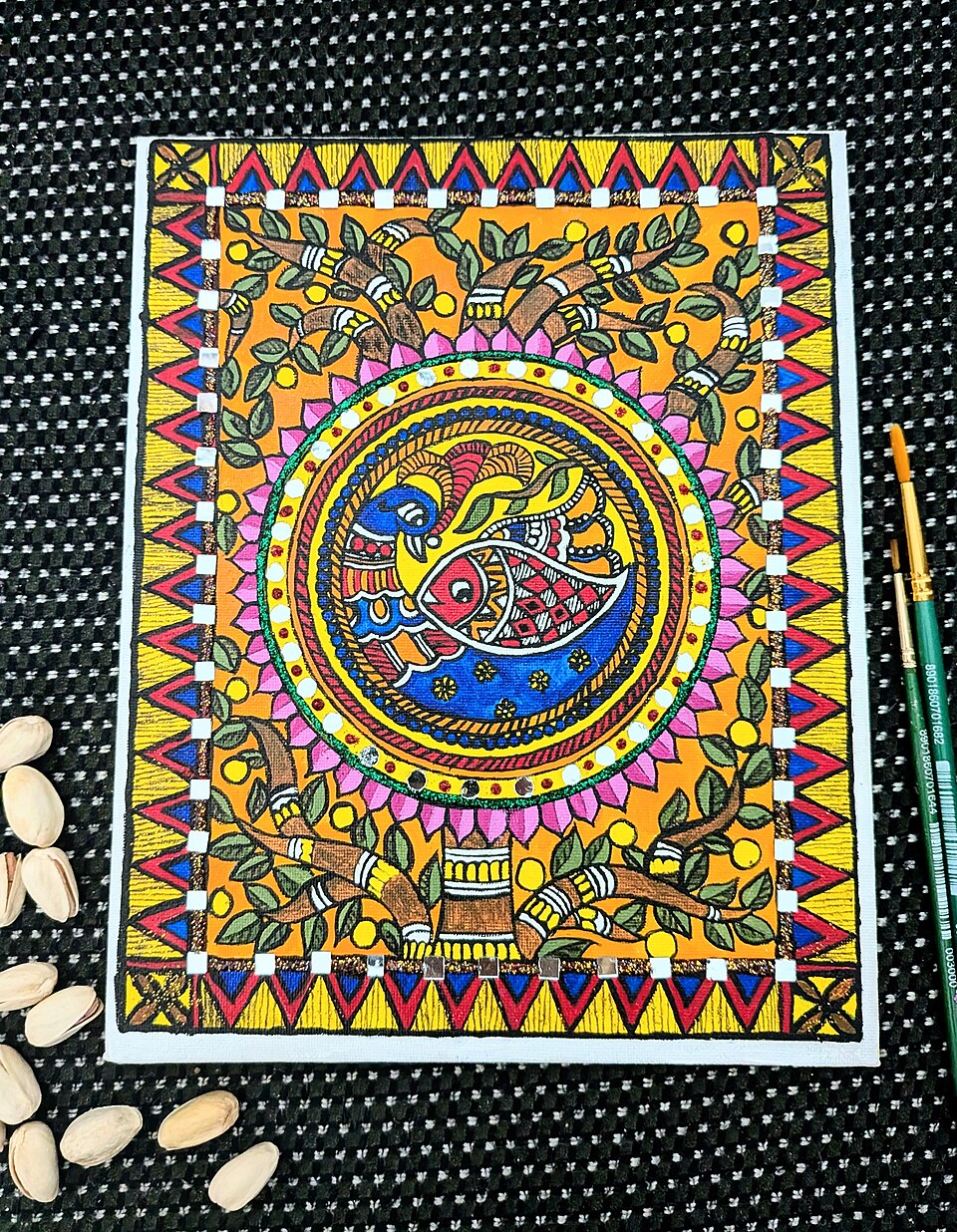
The kohbar. The most important Madhubani painting is the kohbar, painted in the room of a newly married couple. It is full of symbols of fertility and a long, happy married life. The painting blesses the couple at the start of their life together.
Natural colours. Traditional colours come from nature: black from soot, yellow from turmeric, orange from palash flowers, red from kusum flowers and blue from indigo. Painters work with twigs, fingers and simple brushes. Each colour has its own meaning in ritual.
A full surface. A key feature of Madhubani is that no empty space is left. Borders are double lines filled with patterns, and gaps are filled with flowers, birds and geometric designs. Famous artists such as Ganga Devi, who received the Padma Shri, carried it to the wider world.
Warli and Pithora: tribal wall paintings of the west
Warli: who and where. The Warli are a tribe living on the northern edge of the Sahyadri range, mainly in the Thane and Palghar districts of Maharashtra. Their painting is done on the red-brown mud walls of their homes. Traditionally, married women paint it for weddings and harvests.
Simple shapes, rich life. Warli painters use white rice paste on the dark wall. Human figures are made of two triangles joined at the tip, with a circle for the head and lines for limbs. With these simple shapes, they show farming, hunting, dancing in a circle and village life.
What Warli paints, and what it does not. At the centre of a wedding painting is often a square frame, the chauk, with a fertility goddess. Warli art mostly shows everyday life and nature rather than gods of the great epics. The artist Jivya Soma Mashe made Warli painting famous across the world.
Pithora. Pithora painting belongs to the Bhil and Bhilala of Jhabua in Madhya Pradesh and the Rathwa of Gujarat. It is a ritual painting made on the walls of a house to thank or please the deity Pithora. A trained painter, called the Lakhindra, paints it while the community watches and celebrates.
Gond painting of Madhya Pradesh
Where it comes from. Gond painting belongs to the Gond adivasis of central India. The Pradhan Gonds, a sub-group, are seen as the flag-bearers of this art. Its best-known home is the village of Patangarh in Dindori district of Madhya Pradesh.
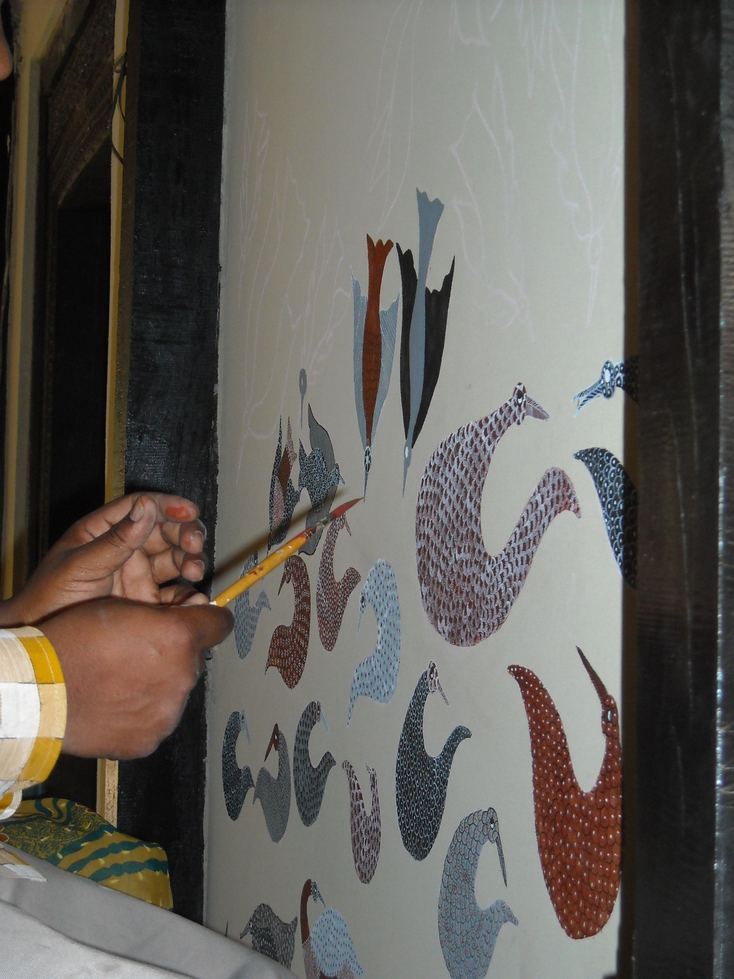
From mud walls to canvas. Gond art began as decoration on the mud walls of homes. In the 1980s, the young artist Jangarh Singh Shyam of Patangarh began painting on paper and canvas, and his work reached galleries. He is called a pioneer of modern Gond art, and artists such as Bhajju Shyam trained under him.
What Gond paintings show. Gond paintings are full of nature: trees, animals, birds, the sun and the moon, along with folk tales and daily life. Deities are often shown not as human figures but as a sacred stone under a tree. Bright colours make each animal and tree seem alive.
GI and recognition. In April 2023, Gond painting received a Geographical Indication (GI) tag, which recognises Dindori district as its home. This helps protect the name from copies and supports the artists. Gond art shows how a tribal wall tradition can become a modern art form while keeping its roots.
Pattachitra of Odisha
Meaning. Pattachitra means "cloth painting" (patta = cloth, chitra = picture). It is one of the ancient art traditions of Odisha, said to date back to about the 12th century. It is closely tied to the worship of Jagannath at Puri.
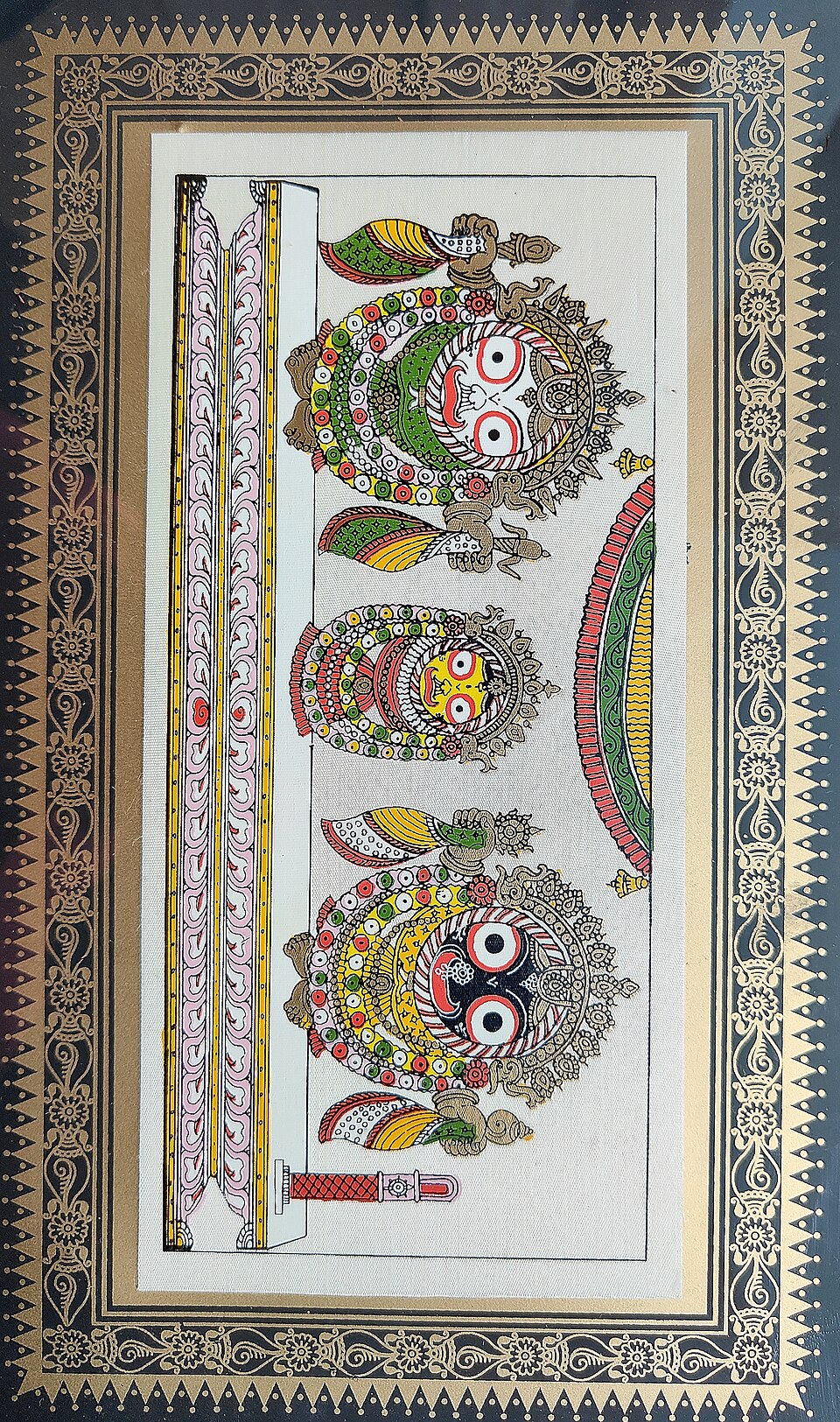
Preparing the cloth. Making the base is a skilled job. Old cotton cloth is layered and stuck together with tamarind-seed glue, then coated with chalk and polished with stones until smooth. After painting, the surface is given a coat of lacquer for shine and long life.
Colours and themes. Colours are natural: black from lamp soot, yellow from a stone called haritala, red from geru and white from crushed conch shells. Themes are mostly religious: Jagannath, Krishna Leela, and stories from the Ramayana and Mahabharata. Traditional painter families made cloth paintings for the temple, and Pattachitras were also taken home by pilgrims to Puri as sacred souvenirs.
Three media. The tradition is wider than cloth. It is also painted on walls (bhitti chitra) and engraved on palm leaves (tala patra chitra), where bundles of leaves are bound between wooden covers. Odisha Pattachitra is a GI product.
Phad of Rajasthan: a temple that travels
What a phad is. A phad is a long painted cloth scroll from Rajasthan; the word is said to mean "fold". A traditional phad can be about five feet high and thirty feet long. It tells the story of a folk deity, most often Pabuji or Devnarayan.
Who paints it. Phads are painted by the Joshi families of Bhilwara, who are the traditional artists of this form. They use natural colours, with fixed meanings: orange for figures, red for clothes, green for trees. Gold and silver are not used.
A night-long performance. A phad is not hung in a museum: it is a portable shrine. Bhopa priest-singers unroll it in a village and sing the deity's story all night, from sunset to dawn. A woman, the Bhopi, raises an oil lamp to light each episode as it is sung, so the painting and the song work together.
When a phad grows old. A phad is sacred, so it is not thrown away. When a scroll becomes worn, it is respectfully immersed in a holy river or lake, such as the Ganga or Pushkar. This shows how folk art is treated as a living, sacred object, linked to the storytelling traditions in the folk theatre chapter.
Kalighat and Kalamkari
Kalighat: art at a temple gate. Kalighat painting takes its name from the area of the Kali temple at Kalighat in Kolkata. It was made by patuas, a community of traditional painters. They worked in watercolour on paper rather than on walls or cloth.
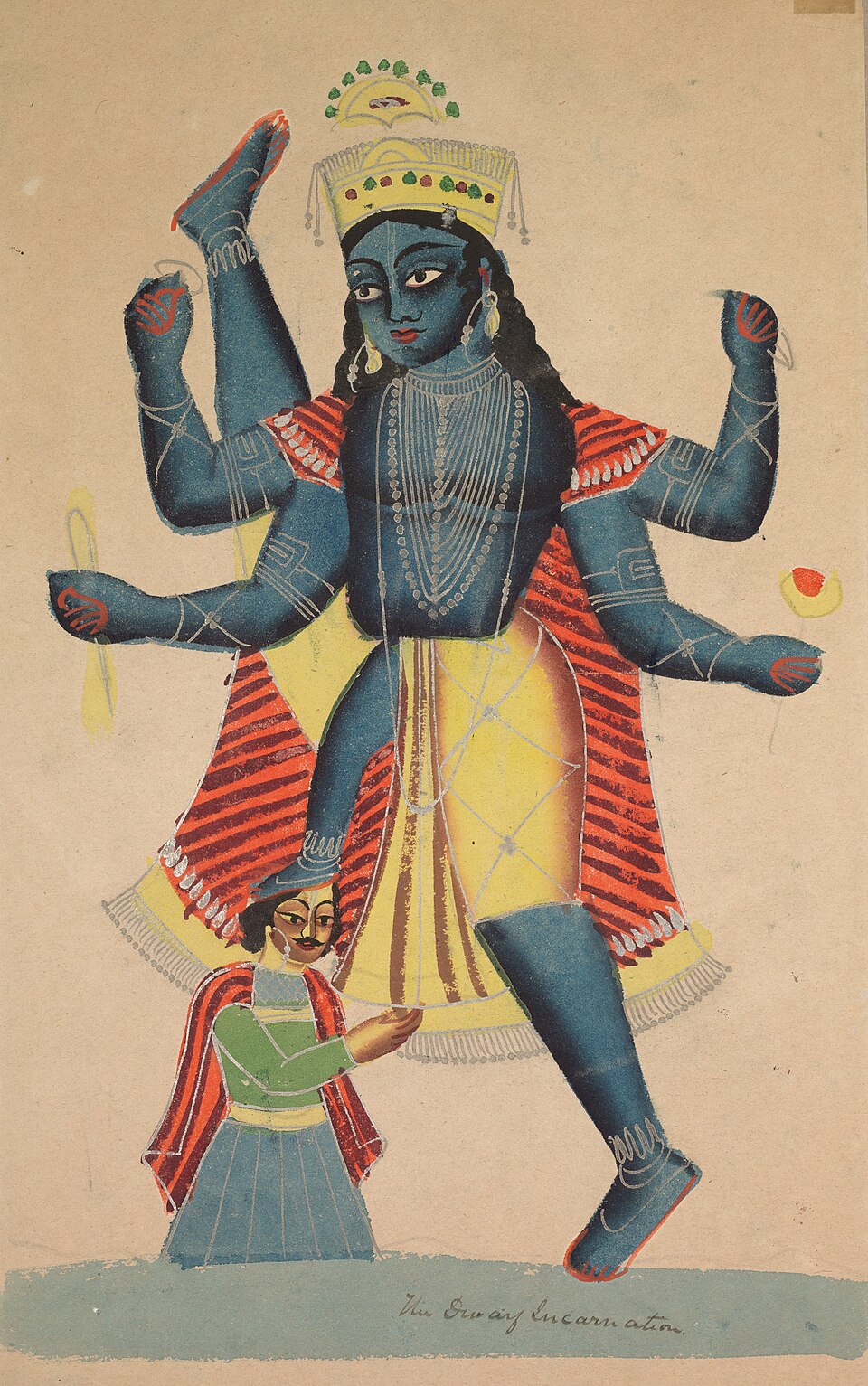
Bold lines and sharp humour. Kalighat paintings have bold, sweeping outlines and simple shading. Besides gods and goddesses, they show the life of the city around them, often with social satire that pokes fun at changing manners. This boldness later inspired modern artists, as you will see in the modern art chapter.
Kalamkari: drawing with a pen. Kalamkari means "pen work". It is a tradition of painting or printing on cloth with natural dyes, especially in Andhra Pradesh. It has two main styles.
Two styles. The Srikalahasti style is drawn freehand with a pen (kalam) and shows temple themes from the epics and Puranas. The Machilipatnam (Pedana) style uses carved wooden blocks and vegetable dyes; it was made for trade and export and is a registered GI product. This contrast between pen and block is a favourite exam point.
| Art form | State | Key features |
|---|---|---|
| Madhubani | Bihar | Women, kohbar, natural colours, no empty space |
| Warli | Maharashtra | Triangles, white rice paste, red-brown wall |
| Pithora | Madhya Pradesh, Gujarat | Bhil, Bhilala, Rathwa ritual wall painting |
| Gond | Madhya Pradesh | Pradhan Gonds, nature, GI 2023 |
| Pattachitra | Odisha | Cloth, tamarind-chalk base, Jagannath |
| Phad | Rajasthan | Scroll, Pabuji, Devnarayan, Bhopa |
| Kalighat | West Bengal | Patuas, watercolour, satire |
| Kalamkari | Andhra Pradesh | Srikalahasti pen; Machilipatnam block |
Quick revision
- Folk art: made by communities, often women; walls, floors, cloth; natural colours; ritual and storytelling.
- Madhubani (Mithila, Bihar): women; kohbar; soot, turmeric, palash, kusum, indigo; no empty space; Ganga Devi (Padma Shri).
- Warli (Thane-Palghar, Maharashtra): triangles, white rice paste on red-brown wall; married women; chauk with fertility goddess; Jivya Soma Mashe.
- Pithora: Bhil, Bhilala (Jhabua, MP), Rathwa (Gujarat); ritual wall painting; painter = Lakhindra.
- Gond (Pradhan Gonds, Patangarh, Dindori, MP): nature, animals, trees; Jangarh Singh Shyam; GI April 2023.
- Pattachitra (Odisha): cloth; tamarind-seed glue + chalk; lacquer; conch white; Jagannath; bhitti chitra, tala patra chitra; GI.
- Phad (Rajasthan): scroll ~5 × 30 ft; Pabuji, Devnarayan; Joshis of Bhilwara; Bhopa sings all night, Bhopi holds lamp; worn phads immersed.
- Kalighat (Kolkata): patuas, watercolour on paper, satire. Kalamkari: Srikalahasti pen (temple) vs Machilipatnam block (GI).
- Floor art: mandana (Raj.), rangoli (Guj., Mah.), alpana (Bengal), aripan (Bihar), aipan (Kumaon), kolam (south), muggu (AP), jhunti (Odisha), chauk purna (UP).