

BPSC LDC · Module 6 · basic depth · 18 min
Babur, Humayun and Sher Shah
What BPSC LDC asks from this chapter
Syllabus lines this chapter covers:
- Paper 2: General Knowledge (General Studies, General Science and Mathematics, Mental Ability) · India and neighbouring countries: history of neighbouring countries, history of India, culture
BPSC LDC questions from this module are being sorted into our bank.
Cut to basic depth for BPSC LDC. 14 deeper paragraphs are in the full chapter.
Start from zero: how did a prince from Central Asia end up ruling Delhi?
Picture a twelve-year-old boy crowned king of a small valley called Farghana, in today's Uzbekistan. His uncles want his land, his nobles grumble, and powerful neighbours keep pushing him out. For twenty years he wins and loses the famous city of Samarqand, until there is nowhere left to go but Kabul.
That boy was Babur. From Kabul he looked east at India: rich, divided, and ruled by a Sultan whose own nobles were in revolt. In 1526 he won at Panipat and founded what we call the Mughal empire.
But the story does not end in triumph. Babur's son Humayun lost the whole empire to an Afghan soldier named Sher Khan, who became Sher Shah and ruled north India brilliantly for five years. Humayun then spent nearly fifteen years in exile before winning it back, only to die months later.
As you read, keep one question in mind. Why did Babur win, why did Humayun lose, and what did Sher Shah leave behind for Akbar?
Thirty years at a glance
| When | What happened | Why it matters |
|---|---|---|
| 1494-1504 | Babur king of Farghana at 12; occupies Kabul in 1504 | Kabul becomes the base for India. |
| 1519-24 | Raids: Bhira, Sialkot, Lahore | Trial runs against the Lodis. |
| 1526 | First Battle of Panipat; Ibrahim Lodi killed | Mughal rule founded at Delhi and Agra. |
| 17 March 1527 | Battle of Khanwa against Rana Sanga's confederacy | The real turning point. |
| 1528, 1529 | Chanderi; Ghagra | Rajput and eastern Afghan resistance broken. |
| 1530 | Babur dies; Humayun succeeds | Empire divided among brothers. |
| 1539, 1540 | Chausa; Kannauj | Sher Shah defeats Humayun; second Afghan empire. |
| 1540-45 | Reign of Sher Shah; dies at Kalinjar | Revenue, coinage and road reforms. |
| 1555-56 | Humayun recovers Delhi; dies January 1556 | Akbar inherits a fragile throne. |
Notice the pattern. Each big victory had to be won again a year or two later, and the Mughals did not feel secure in India until Akbar's time.
India in 1526 and Babur's road to it
A divided north. The Delhi Sultanate had been unstable since the Tughluqs broke up. Neither the Saiyyads nor the Lodis (1451-1526) could tame their nobles, who rebelled at the first chance. When Ibrahim Lodi tried to assert royal power, many Afghan chiefs turned against him.
Rivals all round. In central India three kingdoms competed: Gujarat, Malwa and Mewar. Malwa mattered because it was fertile, supplied elephants and controlled the trade route to the Gujarat ports. Rana Sanga of Mewar was the strongest of them, and by the end of the period his influence covered most of Rajputana.
Beyond the centre. Nusrat Shah ruled Bengal in the east, and Vijayanagara and the Bahmani kingdom stood in the south. Around Agra itself sat a ring of Afghan chiefs, in Mewat, Bayana, Dholpur, Gwalior, Kalpi and other places. Any conqueror of Delhi would have to deal with all of them.
Why Babur looked east. In Central Asia the Timurid princes were losing to the Uzbegs under Shaibani Khan, while the Safavids rose in Iran. Babur took Samarqand twice, in 1497 and 1500, lost it, occupied Kabul in 1504, and briefly held Samarqand again in 1511 with Persian help. After the Uzbeg revival of 1512 he gave up on Central Asia for good.
Reasons and opportunity. Kabul's income was meagre, while India was rich. The disorder after Sikandar Lodi's death showed the Lodi state was weak, and Daulat Khan Lodi, governor of Punjab, and Rana Sanga both sent invitations. Babur also claimed Punjab as a Timurid inheritance, and after taking Bhira in 1519 he asked Ibrahim Lodi to return it.
Was it a holy war? Some historians once argued that Rana Sanga led a Rajput confederacy fired by religious zeal to set up a 'Hindu empire'. They pointed to Babur's remark that Hindustan had five Muslim rulers and two 'pagans', and to the victory proclamation issued after Khanwa. Most historians now reject this, because Muslim chiefs such as Hasan Khan Mewati and Mahmud Khan Lodi fought on Sanga's side, and Babur himself feared the Afghans more.
Panipat, 1526: how a small army won
Four trial runs. Babur invaded India four times before the final battle. Bhira (1519-20), the gateway of Hindustan, fell first, then Sialkot (1520) and Lahore (1524). These raids tested Mughal arms against Lodi forces.
The numbers. At Panipat in 1526 Ibrahim Lodi's army was many times larger, about 1,00,000 soldiers with a large body of elephants. Babur had about 12,000 horsemen. Yet the battle lasted only a few hours.
The Rumi method. Babur used the Rumi (Ottoman) formation. His front was protected by a line of carts with gaps for horsemen, and guns stood behind it. When the Afghans pressed his right, Babur sent in his reserve, and his wing parties swept round to strike the Afghans from the sides and rear.
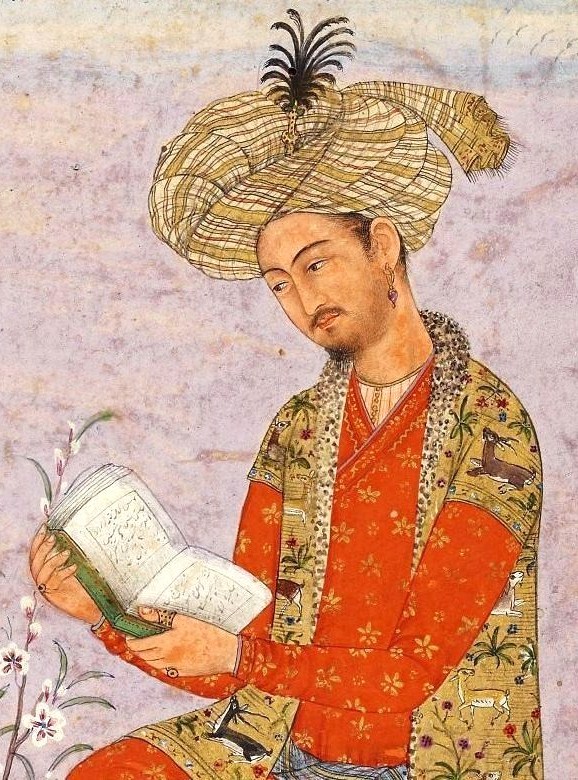
What decided it. Jammed together, the Afghans could move neither forward nor back, and then the guns opened fire. About 20,000 Afghans died, including Ibrahim Lodi. Babur himself said it was not his artillery but his tactics and his mounted archers that won the day.
Only the first step. Panipat formally founded Mughal rule, but it was the first of a series of battles. Babur still had to face Rana Sanga, the Afghan chiefs around Delhi and Agra, the eastern Afghans, and unrest within his own nobility.
Khanwa, Chanderi and Ghagra: making the victory stick
Why Sanga fought. Babur accused Rana Sanga of breaking a promise to join him against Ibrahim Lodi. Whoever asked whom, Sanga clearly expected Babur to loot and go home, leaving Rajputana, perhaps even Hindustan, to him. Babur's decision to stay ended that hope, and Babur knew he could not hold India until Sanga's power was broken.
A mixed confederacy. Sanga now built an alliance that included Afghan nobles. Hasan Khan Mewati played a key role in forming it, and Mahmud Khan Lodi, Ibrahim's brother, claimed the throne of Delhi. Afghan chiefs seized towns in the Doab, and a Mughal advance party was beaten at Bayana.
Lifting a beaten army. Babur's soldiers were so shaken that, according to later chroniclers, a council of war proposed retreating to Punjab. Babur turned the mood with a fiery speech that appealed to his men's religious sentiments. He then dug in at Khanwa, near Sikri.
Better engineering. Once again he used the Ottoman layout, but this time his carts were joined by iron chains, and his guns sat on wheeled wooden tripods that could be moved forward and back. Ustad Mustafa and Ustad Ali spent three weeks preparing the position. Sanga's long delay gave Babur exactly the time he needed.
The result. On 17 March 1527 Babur's artillery, mobile cavalry and discipline won the day. Sanga was badly wounded and carried away, Hasan Khan Mewati was killed, and almost every Rajput contingent lost its commander. Many historians see Khanwa, not Panipat, as the real turning point.
Finishing the job. In 1528 Babur stormed Chanderi, held by Medini Rai, which ended organised resistance in Rajputana. In the east, Mahmud Lodi rallied the Afghans, and Nusrat Shah of Bengal secretly helped them. At the Ghagra in 1529 Babur crushed this coalition, and Nusrat Shah had to hand over many Afghan rebels.
A short reign. Babur died on 29 December 1530, before he could organise his new lands. The Afghans and Rajputs were weakened, not finished. But Panipat and Khanwa had destroyed the old balance of power and opened the way to an all-India empire.
Humayun's troubled start
A weaker hand. Humayun did not command the respect his father had. The Chaghatai nobles were cool towards him, the Indian nobles who had joined Babur deserted, and relatives with Timurid blood were seen as possible rivals. One senior noble even plotted to put someone else on the throne.
Dividing the empire. Following Timurid custom, Humayun shared out the empire. Hindal got Mewat, Askari got Sambhal, and Kamran got Punjab, Kabul and Qandahar. This left Humayun with few resources and created two centres of power, Humayun at Agra and Kamran at Lahore.
Bahadur Shah of Gujarat. In the west, Bahadur Shah of Gujarat at first promised friendship. But he took Malwa in 1531, made alliances with Humayun's enemies, sheltered the rebel Muhammad Zaman Mirza, and in 1534 attacked Chittor. Malwa mattered to Gujarat as a grain store, a buffer and the route to its ports.
A campaign without a finish. Humayun moved slowly while Bahadur Shah besieged Chittor, but then cut him off at Mandu in 1535. Bahadur Shah fled to Diu, and the Mughals chased him without trying hard to capture him. When rebellions broke out near Agra, Humayun rushed back, leaving Askari in charge.
Lost again. Mughal troops had looted and killed local people, so the population welcomed Bahadur Shah's return. Gujarat and Malwa were lost. Bahadur Shah was killed by the Portuguese at Diu on 17 February 1537, and the leaderless Afghans of the west turned to Sher Khan.
Sher Khan outwits Humayun
Rising in the east. While Humayun was busy in Gujarat, Sher Khan quietly built his power in Bihar. He beat back two Bengal invasions, and in 1535 defeated the Bengal army at Surajgarh, forcing the Sultan to supply elephants and money. Afghans who had once deserted him now flocked to his banner.
A costly six months. When Sher Khan attacked Bengal again in 1537, Humayun chose first to capture Chunar fort, to protect his line of communication with Agra. The siege took six months. Meanwhile Sher Khan took Gaur, the capital of Bengal, in April 1538, and many historians call the Chunar delay the mistake that cost Humayun his empire.
The Bengal trap. Sher Khan then withdrew, and Humayun entered Bengal in September 1538 without a fight. He stayed four months settling affairs there. Sher Khan used that time to cut the roads to Agra, and Humayun's brother Hindal, sent to collect supplies, declared himself sovereign.
Chausa, 1539. Hurrying back, Humayun camped at Chausa on the Karmnasa river. Sher Khan offered a truce, but Humayun needlessly crossed the river and exposed himself. Knowing the Mughals were short of food and transport, Sher Khan struck while pretending to keep the truce, and Humayun barely escaped.
Kannauj, 1540. Sher Khan now proclaimed himself king as Sher Shah. The final clash came at Kannauj on the Ganga in 1540, and Humayun was badly defeated. The way was open for the second Afghan empire in India.
Why Humayun lost. Historians list several reasons. He faced hostile brothers, whom he often treated too kindly, and he reacted slowly when speed was needed. He was dragged into Bengal politics, he lacked money and supplies for continuous war, and above all he faced a rival of greater experience, organising skill and political judgment.
Sher Shah's five years
Holding the new empire. Sher Shah ruled only from 1540 to 1545, and he spent much of it at war. He fought the Ghakkars of the north-west frontier without much success, then removed the Bengal governor Khizr Khan in 1541. He took Malwa in 1542, and Raisen and Multan in 1543.
Rajputana. Maldeo of Marwar had built a large state, so Sher Shah marched against him and in 1544 occupied Ajmer, Pali and Mount Abu. The keys of Chittor were handed over without a fight. Almost all of Rajputana came under his control.
A sudden end. While besieging the fort of Kalinjar, Sher Shah was badly wounded in an explosion and died on 22 May 1545. In five years he had brought nearly all of north India under one administration. That is why his reforms matter more than his battles.
Land revenue. Sher Shah had the sown land measured every year and drew up a schedule of crop rates, called rai, with high, medium and low yields for each crop. The tax was fixed at one-third of the average produce, taken in kind or turned into cash at current prices, with concessions for crop failure. This schedule was the forerunner of Akbar's revenue reforms.
Money and roads. The coin called the rupiya is first mentioned in Sher Shah's time. He built great roads with rest houses (sarais): one from his fort in Punjab to Sonargaon near the Bay of Bengal, others from Agra to Burhanpur, from Agra to Jodhpur and Chittor, and from Lahore to Multan. His historian counts about 1,700 sarais, with rooms for both Hindus and Muslims.
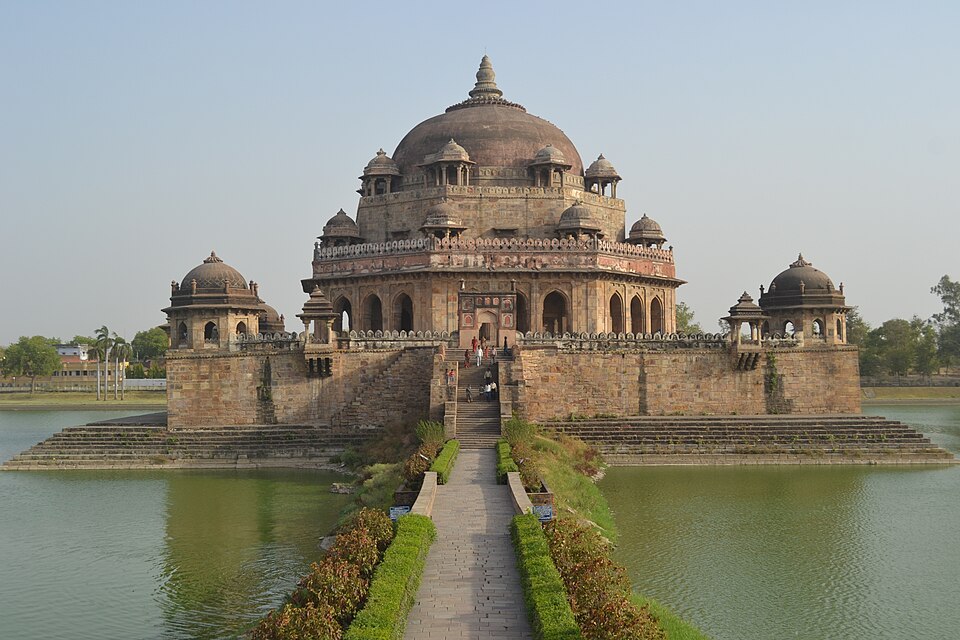
Why roads mattered. The sarais became commercial centres, and the roads helped tie the economy of Bengal to the rest of north India. They also let soldiers, officials and news move fast. A ruler who could move quickly could govern a large empire.
Army and loyalty. Sher Shah's army drew on Afghans, Rajputs and zamindars, with the peasant soldier as its base. Careful recruitment, branding of horses, regular pay and personal loyalty were its pillars. His main contemporary history, the Tarikh-i-Sher Shahi of Abbas Khan Sarwani, was written in Akbar's reign.
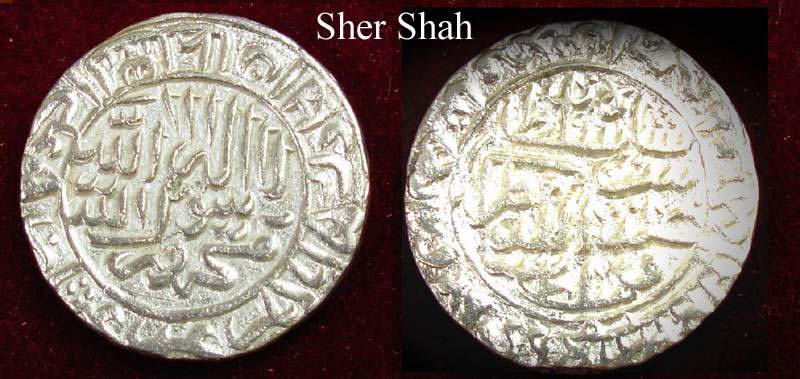
After Sher Shah. His son Islam Shah (1545-53) kept the empire intact but alienated many Afghans, especially the Niyazis. After his death Mubariz Khan murdered Islam Shah's young son and took the title Adil Shah. Revolts broke the Sur empire into five parts, and this gave Humayun his chance.
Quick revision
- 1526 map: Lodis weak; Rana Sanga (Mewar) strongest in Rajputana; Gujarat, Malwa; Nusrat Shah in Bengal; Vijayanagara, Bahmani.
- Babur: Farghana 1494 at 12; Samarqand 1497, 1500, 1511; Kabul 1504; invited by Daulat Khan Lodi and Rana Sanga.
- Raids: Bhira 1519-20, Sialkot 1520, Lahore 1524. Panipat 1526: ~12,000 vs ~1,00,000; Rumi method; tactics and mounted archers; Ibrahim killed.
- Khanwa, 17 March 1527: Sanga + Hasan Khan Mewati + Mahmud Lodi; chained carts; Ustad Mustafa, Ustad Ali.
- Chanderi 1528 (Medini Rai); Ghagra 1529 (Nusrat Shah + Afghans); Babur died 29 Dec 1530.
- Humayun's division: Hindal Mewat, Askari Sambhal, Kamran Punjab, Kabul, Qandahar.
- Bahadur Shah: Malwa 1531, Chittor 1534; Humayun at Mandu 1535; Bahadur killed by Portuguese 17 Feb 1537.
- Sher Khan: Surajgarh 1535; Chunar siege (6 months); Gaur April 1538; Chausa 1539 (Karmnasa); Kannauj 1540.
- Sher Shah 1540-45: Bengal 1541, Malwa 1542, Raisen and Multan 1543, Ajmer and Chittor 1544; died at Kalinjar, 22 May 1545.
- Reforms: rai, one-third of produce, cash or kind; rupiya; roads Punjab-Sonargaon, Agra-Burhanpur, Agra-Jodhpur-Chittor, Lahore-Multan; ~1,700 sarais; branding of horses.
- Islam Shah 1545-53; empire splits into five. Humayun: Persia 1544 (Shah Tahmasp), Kabul 1545, Delhi 1555, died 26 Jan 1556.