

BPSC LDC · Module 10 · basic depth · 14 min
Why nationalism grew
What BPSC LDC asks from this chapter
Syllabus lines this chapter covers:
- Paper 2: General Knowledge (General Studies, General Science and Mathematics, Mental Ability) · India and neighbouring countries: history of neighbouring countries, history of India, culture
- Paper 2: General Knowledge (General Studies, General Science and Mathematics, Mental Ability) · Independence movement and national movement
BPSC LDC questions from this module are being sorted into our bank.
Cut to basic depth for BPSC LDC. 8 deeper paragraphs are in the full chapter.
Start from zero: what makes people feel they are one nation?
Think of a cricket match between India and another country. A fan in Kerala and a fan in Punjab may speak different languages and eat different food, yet both cheer for the same team. That shared feeling of belonging to one country is the seed of nationalism.
This feeling is not as old as we often assume. As an idea, nationalism is only about two hundred years old, and it first took shape in modern Europe. Before the nineteenth century, people in India were loyal to their king, their region, their caste or their faith, and there was patriotism among the Marathas or the Rajputs. But a feeling that all Indians formed one nation, with common interests against a foreign ruler, had not yet taken shape.
Even the great Revolt of 1857 did not unite all of India. So how did a feeling of one nation grow within the next few decades? The surprising answer is that British rule itself, by uniting India under one government and by exploiting it, pushed Indians to think and act together.
This chapter traces why a feeling of one nation grew after 1858: the unity of British rule, the economic critique, reform and cultural pride, and the press. Keep one question in mind as you read. Was Indian nationalism created by British rule, or was it created by Indians in reaction to British rule?
The roots of nationalism at a glance
This table lists the main forces that made Indians feel like one nation. Each one is explained in the sections that follow.
| Force | Example | How it helped nationalism |
|---|---|---|
| One rule, one law | Common administration; railways after 1853, telegraph | Distant Indians met, travelled and shared grievances. |
| Western education | Macaulay's plan for a loyal class | Indians read about liberty and democracy and used English as a common language. |
| Economic exploitation | Naoroji's 'Poverty of India' (1876); the drain | Broke the myth of a kind empire. |
| Reform and cultural pride | Reform movements; pride in India's past | Gave Indians self-respect against British claims. |
| Press and literature | 'Vande Mataram' (1875); 169 Indian-language papers by 1877 | Spread national ideas beyond the cities. |
| Racial arrogance and annexations | Annexation of Awadh (1856); bias in the courts | Insult and insecurity drew Indians together. |
Notice that several of these forces were set up by the British for their own ends. That irony, rule built for control ending up teaching Indians to unite, runs through this chapter.
Why nationalism grew: British rule unites India
One government, one set of laws. After 1858 India was ruled from one centre, by one government, under laws that applied across British India. A lawyer in Madras and a lawyer in Lahore now argued under similar codes in similar courts. This political and administrative unity, created by the British for their own convenience, helped Indians to see their problems as common problems.
Why does unity of rule create unity of feeling? When the same tax, the same law or the same insult falls on people everywhere, they begin to compare notes. A grievance felt in Bengal is understood in Bombay because the cause is the same. Common rule gave Indians a common target.
A new educated class. English education produced a class of lawyers, teachers, doctors and journalists who read about liberty and representative government in Europe. They could see that the rights praised in Britain were denied in India. This contrast between British ideals and British practice in India was a powerful spur.
Reform and self-respect. The reform movements of the nineteenth century, studied in the chapter on Rammohan Roy and the Bengal renaissance, also fed nationalism. Reformers attacked sati and caste so that Indian society could stand on its own feet. At the same time a cultural pride grew, and men like Keshub Chandra Sen and Ishwar Chandra Vidyasagar refused to give up Indian dress when they were expected to wear European clothes.
Patriotism was older, nationalism was new. The Marathas and the Rajputs had fought bravely for their lands, but their loyalty was to a region or a ruler. What was new in the late nineteenth century was the idea of a common nationality for all Indians, joined in opposition to foreign rule. That is why historians describe Indian nationalism as a product of the colonial encounter.
Why didn't discontent turn into nationalism at once? Grievances existed from the early days of Company rule, yet for decades they did not grow into a national movement. The country was vast, communications were poor, most people were not educated, and there was no common language. Grievances also differed from region to region, so protest broke out as scattered local revolts against an officer, a zamindar or a new rule.
Rails, wires and print. The British changed that, though not on purpose. Railway building began after 1853 mainly to carry goods to the ports, but passengers soon used the trains too, and people from distant places began to meet. Post and telegraph linked all the major towns, and the printing press made it cheap to spread news and ideas.
An education with unintended lessons. Western education was meant to produce loyal clerks; Macaulay wanted 'a class of persons, Indians in blood and colour, but English in taste, in opinions, in morals, and in intellect'. Yet the same books taught liberty, equality and nationalism, and Indians read about the unification of Germany and Italy and about writers such as Mill, Rousseau and Mazzini.
The system also stayed narrow, for even in 1921 about 92 per cent of Indians could not read. Indians who studied in England came home to find that the rights taken for granted there were denied to them in India.
Fear among the princes. The British kept annexing states even when they were not at war with them: Sind in 1843, Punjab in 1849, Rangoon and Pegu in 1852 and Awadh in 1856, along with Jhansi, Satara and Nagpur. Indian rulers grew fearful of what the British would do next.
Pride in the past. To justify their rule, the British painted the eighteenth century as a time of stagnation and claimed that Indians had achieved nothing in science and could not govern themselves. Educated Indians answered by bringing to light India's achievements in art, architecture, literature, philosophy and science. This search into history fed both reform and national pride.
The sting of race. The British attitude of racial superiority also pushed Indians together. Discrimination ran through social life and even the courts.
In 1864 G.O. Trevelyan admitted that in court 'the testimony of a single one of our countrymen has more weight ... than that of any number of Hindus'.
The economic critique: the drain of wealth
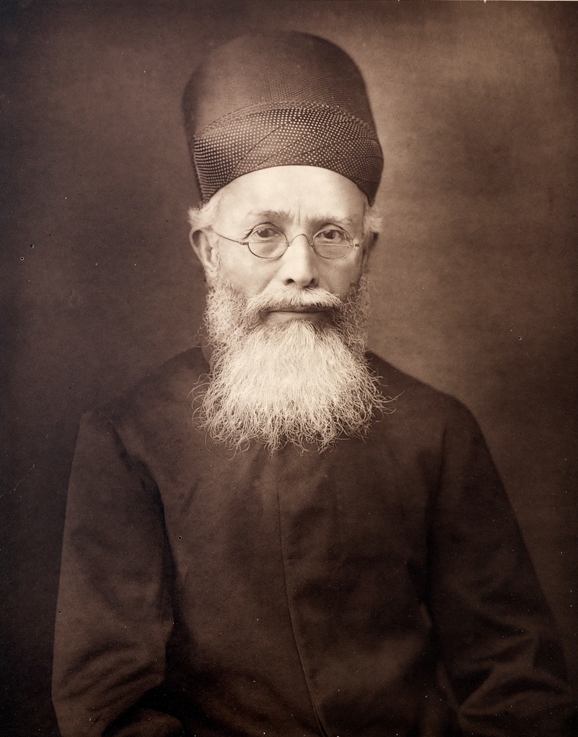
What was the complaint? Many Indians had first welcomed British rule as a bringer of order and progress. In the second half of the nineteenth century, a group of thinkers asked a hard question: if British rule was good for India, why was India growing poorer? Dadabhai Naoroji, Mahadev Govind Ranade and Romesh Chunder Dutt led this enquiry, and Gokhale, Tilak and G.V. Joshi carried it forward.
Naoroji and numbers. Dadabhai Naoroji (1825–1917) is remembered as the man who brought statistics into politics. In 1876 he read a paper called 'Poverty of India', and in 1901 he published his famous book 'Poverty and Un-British Rule in India'. He argued that a large part of India's wealth flowed to Britain every year, including through the 'home charges' paid in London for the costs of governing India.
What is the 'drain'? Imagine a family that earns well but must send a large part of its income to a distant landlord, receiving nothing back. However hard it works, it cannot save or invest. By the nationalist leaders' own calculation, the drain from India equalled about half of the government's revenue and more than a third of the country's savings.
Why was this idea so powerful? The drain theory demolished the myth that British rule was benevolent. It showed that India's poverty was not an accident of nature but a result of how India was ruled. Once educated Indians accepted this, the demand for a greater share in government, and later for self-rule, followed naturally.
The implication for the movement. Economic nationalism gave the national movement its sharpest weapon. It also linked the concerns of the educated few with the poverty of peasants and artisans. Later mass movements built on this foundation, which is why the economic critique is often called the intellectual base of Indian nationalism.
Every class felt the pinch. The drain was not an abstract idea; it showed up in daily life. Peasants were squeezed by high revenue, by zamindars who charged more than they paid the state and by moneylenders, and indigo and cotton growers had to sell at prices dictated by the British.
By 1901 landless labourers made up about 20 per cent of the population, some 52.4 million people with their dependants. Artisans lost their market to British machine goods, and unlike in England no new factories appeared to absorb them, while Indian industrialists got none of the help that British capital received.
Words that stirred a nation: songs, books and the press
Vande Mataram. Bankim Chandra Chatterjee (1838–1894) wrote 'Vande Mataram', which was first published on 7 November 1875 in his journal Bangadarshan. In 1882 he included it in his novel Anandamath. The song pictured the motherland as a mother to be honoured, and it gave people an emotional image of the nation that no petition could give.
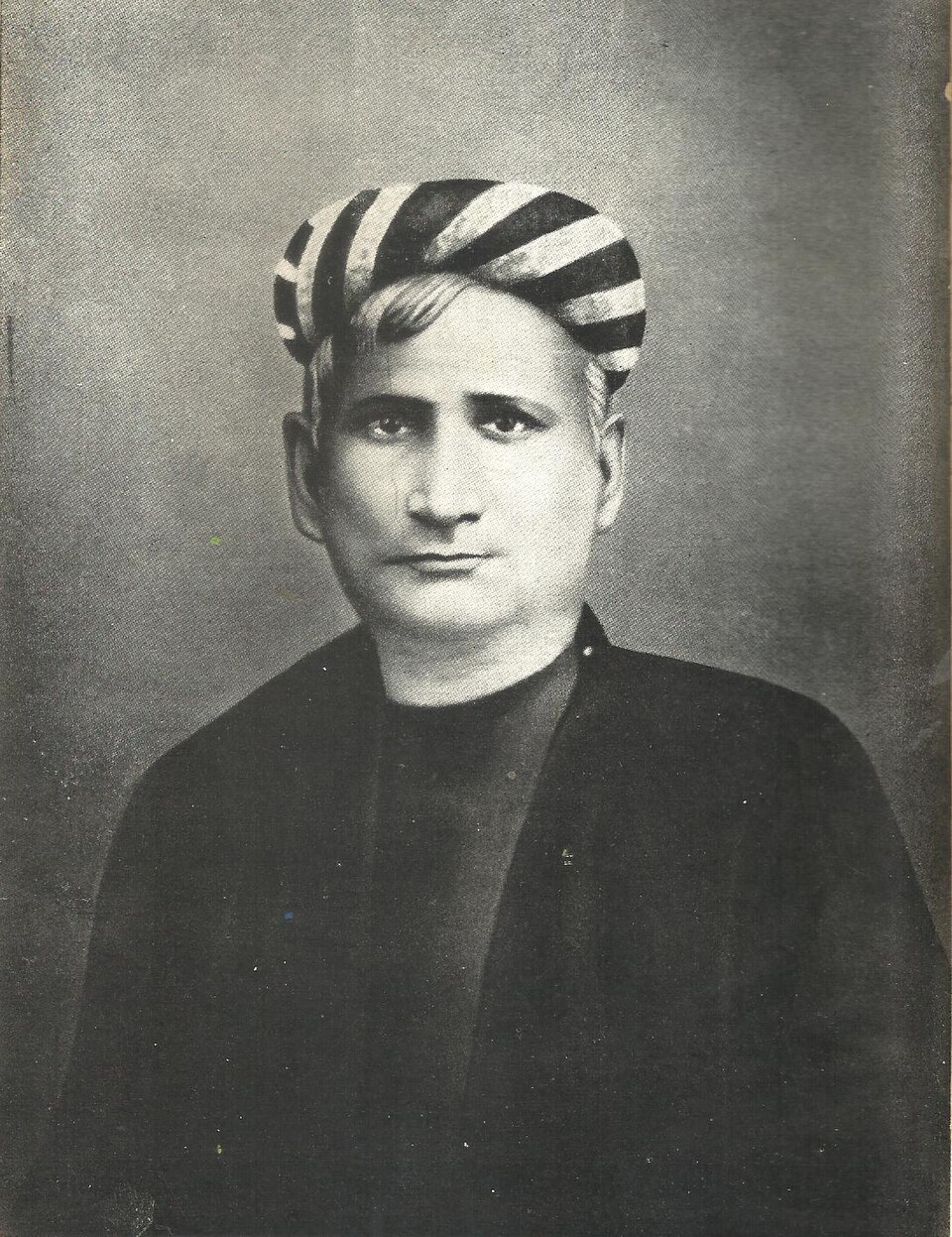
Why did a song matter so much? Arguments about revenue and budgets moved the educated, but songs moved everyone. 'Vande Mataram' became a rallying cry of the national movement, and the British later banned it. When a ruler bans a song, it shows how much power that song has gained.
The press. Newspapers in English and in Indian languages carried national ideas from city to city. They reported injustices, printed the speeches of leaders and let readers in one province learn about the struggles of another. Through the press, a reader in a small town could feel part of a larger national debate.
A call to the young. Swami Vivekananda's words, 'Arise, awake and stop not till the goal is reached', stirred the youth. His message of strength and self-confidence was spiritual, yet it gave many young Indians a sense of purpose that flowed into public life. In this way religion, literature and journalism together built a mood of national awakening.
A press in every region. By 1877 there were 169 newspapers in Indian languages. In Bengal there were the Hindu Patriot, Amrita Bazar Patrika, Bengalee and Sanjivani; in Bombay, Native Opinion, Mahratta and Kesari; in Madras, The Hindu; and in Punjab, The Tribune. Dinabandhu Mitra's play Nil Darpan showed the suffering of indigo cultivators, and writers such as Bharatendu Harishchandra, Subramania Bharati and Altaf Hussain Hali gave national feeling a voice in many languages.
Quick revision
- Nationalism is a modern idea (about 200 years old); Indian nationalism grew as a response to British rule; 1857 did not bring all-India unity.
- Causes: one administration and common laws, economic exploitation, reform movements, press and literature.
- Economic critique: Naoroji, Ranade, R.C. Dutt (later Gokhale, Tilak, G.V. Joshi); 'Poverty of India' 1876; 'Poverty and Un-British Rule in India' 1901; drain via home charges.
- 'Vande Mataram': first published 7 November 1875 in Bangadarshan; in Anandamath (1882).
- Delay factors: vast country, poor communications, illiteracy, no common language, varied grievances.
- Railways after 1853 (for goods), telegraph, press; Macaulay's aim; 92% illiterate in 1921; Trevelyan on courts (1864).
- Landless labourers about 20% of the population in 1901; 169 Indian-language papers by 1877; Nil Darpan (Dinabandhu Mitra).
- Early town protests: Banaras (1810–11) against a house tax and Bareilly (1816) against a police tax.