

BPSC LDC · Module 59 · basic depth · 17 min
The United Nations: structure, India's role and peacekeeping
What BPSC LDC asks from this chapter
Syllabus lines this chapter covers:
- Paper 2: General Knowledge (General Studies, General Science and Mathematics, Mental Ability) · Current affairs: scientific progress, national and international awards, Indian languages, books, scripts, capitals, currencies, sports and sportspersons, important events
BPSC LDC questions from this module are being sorted into our bank.
Cut to basic depth for BPSC LDC. 7 deeper paragraphs are in the full chapter.
Start from zero: a parliament for the world
Imagine a large housing society with many families. Disputes happen, so the residents set up a general meeting where every family has a vote, a small committee to deal with emergencies, and an office to run daily work. No family gives up its home, but all agree to follow some common rules.
The United Nations (UN) is something like that for the world's countries. It was created after the Second World War so that nations could talk, solve disputes and work together instead of going to war. Countries remain sovereign, but they sign the UN Charter, the founding treaty that sets out shared rules.
For India, the UN has always mattered. India helped create it, used it to fight colonialism and racism, and has sent more peacekeepers than almost any other country. At the same time, India argues that the UN must be reformed to reflect today's world.
This chapter explains how the UN is built, how India shaped it, India's record in the Security Council and in peacekeeping, and why India calls for reform.
Why it matters. Questions on the UN appear in almost every exam, from the names of the organs to India's peacekeeping record, so a clear map of the system is essential.
How the UN is built
Birth of the UN. Representatives of many nations met in San Francisco from 25 April to 26 June 1945 to draw up the Charter. The UN officially came into existence on 24 October 1945, after the Charter was ratified by China, France, the Soviet Union, the United Kingdom, the United States and a majority of other signatories. Today it has 193 member states.
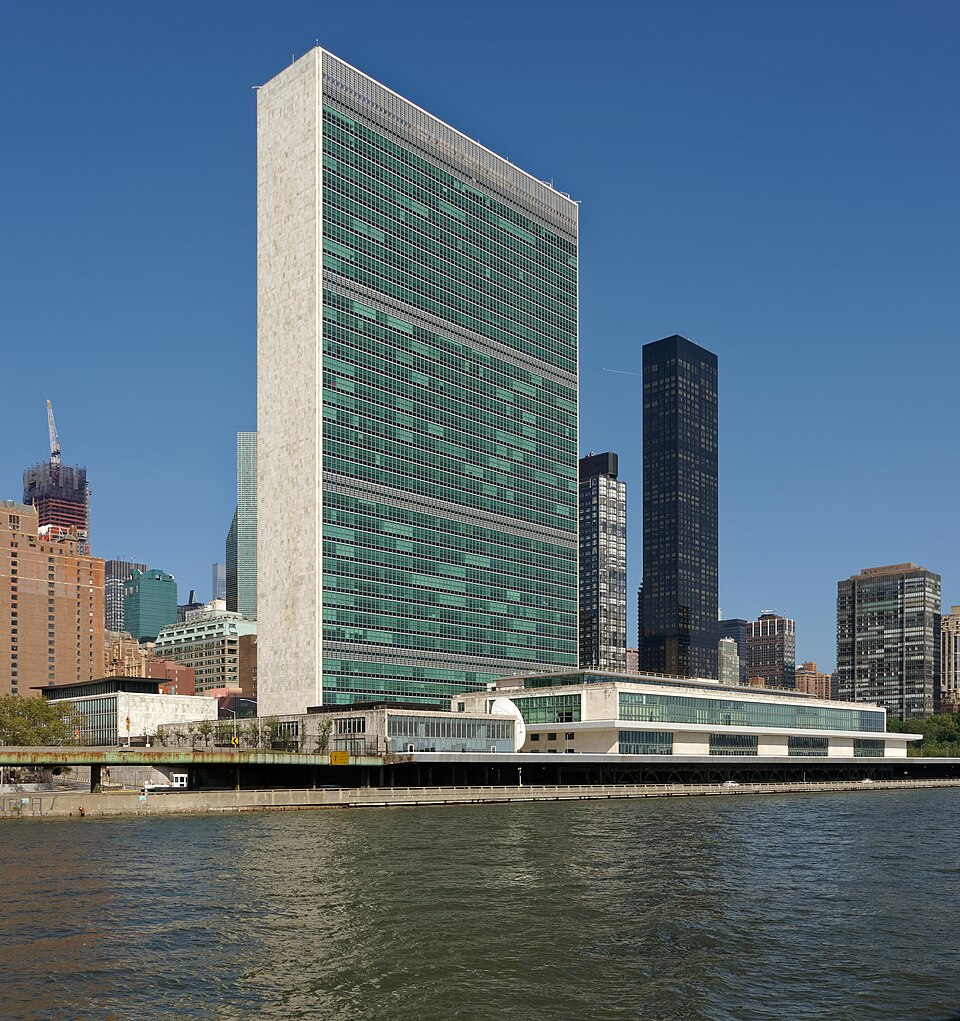
Purposes and principles. The Charter's first purpose is to maintain international peace and security. It also seeks friendly relations based on equal rights and self-determination, and cooperation on economic, social and humanitarian problems. Its principles include the sovereign equality of members, peaceful settlement of disputes and no threat or use of force against other states.
Six principal organs. Article 7 sets up six principal organs: the General Assembly, the Security Council, the Economic and Social Council (ECOSOC), the Trusteeship Council, the International Court of Justice and the Secretariat. Each has a distinct job, much like the parts of a government.
The General Assembly. All members sit in the General Assembly, and each has one vote. Decisions on important questions need a two-thirds majority of members present and voting. It is the UN's most democratic body, where small and large states speak as equals.
The Security Council. Members give the Security Council primary responsibility for international peace and security, and they agree to carry out its decisions (Article 25). It has 15 members: five permanent and ten elected for two years. A decision on substantive matters needs nine votes, including the concurring votes of all permanent members, which is the basis of the veto.
Two tools for peace. Chapter VI deals with the pacific settlement of disputes, through negotiation, enquiry, mediation, conciliation, arbitration and judicial settlement. Chapter VII deals with action against threats to the peace, breaches of the peace and acts of aggression, which can include sanctions or force. ECOSOC, with 54 members, coordinates economic and social work, and the International Court of Justice is the UN's principal judicial organ.
Why it matters. The design gives every country a voice in the General Assembly but gives real power to the Security Council. This gap between equality and power lies at the heart of India's demand for reform.
The UN in the Cold War: vetoes, Uniting for Peace and the birth of peacekeeping
A Council frozen by vetoes. The founders hoped the great powers would work together, but the Cold War split them. The US and the Soviet Union used the veto again and again, so the Security Council could rarely act on wars of the period. It took strong action mainly in Korea in 1950 and in the Iraq-Kuwait crisis of 1990-91.
Uniting for Peace. To get around the deadlock, the General Assembly passed the 'Uniting for Peace' resolution in 1950. When a veto paralyses the Council, the Assembly can meet in an emergency session at short notice and recommend collective action. It was used in crises such as Suez (1956), Hungary (1956) and the Congo.
Peacekeeping is born. During the Suez crisis of 1956, the Assembly created something the Charter never mentioned: a peacekeeping force. It did not fight to enforce peace. It stood on the ceasefire line as a buffer, with the consent of the parties, and fired only in self-defence. A similar force was later sent to the Congo (1960-64), and India served in both.
Who pays? In the 1960s France and the Soviet Union refused to pay for the Suez and Congo forces, arguing that only the Security Council could create them. The International Court of Justice then advised that peacekeeping costs are expenses of the organisation that all members must share. From the 1980s, the United States withheld part of its dues, pushing the UN into a new financial crisis.
What the UN got right. The UN helped many colonies win independence, set global human rights standards and codified much of international law. In 1980, the WHO declared smallpox eradicated. UN peacekeeping forces won the Nobel Peace Prize in 1988, and the refugee agency UNHCR won it in 1954 and 1981.
Why it matters. This history explains why India values the General Assembly, where every nation has one vote, and why it treats peacekeeping as a core contribution. It also shows that the veto problem India criticises today is as old as the UN itself.
India as a founder and a voice for the oppressed
A founding member. India was among the select countries that signed the Declaration by United Nations in Washington on 1 January 1942, during the war. It then took part in the San Francisco conference in 1945 and became a founding member of the UN, even before it gained independence in 1947.
Against colonialism. India co-sponsored the landmark 1960 Declaration on granting independence to colonial countries and peoples. It was also the first chair of the UN's decolonisation committee, known as the Committee of 24. India's own freedom struggle made it a natural voice for peoples still under colonial rule.
Against racism. India was the first country to raise the issue of apartheid at the UN, in 1946. Its stand against racial discrimination built lasting goodwill in Africa.
Shaping human rights. Hansa Mehta, India's delegate to the UN Human Rights Commission in 1947-48, is credited with changing the words 'all men' to 'all human beings' in the first article of the Universal Declaration of Human Rights. Lakshmi Menon argued for the equal rights of men and women in 1948.
Indians in leadership. Vijaya Lakshmi Pandit became the first woman President of the General Assembly in 1953. Arcot Ramasamy Mudaliar, India's delegate at San Francisco, was the first President of ECOSOC in 1946. India is also a founding member of the Non-Aligned Movement and the Group of 77 of developing countries.
Why it matters. India's early record shows that it saw the UN as a tool for justice, not just for great-power balance. This record gives weight to its claim today to speak for the Global South.
India in the Security Council
Eight terms. India has been elected a non-permanent member of the Security Council eight times: 1950-51, 1967-68, 1972-73, 1977-78, 1984-85, 1991-92, 2011-12 and 2021-22. Each term lasts two years, and members are elected by the General Assembly.
The 2021-22 term. India's most recent term was guided by NORMS, a New Orientation for a Reformed Multilateral System, and by five values: Samman (respect), Samvad (dialogue), Sahyog (cooperation), Shanti (peace) and Samriddhi (prosperity). India used the term to push for reform and a stronger fight against terrorism.
Two presidencies. India held the Council's presidency in August 2021, when the Prime Minister chaired an open debate on maritime security, and the Council adopted a presidential statement. India held the presidency again in December 2022, focusing on reformed multilateralism and counter-terrorism.
Leading on terrorism. As chair of the Council's Counter-Terrorism Committee, India hosted a special meeting in Mumbai and Delhi in October 2022. It adopted the Delhi Declaration on countering the use of new and emerging technologies for terrorist purposes.
An early lesson. India's first major experience of the Council came over Kashmir. On 1 January 1948, India made a reference to the UN under Article 35 of the Charter, asking it to end Pakistan's assistance to the invaders. This early experience is one reason India prefers to settle its disputes with neighbours bilaterally.
Why it matters. India's terms show both its ability to shape the agenda and the limits of being an elected member. Elected members serve only two years and have no veto, which is why India seeks a permanent seat.
Blue helmets: India in UN peacekeeping
What peacekeeping is. UN peacekeeping sends soldiers, police and civilians, known as blue helmets, to help countries move from conflict to peace. They monitor ceasefires, protect civilians and support elections.
A record few can match. India has contributed over 290,000 peacekeepers to more than 50 UN missions since the 1950s. Its first role was in Korea (1950-54), where Indian units provided medical cover and India chaired the Neutral Nations Repatriation Commission. As of May 2024, over 5,000 Indian troops served in nine of eleven active missions, including in Lebanon, the Golan Heights, the Democratic Republic of Congo, South Sudan and Abyei.
The cost of service. Nearly 180 Indian peacekeepers have made the ultimate sacrifice while serving under the UN flag. Indian personnel killed in Congo were honoured with the UN's Dag Hammarskjöld Medal in 2023.
Women in blue. In 2007, India deployed the first-ever all-female Formed Police Unit to Liberia. By February 2025, over 150 Indian women peacekeepers served in six missions. Major Radhika Sen was named the UN's Military Gender Advocate of the Year for 2023.
Training and development. The Centre for UN Peacekeeping, set up by the Indian Army in New Delhi, is India's focal point for training peacekeepers from India and abroad. Beyond peacekeeping, the India-UN Development Partnership Fund, set up in June 2017, has US$ 150 million committed and has supported 91 projects in 66 countries. India also pays its UN dues in full and on time.
Why it matters. Peacekeeping shows India's commitment to world peace through action, not just words. It also gives India a strong moral case: a country that bears such costs for UN missions deserves a say in how they are decided.
When, where and why: India and the UN at a glance
This table puts the key moments in order, from the UN's birth to India's recent roles.
| When | What | Why it matters |
|---|---|---|
| 1 Jan 1942 | India signs the Declaration by United Nations | Founding role |
| 24 Oct 1945 | UN comes into existence | Charter in force |
| 1946 | India raises apartheid at the UN | First country to do so |
| 1 Jan 1948 | Kashmir reference under Article 35 | Early lesson on the Council |
| 1953 | Vijaya Lakshmi Pandit GA President | First woman to lead the GA |
| 2007 | All-female police unit to Liberia | A world first |
| Jun 2017 | India-UN Development Partnership Fund | Help for Global South projects |
| Aug 2021 | PM chairs maritime security debate | India sets the Council agenda |
| Oct 2022 | Delhi Declaration on terror and technology | Counter-terrorism leadership |
Read across each row: a date, an event and the reason it matters. Together they show India as a founder, a peacekeeper and a reformer.
Quick revision
- The Charter was drawn up at San Francisco from 25 April to 26 June 1945; the UN came into existence on 24 October 1945 and has 193 members.
- The six principal organs are the General Assembly, Security Council, ECOSOC, Trusteeship Council, International Court of Justice and Secretariat.
- In the General Assembly each member has one vote; important questions need a two-thirds majority.
- The Security Council has primary responsibility for peace and security, and members agree to carry out its decisions.
- Chapter VI covers peaceful settlement; Chapter VII covers action against threats to peace; ECOSOC has 54 members.
- India signed the Declaration by United Nations in 1942, was a founding member and first raised apartheid at the UN in 1946.
- Hansa Mehta changed 'all men' to 'all human beings' in the UDHR; Vijaya Lakshmi Pandit was the first woman GA President in 1953.
- India has served eight terms on the Security Council, the latest in 2021-22 under NORMS, and led the Delhi Declaration of 2022.
- India has sent over 290,000 peacekeepers to more than 50 missions; nearly 180 have died; it sent the first all-female police unit to Liberia in 2007.
- The India-UN Development Partnership Fund (2017) has supported 91 projects in 66 countries.