

BPSC Stenographer in BPSC · Module 44 · basic depth · 7 min
The Union Budget: where the government's money comes from and where it goes
What BPSC Stenographer in BPSC asks from this chapter
Syllabus lines this chapter covers:
- Written: GS 50, General Science and Mathematics 50, Mental Ability 50 · Geography, economic affairs, Indian agriculture and natural resources, five-year plans
BPSC Stenographer in BPSC questions from this module are being sorted into our bank.
Cut to basic depth for BPSC Stenographer in BPSC. 29 deeper paragraphs are in the full chapter.
Start from zero: a family's monthly budget
Think of the Verma family. Every month, Mr Verma earns a salary and Mrs Verma earns from tuition classes. They also receive a little rent from a room they let out. This is their income.
They spend on food, rent, school fees and electricity, and these expenses come back every month. This year they also want to buy a sewing machine that will earn money for years. For that, they may take a small loan.
So the family has two kinds of spending. Day-to-day spending keeps life going but leaves nothing lasting behind. Spending on assets, like the sewing machine, builds something that lasts. When income is not enough, the family borrows.
A government works the same way, only on a giant scale. Its yearly plan of income and spending is the budget. This chapter explains how India's Union Budget is organised, where the money comes from and where it goes.
The Constitution and the budget
The word "budget" does not appear in the Constitution. The Key to the Budget Documents explains that the core document, the Annual Financial Statement (AFS), is mandated under Article 112. The AFS shows the government's estimated receipts and spending for the coming year.
The Key also lists documents mandated by Articles 112, 113 and 110(1)(a). These are the Annual Financial Statement, the Demands for Grants, on which the Lok Sabha votes, and the Finance Bill, which carries the tax proposals.
The government's three accounts:
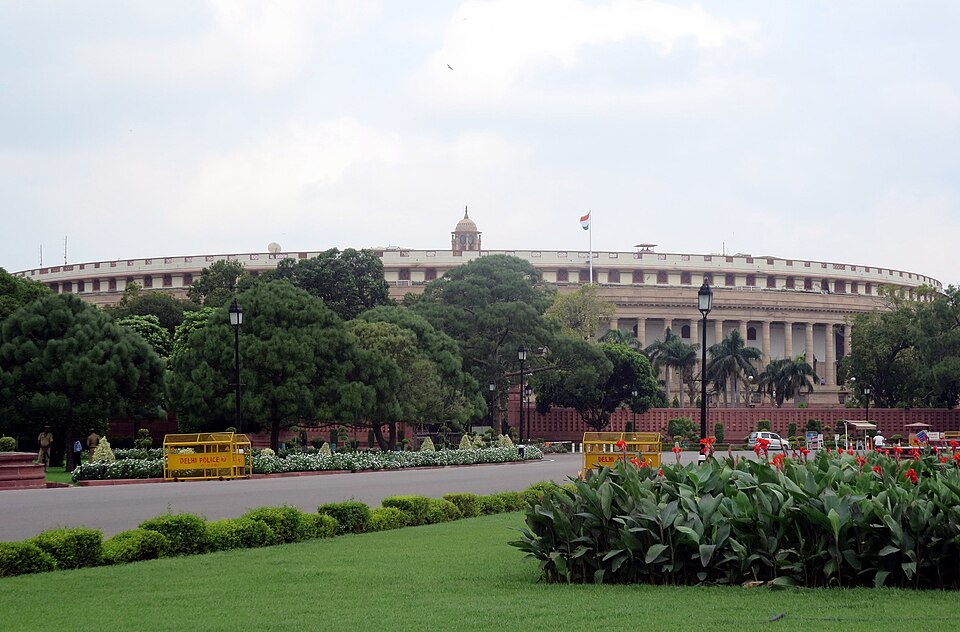
- Consolidated Fund of India (Article 266). Almost all government receipts, such as taxes and loans raised, go into this fund. No money can come out of it without Parliament's approval.
- Contingency Fund of India (Article 267). This is a reserve for urgent, unforeseen spending, which is later approved by Parliament. Its corpus is ₹30,000 crore.
- Public Account (Article 266(2)). This holds money that the government keeps on behalf of others, as a kind of banker, so it must be returned.
Why this matters: Parliament's control over the Consolidated Fund is the core of democratic control over money. The government can neither tax nor spend without the people's representatives agreeing.
Revenue and capital: two halves of the budget
The Key to the Budget Documents divides the budget into a revenue part and a capital part. Together they make the Union Budget.
Revenue budget. This has the government's revenue receipts, which are taxes and non-tax income such as dividends, fees and interest. It also has the spending met from them. Revenue expenditure is spending that broadly does not create assets, such as salaries, pensions, interest payments and subsidies.
Capital budget. This has capital receipts and payments. Capital receipts include borrowings, recovery of loans and money from selling government stakes (disinvestment). Capital expenditure creates assets, such as roads, railways and equipment, or gives loans to states and others.
A simple test:
| Item | Revenue or capital? | Why |
|---|---|---|
| Salary of a teacher | Revenue expenditure | No lasting asset |
| Building a highway | Capital expenditure | Creates an asset |
| Income tax collected | Revenue receipt | No liability to repay |
| Money borrowed through bonds | Capital receipt | Must be repaid |
Effective capital expenditure. Some central grants help states build assets, though the grants themselves are counted as revenue spending. Adding these grants-in-aid for creation of capital assets to capital expenditure gives effective capital expenditure. It is ₹17.15 lakh crore (4.4% of GDP) in 2026-27.
Latest numbers: Budget 2026-27
| Item (Budget Estimates 2026-27) | ₹ lakh crore | % of GDP |
|---|---|---|
| Total expenditure | 53.47 | 13.6 |
| Capital expenditure | 12.22 | 3.1 |
| Effective capital expenditure | 17.15 | 4.4 |
| Interest payments | 14.04 | – |
| Gross tax revenue | 44.04 | 11.2 |
| Non-debt receipts | about 36.5 | – |
How to read this. Total spending of ₹53.47 lakh crore is about ₹17 lakh crore more than non-debt receipts. That gap is the fiscal deficit, which the next chapter explains (see Deficits and debt: fiscal, revenue and primary deficit, and the FRBM Act).
Two signals in the numbers. Capital expenditure has risen from ₹10.96 lakh crore (Revised Estimates 2025-26) to ₹12.22 lakh crore, showing the push for infrastructure. Interest payments of ₹14.04 lakh crore are now larger than capital spending, which shows the cost of past borrowing.
Quick revision
- The Budget is formally the Annual Financial Statement under Article 112, the spending requests come as Demands for Grants under Article 113, and tax changes come in the Finance Bill under Article 110(1)(a).
- All government receipts and spending go through the Consolidated Fund (Article 266), while the Contingency Fund (Article 267) holds ₹30,000 crore for emergencies and the Public Account (Article 266(2)) holds money the government only keeps in trust.
- Revenue expenditure broadly creates no assets, while capital expenditure creates assets or gives loans.
- Capital receipts either create a liability or reduce assets, as with borrowing, loan recovery and disinvestment.
- Effective capital expenditure adds grants given to states for creating capital assets to the Centre's own capex.
- In the 2026-27 Budget Estimates, total spending is ₹53.47 lakh crore (13.6% of GDP), and capex is ₹12.22 lakh crore (3.1%).
- Effective capex in 2026-27 is ₹17.15 lakh crore (4.4%), while interest payments alone take ₹14.04 lakh crore.
- Of every rupee, 24 paise come from borrowing, 21 from income tax, 18 from corporation tax and 15 from GST and other taxes.
- On the spending side, 22 paise go to states' share of taxes, 20 to interest, 17 to central sector schemes and 11 to defence.
- After the Budget is presented, Department-related Standing Committees examine the Demands for Grants, the Lok Sabha alone votes on them, an Appropriation Bill follows, and the Finance Bill carries the tax changes, with a Vote on Account if time runs out.
- The Gender Budget Statement has been part of the Union Budget since 2005-06, and allocations shown in it rose from ₹14,378.68 crore (2005-06) to ₹90,624.76 crore (2016-17).
Common confusions and exam traps:
- Borrowing is a capital receipt, not revenue.
- Grants to states are revenue expenditure for the Centre, even when states use them to build assets.