

BPSC Stenographer in BPSC · Module 51 · basic depth · 11 min
Biogeochemical cycles: how nature recycles carbon, nitrogen, water and phosphorus
What BPSC Stenographer in BPSC asks from this chapter
Syllabus lines this chapter covers:
- Written: GS 50, General Science and Mathematics 50, Mental Ability 50 · General awareness of the environment around the candidate and its application to society, and everyday matters in their scientific aspect
BPSC Stenographer in BPSC questions from this module are being sorted into our bank.
Cut to basic depth for BPSC Stenographer in BPSC. 24 deeper paragraphs are in the full chapter.
Start from zero: the atoms in your body are very old
The carbon in your fingernail may once have been part of a dinosaur, a mango tree or the breath of a buffalo. That sounds strange, but it is simply how nature works. The Earth receives fresh energy from the Sun every day, yet it receives almost no fresh matter from space, so the same atoms have to be used again and again.
You have already seen that energy flows one way through an ecosystem and leaves as heat. Matter behaves differently. Carbon, nitrogen, water and phosphorus pass from air, water and rock into living things and then back again, in great loops that ecologists call biogeochemical cycles.
The name tells the story. "Bio" means life, "geo" means the Earth's rocks, soil, air and water, and "chemical" means the elements themselves. So a biogeochemical cycle is the journey of an element between living things and the non-living Earth.
These cycles are not just textbook diagrams. Climate change is a disturbed carbon cycle, a lake choked with algae is a disturbed nitrogen and phosphorus cycle, and a falling water table is a disturbed water cycle. Understanding the loops is the first step to understanding these problems.
How a nutrient cycle is built: reservoirs and fast loops
Living things need more than 40 elements. A few, such as carbon, hydrogen, oxygen and nitrogen, are needed in large amounts, while others are needed only in traces. The storage and movement of these elements through the parts of an ecosystem is called nutrient cycling, and through it the same nutrients are used again and again.
Two pools in every cycle. Every cycle has a large store where the element sits for a long time, called the reservoir pool. It also has a smaller part that moves quickly between living things and their surroundings, called the cycling pool. Think of a bank's vault and the cash counter: most money sits in the vault, but daily business runs through the counter.
Two kinds of cycles. In a gaseous cycle, the reservoir is the atmosphere or the oceans, and the element moves quickly around the world through the air. Carbon and nitrogen follow gaseous cycles. In a sedimentary cycle, the reservoir is the Earth's crust, and the element is released slowly as rocks weather; phosphorus is the classic example.
Why the type matters. A gas spreads across the planet within months, so a local action such as burning coal in one country affects the air everywhere. A sedimentary element moves slowly and stays local, so when soil loses its phosphorus, it can take a very long time for rocks to replace it. This is why fertilisers and careful soil management matter so much for farming.
The carbon cycle: the loop behind climate change
Carbon is the backbone of every living thing, from sugar to DNA. Its main gaseous form is carbon dioxide in the air. The carbon cycle is the story of how that gas enters life and comes back out.
Into life. Green plants on land and phytoplankton in the sea take in carbon dioxide during photosynthesis and turn it into sugars. Animals get their carbon by eating plants or other animals. In this way carbon from the air becomes leaves, wood, flesh and bone.
Back to the air. Carbon returns to the air in three main ways. Plants and animals release it when they breathe (respiration), decomposers release it when they break down dead matter (decomposition), and fire releases it when wood or fuel burns (combustion). Some carbon is buried for millions of years and becomes coal, oil and gas.
Forests as stores. Forests hold large amounts of carbon in their wood and soil. When a forest is cleared or burned, that store is released. When a forest grows, it pulls carbon out of the air, which is why forests are called carbon sinks.
What humans have changed. By burning coal, oil and gas, humans release carbon that was buried for millions of years, and by clearing forests they shrink the stores that absorb it. The extra carbon dioxide builds up in the air and traps heat, which drives global warming. You can study this link in the chapter on the greenhouse effect.
The nitrogen cycle: plenty in the air, scarce for life
Nitrogen is needed to build proteins and DNA. About four-fifths of the air is nitrogen gas, so it seems that life should never run short. Yet most plants and animals cannot use nitrogen gas directly, because its two atoms are held together very tightly. Nitrogen must first be "fixed", that is, turned into compounds that plants can absorb.
Three ways to fix nitrogen. Lightning provides enough energy to join nitrogen with oxygen, and rain carries the compounds to the soil. Industry fixes nitrogen to make chemical fertilisers. Most important of all, certain bacteria fix nitrogen, including Rhizobium, which lives in the root nodules of pulses such as gram, moong and soybean.
Steps in the soil. In nitrification, soil bacteria turn ammonia into nitrates, the form most plants absorb. In assimilation, plants take up these nitrates and build proteins, which pass to animals through food. When plants and animals die or excrete waste, decomposers turn their nitrogen back into ammonia; this is ammonification.
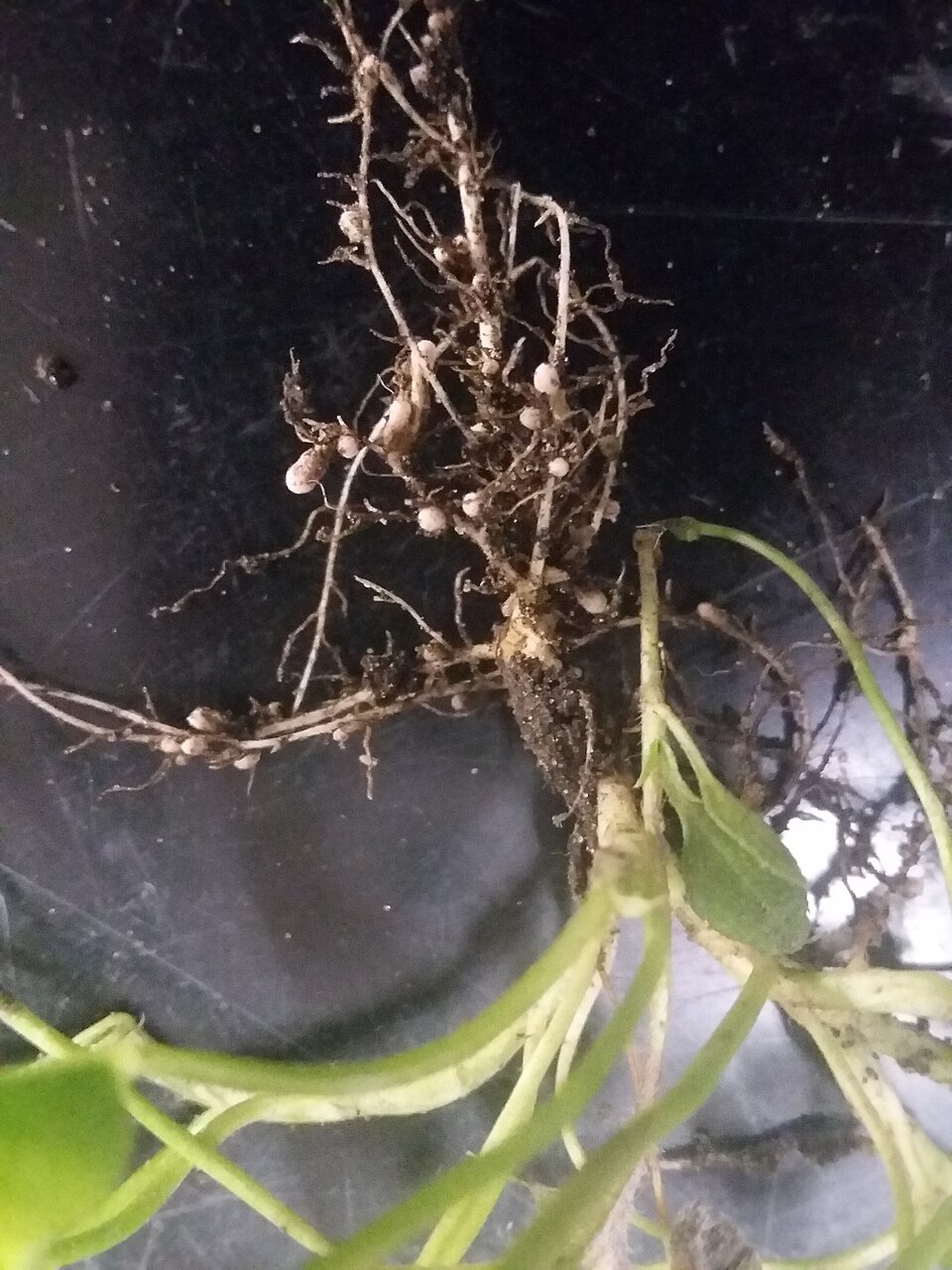
Back to the air. Finally, in denitrification, other bacteria turn nitrates back into nitrogen gas, which returns to the air. This closes the loop. Denitrification is common in waterlogged, oxygen-poor soils, such as paddy fields.
What humans have changed. Farmers grow pulses in rotation with cereals because their root nodules enrich the soil with nitrogen at no cost. Chemical fertilisers have greatly raised harvests, but when too much is applied, the extra nitrogen washes into rivers and lakes and feeds algae. Balancing fertiliser use is therefore both a farming and an environmental issue.
The water cycle: why fresh water is so precious
The water cycle is the one cycle you can watch with your own eyes. The Sun heats the sea, water evaporates, clouds form, rain falls, and rivers carry the water back to the sea. Two forces drive this whole cycle: solar energy, which lifts water into the air, and gravity, which brings it back down and makes it flow.
Where the water is. By one widely used estimate, about 96.5 per cent of all of Earth's water is salty and lies in the oceans. Of the small share that is fresh, about 69 per cent is locked up in ice caps and glaciers, and about 30 per cent is underground as groundwater. The rivers and lakes we depend on every day hold only a tiny fraction of all the water on the planet.
Why this matters for India. Because surface fresh water is so scarce, groundwater becomes the backbone of drinking water and irrigation. When we pump it out faster than rain can refill it, water tables fall, wells dry up and coastal aquifers turn salty. Melting glaciers, meanwhile, threaten the long-term flow of the Himalayan rivers.
The cycle and other cycles. Water also carries the other cycles along. It dissolves nutrients, carries them into the soil by leaching and washes them into rivers. So when the water cycle changes, through deforestation, paving of cities or climate change, nutrient cycles change too.
Quick revision
- Energy flows one way, while nutrients cycle, and living things need more than 40 elements.
- Each cycle has a large, slow reservoir pool and a small, fast cycling pool.
- Gaseous cycles (carbon, nitrogen) have reservoirs in the air or oceans, while sedimentary cycles (phosphorus) have reservoirs in the Earth's crust.
- Decomposition runs fragmentation → leaching → catabolism → humification → mineralisation, and it needs oxygen.
- Carbon leaves the air by photosynthesis and returns by respiration, decomposition and combustion.
- Nitrogen is fixed by lightning, industry and bacteria (Rhizobium in legumes), and denitrification returns it to the air.
- The water cycle runs on solar energy and gravity; about 96.5% of water is in the oceans, and most fresh water is in ice, then groundwater.
- Annual net primary production is about 170 billion tonnes, of which the oceans give only about 55 billion tonnes.
- Ecosystem services are the products of natural processes.