

BPSC Stenographer in BPSC · Module 52 · basic depth · 9 min
Water pollution: pollutants, BOD and COD, eutrophication, rivers and the sea
What BPSC Stenographer in BPSC asks from this chapter
Syllabus lines this chapter covers:
- Written: GS 50, General Science and Mathematics 50, Mental Ability 50 · General awareness of the environment around the candidate and its application to society, and everyday matters in their scientific aspect
BPSC Stenographer in BPSC questions from this module are being sorted into our bank.
Cut to basic depth for BPSC Stenographer in BPSC. 31 deeper paragraphs are in the full chapter.
Start from zero: why clean-looking water can be dirty
Water is called the universal solvent because it dissolves so many substances. That is what makes it so useful, and also so easy to pollute. Whatever we pour into drains, spray on fields or leave on the ground can end up in a river, a lake or the water under our feet.
Some pollution is easy to see, like foam, colour or floating garbage. But the most dangerous pollutants, such as germs, pesticides and heavy metals, are often invisible. A glass of water can look clear and still make a family sick.
In India, the stakes are very high. Millions of people drink from rivers, wells and handpumps, and water-borne diseases rise every monsoon. Rivers also carry deep cultural meaning, which is why cleaning the Ganga has become a national mission.
This chapter explains the types of water pollutants and the tests used to judge water quality. It then covers eutrophication and biomagnification, the state of India's rivers, groundwater, thermal pollution and the pollution of the seas.
Three kinds of water pollutants
Biological agents. Germs such as bacteria, viruses and protozoa come from human and animal waste, sewage, tanneries and slaughterhouses. They cause cholera, typhoid, dysentery, gastroenteritis and viral hepatitis. Mosquitoes that breed in stagnant water also spread malaria, dengue and filariasis.
Chemical agents. Inorganic chemicals include nitrates, phosphates, acids, salts and toxic heavy metals such as lead and mercury. Organic chemicals include oil, pesticides, dyes, plastics, solvents and detergents. Radioactive substances can enter from uranium processing, hospitals and laboratories.
Physical agents. Suspended solids from soil erosion, mining and construction make water muddy, clog waterways and fill reservoirs with silt. Fish struggle to breathe through their gills in such water. Heat from power plants is also a physical pollutant.
Why the type matters. Each type needs a different cure. Germs are killed by treatment and chlorination, but heavy metals and pesticides need removal at the source. Sediment is best tackled by protecting soil and forests upstream.
How water quality is tested
Dissolved oxygen (DO). Fish and other water life breathe oxygen dissolved in water. High DO means healthier water, while low DO signals organic pollution. When DO falls too low, fish die.
Biochemical oxygen demand (BOD). BOD is the amount of oxygen that microbes use to decompose organic matter, such as sewage, food waste and dead leaves. More organic waste means more bacteria, which use more oxygen, so BOD rises and DO falls. BOD is therefore the main measure of sewage pollution.
Chemical oxygen demand (COD). COD is the oxygen needed to break down organic and other compounds by chemical means. It captures pollutants that microbes cannot easily digest, such as many industrial chemicals. Water receiving factory effluent often shows high COD, and COD is usually higher than BOD for the same sample.
MPN and TDS. The most probable number (MPN) test estimates coliform bacteria, such as E. coli, which live in human intestines. Their presence shows that human waste has entered the water. Total dissolved solids (TDS) measures salts and minerals dissolved in water, and very high TDS makes water unfit to drink.
The bathing standard. India's pollution control board sets criteria for water meant for organised outdoor bathing. It should have BOD of 3 mg/l or less, DO of 5 mg/l or more, total coliform of 500 MPN per 100 ml or less and pH between 6.5 and 8.5. These numbers help judge whether a river ghat is safe for a holy dip.
Eutrophication and biomagnification
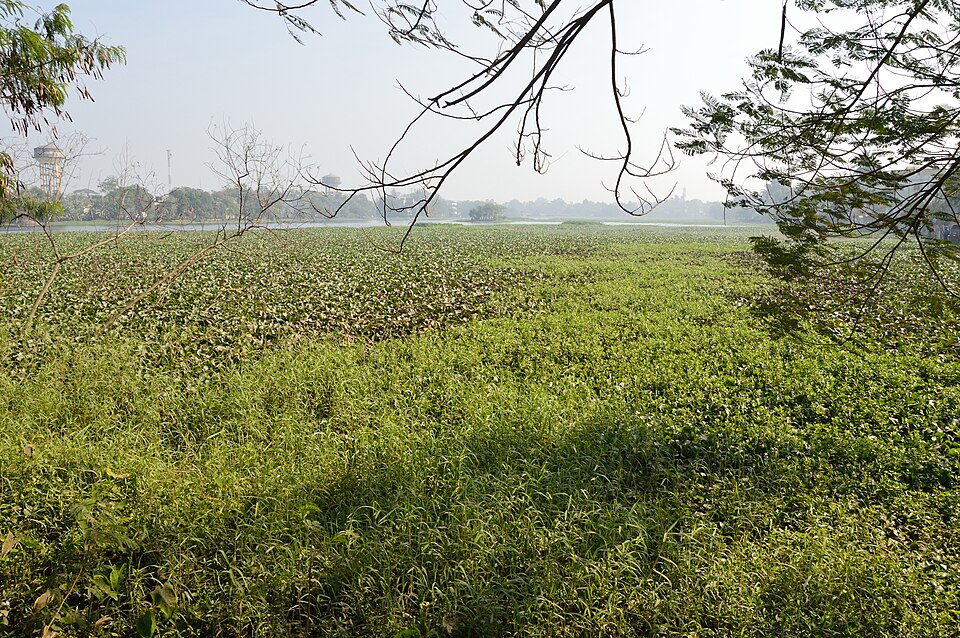
Too much food for a lake. Plants need nutrients like nitrogen and phosphorus to grow. When sewage, fertiliser runoff and phosphate detergents pour these into a lake or slow river, algae and water plants grow explosively. This over-enrichment is called eutrophication.
How the lake chokes. A thick algal bloom covers the surface and blocks sunlight from plants below. When the algae die, bacteria decompose them and use up the dissolved oxygen. Fish and other animals suffocate, and the water begins to smell.
Why it matters. Eutrophication is happening in many Indian lakes, especially those receiving city sewage. Water hyacinth spreading over a lake is a common sign. The cure is to stop nutrients at the source by treating sewage and using fertiliser carefully.
Poisons that build up. Some pollutants, such as DDT, mercury and other persistent chemicals, do not break down and are stored in body fat. Bioaccumulation is the build-up of such a pollutant in an organism from its surroundings. Biomagnification is the rise in its concentration at each step up the food chain, so top predators such as fish-eating birds carry the highest loads, as explained in the chapter on ecosystems and energy.
India's rivers and the Ganga mission
How dirty are the rivers? The pollution control board regularly monitors river water. Based on 2022 monitoring, it identified 311 polluted river stretches on 279 rivers in 30 States and UTs. A stretch is counted as polluted when its BOD exceeds 3 mg/l, the bathing limit.
Why rivers are polluted. The biggest single cause is untreated sewage from towns and cities, because sewage treatment capacity has lagged far behind urban growth. Industrial effluent, farm runoff, solid waste and low summer flows add to the problem. When a river has little water, it cannot dilute what is dumped into it.
Namami Gange. The Ganga basin is home to a very large share of India's people. On 13 May 2015, the Union Cabinet approved Namami Gange, an integrated Ganga conservation mission, with a budget of ₹20,000 crore for five years. Its work includes sewage treatment, industrial pollution control, river-front and ghat development, and public awareness.
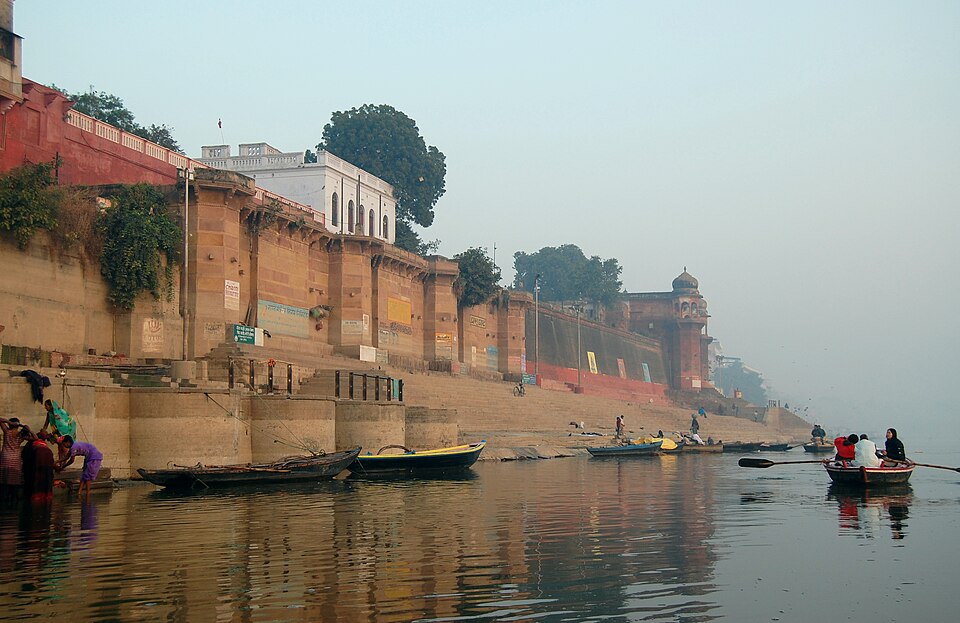
What experience teaches. Earlier efforts, such as the Ganga Action Plan, built treatment plants that often ran below capacity or were not connected to sewers. So the focus has shifted to running plants well, paying for results and keeping enough water in the river. Cleaning a river is a long effort that also needs towns along tributaries to treat their waste.
Quick revision
- Pollutants: biological (germs: cholera, typhoid, hepatitis), chemical (N, P, heavy metals, pesticides, detergents, oil, radioactive), physical (silt, heat).
- DO high = healthy; BOD = oxygen used by microbes, high BOD → low DO; COD = chemical oxidation, usually > BOD; MPN = coliforms (sewage); TDS = dissolved salts.
- CPCB bathing: BOD ≤ 3 mg/l, DO ≥ 5 mg/l, total coliform ≤ 500 MPN/100 ml, pH 6.5–8.5.
- Eutrophication: N + P → algal bloom → oxygen depletion. Biomagnification: up the food chain.
- 311 polluted stretches on 279 rivers, 30 States/UTs (2022 data; BOD > 3 mg/l).
- Namami Gange: approved 13 May 2015, ₹20,000 crore for 5 years.
- Groundwater: arsenic, fluoride mostly natural; nitrates from fertiliser/sewage; leaching from dumps.
- Thermal pollution lowers DO; oil spills destroy birds' insulation and buoyancy.