

BPSC Stenographer in BPSC · Module 2 · basic depth · 15 min
Jainism, the Ajivikas and other sects
What BPSC Stenographer in BPSC asks from this chapter
Syllabus lines this chapter covers:
- Written: GS 50, General Science and Mathematics 50, Mental Ability 50 · India and neighbouring countries: history of neighbouring countries, history of India, culture
BPSC Stenographer in BPSC questions from this module are being sorted into our bank.
Cut to basic depth for BPSC Stenographer in BPSC. 11 deeper paragraphs are in the full chapter.
Start from zero: the other answers of the age
In the chapter on Buddhism we saw how the Buddha answered the questions of the sixth century BC. But he was one voice in a crowded hall. Pali texts speak of 62 doctrinal views before him, and Jaina texts of 363 sects.
One of these traditions, older than the Buddha, was led in his time by Vardhamana Mahavira. Its followers called it the way of the Jina, the 'conqueror' of passions, and so it became Jainism. Like Buddhism, it rejected Vedic ritual and caste, but it chose a much stricter path of austerity and non-violence.
Other teachers gave very different answers. Some said everything is fixed by destiny, some said nothing survives death, and some said we can know nothing for certain. Knowing these voices helps you see what made Buddhism and Jainism distinct.
Why study this? Jainism shaped Indian ideas of ahimsa, vegetarianism, trade ethics and regional literature, and it still thrives today. Exams love its tirthankaras, vows, councils and sects, and Mains often asks you to compare it with Buddhism.
Jainism at a glance
| Theme | Key facts |
|---|---|
| Teachers | 24 tirthankaras; Parsvanatha (23rd), Mahavira (24th) |
| Mahavira | c. 540-468 BC; Jnatrika clan; born near Vaisali; died at Pava |
| Five vows | Ahimsa, non-stealing, not lying, non-possession, celibacy |
| Three jewels | Right faith, right knowledge, right conduct |
| Goal | Moksha: freeing the soul from karma |
| Canon | 14 purvas; 12 angas; Ardhamagadhi |
| Councils | Pataliputra (Sthulabhadra); Vallabhi (Devardhi Kshamasramana) |
| Sects | Digambara (sky-clad) and Svetambara (white-clad) |
One rule to remember. Wherever Buddhism takes a middle position, Jainism usually takes the stricter one. Austerity, non-violence and renunciation are all pushed further in Jainism, and this single idea answers many comparison questions.
Parsvanatha and Mahavira
Twenty-four ford-makers. Jaina tradition holds that twenty-four tirthankaras, 'makers of fords' across the river of rebirth, founded and revived the faith. In each age of the universe, twenty-four are born to renew it. The first twenty-two are of doubtful historicity, but the last two are confirmed even by Buddhist works.
Parsvanatha. The twenty-third tirthankara, Parsvanatha, is said to have been the son of King Asvasena of Varanasi and Queen Vama. He gave up the throne at thirty, became an ascetic and is said to have attained enlightenment after 84 days of penance. Historians think he may have lived in the eighth century BC, long before Mahavira.
A faith before Mahavira. Parsvanatha left many followers, who wore white garments. So some form of Jaina faith already existed before Mahavira. This is why Jainism is said to have a longer history than Buddhism, and why Mahavira is seen as a reformer rather than a founder.
Mahavira's birth. Vardhamana, the twenty-fourth tirthankara, was born around 540 BC at Kundagrama, a suburb of Vaisali in Bihar. His father Siddhartha was head of the Jnatrika clan, part of the Vajji confederacy, and his mother Trishala was a Licchavi princess. He was educated, married Yashoda and had a daughter.
Renunciation. At thirty, Vardhamana left home and became an ascetic. At first he wore a single garment, but after thirteen months he gave it up and wandered as a naked monk. For twelve years he practised severe austerities.
Supreme knowledge. In the thirteenth year of his asceticism, at the age of forty-two, he attained supreme knowledge, called kevala. From then on he was known as Mahavira, 'the great hero', and Jina, 'the conqueror'. He was also hailed as Nirgrantha, 'free from fetters', and the early sect was known by that name.
Thirty years of teaching. For the next thirty years he moved from place to place, preaching in Kosala, Magadha and further east, spending most time at Vaisali and Rajagriha. He wandered for eight months a year and spent the four rainy months in a town. He often visited the courts of Bimbisara and Ajatasatru, and taught in the popular language, Ardhamagadhi.
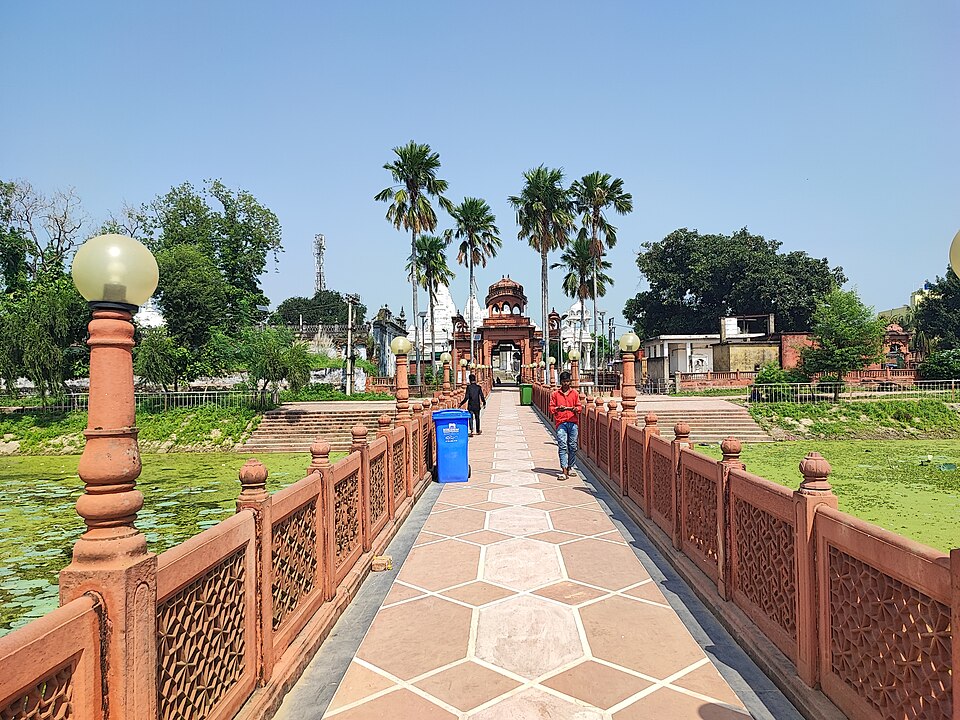
Death. Mahavira died at the age of seventy-two at Pava, around 468 BC. Note that Buddhist texts also know him, calling him Nataputta, the son of the Jnatras. Mahavira and the Buddha were contemporaries working in the same region.
What Mahavira taught
Five vows. The heart of Jaina conduct is five vows: non-violence (ahimsa), non-stealing, not lying, non-possession (aparigraha) and celibacy (brahmacharya). Parsvanatha had taught the first four. Mahavira added celibacy, a favourite exam fact.
Soul and matter. Mahavira taught that the universe is made of two basic things: jiva (living souls) and ajiva (non-living matter). Ajiva includes space, motion, rest, time and matter. The universe was not created by any supreme creator; it runs by an eternal law of decline and progress, in cycles.
Everything has a soul. For the Jainas, not only humans, animals and plants but even earth, fire and water have souls and can feel pain. This is why Jaina ahimsa is so strict. Harming any being, even unseen, binds karma to the soul.
How karma works. The soul is by nature bright, pure and conscious. Every action draws in fine karmic matter that sticks to the soul and weighs it down, causing rebirth. Liberation, moksha, comes by stopping new karma from entering and burning off what is already there.
The three jewels. The path to moksha is the triratna, the three jewels: right faith, right knowledge and right conduct. Do not confuse these with the Buddhist Four Noble Truths. Three jewels are Jaina; four truths and eight steps are Buddhist.
Severe austerity. Unlike the Buddha's Middle Path, Mahavira advocated severe asceticism, penance and fasting to burn off karma. Jainism held that monastic life was essential for full salvation. A householder could progress, but could not reach final liberation without renouncing everything.
Rules for monks. A monk had to give up all possessions. He had to pull out every hair of his head by his own hand. He could walk only during the day, taking care not to kill or injure any living being, and trained himself not to be moved by the senses.
Rules for lay people. Householders kept the five vows in a gentler form. They were told to feed cooked food to the needy every day. They were also advised not to take up agriculture, since ploughing destroys plants and insects.
Rejecting the old order. Like the Buddha, Mahavira rejected the authority of the Vedas, opposed Vedic rituals and challenged the supremacy of the brahmanas. He held that a person is the creator of his own destiny. Purity, virtue and renunciation, not sacrifice, lead to moksha.
Canon, councils, sects and spread
The first teachers. Mahavira had eleven chief disciples, called ganadharas. Only one, Arya Sudharma, survived him and became the first head (thera) of the order. In the time of the late Nandas the order was led by Sambhutavijaya and Bhadrabahu, and Bhadrabahu was a contemporary of Chandragupta Maurya.
Fourteen purvas. According to tradition, Mahavira's original teachings were held in fourteen old texts called purvas. Like the Vedas and the early Buddhist texts, they were passed on orally. Over time, memory and disputes threatened them.
The great famine. Towards the end of Chandragupta Maurya's reign, a terrible famine lasting about twelve years struck south Bihar. Bhadrabahu led his followers south to Sravanabelagola in Karnataka. Others stayed in Magadha under Sthulabhadra.
The first council. Those who stayed summoned a council at Pataliputra around 300 BC. Under Sthulabhadra, the sacred teachings were arranged into twelve angas, or sections. The Svetambaras accepted these, but the Digambaras refused, holding that all the old texts had been lost.
The split. A gulf opened between those who had migrated and those who had stayed. The stay-at-homes had become used to wearing white garments, while the migrants kept to nakedness, as Mahavira had. So the order split into the Digambaras ('sky-clad', naked) and the Svetambaras ('white-clad'), a division that widened from the third century BC.
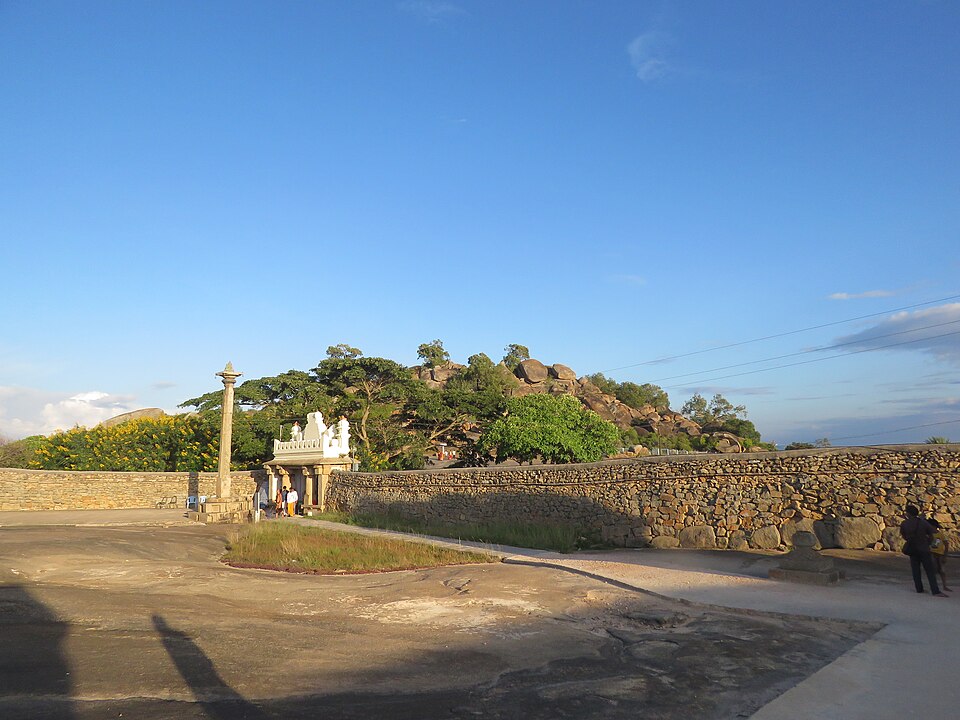
The second council. Much later, a council met at Vallabhi in Gujarat, presided over by Devardhi Kshamasramana. Its purpose was to collect the sacred texts and write them down systematically. By then the twelfth anga had been lost, and the rest were written in Ardhamagadhi, with upangas (minor sections) added.
The key angas. Among the angas, two stand out. The Acharanga Sutra lays down the code of conduct for Jaina monks. The Bhagavati Sutra sets out Jaina doctrine in full, and, as we saw earlier, also gives its own list of sixteen Mahajanapadas.
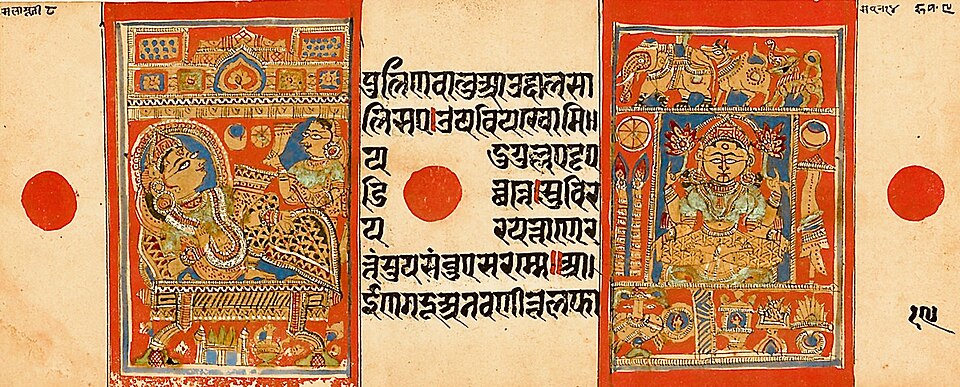
Kings and the faith. Jaina tradition says Udayin, Ajatasatru's successor, was a devoted Jaina. Jaina monks were seen on the banks of the Indus when Alexander invaded. Chandragupta Maurya is said to have become a Jaina, gone south with Bhadrabahu, and ended his life at Sravanabelagola.
Later centres and sects. In the early centuries AD, Mathura and Ujjain became great Jaina centres. Further splits came later in both branches. Among the most notable were groups that rejected image worship and worshipped the scriptures instead, such as the Terapanthis among the Svetambaras.
Why Jainism endured. Mahavira and his followers used the popular Prakrit dialects, especially Ardhamagadhi, instead of Sanskrit. Their simple, homely moral rules appealed to ordinary people, and kings gave patronage. Jaina emphasis on non-violence also drew many lay followers into trade rather than farming.
The Ajivikas and other teachers
The Ajivikas. Among the many non-Vedic sects, the Ajivikas had the largest following and a recognised organisation. Their best-known leader was Makkhali Gosala, who preached at Sravasti, the capital of Kosala, and died there sixteen years before Mahavira. Some texts describe them as shudra ascetics.
Everything is fixed. The Ajivikas' key idea was niyati, an impersonal destiny that governed everything, even the smallest action. Human beings could not change their future by their own effort. Misery would end only after a fixed number of rebirths, and no effort could shorten or lengthen that cycle.
Rebirth without karma. This made the Ajivikas unusual. They believed in rebirth but not in karma, since actions were not truly free. They still practised hard austerities such as fasting and nakedness, and they remained important for centuries.
The materialists. Ajita Kesakambalin taught that a person is made of matter and returns to matter, so everything ends at death. He denied the soul, rebirth and the fruits of good or bad deeds. His school, the Lokayata, saw happiness and the pleasures of the senses as life's aim, and was later linked with the Charvakas.
The doctrine of non-action. Purana Kassapa taught akriya, that actions bring neither merit nor sin. Even killing all creatures would bring no sin, he argued, and good deeds would bring no merit. This was a direct attack on the moral basis of karma.
Seven elements. Pakudha Kachchayana held that there are seven eternal, unchanging elements. The body simply dissolves into them at death. Since these elements cannot be harmed, he saw no real killer and no real victim.
The sceptic. Sanjaya Belatthaputta refused to commit to any view at all. He held that no certain knowledge was possible, and would not even say that other views were wrong. Such scepticism shows how open and unsettled thought was in the Buddha's time.
Why these views matter. These teachers mostly lacked strong organisations, so their schools faded or survived only in rivals' texts. But they reveal the range of the debate: fate, matter, non-action, doubt. Against this background, the Buddhist and Jaina stress on karma, moral effort and organised communities stands out clearly.
Quick revision
- 24 tirthankaras; first 22 doubtful; Parsvanatha (23rd; son of Asvasena of Varanasi; white-clad followers).
- Mahavira (24th): born c. 540 BC, Kundagrama near Vaisali; father Siddhartha (Jnatrika), mother Trishala (Licchavi); wife Yashoda.
- Left home at 30; naked after 13 months; 12 years' austerity; kevala at 42; titles Jina, Mahavira, Nirgrantha.
- Preached ~30 years; Ardhamagadhi; died at 72 at Pava, c. 468 BC; Buddhists call him Nataputta.
- Five vows: ahimsa, non-stealing, not lying, aparigraha, brahmacharya (added by Mahavira).
- Jiva and ajiva; souls even in earth, fire, water; karma covers the soul; triratna: right faith, knowledge, conduct.
- Severe austerity; monks only reach full moksha; monks pull out hair, walk by day; laity avoid agriculture.
- 14 purvas → Pataliputra council (c. 300 BC, Sthulabhadra, 12 angas) → Vallabhi (Devardhi Kshamasramana; written in Ardhamagadhi).
- Famine; Bhadrabahu to Sravanabelagola; Digambara (naked) vs Svetambara (white).
- Key angas: Acharanga (conduct), Bhagavati (doctrine).
- Spread: 11 ganadharas (Arya Sudharma); Udayin; Chandragupta Maurya; Mathura, Ujjain; Terapanthis.
- Ajivikas: Makkhali Gosala, niyati, rebirth without karma; Sravasti.
- Ajita Kesakambalin (materialist, Lokayata); Purana Kassapa (akriya); Pakudha (seven elements); Sanjaya (sceptic).