

BPSC Stenographer in BPSC · Module 55 · basic depth · 12 min
Mobile generations, 5G and 6G
What BPSC Stenographer in BPSC asks from this chapter
Syllabus lines this chapter covers:
- Written: GS 50, General Science and Mathematics 50, Mental Ability 50 · General awareness of the environment around the candidate and its application to society, and everyday matters in their scientific aspect
BPSC Stenographer in BPSC questions from this module are being sorted into our bank.
Cut to basic depth for BPSC Stenographer in BPSC. 13 deeper paragraphs are in the full chapter.
Start from zero: how does a mobile phone talk?
In the last chapter, we saw how computers were joined by cables to make the internet. A mobile phone does the same job without any cable. It talks to the network through radio waves, the same family of invisible waves that carry FM radio.
A phone cannot send its signal across the whole country. Instead, it talks to the nearest tower, which covers a small area called a cell. That is why it is called a cellular phone. The tower then passes the call or data through cables, usually optical fibre, into the operator's core network, which sends it on to the right place.
When you walk or travel, your phone keeps moving from one cell to the next. The network hands your call over from tower to tower so smoothly that you do not notice.
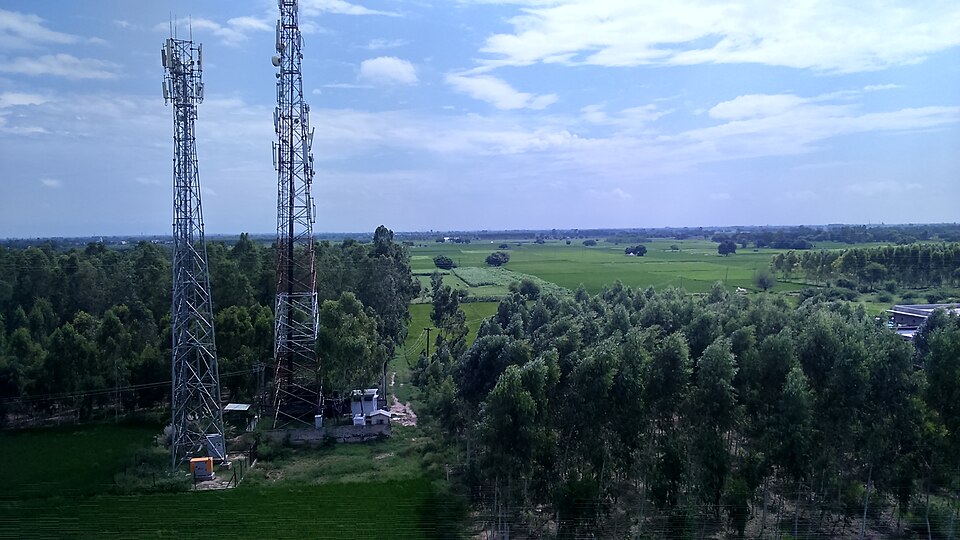
Every ten years or so, engineers have found ways to send more information through the same air, faster and to more people. Each big jump is called a generation, which is what the "G" in 4G and 5G stands for.
Why each new generation came, and when India moved
Why do we keep needing new generations? The reason is simple: what people want to do with phones keeps growing. First they wanted to talk, then send messages, then browse, then watch videos, and now machines also want to talk to each other. Each step needs more data, faster replies and room for more users at once.
Why does India care so much? For most Indians, the phone is the only computer and the only internet connection. So the quality of mobile networks decides how well people can use banking, education, health and government services.
When India moved to 5G:
- 2018: the Department of Telecommunications (DoT) set up a 5G testbed with the IITs, IISc Bengaluru and SAMEER, so that Indian engineers could build and test 5G products.
- 10 March 2021: DoT changed telecom licences so that, from 15 June 2021, operators could connect only trusted products to their networks, a step linked to network security.
- 2022: the 5G spectrum auction allotted 51,236 MHz of airwaves, with gross revenue of ₹1,50,173 crore.
- 1 October 2022: the Prime Minister launched 5G services at the 6th India Mobile Congress in New Delhi. By 26 November 2022, 5G had started in 50 towns across 14 States and UTs.
Where it was built. C-DOT, the government's telecom research centre, developed an indigenous 5G Non-Stand Alone core. This shows that India wanted not only to use 5G but also to make its own equipment.
The five generations, one step at a time
Now let us walk up the ladder of generations. Each one solved the biggest problem of the one before it. The table puts them side by side, and the notes below explain the key change in each.
| Generation | Main new ability | Signal type | What people could do |
|---|---|---|---|
| 1G | Mobile voice calls | Analogue | Talk on the move |
| 2G | Digital voice and SMS | Digital | Clearer calls, text messages |
| 3G | Mobile data | Digital | Email and web on the phone |
| 4G | Fast all-internet (IP) network | Digital | Video streaming, video calls, apps |
| 5G | Very fast, very quick reply, huge numbers of devices | Digital | Connected machines, smart factories, remote services |
1G to 2G: analogue to digital. 1G sent voice as a continuous wave, which was easy to overhear and full of noise. 2G turned voice into digital bits, which made calls clearer and more secure and also allowed SMS.
3G and 4G: from talking to browsing. 3G added proper mobile data, so the phone could open web pages. 4G went further and carried everything, even voice, as internet data, which made video smooth and gave rise to the app economy.
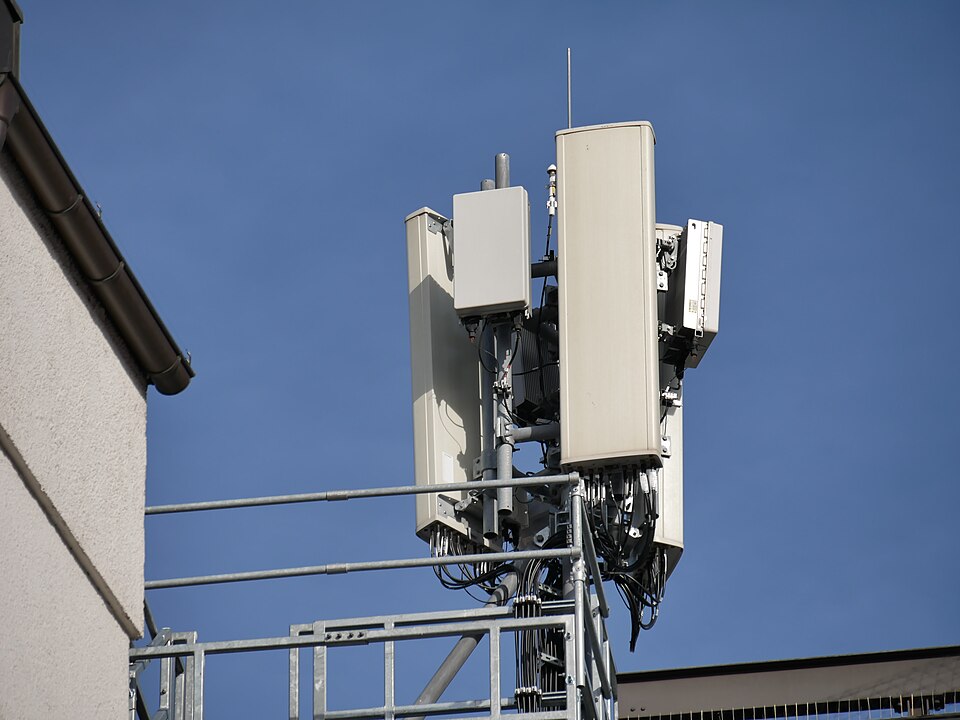
5G: three new strengths. 5G is not just faster. It has three strengths together:
- Much higher speed, for heavy data such as high-quality video.
- Very low delay (latency), so a remote machine or vehicle can react almost at once.
- Room for a huge number of devices, so millions of sensors and machines can connect in one area.
Spectrum: the invisible highway in the air
All mobile signals travel through the air as radio waves of different frequencies. The full range of these frequencies is called the spectrum, and it works like a highway with many lanes. Because only a limited number of lanes exist, the government owns them and auctions them to telecom companies.
Why frequency matters: the trade-off. Different frequencies behave differently, so operators use a mix.
- Low bands travel far and pass through walls easily, but carry less data. They are good for covering villages and large areas.
- Mid bands give a balance of reach and speed, which is why they carry most 5G traffic.
- High bands, also called millimetre waves, carry huge amounts of data but travel only short distances and are easily blocked. They suit crowded places such as stadiums and stations.
Why spectrum is valuable. In the 2022 auction, 51,236 MHz of spectrum was allotted, with gross revenue of ₹1,50,173 crore. Spectrum is a natural resource owned by the public, like minerals, so how it is priced and shared is a policy question as much as a technical one.
Why more towers are needed for 5G. Because the faster bands reach shorter distances, 5G needs many more towers and small cells than 4G. That is why telecom providers had installed 4.86 lakh 5G base stations by June 2025.
India's own telecom stack and the spread of 5G
Using 5G is one thing, and building the equipment is another. For many years, Indian networks depended mostly on foreign equipment makers. That raised costs and also security worries, because the core of a network carries a country's most sensitive data.
The indigenous 4G stack. BSNL's new network is fully indigenous, and it is ready to be upgraded to 5G.
- The core network was built by C-DOT.
- The radio access network, the part that talks to phones, was built by Tejas Networks.
- TCS joined the parts together as the system integrator.
This places India among five nations able to launch fully homegrown 4G. More than 92,000 of these 4G sites were commissioned, built in about 22 months.
How far 5G has spread. 5G has reached all 28 states and 8 UTs. By 30 June 2025, telecom providers had installed 4.86 lakh 5G base stations, and a 2025 industry report put India's 5G population coverage at just over 80%.
Building skills. The government set up 100 5G labs in academic institutions so that students and start-ups could build 5G uses. The Telecom Technology Development Fund (TTDF), launched on 1 October 2022, funds Indian telecom research and products.
Looking ahead: what 6G may bring
5G has only just spread, yet the world is already designing 6G. A generation takes about ten years to develop, so the standards being decided now will shape networks in the 2030s. Countries that help write these standards also earn from the patents and equipment.
India's plan. The Bharat 6G Vision document was released on 23 March 2023. It aims for India to be a frontline contributor in the design, development and deployment of 6G by 2030. The Bharat 6G Alliance, facilitated by DoT, brings together industry, universities and research bodies to work on it.
What 6G is expected to do. 6G is still being researched, so its exact features are not fixed. The direction is clear, though: even faster and more reliable links, networks that can sense their surroundings, and closer use of artificial intelligence inside the network.
Why it matters for a country where many are still offline. About 5.5 billion people, or 68% of the world, used the internet in 2024. So 6G is not only about speed for the connected but also about cheaper, smarter networks that can finally reach the rest.
Previous years' questions
This section shows the real past questions on this chapter for the exam you have chosen. Each question is copied word for word from the official paper, with the year and paper, so that you can see how the topic is actually asked.
Questions are being collected from the official UPSC and BPSC papers. They will appear here once each one is checked against the original paper.
Quick revision
- A mobile phone talks by radio waves to the nearest tower, which covers an area called a cell.
- 1G was analogue voice, 2G brought digital voice and SMS, 3G mobile data, 4G an all-internet network, and 5G high speed, low latency and many devices together.
- Higher frequency means more data but shorter reach, so 5G needs more towers. Spectrum is a public resource sold by auction (51,236 MHz in 2022).
- 5G was launched on 1 Oct 2022 at the 6th India Mobile Congress. By June 2025, there were 4.86 lakh 5G base stations, and 5G covered all 28 states and 8 UTs.
- BSNL's indigenous 4G stack uses C-DOT (core), Tejas Networks (radio) and TCS (integration), putting India among five such nations.
- The Bharat 6G Vision came on 23 Mar 2023, with a target of 2030.