

BPSC TRE 4.0 · Module 11 · standard depth · 12 min
Quit India, Subhas Chandra Bose and the INA
What BPSC TRE 4.0 asks from this chapter
Syllabus lines this chapter covers:
- Class 1 to 5 teacher · Part II, General Studies (120 questions): elementary mathematics, mental ability, general awareness, general science, social science, Indian National Movement, geography and environment (SCERT/NCERT-based).
- Class 6 to 8 teacher · Part II, General Studies: elementary mathematics, general awareness, general science, Indian National Movement and geography (SCERT-based, at the level of the minimum qualification).
- Class 6 to 8 teacher · Part III subject: Social Science (Section I history or geography, Section II geography, economics or political science).
- Class 9 to 10 teacher · Part II, General Studies: elementary mathematics, general awareness, general science, Indian National Movement and geography (SCERT-based, at the level of the minimum qualification).
- Class 9 to 10 teacher · Part III subject: Social Science (history or geography, then geography, economics or political science).
- Class 11 to 12 teacher · Part II, General Studies: elementary mathematics, general awareness, general science, Indian National Movement and geography (SCERT-based, at the level of the minimum qualification).
BPSC TRE 4.0 questions from this module are being sorted into our bank.
Cut to standard depth for BPSC TRE 4.0. 7 deeper paragraphs are in the full chapter.
Start from zero: when patience runs out
Imagine waiting years for a promise that keeps being postponed. Each time you ask, you are told 'later' or offered something smaller than what you were promised. Sooner or later you stop asking and simply say: 'Leave.'
By 1942, India had reached that point. Britain had taken India into the Second World War without asking its people, and the Congress ministries had resigned in protest. When a British offer in 1942 again promised only something after the war, the Congress decided that the time for half-measures was over.
The result was the Quit India Movement of August 1942, the most dramatic mass uprising of the freedom struggle. At the same time, far from India, Subhas Chandra Bose was building an army to fight the British from the east. These two very different paths, one non-violent and one military, both pushed towards the same end.
This chapter explains Quit India, the career of Subhas Chandra Bose and the Indian National Army. Keep one question in mind as you read. Why did both mass rebellion at home and armed struggle abroad emerge in the same years, and what did each achieve?
Key events at a glance
This table lists the main events from 1938 to 1945. Each is explained in the sections below.
| When | What happened | Why it matters |
|---|---|---|
| 1938 | Bose becomes Congress president at Haripura | A radical voice at the top. |
| 1940–1941 | Bose under house arrest, escapes, reaches Germany | He seeks help abroad. |
| March 1942 | Cripps Mission offers Dominion Status after the war | Its failure triggers Quit India. |
| 8 August 1942 | Quit India resolution; 'Do or Die' | Final call for freedom. |
| 9 August 1942 | Top leaders arrested | The people lead the movement. |
| 13 June 1943 | Bose reaches East Asia | He takes charge of the INA. |
| 21 October 1943 | Azad Hind Government at Singapore | A government in exile. |
| 30 December 1943 | Tricolour hoisted at Port Blair | Indian territory under the Azad Hind flag. |
| 14 April 1944 | INA raises the Tricolour at Moirang, Manipur | The INA on the Indian mainland. |
Notice that the two stories run side by side. While Indian leaders sat in jail after August 1942, Bose's army was preparing to march towards India.
The road to Quit India: the Cripps Mission
The war and the deadlock. In 1939 Britain declared India a party to the Second World War without consulting its people, and the Congress ministries resigned. Attempts at a settlement in 1940 failed, and the Congress began a limited individual satyagraha. The background is explained in the chapter on the Acts of 1919 and 1935.
Why did Britain send Cripps? As the war went on, Britain wanted Indian cooperation in the war effort. In March 1942 the British government sent a mission led by Cripps to India with new proposals. The central offer was Dominion Status after the war.
Why was it rejected? The offer gave India nothing real during the war, when the need was greatest, and only a promise for the future. Both the Congress and the Muslim League rejected it, for different reasons. Gandhi famously described it as a 'post-dated cheque', a cheque that could only be cashed later, if at all.
The immediate cause. The failure of the Cripps Mission convinced the Congress that Britain would not part with power by negotiation during the war. That failure was the immediate cause of the Quit India Movement. Patience had run out.
Quit India, August 1942
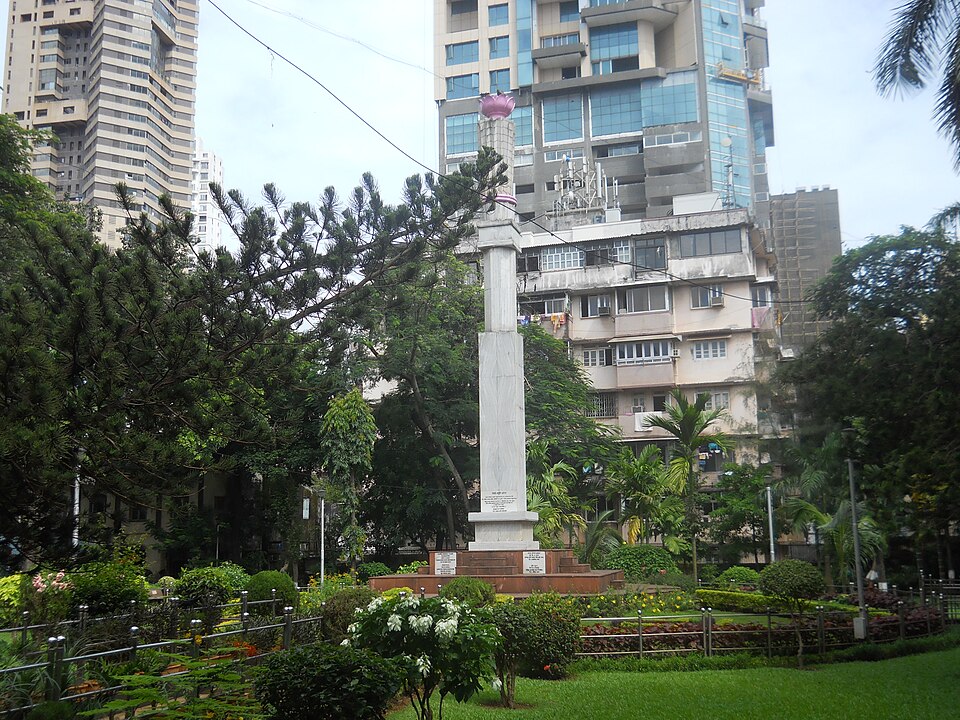
The resolution. The Congress Working Committee met at Wardha on 14 July 1942 and prepared a resolution demanding that the British quit India. On 8 August 1942, the All India Congress Committee met in Bombay and passed the Quit India resolution. At the Gowalia Tank Maidan, Gandhi gave the call 'Karo ya Maro', 'Do or Die'.
What did 'Do or Die' mean? Gandhi was telling Indians that this was the final struggle: either India would be free, or they would die trying. It was a call for total commitment, though Gandhi still expected the struggle to be non-violent. The ground where he spoke is today called August Kranti Maidan, the ground of the August Revolution.
Arrests and a leaderless movement. The government struck at once. Within twenty-four hours, on 9 August 1942, Gandhi and the top leaders were arrested. With the leaders in jail, the movement was carried on by others, among them Ram Manohar Lohia, Jayaprakash Narayan and Aruna Asaf Ali, and by ordinary people acting on their own.
Parallel governments. In some areas, people drove out British authority and set up their own parallel governments. In Ballia, in today's Uttar Pradesh, Chittu Pandey led one such government, and in Satara, in Maharashtra, Y.B. Chavan and Nana Patil led another. The movement was strong in Midnapore in Bengal as well.
The heroes of 1942
The secret radio. Usha Mehta, with Ram Manohar Lohia, ran a secret Congress radio from Bombay that kept people informed of the movement. Running it meant risking arrest every day. It showed how the movement used new tools to reach people.
Women at the front. Women played a striking role in 1942. Matangini Hazra died holding the Tricolour, and Kanaklata Baruah and Sucheta Kripalani were among the women who led or joined the movement. Rajkumari Amrit Kaur was arrested during the movement.
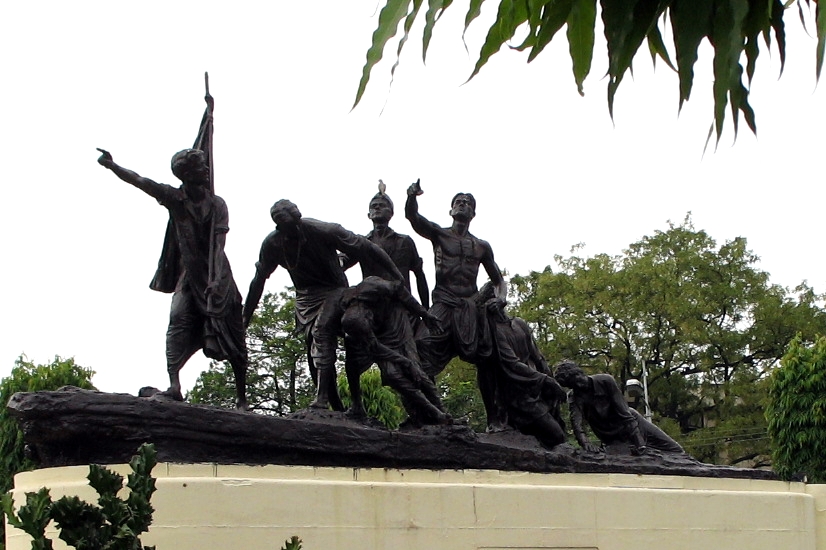
The Patna martyrs. In Patna, seven young men were killed at the Secretariat during the movement. They are remembered as the seven martyrs of 1942. Stories like these, from many parts of India, made 1942 a true people's movement.
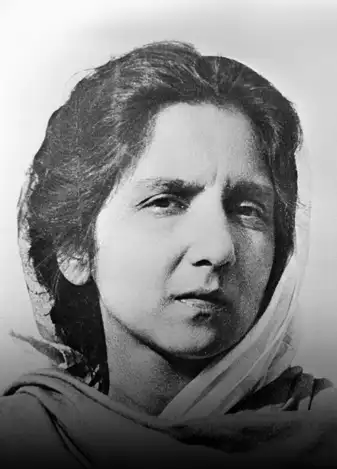
Why remember these names? Quit India was not led from the top, because the top leaders were in jail. Its strength came from thousands of local leaders, students, workers and women. Exams often ask about these figures, and Mains answers gain depth by naming them.
Subhas Chandra Bose and the INA
President of the Congress. Subhas Chandra Bose became president of the Congress at the Haripura session of 1938, where he was taken in procession in a chariot drawn by 51 bullocks. He stood for a more radical and urgent struggle. He later formed the Forward Bloc.
The escape. In 1940 Bose was placed under house arrest in his home at Elgin Road in Kolkata. With the help of his nephew Sisir he escaped, made his way through Kabul and reached Germany in 1941. He hoped that the war would give India a chance to win freedom with help from abroad.
The INA in East Asia. In East Asia, Rash Behari Bose had formed the Indian Independence League in 1942. On his invitation, Subhas Chandra Bose reached East Asia on 13 June 1943 and took charge of the Indian National Army (INA), also called the Azad Hind Fauj. His calls 'Chalo Dilli' ('On to Delhi') and 'Tum mujhe khoon do, main tumhe azadi doonga' ('Give me blood, and I will give you freedom') inspired thousands; the INA also had a women's unit, the Rani Jhansi Regiment.
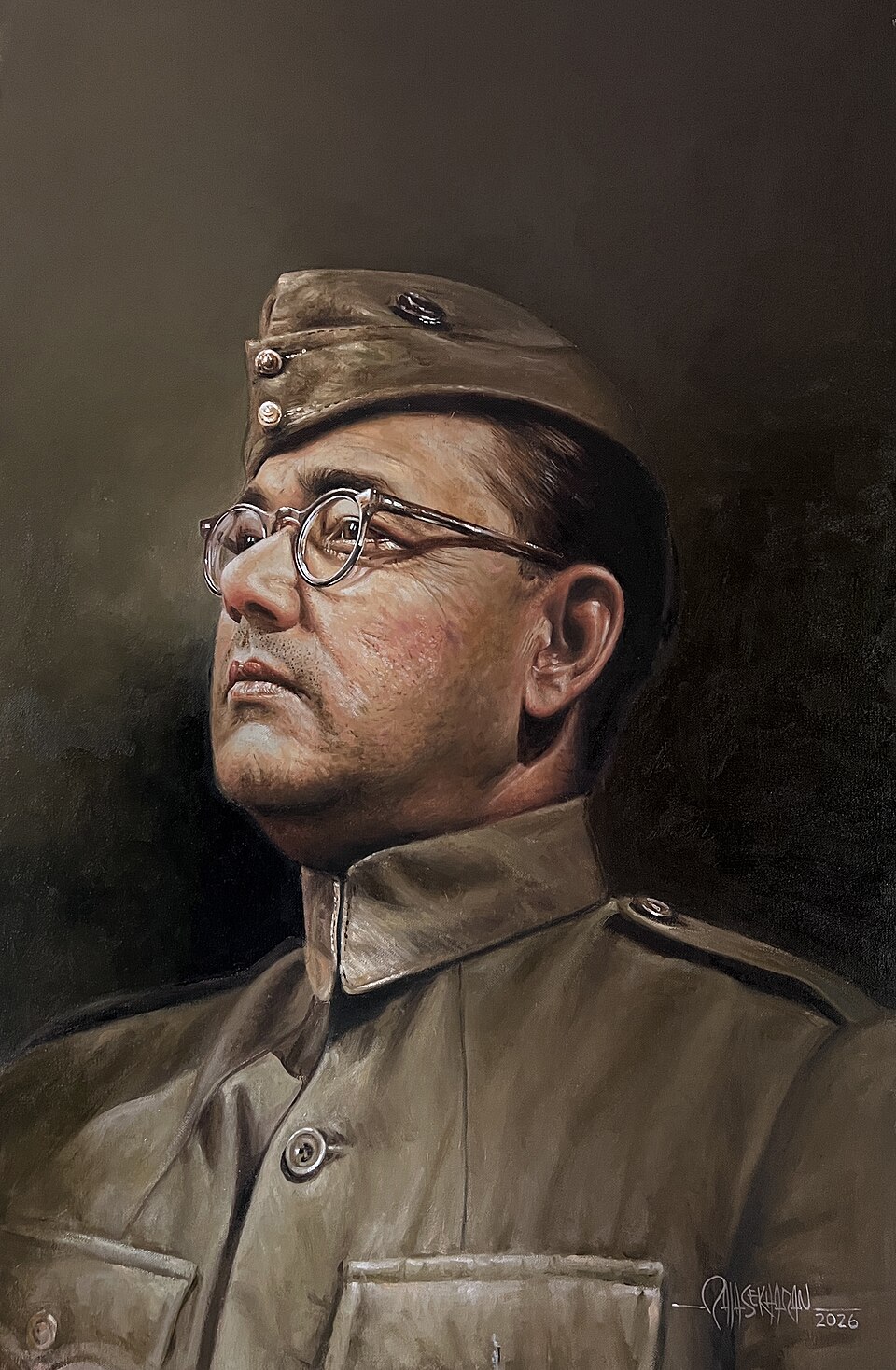
The Azad Hind Government. On 21 October 1943, at Singapore, Bose formed the Provisional Government of Azad Hind and became its head. On 30 December 1943 he hoisted the Tricolour at Port Blair in the Andamans, and on 14 April 1944 the INA raised the Tricolour at Moirang in Manipur. The INA's campaign did not succeed in reaching Delhi, and Bose reportedly died in an air crash in August 1945.
How Netaji is remembered
Memorials and names. Independent India has honoured Netaji in many ways. A museum on Netaji and the Azad Hind Fauj has been built at the Red Fort in Delhi. In 2018, islands of the Andamans were renamed in his honour, including Netaji Subhash Chandra Bose Island.
Anniversaries. His birth anniversary on 23 January is observed as Parakram Diwas, and the anniversary of the Azad Hind Government is marked on 21 October. In 2018 the country marked 75 years of the Azad Hind Government. These observances keep his role in public memory.
An exam caution on dates. Two dates of flag-hoisting are often confused. The Tricolour was hoisted at Port Blair in the Andaman Islands on 30 December 1943, and the INA raised it at Moirang in Manipur on 14 April 1944. Official accounts differ on which counts as the first on Indian soil, so learn both dates and the places they belong to, rather than relying on the word 'first'.
Why does the INA matter historically? Militarily, the INA did not achieve its goal of reaching Delhi. But it showed that Indians abroad, soldiers among them, were ready to take up arms against the empire for India's freedom. That spirit, together with the mass anger of 1942, made it clear to Britain that its hold on India was ending, a story continued in the chapter on the road to freedom and Partition.
Quick revision
- Cripps Mission, March 1942: Dominion Status after the war; rejected by Congress and League; 'post-dated cheque'; failure = immediate cause of Quit India.
- Wardha CWC 14 July 1942; AICC Bombay 8 August 1942; 'Do or Die' at Gowalia Tank (August Kranti Maidan).
- Leaders arrested 9 August 1942; movement carried on by Lohia, JP, Aruna Asaf Ali.
- Parallel governments: Ballia (Chittu Pandey), Satara (Y.B. Chavan, Nana Patil); strong in Midnapore.
- Usha Mehta: secret Congress radio; Matangini Hazra; Kanaklata Baruah; Sucheta Kripalani; Patna Secretariat seven martyrs.
- Bose: Congress president at Haripura 1938; Forward Bloc; escape via Kabul, Germany 1941.
- Rash Behari Bose: Indian Independence League 1942; Subhas reaches East Asia 13 June 1943; 'Chalo Dilli'; Rani Jhansi Regiment.
- Azad Hind Government: Singapore, 21 October 1943; Tricolour at Port Blair 30 December 1943; Moirang 14 April 1944.
- Bose reportedly died in an air crash, August 1945; Parakram Diwas 23 January.