

BPSC TRE 4.0 · Module 52 · standard depth · 18 min
Blockchain, digital currency, cloud and IoT
What BPSC TRE 4.0 asks from this chapter
Syllabus lines this chapter covers:
- Class 1 to 5 teacher · Part II, General Studies (120 questions): elementary mathematics, mental ability, general awareness, general science, social science, Indian National Movement, geography and environment (SCERT/NCERT-based).
- Class 6 to 8 teacher · Part II, General Studies: elementary mathematics, general awareness, general science, Indian National Movement and geography (SCERT-based, at the level of the minimum qualification).
- Class 9 to 10 teacher · Part II, General Studies: elementary mathematics, general awareness, general science, Indian National Movement and geography (SCERT-based, at the level of the minimum qualification).
- Class 11 to 12 teacher · Part II, General Studies: elementary mathematics, general awareness, general science, Indian National Movement and geography (SCERT-based, at the level of the minimum qualification).
BPSC TRE 4.0 questions from this module are being sorted into our bank.
Cut to standard depth for BPSC TRE 4.0. 8 deeper paragraphs are in the full chapter.
Start from zero: three ideas that change how data is kept
Think about where your important records live. Your bank balance sits in the bank's computer, your photos may sit on a company's servers far away, and your electricity meter may soon report your use by itself. Each of these raises a simple question: who keeps the data, and can we trust them?
This chapter covers three technologies that give different answers to that question. Blockchain spreads one record across many computers so that no single keeper can cheat. Cloud computing lets you rent computing power and storage from a big provider instead of owning machines. The Internet of Things (IoT) connects everyday objects, so that they can send data and act on it.
Along the way, we will also study cryptocurrency and India's Digital Rupee (e₹), which are the best-known uses of digital money. These topics are favourites of UPSC because they mix science, economy and governance. We will go step by step, starting with blockchain.
What a blockchain is and how it works
The old way. A normal database is kept by one owner, such as a bank or a registry office. Everyone must trust that owner to keep the records honest and safe. If the owner makes a mistake, is hacked or cheats, the records can be changed.
The blockchain way. A blockchain is a digital ledger (a record book) that is copied and kept by many computers, called nodes, connected peer to peer. Transactions are grouped into blocks, and each block gets an exact time stamp. When a block is full, it is closed and linked to the previous block, forming a chain.
Why it cannot be quietly edited. Each block carries a digital fingerprint of the block before it. If someone changes an old record, the fingerprints no longer match, and all the other nodes reject the change. So records can be added and read, but not edited, deleted or destroyed. This is why a blockchain is also called Distributed Ledger Technology (DLT).
How a transaction moves. The steps are simple to remember:
- A new transaction is entered.
- It is sent to the network of computers over the internet.
- The network checks (validates) it.
- Valid transactions are grouped into a block.
- The block is chained to the earlier blocks, creating a full history.
- The transaction is complete.
Four types of blockchain.
- Public: anyone can join and verify transactions.
- Private: only invited members can join, so it is also called permissioned.
- Consortium: a group of organisations run it together, so it is semi-decentralised.
- Hybrid: a blend of public and private.
Cryptocurrency: money without a bank
The first big use of blockchain was a new kind of money. Its designers wanted people to pay each other directly, without a bank or government in the middle. This led to cryptocurrency.
What it is. A cryptocurrency is a digital currency that uses cryptography (secret codes) to secure transactions between people. It exists only as entries in an online ledger and is kept in a digital wallet. If you own cryptocurrency, you do not own anything physical. You own a key that lets you move a record from yourself to someone else.
How new coins are made. New units are created through mining, in which computers solve hard maths problems to confirm transactions and earn new coins. This uses a lot of computing power and electricity. People can also simply buy coins from exchanges.
When it began. The first cryptocurrency, Bitcoin, started in 2009 and is still the best known. Many others followed, such as Ethereum, which also lets people run small programs called smart contracts on its blockchain.
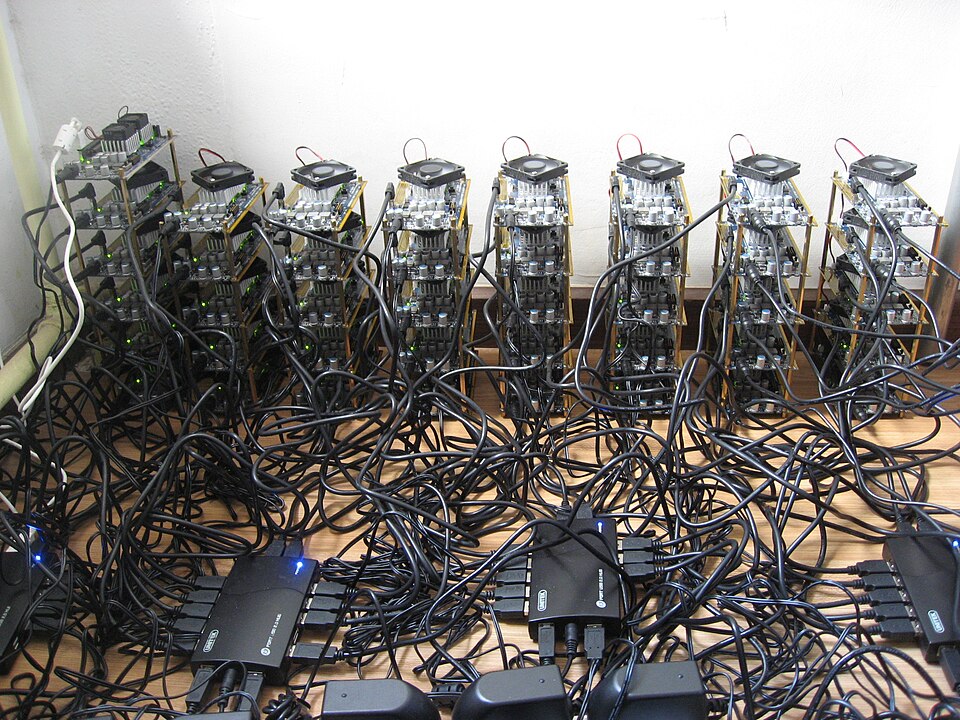
Why governments worry. Crypto prices swing wildly, so ordinary investors can lose heavily. Because it bypasses banks, it can be misused for money laundering, tax evasion and illegal trade. And if crypto were used widely as money, a central bank would lose some control over the money supply.
India's tax approach. India chose to tax crypto heavily rather than treat it like normal income. The Union Budget 2022-23 said that income from transferring any virtual digital asset will be taxed at 30 per cent. Only the cost of buying it can be deducted, losses cannot be set off against other income, and 1 per cent TDS applies to transfers above a threshold so that transactions leave a trail. Gifts of such assets are also taxed in the hands of the receiver.
The Digital Rupee: a central bank's answer
Crypto showed that people want fast digital money. But it is private, unstable and outside the law of money. So central banks asked: why not issue our own digital currency, backed by the state?
What it is. A Central Bank Digital Currency (CBDC) is a digital form of a country's own currency, issued by its central bank. India's CBDC is the Digital Rupee (e₹), issued by the Reserve Bank of India (RBI). It is legal tender under Section 26 of the RBI Act, 1934, and is a liability of the RBI, just like a currency note.
When it began.
- The Union Budget 2022-23 announced the introduction of a Digital Rupee by the RBI starting 2022-23.
- The RBI issued a concept note on 7 October 2022.
- The wholesale pilot, e₹-W, began on 1 November 2022, for settling secondary-market trades in government securities.
- The retail pilot, e₹-R, began on 1 December 2022, in a closed user group. The first cities were Mumbai, New Delhi, Bengaluru, Bhubaneswar and Chandigarh.
How e₹-R works. e₹-R is a digital token issued in the same denominations as notes and coins. You keep it in an e₹ wallet given by a bank and pay other people or shops directly, wallet to wallet. It earns no interest, because it is meant to work like cash. It can also be programmed, for example with an expiry date or a geographical limit, so that a subsidy is spent only on its intended purpose.
How it differs from UPI. With UPI, money moves between bank accounts, so UPI is a payment system. With e₹, the money itself is digital and moves wallet to wallet without passing through the users' bank accounts. That is why a separate e₹ wallet was created: e₹ belongs to the currency system, while other digital wallets belong to the payments system.
India's blockchain plan: strategy, framework and Vishvasya
Blockchain is useful far beyond money. Any record that many parties must trust, such as a land document, a degree certificate or a medicine's journey from factory to shop, can be kept on a blockchain. So India built a national plan for it.
The strategy (2021). The Ministry of Electronics and IT (MeitY) released the National Strategy on Blockchain on 3 December 2021. Its aims are:
- trusted digital platforms through shared blockchain infrastructure;
- research, innovation and application development;
- transparent, secure and trusted delivery of digital services;
- a legal and regulatory framework, standards and skilled people.
The framework. The National Blockchain Framework (NBF) was initiated in March 2021 with ₹64.76 crore. Its idea is that departments should not each build their own blockchain from scratch. Instead, they use a shared national platform.
Vishvasya (2024). On 4 September 2024, MeitY launched the Vishvasya Blockchain Technology Stack. It offers Blockchain-as-a-Service, so that a department can start using blockchain like renting a service. It runs from NIC data centres in Bhubaneswar, Pune and Hyderabad, so the system is spread across places. Two more tools came with it:
- NBFLite, a sandbox where start-ups and students can test blockchain ideas;
- Praamaanik, which uses blockchain to verify the origin of mobile apps, helping users avoid fake apps.
Where it is used. Government uses include verifying certificates and property documents, tracking medicines in supply chains, and court records. The telecom regulator also runs a distributed ledger system that covers more than 1.13 lakh business entities. Each use cuts paperwork, fraud and the need to visit offices.
Cloud computing: renting computers instead of owning them
Now we move from trusting records to storing and processing them. Earlier, every office that needed computing bought its own servers, kept them cool and hired staff to run them. Most of the time, those machines sat half idle.
What cloud computing is. Cloud computing means using computing power, storage and software over the internet from a provider's large data centres, and paying only for what you use. It is like taking electricity from the grid instead of running your own generator. The "cloud" is simply someone else's computers, reached through the internet.
Three service models. A simple kitchen example helps:
- IaaS (Infrastructure as a Service): you rent the bare kitchen, meaning servers, storage and networks, and do the cooking yourself.
- PaaS (Platform as a Service): you rent a kitchen with stove and utensils ready, meaning a platform on which you build your own apps.
- SaaS (Software as a Service): you simply order the meal, meaning ready software such as web email used through a browser.
Why it matters. Cloud lets a start-up or a small department begin quickly without buying machines. It scales up during busy times, such as exam results day, and down again afterwards. But it also raises questions about data security, dependence on a few big providers and where the data is physically stored.
India's government cloud. India's government cloud is MeghRaj, also called GI Cloud, launched in 2014. MeghRaj 2.0 added a hybrid cloud design. 26 cloud service providers are empanelled after an audit by STQC, a government testing body. Departments using MeghRaj grew from 342 in 2015-16 to 2,323 by June 2026.
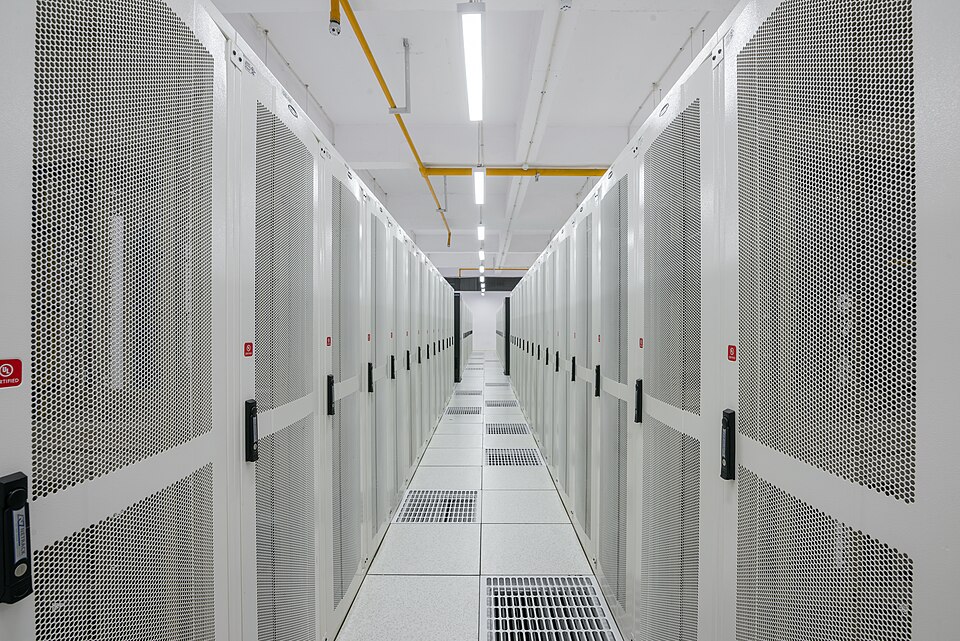
Data centres. Cloud needs huge buildings full of servers, which use a lot of power and water. India's data centre capacity grew from about 375 MW in 2020 to nearly 1,500 MW in 2025, as companies and the government store more data inside the country.
Internet of Things: when objects talk
The internet first connected computers, and then phones. The next step is to connect ordinary things: meters, fans, cars, tractors, water pumps and medical devices. This is the Internet of Things (IoT).
How IoT works. An IoT system has four simple parts:
- Sensors measure something, such as temperature, soil moisture or location.
- A network, such as Wi-Fi or a mobile network, sends the data.
- The cloud or a local computer stores and analyses the data.
- An action follows: an alert on a phone, or a machine switching itself on or off.
Examples you can picture.
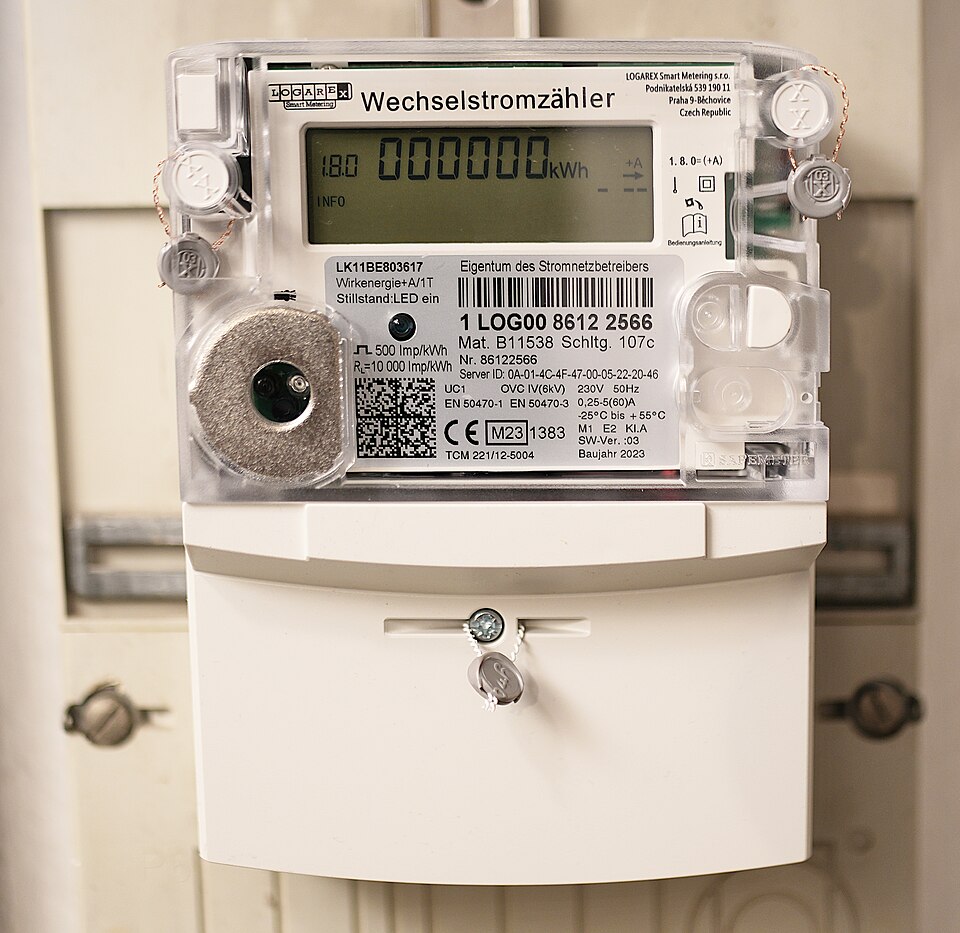
- A smart electricity meter sends readings without a meter reader visiting.
- A soil sensor on a farm tells the farmer when to water, or switches the pump on by itself.
- A fitness band tracks heartbeat and sends alerts to a doctor.
- Smart traffic lights change timing according to the number of vehicles.
Edge computing. Sending every reading to a faraway cloud can be slow and costly. So some analysis is done close to the device, at the "edge" of the network. A self-driving car, for example, cannot wait for the cloud before braking.
Why IoT is linked to 5G. IoT needs networks that can connect a huge number of devices with low delay. This is one of the main purposes of 5G and future 6G networks, which you can revise in Mobile generations, 5G and 6G.
Risks. Every connected device is also a door for hackers. Cheap devices with weak passwords can be taken over and used in large cyber attacks. IoT devices also collect personal data about homes and bodies, which brings in data protection rules.
What these technologies change, and what they risk
We have studied four tools: blockchain, digital currency, cloud and IoT. Together they shape how government and markets will work in the coming years. Here are the main gains and risks to discuss in answers.
1. Trust and transparency. Blockchain records that cannot be quietly edited can reduce fraud in land records, certificates and supply chains. This saves citizens repeated visits to offices to prove the same fact.
2. Cheaper, faster money. The e₹ could cut the cost of printing, storing and moving cash, and programmable money can help target subsidies. But a central bank currency also raises privacy questions, because the state could in theory see more of how people spend.
3. Scale without heavy investment. Cloud lets departments and start-ups grow fast without buying machines. But dependence on a few large providers, and on data centres that use much power and water, needs careful planning.
4. Smarter services. IoT can make farms, cities, power grids and hospitals more efficient. Yet it multiplies cyber risks and collects sensitive personal data, so it must go together with strong security and data protection, which the next chapter, Cyber security and digital public infrastructure, explains.
Previous years' questions
This section shows the real past questions on this chapter for the exam you have chosen. Each question is copied word for word from the official paper, with the year and paper, so that you can see how the topic is actually asked.
Questions are being collected from the official UPSC and BPSC papers. They will appear here once each one is checked against the original paper.
Quick revision
- A blockchain is a distributed, time-stamped ledger kept by many nodes; records can be added but not edited, so it is also called DLT.
- Blockchain types are public, private (permissioned), consortium and hybrid.
- Cryptocurrency is private digital money secured by cryptography; Bitcoin (2009) was first. Budget 2022-23 taxed virtual digital assets at 30% with 1% TDS.
- The Digital Rupee (e₹) is RBI's CBDC and legal tender (s.26, RBI Act 1934). e₹-W began 1 Nov 2022 and e₹-R 1 Dec 2022; it pays no interest and can be programmed.
- National Strategy on Blockchain: 3 Dec 2021. Vishvasya stack: 4 Sep 2024, with NBFLite and Praamaanik.
- Cloud: IaaS, PaaS and SaaS. MeghRaj (GI Cloud) launched in 2014, with 26 empanelled providers.
- IoT links sensors, network, cloud and action; edge computing processes data near the device.