

BPSC TRE 4.0 · Module 50 · standard depth · 14 min
Heredity, DNA and genes
What BPSC TRE 4.0 asks from this chapter
Syllabus lines this chapter covers:
- Class 1 to 5 teacher · Part II, General Studies (120 questions): elementary mathematics, mental ability, general awareness, general science, social science, Indian National Movement, geography and environment (SCERT/NCERT-based).
- Class 6 to 8 teacher · Part II, General Studies: elementary mathematics, general awareness, general science, Indian National Movement and geography (SCERT-based, at the level of the minimum qualification).
- Class 6 to 8 teacher · Part III subject (one of): Mathematics and Science.
- Class 9 to 10 teacher · Part II, General Studies: elementary mathematics, general awareness, general science, Indian National Movement and geography (SCERT-based, at the level of the minimum qualification).
- Class 9 to 10 teacher · Part III subject: Science or Mathematics (secondary level, NCERT/SCERT).
- Class 11 to 12 teacher · Part II, General Studies: elementary mathematics, general awareness, general science, Indian National Movement and geography (SCERT-based, at the level of the minimum qualification).
BPSC TRE 4.0 questions from this module are being sorted into our bank.
Cut to standard depth for BPSC TRE 4.0. 8 deeper paragraphs are in the full chapter.
Start from zero: why children look like their parents
Look at any family photo. A child may have her mother's eyes, his father's curly hair, or a grandparent's height. Some traits even skip a generation and then appear again. The passing of such traits from parents to children is called heredity.
For most of history, people only guessed how this works. Today we know that every living cell carries a set of instructions, like a recipe book, that tells the body how to grow and work. These instructions are written in a chemical called DNA, and each single instruction is called a gene.
A child gets one copy of the recipe book from the mother and one from the father. That is why the child is a mix of both, yet still unique. The full set of DNA in a cell is called the genome.
This chapter tells the story of how scientists found out what genes are, how DNA is built, and how it copies itself. It then looks at the mapping of the human genome and at India's own genome project. These ideas are the base for every later chapter on biotechnology.
From Mendel's peas to chromosomes
Why the question mattered. Farmers had bred better crops and animals for thousands of years, but nobody knew the rules. Without rules, breeding was slow trial and error. Finding the rules of heredity would make it a science.
Mendel's factors. In the 19th century, Gregor Mendel studied pea plants and found that traits pass on in fixed patterns, through units he called "factors". His work was ignored for decades. It was rediscovered in 1900, and those factors are what we now call genes.
Where are the factors? Mendel did not know where these factors sat in the cell. Scientists then noticed that chromosomes, the thread-like bodies in the nucleus, behave during cell division exactly as Mendel's factors should. In 1902, Walter Sutton and Theodor Boveri proposed the chromosome theory of heredity: genes are carried on chromosomes.
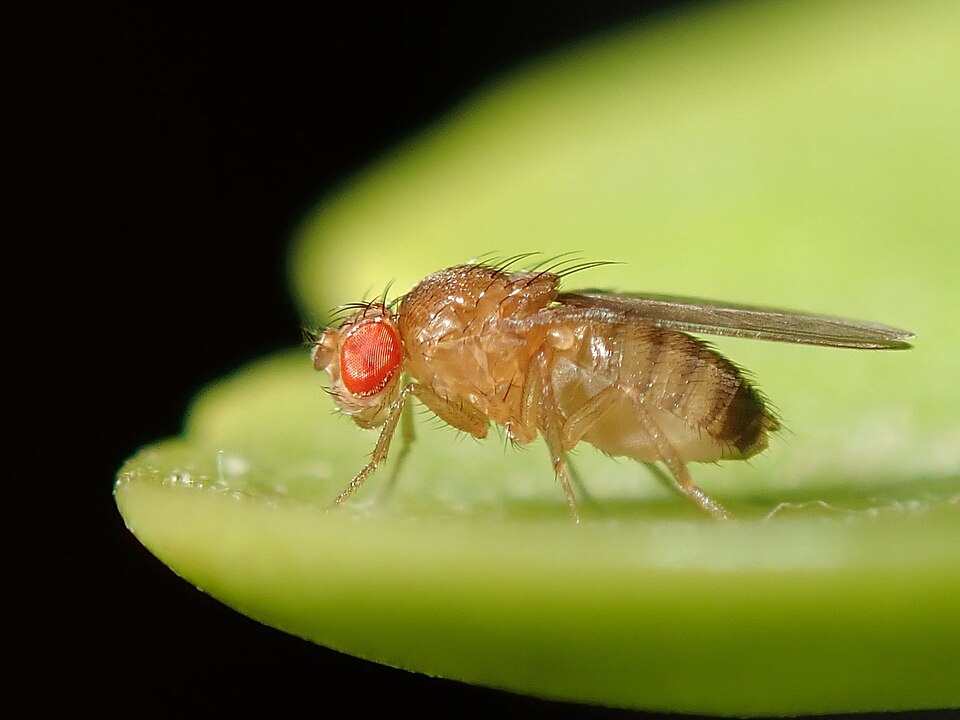
The proof. T.H. Morgan and his team tested this with the fruit fly Drosophila, which breeds fast and has few chromosomes. They confirmed the theory and also found that genes on the same chromosome tend to be inherited together, which is called linkage.
The great hunt: proving that genes are made of DNA
Chromosomes are made of two main substances, proteins and DNA. For a long time, most scientists thought proteins must carry the genes, because proteins are far more varied. Three famous experiments proved them wrong.
1. Griffith (1928): something can pass between bacteria. Frederick Griffith worked with bacteria that cause pneumonia. One strain (smooth, S) killed mice, while another (rough, R) did not.
When he mixed heat-killed S bacteria with live harmless R bacteria, the mice died, and live S bacteria were found in them. Something from the dead bacteria had transformed the harmless ones. This was called bacterial transformation.
2. Avery, MacLeod and McCarty (1944): that something is DNA. These scientists purified the "transforming principle" and tested it chemically. Enzymes that destroyed proteins did not stop transformation, but an enzyme that destroyed DNA did. So the transforming substance had to be DNA.
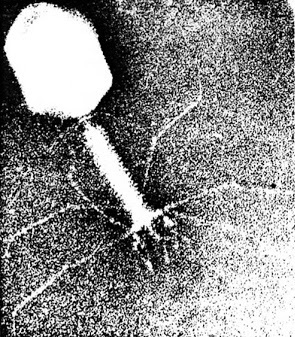
3. Hershey and Chase (1952): final proof with viruses. Alfred Hershey and Martha Chase used a bacteriophage, a virus that infects bacteria, and marked its protein and its DNA with different radioactive labels. When the virus infected bacteria, the labelled DNA went inside, while the protein coat stayed outside. Since new viruses were made inside, the hereditary instructions had to be in the DNA.
Why it mattered. Once scientists knew genes were made of DNA, they could study DNA directly. This turned genetics from the study of patterns into the study of molecules. Every tool of modern biotechnology grew from this shift.
The double helix: how DNA is built and copied
Knowing that genes are DNA raised the next question: what does DNA look like? Its shape had to explain two things. It had to store a huge amount of information, and it had to copy itself exactly every time a cell divides.
The answer (1953). Using X-ray pictures of DNA, James Watson, Francis Crick, Maurice Wilkins and Rosalind Franklin worked out that DNA is a double helix. It looks like a twisted ladder. Watson, Crick and Wilkins received the Nobel Prize in 1962.
The parts of the ladder.
- The two side rails are made of sugar and phosphate.
- The rungs are pairs of chemical letters called bases.
- There are four bases: adenine (A), thymine (T), guanine (G) and cytosine (C).
- A always pairs with T, and G always pairs with C.
Because of this pairing, the amount of A in DNA always equals the amount of T, and G equals C. This is known as Chargaff's rule. The order of the letters along one strand is the actual information, just as the order of letters in a sentence carries meaning.
How DNA copies itself. Before a cell divides, the ladder unzips down the middle. Each old strand then acts as a template, and a new partner strand is built using the pairing rule. The result is two identical double helices, each with one old strand and one new strand. This is called semiconservative replication, which Watson and Crick suggested in 1953.
Why the structure was so important. The pairing rule meant that each strand carries the information for the other. This explained, in one simple idea, how life copies itself so accurately. It also gave later scientists a way to read and edit DNA.
From gene to protein, and what a genome is
A recipe book is useless until someone cooks. In the same way, DNA does its work only when its instructions are used to make proteins. Proteins are the workers of the body: they build muscles, carry oxygen, fight germs and speed up chemical reactions.
The two steps.
- Transcription: inside the nucleus, the instructions of one gene are copied into a messenger molecule called mRNA.
- Translation: the mRNA travels out to a cell machine called the ribosome, which reads it three letters at a time and joins amino acids in the right order to make a protein.
There are 20 types of amino acids. Different orders of these amino acids give the thousands of different proteins in our body. A change in even one DNA letter can change a protein, which is how many genetic diseases arise.
The human genome in numbers. The human genome has about 3 billion bases and about 20,000 genes, packed into 23 pairs of chromosomes. Surprisingly, genes make up only about 1% of all the DNA. The rest includes switches that turn genes on and off, and long stretches whose roles are still being studied.
DNA outside the nucleus. Tiny energy-making parts of the cell, called mitochondria, have their own small DNA. It is passed on only from the mother, so scientists use it to trace family lines and human migration.
Reading the whole book: the Human Genome Project
Once scientists could read short pieces of DNA, a bold idea followed: why not read all 3 billion letters of the human genome? Doing so would give a reference map for studying every human disease. That idea became the Human Genome Project (HGP).
When and who. The HGP ran from 1990 to 2003. It finished two years ahead of its target of 2005, and its projected cost was about $3 billion over 15 years. About 20 centres in the USA, UK, France, Germany, Japan and China worked together as an international consortium.
Rules that shaped science. Under the Bermuda Principles of 1996, the project released its data quickly and freely, so any scientist in the world could use it. From the start in 1990, it also funded a programme on the ethical, legal and social issues (ELSI) of genetics, such as privacy and discrimination.
Was it really complete? The 2003 sequence was "essentially complete" but still had gaps in hard-to-read regions. The first truly complete human genome, from one end of each chromosome to the other, was announced by the Telomere-to-Telomere (T2T) consortium on 31 March 2022.
Why it matters for India. The HGP reference was built mostly from a few people, largely of non-Indian ancestry. Genetic diseases and drug responses differ across populations. This is why India needed its own genome data, which the next section explains.
India's own map: the GenomeIndia project
India is one of the most genetically diverse countries in the world, with many communities that have married mostly within their own groups for centuries. This means some genetic diseases are common in certain groups but rare elsewhere. A reference built on other populations can miss these differences.
What was done. Under the GenomeIndia project, led by the Department of Biotechnology (DBT), scientists sequenced the whole genomes of people from diverse Indian populations. On 9 January 2025, a dataset of 10,000 whole genomes was released at the Genome India Data Conclave in New Delhi.
Where the data lives. The data is archived at the Indian Biological Data Centre (IBDC). Researchers can request access through the Framework for Exchange of Data Protocols (FeED), which works under the Biotech-PRIDE Guidelines of 2021. These rules aim to share data for research while protecting the privacy of the people who gave samples.
Why it matters.
- Better diagnosis: doctors can tell whether a gene change is common and harmless in India, or rare and likely to cause disease.
- Better medicines: drug doses and choices can be matched to how Indian patients respond.
- Research and industry: Indian start-ups and labs can build genetic tests designed for Indian patients.
What comes next. Officials have spoken of a much larger future target of genomes. Bigger datasets will improve accuracy, but they also make strong data protection more important.
Previous years' questions
This section shows the real past questions on this chapter for the exam you have chosen. Each question is copied word for word from the official paper, with the year and paper, so that you can see how the topic is actually asked.
Questions are being collected from the official UPSC and BPSC papers. They will appear here once each one is checked against the original paper.
Quick revision
- Mendel's work was rediscovered in 1900. Sutton and Boveri (1902) gave the chromosome theory, and Morgan confirmed it with Drosophila.
- Griffith (1928) showed transformation, Avery–MacLeod–McCarty (1944) showed it is DNA, and Hershey–Chase (1952) confirmed it with phage.
- The double helix (1953) has bases A, T, G and C, with A–T and G–C pairs. Replication is semiconservative.
- DNA → mRNA → protein works through transcription and translation, using 20 amino acids.
- The human genome has about 3 billion bases, ~20,000 genes and 23 chromosome pairs. Genes are about 1% of DNA, and mitochondrial DNA comes from the mother.
- The HGP ran from 1990 to 2003, and T2T completed the genome in 2022. GenomeIndia (DBT) released 10,000 genomes on 9 Jan 2025, stored at IBDC.