

BPSSC SI Special Branch · Module 3 · standard depth · 17 min
Post-Mauryan India: Sungas, Indo-Greeks, Sakas, Kushanas and Satavahanas
What BPSSC SI Special Branch asks from this chapter
Syllabus lines this chapter covers:
- Prelims: general knowledge and social issues · General knowledge and current affairs
- Mains Paper I (objective): GS 50, Maths 40, Reasoning 40, English 20, Hindi 20, Bihar GK 30 · General studies
BPSSC SI Special Branch questions from this module are being sorted into our bank.
Cut to standard depth for BPSSC SI Special Branch. 10 deeper paragraphs are in the full chapter.
Start from zero: after the empire, many kingdoms
In the last chapter we saw the Mauryan empire break apart about half a century after Asoka. What came next was not chaos. For about five hundred years, roughly from 200 BC to AD 300, India had no single great empire, but it had many busy kingdoms, growing towns and new trade routes.
Two things happened at once. In the north-west, a series of newcomers crossed the mountains: first Greeks, then Sakas and Parthians, then the Kushanas. In the rest of India, local families and tribal republics took power, and in the Deccan the Satavahanas built the first state of the region.
Think of a river that breaks its banks. The water does not vanish; it spreads into many channels and waters new fields. In the same way, the trade, towns and coins that the Mauryas had spread now fed many smaller states.
Why study this? This period explains how foreigners became Indians, how the Silk Route reached India, how Buddhism changed, and how the Deccan entered history. Exams ask about Menander, Rudradaman, Kanishka, Gautamiputra Satakarni and Kharavela. Mains asks about the impact of Central Asian contact and the assimilation of foreigners.
Post-Mauryan India at a glance
| Power | Key facts |
|---|---|
| Sungas | Brahmana family; Pushyamitra killed Brihadratha; two asvamedhas; ended about 75 BC |
| Kanvas | Founded by Vasudeva; short-lived, perhaps only Magadha |
| Indo-Greeks | From Bactria; Menander at Sakala; Milinda-panha; fine coins |
| Sakas | Maues in Gandhara; Rudradaman I, Junagadh inscription AD 150 |
| Parthians | Gondophernes; St Thomas tradition |
| Kushanas | Kujula and Vima Kadphises; Kanishka, probably AD 78; fourth council |
| Kalinga | Kharavela, Mahameghavahana, Jaina; Hathigumpha inscription |
| Deccan | Satavahanas from about 1st century BC; Gautamiputra Satakarni |
The key idea. For this period, coins are the backbone of political history. Many kings are known only from coins bearing their names, so a ruler with no coins may be lost to us entirely.
The Sungas, Kanvas and local powers
Sources for the Sungas. Our information comes in scraps: the Gargi Samhita, Patanjali's Mahabhashya, the Divyavadana, Kalidasa's play Malavikagnimitra and Bana's Harshacharita. Inscriptions from Ayodhya, Vidisa and Bharhut add more. Putting these together is like solving a puzzle with many pieces missing.
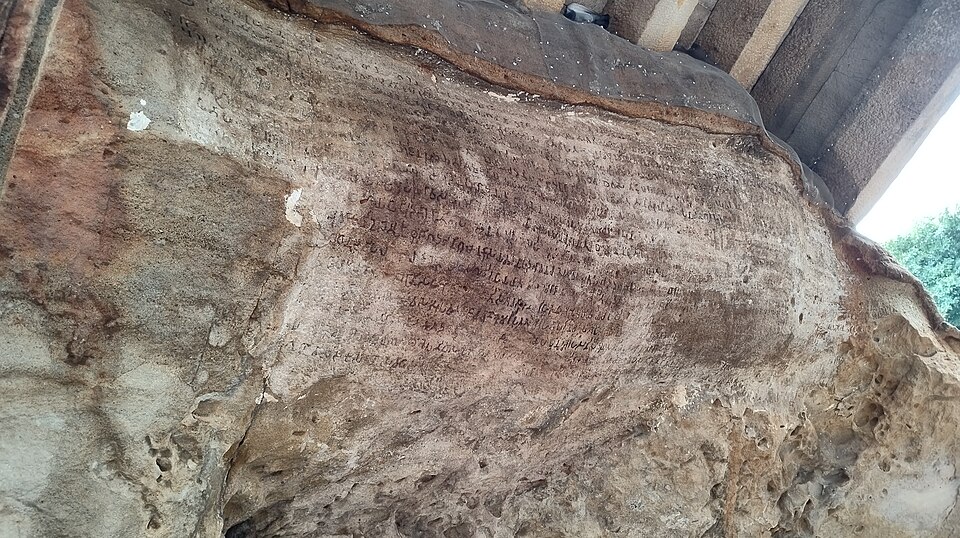
Who were the Sungas? They were a brahmana family, possibly Mauryan officials from the Ujjain region. Their founder Pushyamitra Sunga killed the last Mauryan king Brihadratha early in the second century BC. Bana's account supports this tradition.
Pushyamitra and Vedic revival. The Ayodhya inscription of Dhanadeva credits Pushyamitra with two asvamedha (horse) sacrifices. This shows both his hold over a wide area and his support for Brahmanical ritual. Buddhist tradition in the Divyavadana paints him as a destroyer of monasteries, though such claims come from a hostile source.
The decline of the Sungas. Pushyamitra ruled for 36 years according to the Puranas and was followed by his son Agnimitra. Over time the Sungas shrank to Magadha and central India, while places like Kosala broke away. The last Sunga, Devabhuti, fell to a plot by his brahmana minister Vasudeva around 75 BC.
The Kanvas. Vasudeva founded the Kanva line, which lasted only four generations and was perhaps confined to Magadha. The fact that a minister could replace a king shows how fragile royal power had become.
Coins of local rulers. In the upper Ganga-Yamuna basin, coins reveal independent principalities at Ayodhya, Kausambi, Mathura and Panchala. These towns had once been swallowed by Magadha. Now, with Magadha weak, they reasserted themselves.
Tribal republics return. Between the Ravi and the Yamuna, kshatriya tribes asserted their freedom. The Audumbaras held the land between the upper Ravi and Beas, the Kunindas the Siwalik foothills between the Beas and Yamuna, and the Trigartas the plains between the Ravi and Sutlej. The warlike Yaudheyas ruled between the Sutlej and Yamuna, while the Arjunayanas, Malavas and Sibis were spread over Rajasthan.
Kharavela of Kalinga. In Odisha, a local line called the Mahameghavahanas arose. Its third ruler, Kharavela, is known from the Hathigumpha inscription on the Udayagiri hills near Bhubaneswar, which gives a year-by-year account of his reign up to its thirteenth year. It claims victories in the north, west and south, records public works, and shows Kharavela as a Jaina who cut caves for Jaina monks.
Greeks, Sakas and Parthians in the north-west
Why did they come? The answer lies far away in Central Asia. When the Chinese built their Great Wall, nomadic Scythian tribes could not move east, so they turned on the Greeks of Bactria and the Parthians. Each group pushed the next, like a row of falling dominoes, and the pressure spilled over the Hindu Kush into India.
The Indo-Greeks. The Greeks of Bactria, south of the Oxus in north Afghanistan, moved into north-west India from the second century BC. Alexander's invasion had left little mark, but these Indo-Greeks truly mixed the two cultures. They raided deep into the Ganga plain, reaching Panchala, Saketa and Pataliputra.
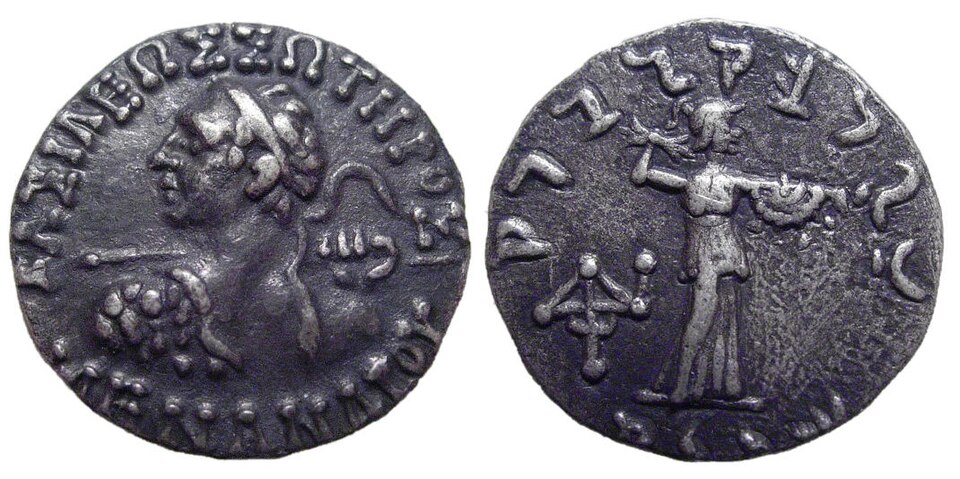
Menander, the king who asked questions. The most famous Indo-Greek was Menander, called Milinda in Indian texts. He ruled from the Swat valley to the Ravi with his capital at Sakala (Sialkot). His long dialogue with the monk Nagasena, recorded in the Milinda-panha ('Questions of Milinda'), led to his conversion to Buddhism.
Known through coins. At least thirty Indo-Greek kings are known, mostly from their coins, which carry legends in Greek and later in Kharosthi and Brahmi. Their silver coins were finely made and influenced the coins of Indian rulers. The Indo-Greeks also brought Hellenistic art features that later flowered in Gandhara art.
The Sakas. The Sakas, or Scythians, were nomads driven from the Bactrian border by another tribe, the Yueh-chi. They probably entered India through the Bolan pass. Different branches ruled in Afghanistan, in Punjab with Taxila as capital, at Mathura, and in western and central India.
Maues and Azes. The first Saka king in India was Maues (Moga), who set up Saka power in Gandhara. A dated copper plate from Taxila records the placing of the Buddha's relics in a stupa in his time. His successor Azes defeated Hippostratos, the last Greek king in north India.
Rudradaman, the Sanskrit-lover. Only in western India did the Sakas rule for about four centuries. Their most famous king, Rudradaman I (c.
AD 130-152), ruled Sindh, Kutch, Gujarat, Malwa, Konkan and more. His Junagadh inscription of AD 150 records his conquests and the repair of the old Mauryan Sudarshana lake, and it is the first major inscription in Sanskrit.
The satrap system. The Sakas and Parthians introduced the satrap system, borrowed from Iran. Provinces were run by military governors called mahakshatrapas and lower kshatrapas, who even issued their own coins and inscriptions. The Indo-Greeks had used meridarchs and military governors called strategos, and some foreign rulers practised dual rule, with father and son ruling together.
The Parthians. The Parthians (Pahlavas) came from Iran and often ruled alongside the Sakas, so texts call them Saka-Pahlavas together. Their best-known king, Gondophernes, ruled from Kabul to Punjab. A tradition links him with St Thomas, said to have come to his court to spread Christianity.
The Kushanas: an empire across Asia
Who were the Kushanas? They were one of five clans of the Yueh-chi, nomads from the steppes near China, also called Tocharians. They drove the Sakas out of Bactria and the Parthians out of Gandhara. Their empire became a meeting point of the Mediterranean world, West Asia, Central Asia, China and India.
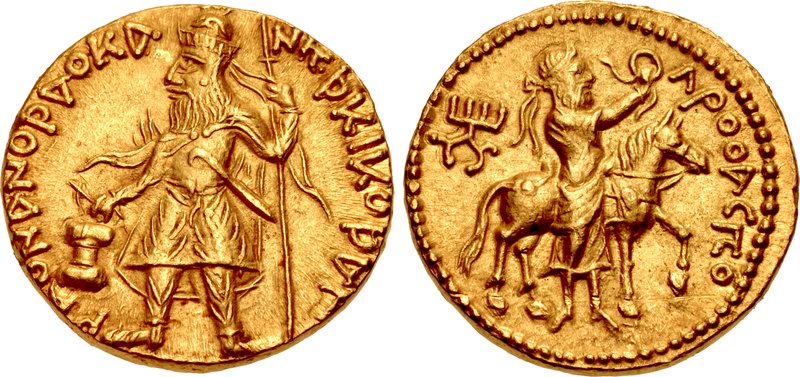
The Kadphises kings. Kujula Kadphises united the five clans and established himself in Kabul and Kashmir; one of his copper coins carries a Roman-style bust. His successor Vima Kadphises started something new. He was the first Indian ruler to issue gold coins regularly, following the weight of Roman gold coins, a system that lasted with changes till the Guptas.
Kanishka, the greatest Kushana. Kanishka I may not have been closely related to the Kadphises kings. His accession is dated anywhere from AD 78 to 144, but AD 78, the start of the Saka era, is the most likely. His capital was Purushapura (near Peshawar), with Mathura as a second capital, and his empire reached Sanchi and Varanasi.
Kanishka and Buddhism. Kanishka built a monastery and a huge stupa at Purushapura. He sponsored the fourth Buddhist council, where the doctrines of Mahayana Buddhism took final shape. Monks now travelled to Central Asia and China, and Kanishka also patronised art and Sanskrit literature.
Decline. Kanishka's successors ruled for over a century, some with Indian names like Vasudeva. In the mid-third century AD the Sassanians of Iran took Peshawar and Taxila, and the Kushanas became their subordinates.
The Silk Route. Central Asian rule opened up new routes to the north. The Silk Route from China ran through Central Asia and Afghanistan to West Asia, with trading stations at Kashgar, Yarkand, Khotan and Miran. The Kushanas controlled this route and taxed its traders, which made them rich.
Gold, horses and boots. India received gold from the Altai mountains and from trade with Rome, which helps explain why the Kushanas issued gold coins on a large scale. Sakas and Kushanas popularised cavalry, with reins and saddles seen in Buddhist sculpture. They also brought the cap, helmet and boots, and horse-riding scenes appear in terracottas from Begram in Afghanistan.
Kings as sons of god. The Kushanas stressed the divine origin of kingship. They called themselves 'sons of god', a title perhaps borrowed from China, and used an Indian form of the Roman title Caesar. The Brahmana lawgiver Manu shows similar ideas of royal authority.
The Satavahanas: the first state in the Deccan
How the Deccan changed. Before this period, the Deccan was a land of villages and tribes such as the Andhras, Sabaras and Pulindas. Change began with Mauryan interest in its gold, diamonds and gems. Market centres grew along the routes, such as Dharanikota on the Krishna and Karad in Satara, and local chiefs called maharathis gained power.
Sources. The Puranas call the Satavahanas Andhras, but their lists vary and mix fact with legend. They must be checked against the Satavahanas' coins of lead, silver and copper alloy and their inscriptions in Buddhist caves. Together these place the start of Satavahana rule around the first century BC.
Simuka to Satakarni. Puranic tradition names Simuka as the founder. The Nanaghat inscription of Queen Nayanika, widow of Satakarni, lists several rulers and records her Vedic sacrifices.
Nanaghat was a key pass from Junnar to the coast. Early Satavahana power suffered setbacks from the Kshatrapas and from Kharavela of Kalinga.
Gautamiputra Satakarni, the restorer. The dynasty revived under Gautamiputra Satakarni. His mother's inscription at Nasik praises him as the restorer of Satavahana glory and describes the extent of his kingdom. He defeated the Kshatrapas of the western Deccan and Gujarat and restruck the silver coins of the Kshatrapa Nahapana with his own name and symbols.
Why fight over the coast? Control of foreign trade was a likely cause of conflict. The Periplus of the Erythraean Sea, written by an unknown Greek sailor in the first century AD, says Greek ships entering Kalyan were sent under guard to Bharuch because of this rivalry.
Later kings. Under his son Pulumavi, Satavahana inscriptions appear at Amaravati in Andhra, showing consolidation in the east. Yajnasri Satakarni was the last important ruler, after whom the kingdom split. Later coins carry bilingual legends, in Prakrit and a south Indian language.
A simpler administration. Satavahana government was simpler than the Mauryan. Ministers chosen by the king, not hereditary, kept the treasury and land records. The kingdom was divided into aharas (districts), such as Govardhana around Nasik and Soparaka on the west coast.
Land grants begin. In the first century AD the Satavahanas started donating the revenue of villages to brahmanas and the Buddhist sangha. Such grants were proclaimed in an assembly and written on copper plates or cloth. This practice became far more widespread under the Guptas, with deep effects on Indian society.
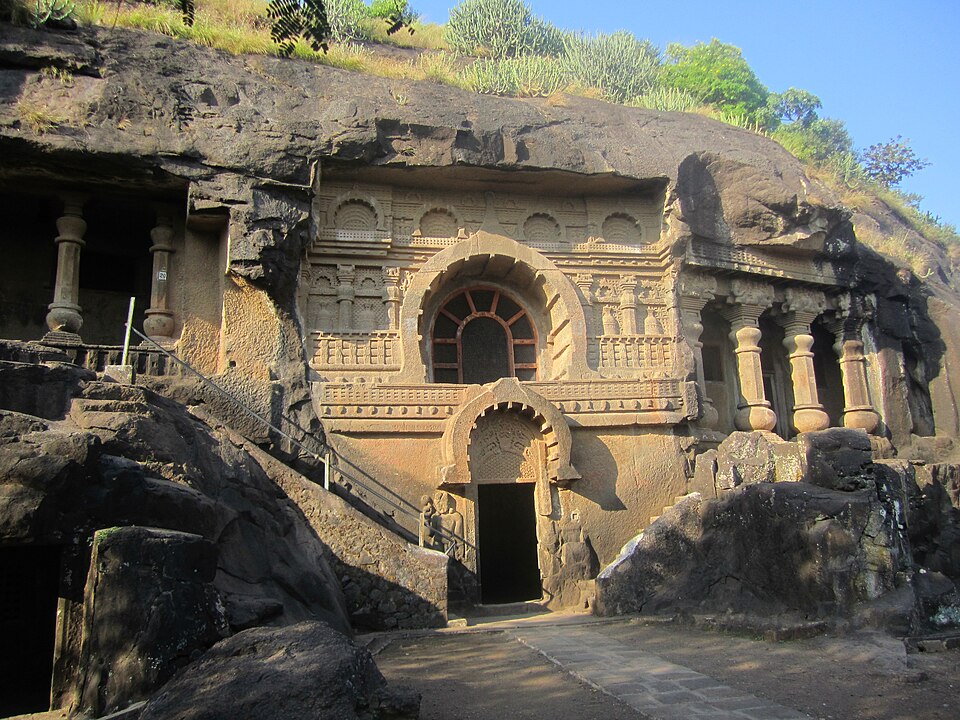
Trade and towns. Ports such as Bharuch, Kalyan, Sopara and Chaul were fed by inland centres through mountain passes. A trans-peninsular route ran from Bharuch to Paithan and Ter and on to Andhra. Fortified, brick-built towns appeared in the Deccan for the first time, and guilds handled trade and acted as bankers.
A different kind of society. Satavahana society did not follow the Dharmasastras closely. Kings were named after their mothers, as in Gautamiputra, 'son of Gautami'. They called themselves unique brahmanas who crushed the pride of the kshatriyas, though the texts say only kshatriyas should rule.
Who gave gifts? Cave inscriptions record donations by merchants, blacksmiths, gardeners, fishermen, women and yavanas (foreigners). Donors gave their occupations rather than their castes. Kings and queens gave land and money to Buddhist monasteries, which grew rich.
Quick revision
- Sources: Puranas, coins (key), inscriptions (Kharosthi in Gandhara), Milinda-panha, Chinese Han chronicles; for Sungas: Mahabhashya, Malavikagnimitra, Harshacharita, Divyavadana.
- Sungas: brahmana family; Pushyamitra killed Brihadratha; two asvamedhas (Ayodhya inscription of Dhanadeva); Agnimitra; last Devabhuti, killed c. 75 BC by Vasudeva, founder of Kanvas.
- Indo-Greeks: from Bactria; Menander/Milinda, capital Sakala; converted by Nagasena; 30+ kings from coins; Hellenistic art leading to Gandhara.
- Sakas: via Bolan pass; Maues first in Gandhara; Azes beat Hippostratos; Rudradaman I (c. AD 130-152); Junagadh AD 150, first major Sanskrit inscription, Sudarshana repairs.
- Satrap system: mahakshatrapa, kshatrapa; Indo-Greek meridarchs, strategos; dual rule. Gondophernes (Parthian), St Thomas.
- Kushanas: Yueh-chi clan; Kujula Kadphises; Vima Kadphises regular gold coins; Kanishka probably AD 78 (Saka era), Purushapura and Mathura; fourth council, Mahayana; Sassanians mid-3rd century.
- Local: Ayodhya, Kausambi, Mathura, Panchala; Audumbaras, Kunindas, Trigartas, Yaudheyas, Arjunayanas, Malavas, Sibis. Kharavela: Mahameghavahana, Jaina, Hathigumpha.
- Satavahanas: 'Andhras'; c. 1st century BC; Simuka; Nayanika, Nanaghat; Gautamiputra Satakarni beat Kshatrapas, restruck Nahapana's coins (Nasik inscription); Pulumavi, Amaravati; Yajnasri.
- Satavahana rule: aharas; ministers; first land grants to brahmanas and Buddhists; guilds as bankers; ports Bharuch, Kalyan, Sopara; Periplus.
- Society: matronymics; 'unique brahmanas'; donors by occupation; yavanas; foreigners absorbed as fallen kshatriyas.