BPSSC SI Special Branch · Module 39 · standard depth · 15 min
Cyber security, data protection and digital public infrastructure
What BPSSC SI Special Branch asks from this chapter
Syllabus lines this chapter covers:
Prelims: general knowledge and social issues · General knowledge and current affairs
Mains Paper I (objective): GS 50, Maths 40, Reasoning 40, English 20, Hindi 20, Bihar GK 30 · General studies
BPSSC SI Special Branch questions from this module are being sorted into our bank.
Cut to standard depth for BPSSC SI Special Branch. 8 deeper paragraphs are in the full chapter.
Start from zero: why a digital country needs digital guards
In earlier chapters we saw how India moved its money, documents and services online. Today a farmer gets a subsidy in a bank account, a student downloads a marksheet on a phone, and a shopkeeper takes payment by scanning a code. This is convenient, but it also means that much of life now depends on computers and networks working safely.
Three linked topics in one picture
Just as a city needs police and locks, a digital country needs cyber security. This means protecting computers, networks and data from being attacked, damaged or stolen. It also needs rules on how people's personal data may be used, which is called data protection.
This chapter covers three linked topics. First, the main cyber threats and the institutions that defend India. Second, India's data protection law. Third, India's digital public infrastructure (DPI), such as Aadhaar, UPI and DigiLocker, which is both a great strength and a target that must be protected.
The main cyber threats, explained simply
Before we study the defenders, we must know the attackers' tools. Most cyber attacks fall into a few simple types. Each one can be understood with an everyday example.
Common cyber attacks in one picture
Phishing: a fake email, message or call that tricks you into sharing a password or OTP, like a stranger in a bank uniform asking for your PIN.
Malware: harmful software such as viruses and spyware that enters a device and damages it or steals from it.
Ransomware: malware that locks your files and demands money to unlock them, like a thief who locks your house and sells you the key.
Botnet: a large group of infected devices, often cheap cameras or routers, secretly controlled by an attacker.
DDoS (distributed denial of service): a flood of fake traffic from a botnet that overloads a website so that real users cannot reach it.
Data breach: theft or leak of stored data, such as customer records from a company.
Why attacks keep rising. More people, devices and services are online every year, so there are more doors to attack. Many users are new to the internet and do not recognise tricks. And attackers can sit in another country, which makes catching them hard.
Why attacks rise, and who attacks
Who attacks. Attackers range from small fraudsters seeking money to organised gangs and, in some cases, hostile states. State-backed attacks may aim at power grids, banks or defence networks to cause damage in a crisis. This is why cyber security is now part of national security.
Who defends India in cyberspace
Knowing the threats, we can now see India's defence system. Its legal base is the Information Technology (IT) Act, 2000, which created the key agencies. Each agency has a clear job, and exams often test which agency does what.
Who protects India in cyberspace
1. CERT-In (Section 70B). The Indian Computer Emergency Response Team works under MeitY. It is the national agency for responding to cyber security incidents: it collects reports, issues warnings, and helps organisations recover. In 2025 it handled more than 29.44 lakh incidents.
2. NCIIPC (Section 70A). The National Critical Information Infrastructure Protection Centre protects critical information infrastructure (CII). CII means computer systems whose failure or destruction would badly hurt national security and similar vital areas, such as power, banking, telecom and transport. NCIIPC shares threat warnings with such organisations and checks that they follow the 2018 rules for Protected Systems.
Critical information infrastructure
3. Other tools run by or with CERT-In.
The National Cyber Coordination Centre (NCCC) is a control room that scans cyberspace for threats.
The Cyber Swachhta Kendra is a botnet-cleaning and malware-analysis centre that offers free tools to citizens.
The Cyber Crisis Management Plan tells every central ministry how to respond to a major attack.
Sector teams such as CSIRT-Fin for finance and CSIRT-Power for electricity handle their own areas.
4. National coordination. The National Cyber Security Coordinator sits under the National Security Council Secretariat, linking all these agencies at the top. The Union Budget 2025-26 set aside ₹782 crore for cyber security projects.
Rules for reporting, and help for citizens
Agencies can act only if they learn about attacks quickly. So India made rules that force organisations to report, and built easy channels for ordinary people to complain. Both matter, because most attacks hit ordinary users first.
CERT-In directions of 28 April 2022
CERT-In directions (2022). On 28 April 2022, CERT-In issued directions under Section 70B(6) of the IT Act. They cover:
synchronising the clocks of computer systems, so that the order of events in an attack can be traced;
mandatory reporting of cyber incidents to CERT-In;
keeping logs of computer systems, which act like CCTV footage for investigators;
keeping customer records at data centres, VPN, VPS and cloud service providers;
KYC rules for virtual asset exchanges and wallet providers.
Help for citizens. Cyber crime is a police matter, so the Ministry of Home Affairs created the Indian Cyber Crime Coordination Centre (I4C). Citizens can call the helpline 1930 or file a complaint on cybercrime.gov.in. Quick reporting matters, because money stolen in a fraud can often be frozen before it leaves the banking system.
Hit by fraud? Report fast
Results so far. By October 2025, the Citizen Financial Cyber Fraud Reporting and Management System had helped save more than ₹5,489 crore across more than 17.82 lakh complaints. More than 9.42 lakh SIM cards and 2,63,348 IMEIs linked to fraud were blocked. The Sahyog portal lets agencies send notices to online platforms to remove unlawful content.
Data protection: the DPDP Act and Rules
Security keeps attackers out, but a second question remains. Even honest companies and governments collect huge amounts of personal data, so what may they do with it? This is the job of data protection law.
The four roles in the DPDP Act
Why a law was needed. Apps, banks, hospitals and offices collect names, phone numbers, locations, health records and spending habits. Without clear rules, such data could be sold, misused or carelessly leaked. The Supreme Court's recognition of privacy as a fundamental right in 2017 added pressure for a proper law, which you can study in Polity.
When it came. The Digital Personal Data Protection (DPDP) Act was enacted on 11 August 2023. Its Rules were notified on 14 November 2025, with compliance phased in over 18 months so that organisations have time to adjust.
DPDP Act: dates and penalties
The four roles.
Data Principal: the person whose data it is, such as you.
Data Fiduciary: the body that decides why and how the data is used, such as a bank or an app company.
Data Processor: a body that processes data on behalf of a fiduciary, such as an outsourcing firm.
Consent Manager: an India-based company that helps people give, manage and withdraw consent through one platform.
Key rules.
Key rules of the DPDP Act
Data must generally be used only with the person's consent and for the stated purpose.
People can ask for their data to be corrected or erased, and fiduciaries must respond within 90 days.
Processing children's data needs verifiable parental consent.
Significant Data Fiduciaries, which handle large or sensitive data, face extra duties such as audits and impact assessments.
Enforcement. The Data Protection Board of India handles complaints and works as a digital body, so people can approach it online. Appeals against its orders go to TDSAT. Penalties go up to ₹250 crore for failing to take reasonable security safeguards, and up to ₹200 crore for failing to report a data breach or for breaking the rules on children's data.
A debated change. The Act also amended Section 8(1)(j) of the RTI Act, which deals with personal information. Critics argue this could make it harder to get information about public officials, while the government says it protects individuals' privacy.
Digital public infrastructure: India's model
Now we come to what is being protected. India built a set of shared digital systems that anyone, from a government department to a small start-up, can build services on. These are called digital public infrastructure (DPI), much like roads are public infrastructure for vehicles.
India's DPI as three layers
The three main layers.
UPI growth and DPI abroad
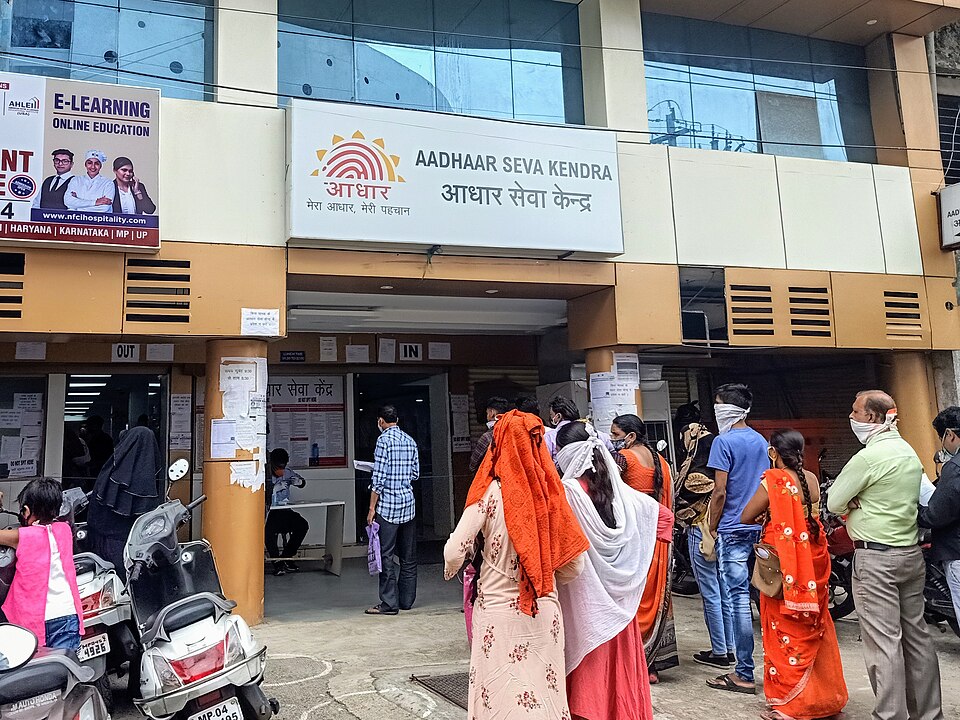
Identity: Aadhaar. A unique digital identity backed by the Aadhaar Act, 2016, with more than 144 crore Aadhaar numbers by March 2026.
Payments: UPI. Instant payments between bank accounts using a phone, which grew from about 2 crore transactions in FY17 to more than 24,162 crore in FY26.
Data and documents: DigiLocker. A digital locker for official documents such as marksheets and licences, with more than 70.69 crore users by March 2026.
Why DPI matters. Because these systems are public and open to build on, many private apps compete on top of them, which lowers costs for users. Together with Jan Dhan bank accounts and mobile phones, they made direct benefit transfers possible, so subsidies reach people without middlemen. This is why DPI is often described as India's big digital innovation.
India takes DPI to the world. During its G20 Presidency in 2023, India launched India Stack Global and the Global DPI Repository, to share these tools with other countries. By February 2026, India had signed DPI agreements (MoUs) with 24 countries.
Why DPI needs strong protection. When crores of people rely on a few shared systems, an attack or leak can harm everyone at once. So DPI must be built with security, privacy and backup plans from the start. This is where the agencies and the data law studied above come together.
Implications: balancing safety, privacy and growth
We have seen the threats, the defenders, the data law and the DPI they protect. UPSC answers need to weigh these against each other. Here are the main tensions.
Four tensions to balance
1. Security versus privacy. Rules that require logs and customer records help investigators catch criminals. But they also mean more personal data is stored, which can itself be leaked or misused. Good policy keeps such data only as long as needed and protects it strongly.
2. Growth versus protection. Strict data rules raise costs, especially for small firms. Yet without trust, people may avoid digital services altogether, which would slow growth even more. The phased 18-month rollout of the DPDP Rules tries to balance this.
3. Awareness is the weakest link. Most financial frauds start by tricking a person, not by breaking a system. So digital literacy, quick reporting on 1930 and simple warnings matter as much as advanced technology.
4. Skills and self-reliance. India needs many more trained cyber security professionals and trusted, home-grown security products. Cyber attacks cross borders, so cooperation with other countries' response teams is also essential.
Previous years' questions
This section shows the real past questions on this chapter for the exam you have chosen. Each question is copied word for word from the official paper, with the year and paper, so that you can see how the topic is actually asked.
Questions are being collected from the official UPSC and BPSC papers. They will appear here once each one is checked against the original paper.
Quick revision
One-page revision card
Main threats are phishing, malware, ransomware, botnets, DDoS and data breaches.
CERT-In (Section 70B, MeitY) responds to incidents and handled 29.44 lakh+ in 2025. NCIIPC (Section 70A) protects critical information infrastructure.
NCCC scans cyberspace, and the Cyber Swachhta Kendra cleans botnets. The National Cyber Security Coordinator sits under the NSCS.
CERT-In directions came on 28 Apr 2022. I4C is under the MHA, with helpline 1930 and cybercrime.gov.in.
DPDP Act:11 Aug 2023; Rules 14 Nov 2025. Its roles are Data Principal, Fiduciary, Processor and Consent Manager, with appeals to TDSAT and penalties up to ₹250 crore.
DPI: Aadhaar (144 crore+), UPI (24,162 crore+ transactions in FY26) and DigiLocker (70.69 crore+ users). India Stack Global began in the 2023 G20, and DPI MoUs cover 24 countries.
Exam-style questions on this chapter. Pick an answer to see the explanation. 0 of 9 answered
CERT-In derives its role as the national agency for cyber incident response from which section of the IT Act, 2000?
NCIIPC is the nodal agency for:
Consider the following statements:
1. The Cyber Swachhta Kendra is a botnet cleaning and malware analysis centre.
2. The National Cyber Coordination Centre is run by CERT-In.
3. The National Cyber Security Coordinator works under the Ministry of Home Affairs.
Which of the statements given above is/are correct?
The national helpline number to report cyber crime and financial fraud is:
The Indian Cyber Crime Coordination Centre (I4C) was set up by:
Consider the following statements:
1. The DPDP Act was enacted in August 2023.
2. The DPDP Rules were notified in November 2025.
3. All provisions of the Rules came into force on the day of notification.
Which of the statements given above is/are correct?
Under the DPDP Act, the entity that decides the purpose and means of processing personal data is called the:
Appeals against orders of the Data Protection Board of India lie with:
Assertion (A): India's DPI lets private firms build competing services on shared public rails.
Reason (R): Systems like Aadhaar, UPI and DigiLocker are open public infrastructure rather than a single closed government app.
Mains answer practice
Write your answer first, then open the points a good answer should cover.
Critically examine India's institutional and legal framework for cyber security and data protection. (250 words)
Show answer points
IT Act 2000: CERT-In (s.70B) for incidents, NCIIPC (s.70A) for critical infrastructure.
NCCC, Cyber Swachhta Kendra, CCMP, sector CSIRTs, NCSC under NSCS; CERT-In directions of 28 Apr 2022.