

CGPSC SSE · Module 49 · Mains depth · 19 min
Fighting climate change: mitigation, adaptation, carbon removal and loss and damage
What CGPSC SSE asks from this chapter
Syllabus lines this chapter covers:
- Prelims Paper 1, Part 1 (India) · Environment
CGPSC SSE questions from this module are being sorted into our bank.
Read at full depth: basics, the standard layer and the Mains analysis.
Start from zero: the overflowing bathroom
Imagine coming home to find water pouring from a tap and flooding the bathroom. The first thing you do is turn off the tap, because otherwise nothing else will help. Then you mop the floor and lift things off the ground to limit the damage. Some things, such as a soaked carpet, are already ruined, and you call the insurer.
Climate action follows the same three steps. Turning off the tap is mitigation, cutting the greenhouse gases that cause warming. Mopping and lifting is adaptation, preparing for the changes that are already happening or cannot be avoided. The ruined carpet is loss and damage, the harm that neither step can prevent.
No single step is enough. If we only mop, the water keeps rising. If we only turn off the tap, we still have a flooded floor, because the gases already in the air keep warming the planet for decades.
This chapter explains each step: what it means, the tools it uses, why each is needed, and the debates around it. It covers net zero, carbon removal, geoengineering, carbon markets, the limits of adaptation and the new fund for loss and damage.
Mitigation and adaptation: two different jobs
The IPCC defines mitigation as "a human intervention to reduce emissions or enhance the sinks of greenhouse gases". There are two ways to do it. You can cut emissions, for example by using solar power instead of coal, or you can enlarge sinks that absorb carbon, such as forests and soils.
Adaptation is the process of adjusting to the actual or expected climate and its effects. The goal is to reduce harm, or to make use of any new opportunities. Examples include heat action plans for cities, drought-tolerant seeds, early warning systems for cyclones, and raising homes in flood-prone areas.
The two differ in who benefits. A tonne of CO2 cut anywhere helps the whole world, so mitigation is a global public good, and every country is tempted to let others do it. Adaptation mostly helps the place where it happens, so its benefits are local and easier to justify to voters.
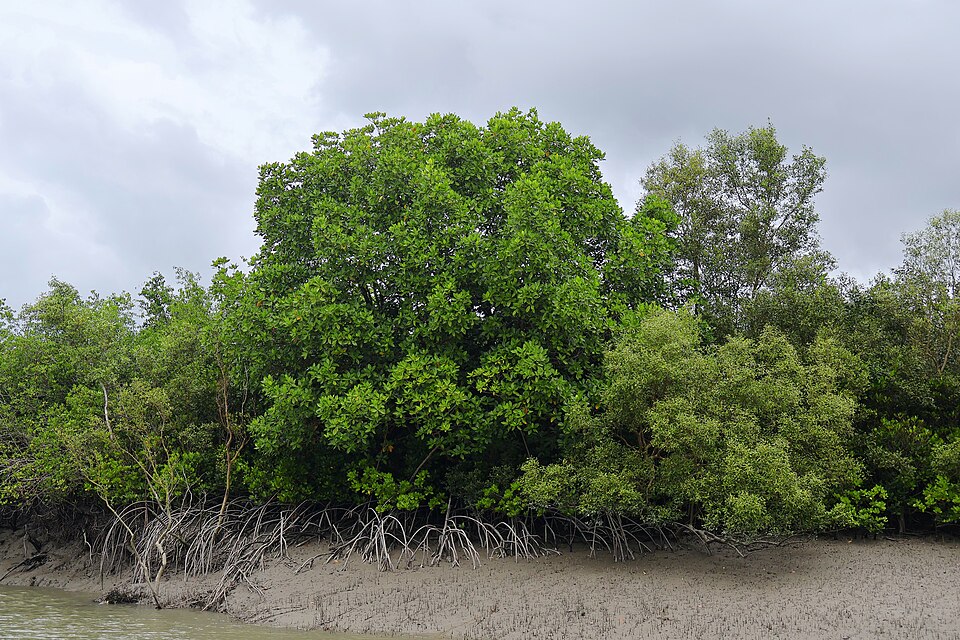
They also differ in timing. Mitigation pays off over decades, because it slows future warming. Adaptation pays off now, because it protects people from impacts that are already here. A sensible strategy needs both, and many actions do both at once, such as planting mangroves, which store carbon and protect coasts.
How fast must emissions fall? The meaning of net zero
The Paris Agreement aims to hold warming well below 2 °C and pursue 1.5 °C. The IPCC worked out what that means for emissions. To limit warming to 1.5 °C with no or limited overshoot, global greenhouse gas emissions must fall by about 43% by 2030 and 60% by 2035, compared with 2019 levels.
Carbon dioxide must go further. Global CO2 emissions need to reach net zero in the early 2050s for 1.5 °C. For a 2 °C limit, CO2 net zero can come later, around the early 2070s, but the cuts this decade must still be deep.
What does net zero mean? It does not mean zero emissions. It means that whatever CO2 is still emitted is balanced by the same amount removed from the air, by forests or by technology. Think of a bathtub: the level stops rising when the water flowing in equals the water draining out.
Why does CO2 need to reach net zero? CO2 stays in the air for centuries, so warming keeps adding up as long as net emissions continue. Only when net CO2 emissions stop does the temperature stop climbing. This is why net zero years, such as India's 2070 target, are at the centre of climate policy.
The main mitigation tools are well known: renewable energy in place of coal, oil and gas; energy efficiency in buildings, industry and transport; electric vehicles and public transport; less methane from farms, landfills and gas leaks; and protecting forests. Most of these are cheaper now than a decade ago, which makes deep cuts more affordable.
Pulling carbon back out, and the geoengineering debate
Some emissions are very hard to cut, such as those from cement, steel, aviation and parts of farming. The IPCC states that carbon dioxide removal (CDR) to counterbalance these hard-to-abate residual emissions is unavoidable if the world is to reach net zero. CDR means taking CO2 out of the air and storing it for a long time.
The main CDR methods are:
- Afforestation and reforestation: growing new forests or regrowing lost ones.
- BECCS: growing plants for energy, burning them for power, and capturing and storing the CO2 underground.
- DACCS: machines that capture CO2 directly from the air and store it.
- Enhanced weathering: spreading crushed rock that slowly absorbs CO2 as it weathers.
- Ocean alkalinity enhancement: adding minerals to seawater so it can hold more CO2.
CDR is not the same as carbon capture at a chimney. Capturing CO2 at a power plant or factory before it escapes (carbon capture and storage, CCS) only reduces new emissions. CDR removes CO2 already in the air. Both may be useful, but they do different jobs.
A more radical idea is solar radiation modification (SRM), which tries to cool the Earth by reflecting some sunlight back to space. The IPCC warns that such approaches, if implemented, would introduce a widespread range of new risks. They could offset some warming, but they would not stop CO2 from rising and would not reduce ocean acidification.
Why the caution? SRM treats the fever without curing the disease. If it were started and then suddenly stopped, warming hidden by it could return quickly. It also raises a governance problem, because one country's action would change the climate of every other country.
Carbon markets: putting a price on pollution
Pollution is cheap when the polluter does not pay for the harm. A carbon price fixes this by making each tonne of emissions cost money. It can be a carbon tax, where the government sets the price, or an emissions trading system, where the government caps total emissions and firms buy and sell permits.
Carbon pricing is spreading. By 2026, just over 29% of global greenhouse gas emissions were covered by a direct carbon price, according to the World Bank. The idea is that firms which can cut emissions cheaply will do so first and sell their spare permits, so the total cut is achieved at the lowest cost.
The Paris Agreement brings this idea across borders through Article 6. Article 6.2 lets countries trade internationally transferred mitigation outcomes, that is, emission cuts made in one country and counted by another. It insists on robust accounting to avoid double counting, so the same tonne is not claimed by both.
Article 6.4 creates a central UN-supervised market, the Paris Agreement Crediting Mechanism, which replaces the old Kyoto-era system. Countries agreed on the final building blocks of these carbon markets at COP29 in Baku in November 2024. The details of the negotiations are covered in the chapter on climate summits and their mechanisms.
The debate. Supporters say markets channel money to the cheapest cuts, often in developing countries. Critics worry about weak credits that claim cuts that would have happened anyway, and about rich polluters buying their way out of real change. The quality of credits is therefore the key issue.
Adaptation: preparing, and knowing its limits
Some warming is already locked in, so adaptation is no longer optional. Article 7 of the Paris Agreement sets a global goal on adaptation: enhancing adaptive capacity, strengthening resilience and reducing vulnerability to climate change. This gave adaptation equal standing with mitigation in the treaty.
Adaptation takes many forms. Infrastructure responses include embankments, cyclone shelters and heat-resistant roads. Ecosystem-based responses include restoring mangroves, wetlands and watersheds. Social and institutional responses include crop insurance, early warning systems, heat action plans and changing sowing dates.
But adaptation has limits. The IPCC distinguishes soft limits, where options may exist but are not currently available, often for lack of money or knowledge, from hard limits, where no adaptive action can avoid intolerable risks. Soft limits have already been reached for some people, and hard limits have been reached in some ecosystems, such as some coral reefs and mountain habitats.
Adaptation can also go wrong. Maladaptation is a response that ends up increasing risk, often by locking people into a vulnerable path. The IPCC gives examples such as seawalls that protect one stretch of coast but harm another or encourage building in danger zones, and fire suppression in ecosystems that naturally need fire.
Why finance matters. Poorer countries face the biggest adaptation needs with the least money. At COP29, countries agreed a new collective goal of at least USD 300 billion a year by 2035 for developing countries, with a call to scale up to USD 1.3 trillion a year from all sources. Developing countries argue that this is still far short of what they need.
Loss and damage: paying for what cannot be prevented
Even with strong mitigation and adaptation, some harm cannot be avoided. Homes swept away by a cyclone, farmland made salty by the sea, or a culture lost when an island becomes uninhabitable are examples. This is loss and damage, and Article 8 of the Paris Agreement recognises the need to avert, minimise and address it.
For decades, small island states and poor countries argued that those who caused the problem should help pay for such losses. Rich countries resisted, fearing unlimited legal liability. The breakthrough came at COP27 in Sharm el-Sheikh, Egypt, in 2022, where countries decided to establish a fund for responding to loss and damage.
The fund was made operational on 30 November 2023, on the first day of COP28 in Dubai, the first time a substantive decision was adopted on a conference's opening day. It is now called the Fund for responding to Loss and Damage. The World Bank serves as its interim trustee and hosts its secretariat, and the Philippines was selected as the host country of its Board.
Why it matters, and the debate. The fund is a moral and political milestone, because it accepts that the most vulnerable deserve support for harm they did little to cause. The open questions are how much money it will hold, who must pay, and how quickly it can reach affected communities.
Mains lens: balancing the three responses
Mains questions here usually ask you to compare responses, judge a tool such as carbon markets or geoengineering, or argue India's position. Four arguments give structure.
1. Mitigation, adaptation and loss and damage are complements. Use the bathroom analogy in one line, then show that cutting emissions reduces future adaptation costs, while adaptation protects people now. Loss and damage covers what is left, which links to fairness.
2. Removal is a supplement, not a substitute. The IPCC says CDR is unavoidable for hard-to-abate emissions, but relying on future removal to delay cuts today is risky. Forests can burn and technologies are not yet proven at scale, so deep cuts must come first.
3. Markets need integrity. Carbon pricing can lower costs and bring finance to developing countries, but only if credits are real and counted once. Article 6's accounting rules exist for exactly this reason.
4. Equity runs through everything. Developing countries need finance for both mitigation and adaptation, and the COP29 goal of USD 300 billion a year by 2035 is judged against much larger needs. A balanced answer acknowledges progress and the gap together.
Mains practice: six questions, six angles
These are practice questions written by us, not past papers. Past questions from each exam appear in the PYQ panel of this module.
| Angle | Question | Key points to cover |
|---|---|---|
| Concept | Distinguish between climate change mitigation and adaptation. Why must both proceed together? | Give the IPCC definitions, the global versus local benefit and the timing difference. Then add examples that do both, such as mangroves. |
| Net zero | What does net zero mean? Why is reaching net zero CO2 essential to stop global warming? | Explain balancing emissions with removals and CO2's long life. Then give the 43% by 2030 and early-2050s figures and India's 2070 target. |
| Technology | Examine the role and risks of carbon dioxide removal and solar radiation modification in tackling climate change. | List CDR methods and the IPCC view that CDR is unavoidable for residual emissions. Then explain SRM's new risks, termination danger and governance problem. |
| Markets | Can carbon markets deliver real emission cuts? Discuss with reference to Article 6 of the Paris Agreement. | Explain carbon tax versus trading and the 29% coverage. Then cover Articles 6.2 and 6.4, double counting and credit quality. |
| Adaptation | "Adaptation has limits, and some adaptation can do more harm than good." Discuss. | Define soft and hard limits with examples, then explain maladaptation using seawalls and fire suppression. End with finance and planning that avoid lock-in. |
| Justice | Trace the evolution of the loss and damage fund. How far does it address climate justice? | Cover Article 8, COP27 in 2022, operationalisation on 30 November 2023, the World Bank and the Philippines. Then judge the size, contributors and speed of delivery. |
How to use this table: each answer should first explain the what, then give the why from this chapter, and end with a way forward.
Quick revision
- Mitigation = reduce emissions or enhance sinks; adaptation = adjust to actual or expected climate; loss and damage = harm neither can prevent.
- For 1.5 °C: GHG −43% by 2030, −60% by 2035 (from 2019); CO2 net zero in the early 2050s; for 2 °C, CO2 net zero around the early 2070s.
- Net zero = remaining emissions balanced by removals.
- CDR is unavoidable for hard-to-abate emissions: forests, BECCS, DACCS, enhanced weathering, ocean alkalinity.
- SRM brings new risks and does not stop CO2 rise or ocean acidification.
- Carbon price covers just over 29% of global emissions (2026); Article 6.2 = traded outcomes without double counting; Article 6.4 = Paris Agreement Crediting Mechanism; final building blocks agreed at COP29 Baku (2024).
- Article 7 = global goal on adaptation; soft vs hard limits; maladaptation (seawalls, fire suppression); COP29 finance goal USD 300 billion a year by 2035, call for USD 1.3 trillion.
- Loss and damage fund: agreed COP27 (2022), operational 30 Nov 2023 (COP28); World Bank trustee and secretariat host; Board hosted by the Philippines; Article 8.