

CGPSC SSE · Module 7 · Mains depth · 26 min
Building an empire: Mysore, the Marathas, the Sikhs and the tools of expansion
What CGPSC SSE asks from this chapter
Syllabus lines this chapter covers:
- Prelims Paper 1, Part 1 (India) · History and national movement
CGPSC SSE questions from this module are being sorted into our bank.
Read at full depth: basics, the standard layer and the Mains analysis.
Start from zero: how do you swallow a country?
In 1765 the Company ruled Bengal and Bihar and held a few posts on the coast. By 1857, almost the whole of India was either ruled by the British directly or by Indian princes who obeyed them. How did a trading company swallow a whole subcontinent in less than a hundred years?
The answer is that it used three tools, often at the same time. The first was war, against powers strong enough to fight back, such as Mysore, the Marathas and the Sikhs. The second was the subsidiary alliance, which tied Indian rulers to the Company without a battle. The third was the doctrine of lapse, which took over states when a ruler died without a son.
This chapter follows each tool in turn. As you read, keep two questions in mind. Why could the Indian powers not stop the British? And which tool did the most damage?
The road to empire at a glance
This table lists the main powers the Company faced and how each was brought under British control. The details follow in this chapter.
| Power or tool | Key leaders | How it ended |
|---|---|---|
| Mysore | Haidar Ali and Tipu Sultan | Four Anglo-Mysore wars were fought, and Tipu was killed in 1799. |
| The Marathas | The Peshwa, Sindhia, Holkar, Bhonsle and Gaikwad | Three Anglo-Maratha wars were fought, and the Peshwa was dethroned after the third. |
| Subsidiary alliance | Lord Wellesley, from 1798 | Hyderabad joined first in 1798, and many states became dependent princely states. |
| The Sikhs of Punjab | Ranjit Singh | Two Anglo-Sikh wars followed his death, and Punjab was annexed in 1849. |
| Doctrine of lapse | Lord Dalhousie, 1848-56 | Satara, Sambalpur, Nagpur and Jhansi were annexed. |
Notice that war was used against the strongest powers, while alliances and lapse were used to absorb the rest. The British chose the cheapest tool that would work in each case.
Mysore: the kingdom that fought hardest
A soldier becomes ruler. Mysore had been ruled by the Wodeyar family. Haidar Ali, a cavalry commander, led its army from 1749. In 1761 he took effective power and turned the Wodeyar rulers into figureheads.
Building a war state. Haidar and Tipu kept the old Wodeyar administration of eighteen departments, but they changed who held power in the countryside. Haidar auctioned large tracts to tax farmers who pressed revenue demands on the local chiefs, and Tipu went further, expelling the chiefs and renting out their lands. Tipu also paid his troops a regular salary instead of a share of the loot, so the army could not tie up with the chiefs.
Tipu the trader-king. French soldiers were hired to train Mysore's infantry and artillery along European lines. Tipu set up state trading centres, and in 1785 he banned the export of pepper, sandalwood and cardamom from his ports. In 1788 he forbade trade with the English altogether, but war cost so much that he raised land revenue by 30 per cent when his defeats were at their worst.
Why did Mysore need the coast? Mysore was landlocked. It depended on ports on the east coast for trade and for military supplies, and these ports were falling under European control. So Haidar, and after 1782 his son Tipu Sultan, tried to win access to both coasts of the peninsula.
A bold state. They took coastal Karnataka and northern Kerala, and this let Tipu open diplomatic and trade links with the Middle East. Tipu's ambitions went further than his father's, and he tried to free Mysore from even formal Mughal overlordship. Mysore under these two rulers was among the strongest states in India.
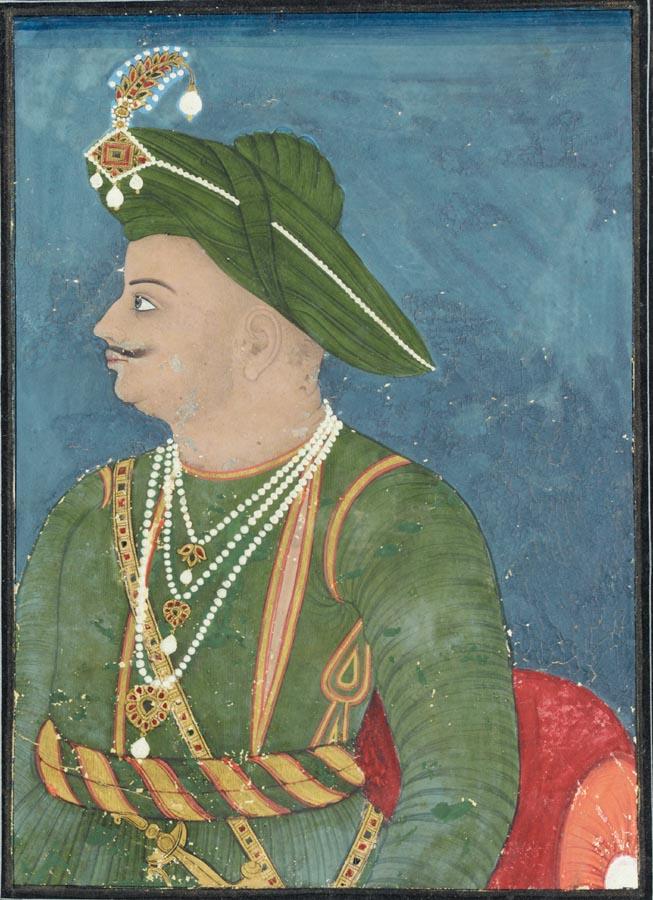
Why was Mysore still vulnerable? Mysore could not build internal unity. It relied heavily on migrants and mercenaries for its army and finances, and local chiefs called Poligars resisted it again and again. Its neighbour Travancore also defended itself firmly against Mysore.
Why did the Company want Mysore crushed? The reasons were mainly commercial: Haidar and Tipu controlled the trade of the Malabar coast, which threatened British trade in pepper and cardamom, and Mysore also threatened British control of Madras. Mysore's alliance with the French made the danger look worse. From the 1770s the Company gave Mysore no breathing room and blocked its access to the rich lands and ports of the Coromandel coast.
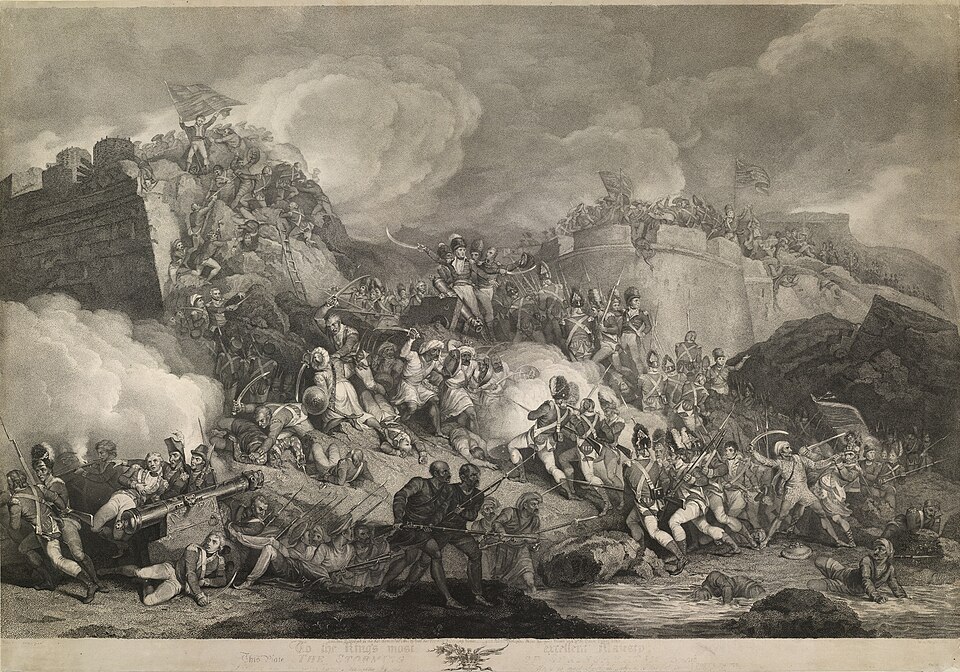
Four wars. In 1766 the Nizam and the Marathas joined the British against Haidar, but he struck back, chased the English to within five miles of Madras and dictated a treaty in 1769. That treaty was a defensive alliance, in which each side promised to help the other if a third power attacked. In the second war Sir Eyre Coote defeated Haidar in 1781, and Haidar died in 1782 while the war was still on, so Tipu fought on.
The end of Mysore's independence. The fourth war in 1799 was launched by Lord Wellesley, and Tipu Sultan was killed as his capital Seringapatam fell. The British did not take all of Mysore: they carved a small kingdom out of Tipu's lands, gave it back to the Wodeyars and bound it by a subsidiary alliance. The Company's most determined enemy in the south was gone.
Why does Mysore matter for your answer? Mysore shows that a strong, modernising Indian state could still lose. Its problems were not only military: no sea access, no internal unity and enemies on every side. These same weaknesses appear again and again in the story of Indian resistance.
The Marathas: a confederacy that could not hold together
From kings to Peshwas. After Shivaji's time, Maratha power recovered under Sahu, who ruled from 1708 to 1749. Under Sahu, the Peshwas, his chief ministers, took control of the state. Baji Rao I (Peshwa 1720-40) and his successors spread Maratha power across Malwa, Gujarat and Bundelkhand.
A confederacy of chiefs. As the Marathas expanded, powerful chiefs set up their own states. The Bhonsles ruled at Nagpur, the Gaikwads at Baroda, the Holkars at Indore and the Sindhias at Gwalior, while Shivaji's line stayed at Satara. Together with the Peshwa at Pune, they formed a loose confederacy, united in name but often rivals in practice.
The blow at Panipat. In 1761, at the third battle of Panipat, the Afghan ruler Ahmad Shah Abdali defeated the Maratha chiefs. Maratha power in the north was badly shaken. It was rebuilt by Mahadaji Sindhia (1761-94), a gifted commander who employed many European soldiers, and Emperor Shah Alam II made him deputy regent in the mid-1780s.
How did the British get in? Rivalry inside the confederacy gave the British their openings. When chiefs quarrelled, one side would turn to the Company for help. The Gaikwad ruler Fateh Singh, for example, dealt directly with the Company, and by 1800 the British were deciding who would succeed to the Gaikwad throne.
The first war and Salbai. The British fought three Anglo-Maratha wars, and the first grew out of a quarrel over who should be Peshwa, in which Raghunath Rao (Raghoba) turned to the English for help. It ended with the Treaty of Salbai (1782), which Nana Fadnavis ratified a year later. Salbai confirmed the British hold on Salsette, recognised Madhav Rao Narayan as the rightful Peshwa and kept the peace for about twenty years, which freed the British to deal with Mysore.
Bassein and the second war. After Nana Fadnavis died, Jaswant Rao Holkar defeated the combined armies of Sindhia and the Peshwa and captured Poona. Peshwa Baji Rao II turned to Wellesley and signed the Treaty of Bassein (1802), accepting the subsidiary alliance: he could no longer deal with other powers without British consent and had to pay a large yearly subsidy. Sindhia and Bhonsle fought to save Maratha independence in the second war (1803-05), but they were beaten and signed separate treaties, among them Daulat Rao Sindhia's treaty of 1803, which surrendered territory in the north and west.
Holkar stands alone. Holkar had stayed out of that fighting, and in 1804 he tried to build a coalition of Indian rulers against the British, but it failed. Wellesley's recall then brought a pause in the wars.
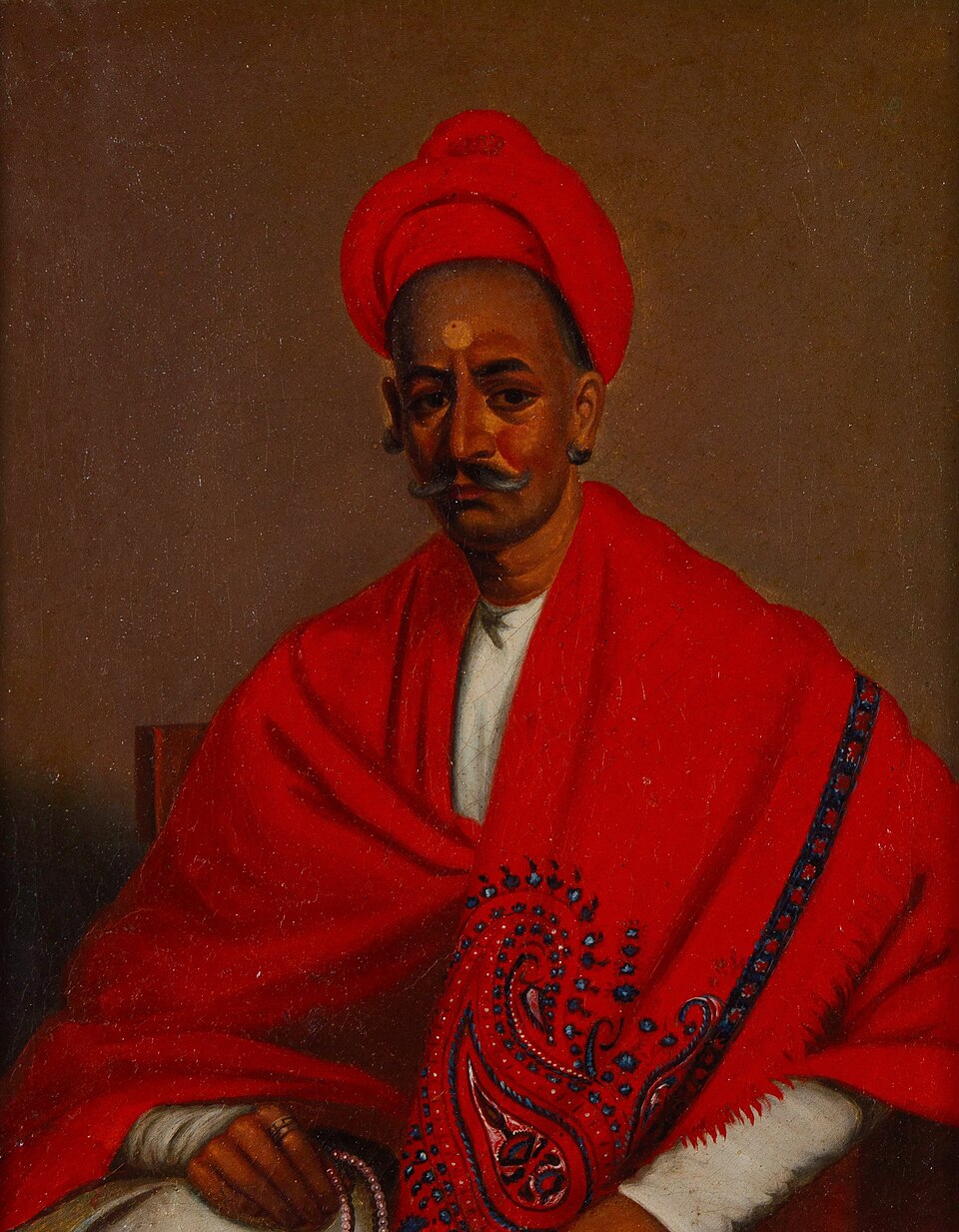
The end of the Peshwa. In the third Anglo-Maratha war, which began in 1817, Baji Rao II made a last bid to rally the Maratha chiefs. The British defeated him, abolished the Peshwaship, annexed his lands and pensioned him off to Bithur near Kanpur. Bhonsle lost his lands north of the Narmada, Holkar ceded territory and became a subordinate chief, and a small state of Satara was carved out for Pratap Singh, a descendant of Shivaji.
Why did the Marathas lose? The Marathas had the size and the soldiers to resist. What they lacked was unity, since each chief put his own state first. The British fought them one at a time and drew some chiefs to their side, so the confederacy never fought as one.
The subsidiary alliance: conquest without battle
What was it? Lord Wellesley introduced the subsidiary alliance system in and after 1798. Under it, the British promised to protect an Indian ruler from outside attack and internal disorder. It sounded like friendly help, but the conditions told a different story.
What did the ruler have to accept? The terms were:
- The ruler had to keep a British force in his state and pay a subsidy for it.
- He could not make alliances with other powers or fight wars without British permission.
- He had to accept a British Resident at his court, who had the authority to interfere in its politics.
Why was this so useful to the British? The system let the British maintain large armies at no cost to themselves, because the Indian ruler paid. It also removed French influence from Indian courts, which mattered greatly while Britain and France were at war. Above all, its main purpose was to make the British the paramount power in India.
The first to join. The Nizam of Hyderabad was the first to join, in 1798. He replaced his French officers with English ones and handed over Bellary and Cuddapah to pay for the British army. Mysore was brought into the system in 1799, after Tipu's death.
Awadh: the method before the system. Awadh shows the same method at work long before 1798. After Buxar, Nawab Shuja-ud-Daula got his state back but was bound by a treaty of mutual defence paid for by him, with duty-free trade for the Company and Rs 50 lakh in war debts. He also accepted a permanent British force at Rs 2,10,000 a month per brigade, a British Resident at his court, and a promise to employ no European without British consent.
Squeezing out cash and land. Each new Nawab needed Company backing to win the throne and paid for it, and in 1798 the Company deposed Wazir Ali and installed Saadat Ali Khan. In 1801 Wellesley forced Saadat Ali to cede the Doab, Gorakhpur and Rohilkhand, cut the Awadh army to less than a tenth of its size and promise to govern on the Company's advice. That last clause was vague, and in 1856 it became the main ground for annexing Awadh.
Taking the shine off the Mughal crown. In 1819 the Company encouraged Nawab Ghazi-ud-Din Haider to declare independence from the Mughal emperor. It looked like a gift to Awadh, but it weakened Mughal authority everywhere and cleared the way for the British to become the new all-India power.
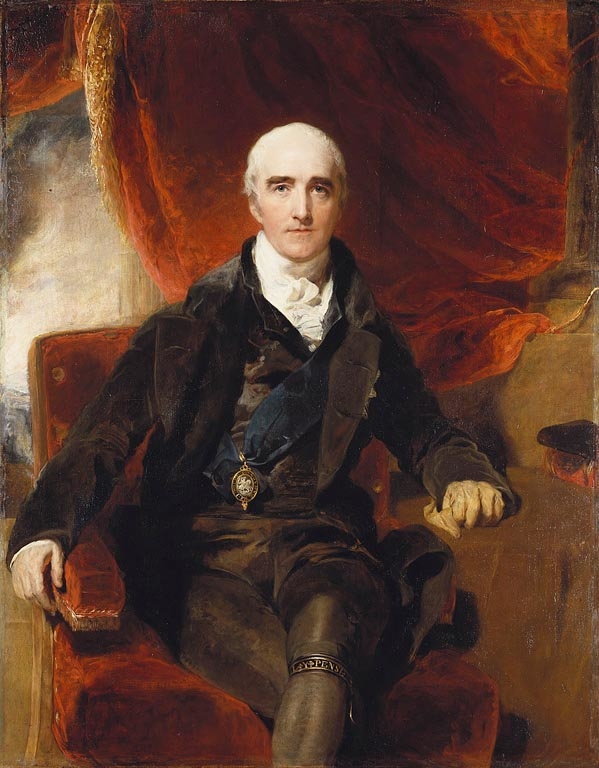
What did it do to the Indian states? States under the alliance became princely states, which kept their rulers but lost their freedom. A ruler who had handed over his foreign policy and his army could no longer defend himself or choose his friends. The Resident often became the real power behind the throne.
Why does this matter for your answer? The subsidiary alliance was conquest without battle and without cost. It explains how a small number of British troops could control so many Indian states. It also explains why the Marathas fought: accepting it meant giving up their independence.
The Sikhs and Punjab: the last kingdom to fall
The rise of Ranjit Singh. In the 18th century, Sikh chiefs had fought the Mughals and the Afghan invader Abdali, and by the 1770s some sixty Sikh chieftains held Punjab. Ranjit Singh joined many of these principalities into one kingdom. He captured Lahore in 1799, made it his capital and was master of most of Punjab by 1809.
From misls to a monarchy. In the second half of the 18th century the small Sikh fighting bands, called jathas, regrouped into twelve misls, regional confederacies under their own chiefs. They met in the Sarbat Khalsa, whose agreed resolution was called a gurmata, but the misls soon fought one another. Ranjit Singh, leader of the Sukerchakia misl, used this rivalry to bring them under one rule, and went on to take Multan (1818), Kashmir (1819) and Peshawar (1834).
A Mughal-style, secular state. Ranjit Singh kept the Mughal pattern of subas, parganas and villages, and his Diwan was the most powerful official after the king. He appointed men of different faiths on merit and made grants to religious institutions of all faiths. Land revenue was taken by sharing the crop (batai), by estimating the standing crop (kankut) or in cash (zabti), and the state's share ranged from a third to two-thirds of the produce.
A modern army. Ranjit Singh raised money through monopolies on the trade in salt, grain and textiles. With it he built an army partly trained by European mercenaries. It became the second largest modernised army in Asia, after the British army itself.
The line on the Sutlej. Until 1808 the British wanted Ranjit Singh as a buffer against a French march on India, but once that danger faded they backed the cis-Sutlej Sikh states that wanted protection from him. A British force marched to Ludhiana, and by the Treaty of Amritsar (1809) Ranjit Singh gave up his claims south of the Sutlej. The two powers then stayed friendly until his death in 1839, since a strong, disciplined Punjab was not an easy target.
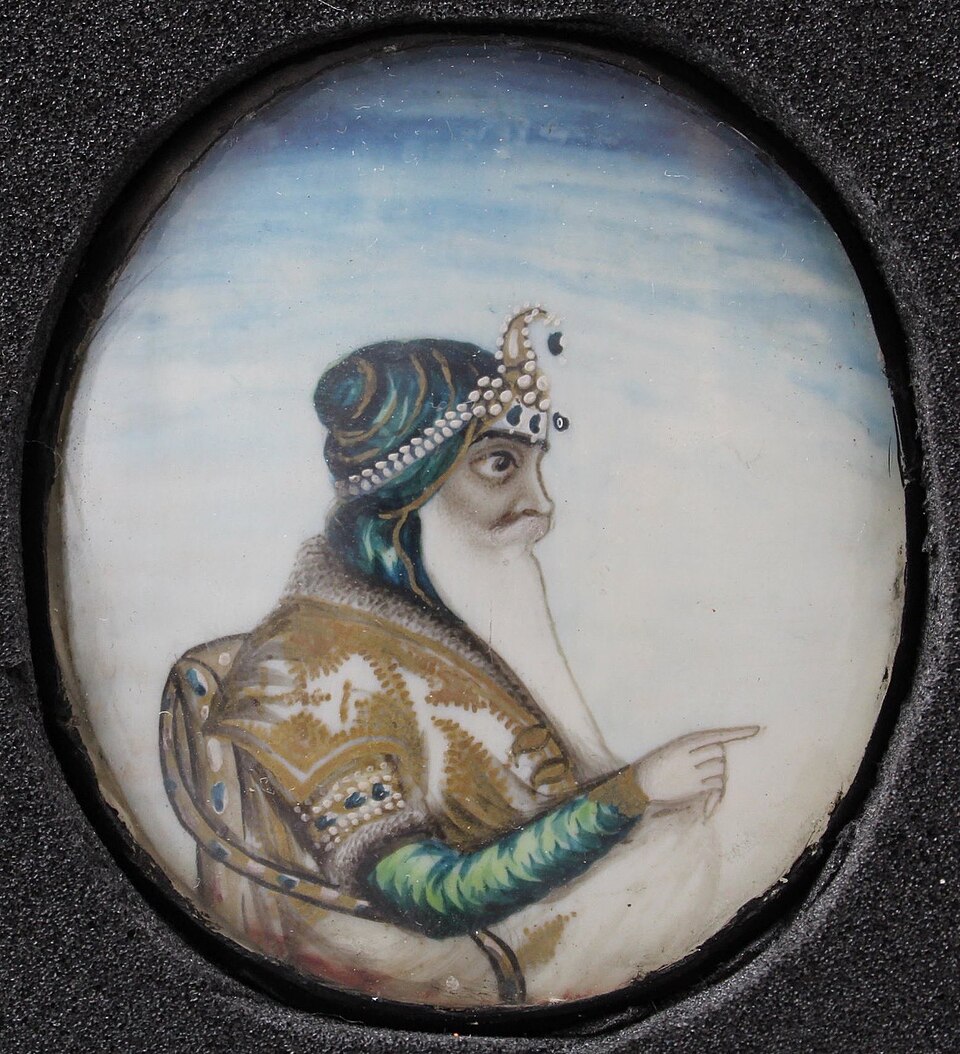
The Anglo-Sikh wars. After 1839 five rulers came to the throne in quick succession, and the army had a hand in each change. The First Anglo-Sikh War was declared on 13 December 1845, and leaders such as the prime minister Lal Singh and the commander Tej Singh failed their own army at critical moments. By the Treaty of Lahore (8 March 1846) the British annexed the Jalandhar Doab, cut the Punjab army to 20,000 infantry and 12,000 cavalry and placed a British force at Lahore, and in the same year Jammu and Kashmir passed to the Dogra Raja Gulab Singh for a cash payment.
Punjab annexed. A second treaty in December 1846 gave the British Resident at Lahore authority over every department of the state. A revolt in 1848 gave the British the chance they wanted, and in the Second Anglo-Sikh War they won a decisive victory at Gujrat on the river Chenab. In 1849 Lord Dalhousie annexed Punjab, the last major Indian state to be conquered, and Ranjit Singh's son Dalip Singh was pensioned off and sent to England.
The lesson of Punjab. Punjab had a strong army, but its strength rested on one ruler. Once he was gone, the state could not hold together, and the Company was waiting. This pattern, a strong leader followed by a struggle over succession, gave the British their chance again and again.
The doctrine of lapse and the last annexations
An old custom. Indian kings who had no natural son commonly adopted an heir. The adopted son was accepted as the rightful successor by custom. This old practice became the target of a new British policy.
What was the doctrine of lapse? Lord Dalhousie, Governor-General from 1848 to 1856, devised the doctrine of lapse. Under it, a state that had been created by the Company or was under its paramount influence would lapse, that is, be annexed, if its ruler died without a natural male heir. Adopted heirs lost the right to the throne, and also the pensions that the British had granted.
Which states were taken? Under this doctrine the British annexed Satara (1848), Sambalpur (1850), Nagpur (1853) and Jhansi (1854), among others. In each case an adopted heir was pushed aside.
Why was this such a big change? By this rule the British took over the right to decide who would succeed to an Indian throne. They also claimed the authority to judge whether a ruler was competent. Indian rulers now held their thrones only at British pleasure.
Awadh: annexed for "misrule". Awadh was annexed in 1856 for a different reason. The British said its ruler was of evil disposition and indifferent to his subjects, and so unfit to rule. Berar had been annexed in 1854, and Sindh had been occupied in 1843.
Why does this matter? Lapse and annexation turned many rulers, nobles and their followers against the British. The Rani of Jhansi and the people of Awadh were among those who felt this anger most sharply. That anger exploded only a few years later, in the revolt of 1857.
Why could the Indian powers not stop the British?
1. They would not unite. The regional states that rose after the Mughals were often based on one group, such as the Marathas, Jats or Sikhs. Mutual rivalry stopped them from uniting against an outside power. The British could fight them one at a time and win allies among their enemies.
2. Most had no sea. Apart from the Marathas, all the major states were landlocked. This made them vulnerable to the Company, which began as a sea power and could bring men, money and guns by ship. Mysore's long struggle to reach the coast shows how much this mattered.
3. Shaky foundations. Several states depended on mercenaries and outsiders and lacked deep support at home. Others rested on one great ruler, like Ranjit Singh, and collapsed after his death. Succession quarrels gave the Company an opening again and again.
What did the conquest cost Indian society? Annexation hurt many people at once. Soldiers lost their jobs, craftspeople lost their royal buyers, and nobles and dependants of the old rulers were ruined. Scholars and priests lost the patronage of courts, and chieftains and zamindars were impoverished.
The final picture. By the mid-19th century, no single Indian power could resist the British. Much of India was ruled directly, and the rest was held through princely states bound by alliances. The resentment built up during this conquest became one of the main roots of the revolt of 1857, whose story is told in The Revolt of 1857: causes and outbreak.
Mains practice: building an empire
These are practice questions written by us, not past papers. Past questions from your exam appear in the PYQ panel.
| Angle | Question | Key points to cover |
|---|---|---|
| Tools | Examine the methods by which the British expanded their rule in India between 1765 and 1856. | Explain war, the subsidiary alliance and the doctrine of lapse with one example each. Then show how the British chose the cheapest tool that would work. |
| Why (causes) | Why did the Indian powers fail to resist British expansion? | Cover disunity, landlocked states, mercenaries and succession quarrels. Then add British naval power and the money of Bengal. |
| Evaluation | "The subsidiary alliance was conquest without war." Discuss. | Explain the terms and the Nizam's case of 1798. Then show the benefits to the British and the loss of freedom for the princes. |
| Case study | Assess the resistance offered by Mysore under Haidar Ali and Tipu Sultan. | Show the search for the coast, the four wars and Tipu's outside links. Then explain the weak points: no unity, mercenaries and the Poligars. |
| Link | How did Dalhousie's annexations prepare the ground for 1857? | Explain lapse with Satara, Nagpur and Jhansi, and the annexation of Awadh for misrule. Then link this to the anger of rulers, nobles and soldiers. |
How to use this table: each answer should explain the what, then the why, and end with what it led to.
Quick revision
- Haidar Ali took power in Mysore in 1761, and his son Tipu Sultan ruled after 1782.
- Four Anglo-Mysore wars were fought, and Tipu was killed in 1799.
- The Marathas were a loose confederacy of the Peshwa, Bhonsle, Gaikwad, Holkar and Sindhia, with Shivaji's line at Satara.
- Abdali defeated the Marathas at Panipat in 1761, and the British later fought three Anglo-Maratha wars.
- Salbai (1782) ended the first Anglo-Maratha war, and by Bassein (1802) Peshwa Baji Rao II accepted the subsidiary alliance.
- After the third war, the Peshwaship was abolished and Baji Rao II was pensioned off to Bithur.
- By the 1801 treaty Awadh ceded the Doab, Gorakhpur and Rohilkhand, and its "advice" clause was later used to annex it.
- Lord Wellesley began the subsidiary alliance in 1798, and the Nizam of Hyderabad joined first.
- Ranjit Singh took Lahore in 1799, accepted the Sutlej line by the Treaty of Amritsar (1809), and Punjab was annexed by Dalhousie in 1849.
- Dalhousie's doctrine of lapse took Satara, Sambalpur, Nagpur and Jhansi.
- Awadh was annexed in 1856 on the charge of misrule.