

CGPSC SSE · Module 27 · Mains depth · 27 min
Directive Principles of State Policy
What CGPSC SSE asks from this chapter
Syllabus lines this chapter covers:
- Prelims Paper 1, Part 1 (India) · Constitution and polity
CGPSC SSE questions from this module are being sorted into our bank.
Read at full depth: basics, the standard layer and the Mains analysis.
Start from zero: a rule or a goal?
On a family fridge there are two notes.
The red note says: "No one hits anyone in this house." If your brother hits you, you can go straight to your parents and they must act. It is a rule, and you can complain when it is broken.
The green note says: "This year we will try to save for a house and for college fees." If the money runs short, you cannot "complain" that the house was not bought. It is a goal: the family works towards it as far as its income allows.
The Constitution has both kinds of notes.
- Part III (Fundamental Rights) is the red note: rules that stop the State from hurting you, and courts enforce them.
- Part IV (Directive Principles of State Policy) is the green note: goals the State must keep working towards, like jobs, health, education and fair wages. No court can force the State to reach them, but every government is told to keep them in front of it.
This chapter reads that green note, line by line.
What Part IV is, and its unusual status
The Directive Principles of State Policy are in Part IV, Articles 36 to 51. The idea came from the Irish Constitution. They are instructions or guidelines to governments at the Centre and in the States, put in to provide economic justice and to stop wealth from piling up in a few hands.
Article 36: who is "the State"? It has the same meaning as in Part III (Article 12): the Union and State governments, Parliament and the State Legislatures, and local and other authorities. So a municipality is also addressed by these directives.
Article 37: the key Article. It says three things at once:
- the provisions of Part IV "shall not be enforceable by any court";
- but the principles are "nevertheless fundamental in the governance of the country";
- and "it shall be the duty of the State to apply these principles in making laws".
What "non-justiciable" means: if the State does not provide, say, a living wage for all workers, you cannot file a case asking a court to order it. Why design it so? The goals need money and time, and The State must pursue them "keeping in view its limited material resources". A court cannot order a poor country to become rich overnight, but the Constitution can tell every government which way to walk.
Article 38: the master directive
Think of Article 38 as the headline of Part IV; the other Articles are the details.
Article 38(1): the State shall strive to promote the welfare of the people by securing a social order in which justice, social, economic and political, shall inform all the institutions of national life. Notice these are the same three kinds of justice promised in the Preamble.
Article 38(2) (added by the 44th Amendment, 1978): the State shall
- strive to minimise inequalities in income, and
- endeavour to eliminate inequalities in status, facilities and opportunities,
- not only between individuals but also between groups of people living in different areas or engaged in different vocations.
Example: a doctor in a big city and a doctor in a remote rural block may have the same degree, but very different hospitals, roads and schools around them. Article 38(2) asks the State to reduce such gaps between regions and occupations, not only between rich and poor individuals.
Article 39: six fair-share rules
Article 39 says the State shall "in particular" direct its policy towards securing:
- (a) that citizens, men and women equally, have the right to an adequate means of livelihood;
- (b) that the ownership and control of the material resources of the community are so distributed as best to serve the common good;
- (c) that the economic system does not lead to concentration of wealth and means of production to the common detriment;
- (d) equal pay for equal work for both men and women;
- (e) that the health and strength of workers and the tender age of children are not abused, and citizens are not forced by economic necessity into work unsuited to their age or strength;
- (f) (as substituted by the 42nd Amendment) that children get opportunities to develop in a healthy manner in conditions of freedom and dignity, and childhood and youth are protected against exploitation and abandonment.
Read them as a story: (a) everyone should be able to earn a living; (b) and (c) the country's land, mines and factories should not end up owned by a handful of people; (d) a woman doing the same job should get the same pay; (e) and (f) workers and children should not be used up by poverty.
Why (b) and (c) matter for exams: Land reform and nationalisation are linked to these goals. The Constitution even protects laws made to give effect to them: Article 31C (25th Amendment, 1971) shields such laws from challenge under Articles 14 and 19.
Justice and work: Articles 39A to 43B
Article 39A: equal justice and free legal aid (added by the 42nd Amendment, 1976). The legal system should promote justice "on a basis of equal opportunity", and the State shall provide free legal aid so that no citizen is denied justice because of economic or other disabilities. A poor tenant facing eviction should not lose a case only because she cannot pay a lawyer.

Article 41: work, education, public help. Within the limits of its economic capacity, the State shall secure the right to work, to education and to public assistance in cases of unemployment, old age, sickness and disablement. Note the limit: "within its economic capacity".
Article 42: just and humane conditions of work and maternity relief.
Article 43: a living wage. The State shall try to secure to all workers, agricultural, industrial or otherwise, work, a living wage, conditions ensuring a decent standard of life, and leisure and social and cultural opportunities. A living wage is more than a bare minimum: enough to live decently. The same Article asks the State to promote cottage industries in rural areas, which is a Gandhian idea.
Article 43A (42nd Amendment): participation of workers in the management of industries.
Article 43B (97th Amendment, 2011, in force from 15 February 2012): promote voluntary formation, autonomous functioning, democratic control and professional management of co-operative societies. (The same amendment added "co-operative societies" to Article 19(1)(c).)
Gandhi's village in the Constitution
Some directives carry Mahatma Gandhi's vision of a self-reliant, village-based India. These are called the Gandhian principles:
- Article 40: organise village panchayats and give them the powers they need to work as units of self-government. (This seed grew into the 73rd Amendment, which gave Panchayati Raj constitutional status; you will study it in the Local Government module.)
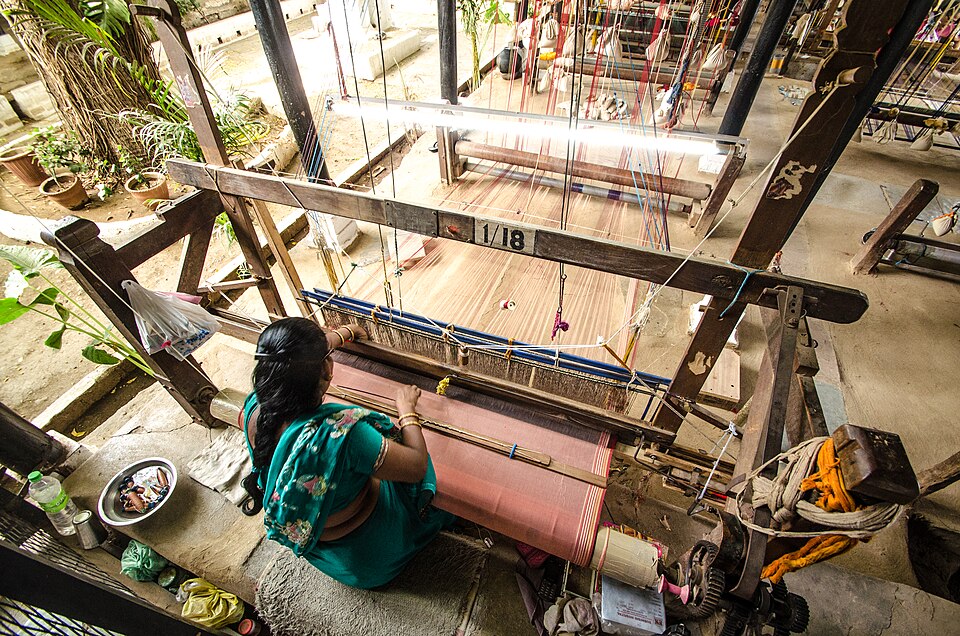
- Article 43 (second half): promote cottage industries, on an individual or co-operative basis, in rural areas. Think of a silk weaver's handloom in a Bhagalpur village.
- Article 47 (second half): bring about prohibition of intoxicating drinks and of drugs injurious to health, except for medicinal purposes.
- Article 48: prohibit the slaughter of cows and calves and other milch and draught cattle.
Memory trick: P-C-P-C: Panchayats (40), Cottage industries (43), Prohibition (47), Cows (48).
Children, health and the weaker sections
Article 45: early childhood. As substituted by the 86th Amendment (2002), in force from 1 April 2010: the State shall try to provide early childhood care and education for all children until they complete six years.
Why did Article 45 change? The 86th Amendment lifted the promise of free and compulsory education for children up to 14 into Part III as Article 21A: education for ages 6 to 14 is now a Fundamental Right. Article 45 now covers the years before six. The same amendment added a duty for parents in Article 51A(k). One promise, three Articles:
| Age | Article | Nature |
|---|---|---|
| 0 to 6 | 45 | Directive (goal) |
| 6 to 14 | 21A | Fundamental Right (enforceable) |
| 6 to 14 | 51A(k) | Duty of parent or guardian |
How far India had to travel: literacy at independence was only about 14%.
Article 46: weaker sections. The State shall promote with special care the educational and economic interests of the weaker sections, in particular the Scheduled Castes and Scheduled Tribes, and protect them from social injustice and all forms of exploitation.
Article 47: nutrition and health. The State shall regard raising the level of nutrition, the standard of living and public health as "among its primary duties". Note the strong words: of all the directives, health and nutrition are called primary duties.
One code, nature, heritage, courts and the world
- Article 44: uniform civil code. The State shall endeavour to secure for the citizens a uniform civil code throughout the territory of India. A civil code covers personal matters such as marriage, divorce, inheritance and adoption. Note the soft verb "endeavour": it is a goal, not an order with a deadline.
- Article 48A: environment (added by the 42nd Amendment, 1976). The State shall try to protect and improve the environment and safeguard forests and wild life. Its partner is the citizen's duty in Article 51A(g).
- Article 49: monuments. It is the obligation of the State to protect every monument, place or object of artistic or historic interest declared by or under a law made by Parliament to be of national importance, from spoliation, disfigurement, destruction, removal, disposal or export. Note: only those declared of national importance by Parliament's law are covered.
- Article 50: separate the judiciary from the executive in the public services of the State, so that the people who run the administration are not the same people who judge cases.
- Article 51: international peace. The State shall endeavour to (a) promote international peace and security; (b) maintain just and honourable relations between nations; (c) foster respect for international law and treaty obligations; and (d) encourage settlement of international disputes by arbitration.
Grouping the directives and the later additions
Four study groups:
- Economic and social: Articles 38, 39, 39A, 41, 42, 43, 43A, 45, 46, 47 (first half).
- Gandhian: 40, 43 (cottage industries), 47 (prohibition), 48.
- International peace and security: 51.
- Miscellaneous: 44 (uniform civil code), 48A, 49, 50.
Which directives were added later?
| Amendment | What it added or changed |
|---|---|
| 7th (1956) | Article 49 wording: monuments "declared by or under law made by Parliament" |
| 42nd (1976) | New 39(f); 39A free legal aid; 43A workers in management; 48A environment |
| 44th (1978) | 38(2): minimise inequalities |
| 86th (2002) | New Article 45: early childhood care up to 6 |
| 97th (2011) | 43B: co-operative societies |
Memory trick for the 42nd: "legal aid, workers, environment, children" = 39A, 43A, 48A, 39(f).
Rights and Directives: two halves of one promise
| Fundamental Rights (Part III) | Directive Principles (Part IV) |
|---|---|
| Negative: they stop the State from doing certain things | Positive: they direct the State to do certain things |
| Justiciable: Supreme Court and High Courts can issue writs to enforce them | Non-justiciable: they create no legal remedy |
| Build political democracy | Aim at economic and social democracy |
| Focus on the individual | Focus on society's welfare |
Different does not mean inferior. The two are complementary and supplementary: together they form the core of the Constitution.
Where they meet in the text:
- Article 31C protects laws that carry out Article 39(b) and (c) from challenge under Articles 14 and 19.
- Article 21A turned a directive (education up to 14) into a Fundamental Right.
- Article 24 (no child labour in hazardous work) and Article 39(e), (f) (protect children) say the same thing in two Parts: one as a ban, one as a goal.
Have the directives worked?
Many directives have turned into real laws and programmes. Match each one to its Article:
| Step taken | Directive behind it |
|---|---|
| Land reforms, abolition of zamindari and jagirdari, ceilings on land | 39(b), 39(c) |
| Nationalisation of banks, life and general insurance | 39(b), 39(c) |
| Abolition of privy purses of former princes | 38(2), 39(c) |
| Right to property removed from Fundamental Rights | 38, 39 |
| Equal wages for men and women | 39(d) |
| Subsidised public distribution for the poor | 47 |
| Khadi and village industries | 43 |
| Panchayati Raj given constitutional status (73rd Amendment) | 40 |
| Co-operation with the UN for world peace | 51 |
Other steps include a national commission for the welfare of women and efforts for SCs, STs and other backward classes (Article 46). Still, there is "a long way to go".
How the courts have read the Directive Principles
Article 37 says that no court can enforce the Directive Principles. That raises a hard question: what should a court do with a directive when it decides a case about rights? Its answer has changed over the years.
At first, a strict line. In early cases such as Champakam Dorairajan and the Kerala Education Bill case, the Supreme Court held that the Directive Principles are not enforceable. The directives stayed outside the courtroom.
Later, read together. In cases such as Chandra Bhavan and Lingappa, the Court said the directives should be read positively, to supplement the Fundamental Rights. In the Gruha Kalyana case, it said they must be read harmoniously with the rights.
In practice today. Courts now use the directives to understand what the State should aim for. For example, in M. C. Mehta (1988), the Supreme Court issued directions on keeping the water of the Ganga clean.
Two steps forward, one step back. In Shah Bano (1985), the Supreme Court upheld a Muslim woman's right to maintenance from her husband after divorce, seen as a step towards the Uniform Civil Code of Article 44. But in the Delhi Development Horticultural Employees' Union case (1992), it held that the government had no obligation to give regular jobs once an employment scheme ended. So the record of directives in court is mixed.
Why goals instead of rules, and what they changed
In 1950 India was poor, with literacy of only about 14 per cent. The framers wanted a welfare state, but they knew the money and machinery would take time. So they wrote these aims as directions that courts cannot enforce, but that every government must keep in view (Article 37).
| Directive | Why it was written in | What it led to |
|---|---|---|
| Non-justiciable but "fundamental" (Art 37) | The State could not afford everything at once | Governments are judged by voters, not courts, on these goals |
| Fair share of resources (Art 39(b), (c)) | Land and wealth were held by a few | Land reforms, abolition of zamindari, bank nationalisation |
| Village panchayats (Art 40) | Gandhi's idea of self-governing villages | Constitutional status for Panchayati Raj later |
| Free legal aid (Art 39A) | Justice should not depend on money | Added in 1976 by the 42nd Amendment |
| Uniform civil code (Art 44) | One set of civil laws for all citizens was an aim, not yet agreed | It stays an "endeavour", a live debate |
| Environment (Art 48A) | Forests and wildlife needed care as the economy grew | Added in 1976; paired with the citizen's duty in 51A(g) |
| Separate judiciary (Art 50) | Judges should not take orders from those who govern | Courts that are independent of the executive |
The big picture. Fundamental Rights build political democracy; Directive Principles aim at economic and social democracy. One tells the State what it must not do, the other tells it what it should try to do.
Why it matters today. Welfare schemes, the uniform civil code debate, free legal aid and environmental policy all trace back to Part IV. A good answer shows how a "non-enforceable" goal still shapes laws, budgets and court reasoning.
Mains lens: pious wishes or a polestar?
A common question: "Directive Principles are mere pious wishes because no court can enforce them." Critically examine.
Introduction: define them (Part IV, Articles 36 to 51) and quote Article 37: not enforceable by any court, yet fundamental in governance and a duty in law-making.
The critics' case:
- they were called no better than "New Year greetings", high-sounding promises;
- they are "holy wishes" with no legal sanction, and the government is not bound to implement them;
- some were framed without enough thought for practical limits.
The supporters' case:
- they are like a polestar that gives direction, even if the ship has not reached it;
- many have become law: land reform, Panchayati Raj, equal wages, nationalisation;
- Article 37 makes applying them a duty of the State in making laws, and the text links them to rights (Article 31C, Article 21A);
- they are a mirror of public opinion that reflects the spirit of the Preamble, so no government can afford to ignore them.
Why the gap remains: lack of political will, lack of awareness and organised action by people, and limited material resources.
Conclusion: their real sanction is the people: a government that ignores them answers to voters at the next election. So they are neither empty wishes nor court orders, but a standing report card for every government.
Mains lens: directives and the welfare state
A common question: "Explain how the Directive Principles provide the framework of a welfare state, with reference to education, children and women."
The directives are best studied through these three lenses. Build your answer on them:
1. Universal education.
- Article 45 now covers early childhood care up to six; education for ages 6 to 14 was lifted to a Fundamental Right in Article 21A by the 86th Amendment, with a parental duty in Article 51A(k).
- At the starting point, literacy was only about 14% at independence; literacy missions, open schooling and distance learning are among the efforts since then.
2. Ending child labour.
- Article 39(e) and (f) say that children's tender age must not be abused, and that they must grow up in freedom and dignity.
- The Fundamental Right in Article 24 backs these directives.
- The obstacles are poverty, social attitudes and a lack of will.
3. Status of women.
- Article 39(a) asks for adequate livelihood for men and women equally, 39(d) asks for equal pay for equal work, and Article 42 asks for maternity relief.
- Article 51A(e) adds the citizen's duty to renounce practices derogatory to the dignity of women.
- One-third of seats in panchayats and municipalities are reserved for women (73rd and 74th Amendments).
Conclusion: a welfare state is one that takes responsibility for the well-being of the weak. Part IV gives that responsibility a written shape; its success depends on resources, political will and an aware public.
Mains practice: more questions, different angles
Practise each with a 150-word answer. The points give the skeleton; add facts from this chapter.
1. Conflict: When a Fundamental Right and a Directive Principle clash, which prevails? Discuss with constitutional provisions.
- Start with the difference: rights are justiciable, but directives are not (Article 37).
- Show that Article 31C protects laws made under 39(b) and (c) from challenge under Articles 14 and 19.
- Explain that the two are still complementary.
- Conclude that harmony is the aim, and the Constitution gives limited priority to some directives by design.
2. Movement: Trace how a directive became a Fundamental Right, using education as the example.
- Explain that before 2002, spreading elementary education was a directive goal.
- Show that the 86th Amendment (2002) made education for ages 6 to 14 a Fundamental Right in Article 21A.
- Add that the new Article 45 covers early childhood care below the age of six.
- Conclude that directives can "graduate" into rights when the country is ready.
3. Equality: Article 38(2) asks the State to minimise inequalities. How have governments tried to act on it?
- Note that the 44th Amendment added 38(2).
- List the steps taken: land ceilings, the end of privy purses and bank nationalisation.
- Point out that 38(2) speaks of inequality between areas and groups, not only between individuals.
- Conclude that this aim is measured by results, not by court orders.
4. Uniform civil code: Examine the arguments for and against Article 44.
- Begin with the text: the State "shall endeavour" to secure a uniform civil code.
- Give the case for it: equal civil law for all citizens, and national integration.
- Give the case against it: respect for diversity, and reform from within communities.
- Conclude that the Constitution set a goal, and left the timing to consensus.
Quick revision
- Directive Principles are in Part IV, Arts 36 to 51, and the idea came from Ireland. Under Art 36, "State" means the same as in Part III, and Art 37 says they are not enforceable by courts but are fundamental in governance, so the State must apply them in making laws.
- Art 38 asks for a social order based on justice (social, economic, political), and 38(2) (44th Amendment) asks the State to minimise income inequality, also between areas and vocations.
- Art 39 asks for (a) livelihood for men and women equally, (b) resources used for the common good, (c) no harmful concentration of wealth, (d) equal pay, (e) no abuse of workers and children, and (f) children's healthy growth (42nd Amendment).
- 39A asks for free legal aid (42nd). 41 asks for work, education and public assistance within economic capacity, and 42 for humane work and maternity relief. 43 asks for a living wage and cottage industries, 43A for workers in management (42nd) and 43B for co-operatives (97th, 2011).
- 44 asks for a uniform civil code, and 45 for early childhood care up to 6 (86th). 46 protects SCs, STs and weaker sections, and 47 makes nutrition and health primary duties and asks for prohibition. 48 asks for modern agriculture and better cattle, and 48A for the environment (42nd).
- 49 protects monuments of national importance, 50 separates the judiciary from the executive, and 51 promotes international peace and arbitration.
- The Gandhian directives are Articles 40, 43, 47 and 48 (remember P-C-P-C).