

CSBC Constable · Module 9 · basic depth · 11 min
Minerals
What CSBC Constable asks from this chapter
Syllabus lines this chapter covers:
- Written exam (12th level, OMR) · Social science: history, geography, civics, economics
CSBC Constable questions from this module are being sorted into our bank.
Cut to basic depth for CSBC Constable. 15 deeper paragraphs are in the full chapter.
Start from zero: what is a mineral?
Look around you: the steel in a bridge, the copper wire in a fan, the aluminium in a pressure cooker, the cement in your house and the salt in your food. All of them come from minerals, natural substances dug out of the Earth. A mineral has a definite chemical composition and usually a crystal structure, and when it is found in amounts large enough to be mined profitably, the rock is called an ore.
Minerals are grouped by what they contain. Metallic minerals yield metals: ferrous ones contain iron (iron ore, manganese, chromite), while non-ferrous ones do not (copper, bauxite, lead, zinc, gold). Non-metallic minerals include mica, limestone, gypsum and salt, while energy minerals include coal, petroleum, natural gas and uranium.
Where minerals occur depends on rock type. Most metallic minerals formed in the very old igneous and metamorphic rocks of the Peninsular Plateau, where molten material cooled and hot fluids deposited ores in cracks. Coal, petroleum, limestone and gypsum are found in sedimentary rocks, which formed in layers in water.
Why it matters. Minerals are the raw materials of industry, infrastructure and defence. Understanding why they occur where they do explains India's industrial map and its import needs.
Where India's minerals lie: the three belts
India's minerals are unevenly spread. The great northern plains, made of thick river alluvium, have almost no economic minerals, because the old rocks lie buried far below. The Peninsular Plateau, by contrast, exposes ancient rocks at the surface, and almost all metallic minerals are found there.
Geographers identify three main mineral belts. The north-eastern plateau belt, covering the Chota Nagpur plateau of Jharkhand, Odisha, Chhattisgarh and West Bengal, is the richest, with iron ore, coal, manganese, bauxite, mica and copper. The south-western plateau belt, across Karnataka, Goa and parts of Tamil Nadu and Kerala, has iron ore, manganese, bauxite and the coastal monazite and thorium sands.
The north-western belt, along the Aravalli range in Rajasthan and into Gujarat, has non-ferrous minerals such as copper, zinc and lead, along with building stones like marble and sandstone, and gypsum. Some geographers add a fourth, Himalayan belt, with copper, lead, zinc, cobalt and tungsten, but the young, folded and unstable rocks make mining there difficult and costly. Offshore, the continental shelf holds petroleum, gas and heavy mineral sands.
Why it matters. The concentration of minerals in a few plateau states explains why Jharkhand, Odisha and Chhattisgarh host heavy industry, and also why they face mining conflicts, displacement and pollution.
Ferrous minerals: iron ore and manganese
Iron ore is the backbone of industrial development, because it is the raw material of steel. India has large reserves of good-quality ore. The two main types are haematite, the most widely mined, with high iron content, and magnetite, with the highest iron content and magnetic properties.
The main iron ore regions are the Odisha–Jharkhand belt, with mines at Badampahar and Gurumahisani in Odisha and Noamundi and Gua in Jharkhand's Singhbhum; the Durg–Bastar–Chandrapur belt, with the famous Bailadila hills of Chhattisgarh, whose high-grade haematite is exported through Visakhapatnam port; the Ballari–Chitradurga–Chikkamagaluru–Tumakuru belt of Karnataka, including Kudremukh in the Western Ghats; and the Maharashtra–Goa belt, where ore of lower grade is exported through Mormugao port.
Manganese is used mainly to make steel and ferro-manganese alloys, and also in bleaching powder, insecticides and paints. About 10 kg of manganese is needed for every tonne of steel. It occurs mostly in Dharwar rocks, and Odisha, Madhya Pradesh, Maharashtra and Karnataka are the main producers, with the Balaghat–Nagpur–Bhandara belt being well known.
Three more ferrous minerals matter for special steels. Chromite, the ore of chromium, gives stainless steel its resistance to rust and is used in chrome plating and heat-resistant alloys; almost all of India's chromite comes from the Sukinda valley of Odisha. Nickel also goes into stainless steel, and most of India's nickel resources are in Odisha too. Tungsten, the metal with the highest melting point, hardens cutting tools and was used in bulb filaments, with small resources in Karnataka and Rajasthan.
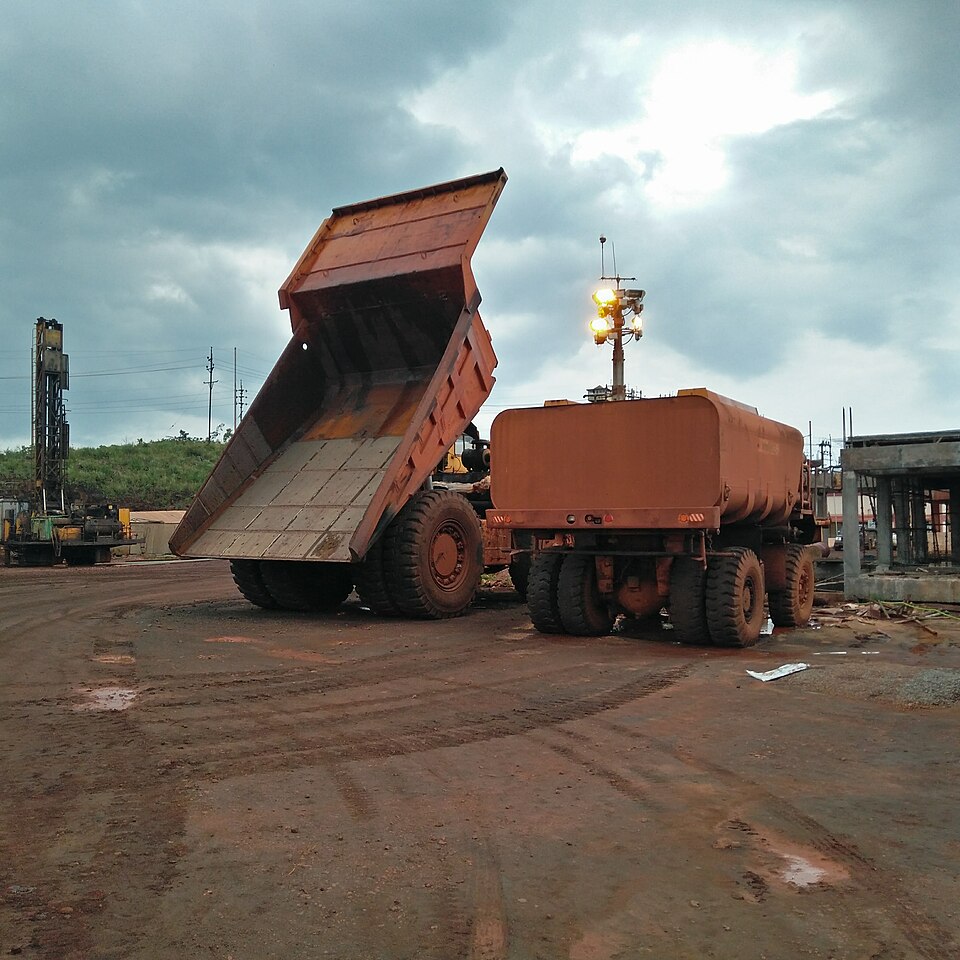
Reserves and production are not always in the same place. Odisha holds the largest share of iron ore and manganese reserves and produces well over half of India's iron ore, while Madhya Pradesh has recently been the largest producer of manganese ore. Ore is mined mostly by open-cast methods from low hill ranges, which explains the scale of forest clearing in mining districts.
Why it matters. India's iron ore underpins its steel ambitions. Questions on ore regions, export ports and the environmental impact of mining in forests are common.
Non-ferrous minerals: bauxite, copper, zinc–lead and gold
Bauxite is the ore of aluminium, a light, strong metal that conducts electricity well and does not rust. It forms when rocks rich in aluminium silicates are deeply weathered under hot, wet conditions, leaving behind laterite. So it is found on the flat-topped plateaus and hills of the peninsula. Odisha is the largest producer, with the huge Panchpatmali deposits in Koraput district, followed by Gujarat, Jharkhand, Chhattisgarh (Amarkantak plateau) and Maharashtra.
Aluminium smelting needs enormous amounts of electricity, so smelters are located near cheap power sources as well as near ore, such as at Korba in Chhattisgarh and Renukoot in Uttar Pradesh.
Copper is essential for electrical cables, electronics and chemical industries, because it conducts electricity well and can be drawn into thin wires. India is deficient in copper and imports a large share. The main mining areas are Khetri in Rajasthan, the Singhbhum belt of Jharkhand and Malanjkhand in Madhya Pradesh's Balaghat district.
Zinc and lead come mainly from the Aravalli rocks of Rajasthan, especially Zawar near Udaipur and Rampura Agucha in Bhilwara, one of the world's largest zinc mines. Gold is mined in small amounts, mainly at Hutti in Karnataka, after the famous Kolar Gold Fields closed in 2001 because the deep mines became uneconomic. Interestingly, the largest gold ore reserves are recorded in Bihar, but almost all actual production comes from Karnataka.
Diamonds occur in kimberlite pipes, old conglomerate beds and river gravels. Panna in Madhya Pradesh is India's main diamond-mining area, and the Golconda region of the Krishna valley was famous for diamonds in history.
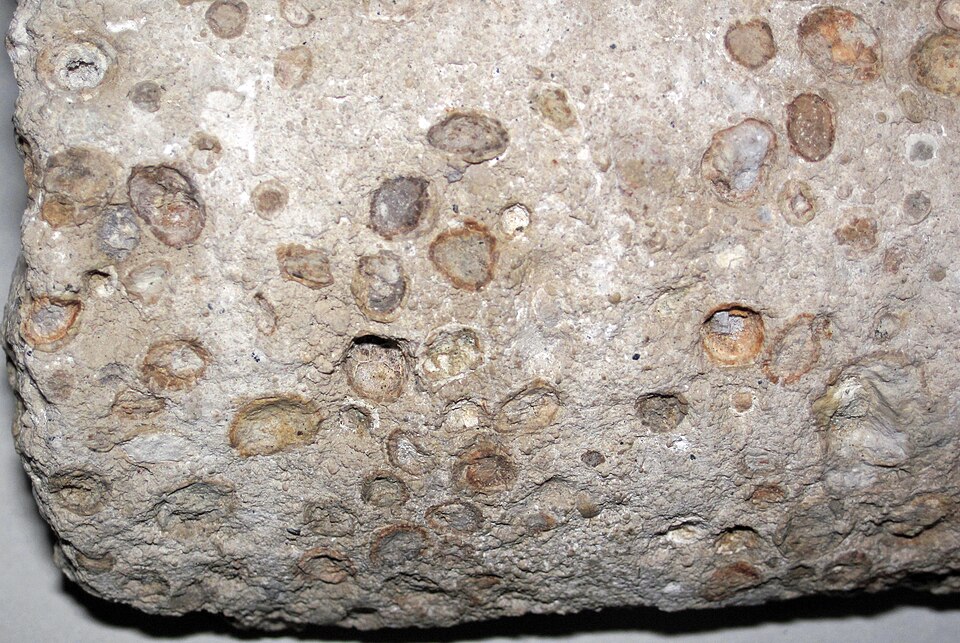
Why it matters. India's dependence on imported copper, gold and critical minerals affects its trade balance and energy transition. Bauxite mining on tribal hills, as in Odisha, has also become a key environment and rights issue.
Non-metallic and critical minerals
Mica splits into thin, transparent, flexible sheets and is an excellent insulator that resists heat and electricity, so it is used in electrical and electronic goods. India has long been a leading mica producer. The main deposits are in the Koderma–Gaya–Hazaribagh belt of Jharkhand and Bihar, Nellore in Andhra Pradesh and parts of Rajasthan.
Limestone is a sedimentary rock made of calcium carbonate. It is the basic raw material for cement and is also used as a flux in iron and steel smelting and in chemical industries. It is found widely, in Madhya Pradesh, Rajasthan, Andhra Pradesh, Gujarat, Chhattisgarh and Karnataka, which is why cement plants are spread across the country near limestone and markets. Gypsum, used in cement and plaster of Paris, comes mainly from Rajasthan, where it formed as deposits in dried-up salt lakes.
Dolomite, a calcium–magnesium carbonate close to limestone, is used as a flux in steel plants and in glass, bricks and ceramics, and is spread across Madhya Pradesh, Chhattisgarh, Odisha and Andhra Pradesh. Together, limestone, dolomite and gypsum make cement one of the most widely located industries in India, since these bulky raw materials are found in many states and cement is costly to carry far.
A new class has become strategically important: critical minerals such as lithium, cobalt, nickel, graphite and rare earth elements. They are needed for batteries, electric vehicles, wind turbines, solar panels and electronics, and their supply is concentrated in a few countries. India has notified a list of critical minerals, opened them to auction and launched a national mission to explore at home and secure supplies abroad, with lithium finds reported in Jammu and Kashmir and other states.
Why it matters. Mica, limestone and gypsum support construction and electronics, while critical minerals are central to the clean-energy transition and supply-chain security.
Quick revision
- Metallic: ferrous (iron, manganese) and non-ferrous (copper, bauxite, zinc, gold); non-metallic: mica, limestone, gypsum.
- Metallic minerals in old peninsular rocks; plains have almost none.
- Three belts: north-eastern plateau (richest), south-western plateau, north-western Aravalli.
- Iron ore: Badampahar, Noamundi, Gua, Bailadila, Kudremukh, Ballari, Goa; haematite most mined, magnetite highest iron.
- Manganese: Odisha, MP, Maharashtra, Karnataka. Bauxite: laterite; Odisha (Panchpatmali).
- Copper: Khetri, Singhbhum, Malanjkhand (deficient). Zinc–lead: Zawar, Rampura Agucha. Gold: Hutti (Kolar closed 2001).
- Mica: Koderma–Gaya–Hazaribagh, Nellore. Limestone: cement.
- Critical minerals: lithium, cobalt, graphite, rare earths.
- Chromite: Sukinda (Odisha); nickel mostly Odisha; diamonds: Panna (MP).
- Odisha: over half of iron ore and most bauxite output; Rajasthan: only lead–zinc producer, most gypsum.