Written exam (12th level, OMR) · General knowledge and current affairs
CSBC Constable questions from this module are being sorted into our bank.
Cut to basic depth for CSBC Constable. 31 deeper paragraphs are in the full chapter.
Why India wanted its own rockets: when and where it all began
Before we look at India's rockets one by one, ask a simpler question: why would a poor, newly independent country spend money on rockets at all? In the early 1960s India had food shortages, few roads and little electricity in villages. Many people asked the same question then.
From Thumba to the Sun: India's rocket timeline
The answer came from Dr Vikram Sarabhai, the founding father of the Indian space programme. He was convinced that the resources of space could help solve the real problems of man and society. In other words, space was not for showing off. It was a tool for weather warnings, TV lessons for villages, maps of crops and forests, and telephone links to far-off places.
When and where it began:
1962: the Indian National Committee for Space Research (INCOSPAR) was set up under the Department of Atomic Energy.
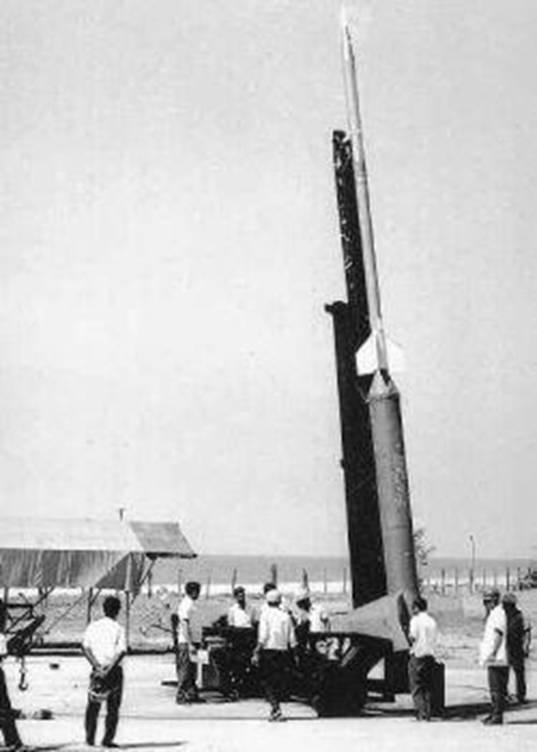
21 November 1963: India's first sounding rocket was launched from Thumba, near Thiruvananthapuram in Kerala. This launch marked the beginning of the Indian space programme.
The Thumba Equatorial Rocket Launching Station (TERLS) was set up in 1963 at a place close to the magnetic equator.
The first rockets were two-stage rockets imported from Russia (M-100) and France (Centaure). On 2 February 1968 TERLS was dedicated to the United Nations.
A sounding rocket goes straight up, measures the upper air for a few minutes and falls back. It does not reach orbit. So in the 1960s India could study the sky above it, but it could not yet put anything into space.
Where it happens: Thumba and Sriharikota
From a committee to a full department:
15 August 1969: the Indian Space Research Organisation (ISRO) was formed in place of INCOSPAR.
June 1972: the government set up the Space Commission and the Department of Space (DOS), and brought ISRO under DOS in September 1972.
Why depending on others was a problem: India's first satellite, Aryabhata, went up on 19 April 1975, but on a Soviet launcher. A country that must borrow a rocket must also wait for another country's date, price and permission. So the next goal was clear: build an Indian rocket.
18 July 1980:SLV-3 placed the Rohini satellite RS-1 in orbit from Sriharikota (SHAR), after a partly successful first flight in August 1979. For the first time, an Indian rocket put an Indian satellite into orbit.
ASLV followed: its first two flights, on 24 March 1987 and 13 July 1988, did not succeed, but ASLV-D3 placed SROSS-C in orbit on 20 May 1992. Failures taught lessons that went into the next rocket, PSLV.
Where India launches from today: the Satish Dhawan Space Centre (SDSC) SHAR is in Sriharikota, in the Nellore district of Andhra Pradesh. It has two launch pads for PSLV and GSLV launches, and a separate pad for sounding rockets. A launch site close to the equator is useful, because the ground there moves fastest as Earth spins and gives the rocket extra speed.
Early sounding rocket at ThumbaPhoto: Times of India, Public domain, via Wikimedia Commons
Why this history matters for the exam: every Indian rocket has an answer to "why".
SLV-3 ended dependence on others for small satellites. PSLV made launches to polar orbits reliable. Later, India's own cryogenic stage ended that dependence for heavy satellites too. Keep this chain in mind for Mains answers on self-reliance.
Previous years' questions
This section shows the real past questions on this chapter for the exam you have chosen. Each question is copied word for word from the official paper, with the year and paper, so that you can see how the topic is actually asked.
Questions are being collected from the official UPSC and BPSC papers. They will appear here once each one is checked against the original paper.
Quick revision
PSLV carries 1,750 kg to SSO, GSLV Mk II carries 2,250 kg to GTO, LVM3 carries 4,000 kg to GTO and 8,000 kg to LEO, and SSLV carries 500 kg to 500 km.
India's space programme began at Thumba on 21 November 1963. ISRO was formed on 15 August 1969, Aryabhata went up on a Soviet rocket in 1975, and SLV-3 put Rohini in orbit from Sriharikota on 18 July 1980.
Each rocket fixed the gap left by the one before: SLV-3 gave India its own way to orbit, PSLV made polar launches reliable, and GSLV with an Indian cryogenic stage (from January 2014) and LVM3 opened the road to heavy satellites.
Exam-style questions on this chapter. Pick an answer to see the explanation. 0 of 9 answered
India's first sounding rocket was launched on 21 November 1963 from:
Consider the following statements:
1. ISRO was formed on 15 August 1969.
2. The Department of Space was set up in 1972.
3. INCOSPAR was set up after ISRO was formed.
Which of the statements given above is/are correct?
Aryabhata, India's first satellite, was launched in 1975 by:
Which rocket first placed a satellite in orbit from Indian soil?
Satish Dhawan Space Centre SHAR is located in:
Which ASLV flight first succeeded, placing SROSS-C in orbit on 20 May 1992?
Consider the following statements:
1. GSLV Mk II is taller than LVM3.
2. LVM3 can carry more mass to GTO than GSLV Mk II.
3. PSLV has three stages.
Which of the statements given above is/are correct?
Which Indian launch vehicle is called the 'Workhorse of ISRO'?
Whom does ISRO call the founding father of the Indian space programme?
Mains answer practice
Write your answer first, then open the points a good answer should cover.
Trace the evolution of India's launch vehicles from SLV-3 to LVM3, bringing out the need each one met. (250 words)
Show answer points
Sounding rockets from Thumba (1963) let India study the upper air but could not reach orbit.
Aryabhata (1975) needed a Soviet launcher, which showed the cost of dependence.
SLV-3 (1980) gave India its own access to orbit, and ASLV's failures taught lessons that went into later rockets.
PSLV made launches to polar and sun-synchronous orbits reliable and became ISRO's workhorse.
GSLV, with an Indian cryogenic stage from January 2014, and LVM3 opened the way to heavy satellites and the Moon.
Previous year questions
Previous year questions for UPSC CSE will appear here once each one is checked word for word against the official question paper.
Frequently asked questions
Why is PSLV called the workhorse of ISRO?
Because it has flown many reliable missions; it can place 1,750 kg in a sun-synchronous polar orbit.
When did GSLV fly with an Indian cryogenic stage?
On 5 January 2014, from GSLV-D5 onwards; earlier stages were supplied by Russia.
What is LVM3?
ISRO's heavy-lift launcher, able to put 4,000 kg in GTO; its human-rated version will launch Gaganyaan.
Where is India's spaceport?
Satish Dhawan Space Centre SHAR at Sriharikota, Andhra Pradesh.