

CSBC Operator · Module 3 · basic depth · 12 min
Migration: types, causes and consequences
What CSBC Operator asks from this chapter
Syllabus lines this chapter covers:
- Written exam: GK & social issues 25, Physics 25, Chemistry 25, Maths 25 (intermediate level) · General knowledge and social issues
CSBC Operator questions from this module are being sorted into our bank.
Cut to basic depth for CSBC Operator. 11 deeper paragraphs are in the full chapter.
Start from zero: why do people move?
Think of the people around you. A shopkeeper's family may have come from a village a hundred kilometres away, a teacher may have moved after marriage, and a cousin may be working in a city in another state or abroad. Very few families have lived in exactly the same place for generations.
Migration is the movement of people from one place to another, usually with a change in their usual place of residence. Together with births and deaths, it is one of the three components that change the population of a place. Births and deaths change the population of the country as a whole, while migration mostly shifts people within it.
People who leave a place are out-migrants or emigrants, and those who arrive are in-migrants or immigrants. The place they leave is the origin and the place they reach is the destination. Migration can be permanent, temporary or seasonal, such as farm workers moving for the harvest and returning home.
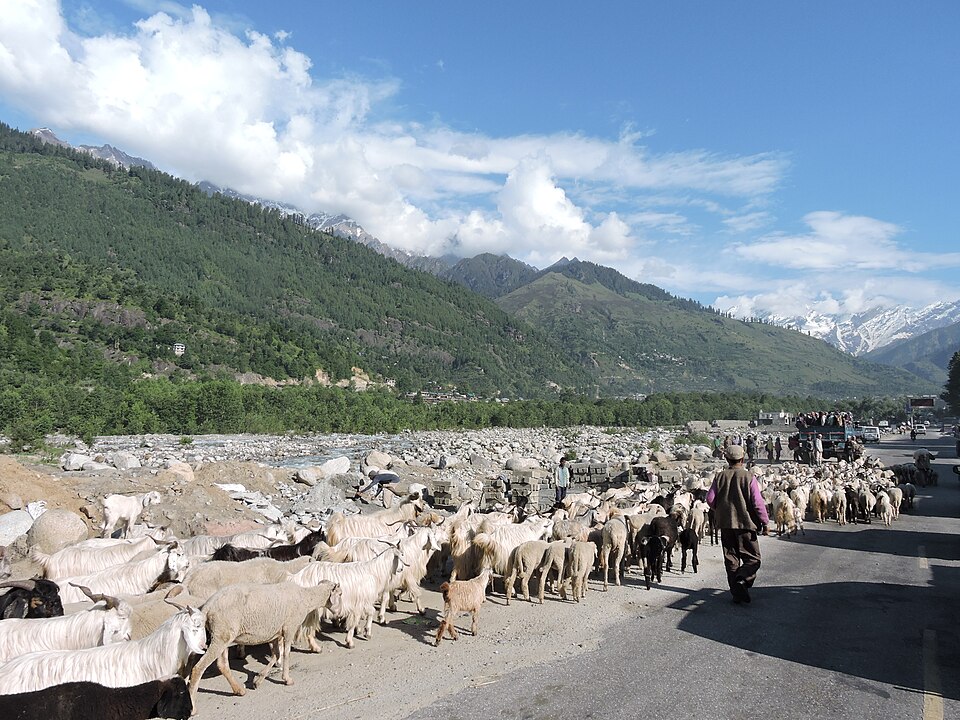
Not every movement counts as migration. Commuting is daily travel between home and work, circulation is short repeated stays away from home, and transhumance is the seasonal movement of herders with their animals between summer and winter pastures, as practised by the Gujjars and Bakarwals in the Himalaya. Refugees have crossed an international border to escape persecution, while internally displaced persons have fled conflict or disaster but remain inside their own country.
Why it matters. Migration reshapes cities, villages and even national economies. Understanding it is essential for urban planning, labour policy and the welfare of millions of workers.
How the Census counts migrants
The Census of India asks two questions to identify migrants. The first is the place of birth: if a person is counted somewhere other than where they were born, they are a migrant by birthplace. The second is the place of last residence: if a person has moved from the place where they lived before, they are a migrant by last residence, even if they were born elsewhere.
Migration is also classified by distance. Intra-district migration happens within a district, inter-district within a state, and inter-state between states. Most migrants in India move short distances, within the same district or state, and a much smaller share crosses state borders.
The numbers are very large. Census 2011 counted roughly 45 crore people as migrants by last residence, around 37 per cent of the population. Most of them, however, are women who moved a short distance after marriage, not workers travelling to distant cities.
The Census misses much seasonal and circular migration, where workers move for a few months to brick kilns, construction sites or harvests and then return. Their numbers became visible during the 2020 lockdown, when lakhs of workers walked home from cities.
Why it matters. The way migration is counted shapes what policy sees. Uncounted seasonal migrants often miss out on rations, voting and social security.
Streams of migration and who moves
Internal migration in India flows in four streams: rural to rural, rural to urban, urban to urban and urban to rural. The largest stream by far is rural to rural. This surprises many students, who expect the flow from villages to cities to be the biggest.
The reason is marriage. In most of India a woman moves to her husband's home after marriage, usually to another village nearby. So women make up the great majority of rural-to-rural migrants, and marriage is the single largest reason for female migration.
For men, the picture is different. The main reason for male migration is work and employment, followed by education and moving with the household. Men dominate the rural-to-urban stream, travelling from poorer villages to cities in search of jobs in construction, factories, transport and services.
Urban-to-urban migration involves people moving between towns for better jobs or higher education. Urban-to-rural migration is the smallest stream, made up mainly of retired people and those returning home after losing work.
Migration is also selective by age and skill. Young adults between about 15 and 35 years move the most, because they are starting work or marriage and have fewer ties. Educated and skilled people tend to move longer distances, often to big cities or abroad, which can drain talent from the regions they leave.
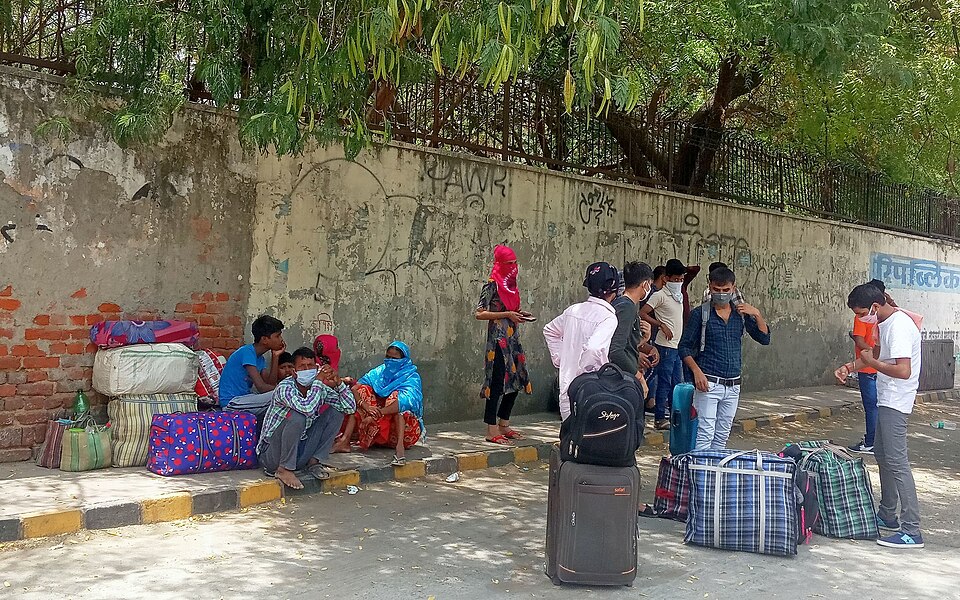
Why it matters. The sex and purpose of migrants decide what support they need. Women migrants need social security and safety, while male labour migrants need housing, portable benefits and fair wages.
Push and pull: the causes of migration
Geographers explain migration through push and pull factors. Push factors are conditions at the origin that drive people away, such as poverty, lack of jobs, small landholdings, debt, droughts, floods, caste discrimination and conflict. Pull factors are attractions at the destination, such as regular jobs, higher wages, better schools and hospitals, and a sense of security.
In India, push factors are usually stronger than pull factors. Many migrants leave not because the city offers a good life but because the village cannot feed the family. This is why rural-to-urban migrants often end up in low-paid, insecure work and live in slums.
Distance and information also matter. Most people move short distances, and long-distance migrants usually follow relatives or people from their village who have already settled at the destination. Over time, these migrant networks create links between particular sending districts and receiving cities.
Big events also trigger migration. The Partition of 1947 caused one of the largest migrations in history, and conflicts, disasters and large dams have displaced millions since then. Such forced migration is very different from voluntary movement for work.
Environmental factors are becoming more important. Rising seas, river erosion, cyclones and repeated droughts force people out of coastal villages, islands such as those in the Sundarbans, and dry farming areas. Such people are sometimes called environmental or climate migrants, and their numbers are expected to grow as the climate warms.
Why it matters. Knowing whether push or pull drives migration helps policy decide where to act. Better rural jobs reduce distress migration, while better urban services make migration safer.
Where migrants go: states, cities and abroad
Inter-state migration follows the map of economic opportunity. Maharashtra attracts the largest number of net in-migrants, followed by Delhi, Gujarat and Haryana. On the other side, Uttar Pradesh and Bihar send out the largest number of net out-migrants, followed by states such as Rajasthan and Madhya Pradesh.
Among cities, Greater Mumbai has received the largest number of in-migrants, followed by Delhi, Kolkata, Chennai and Bengaluru. These metropolitan regions offer the most jobs in industry, trade and services, though many migrants work in the informal sector.
Indians have also migrated abroad in several waves. In the 19th century, the British took indentured labourers, known as girmitiyas, from Uttar Pradesh and Bihar to plantations in Mauritius, the Caribbean, Fiji and South Africa. After independence, doctors, engineers and traders moved to countries such as the United Kingdom, the United States and Canada, and later software professionals followed.
From the 1970s, the oil boom in West Asia drew large numbers of skilled and semi-skilled workers, especially from Kerala. Today the Indian diaspora is among the largest in the world, spread across more than a hundred countries.
Seen globally, international migration has redrawn the human map. From the 16th century, Europeans settled the Americas, Australia and New Zealand, while millions of Africans were carried across the Atlantic as slaves. Today the main flows run from poorer regions of Asia, Africa and Latin America towards North America, Western Europe and the oil-rich countries of West Asia.
Why it matters. The direction of migration shows regional inequality within India. The diaspora is also a source of remittances, investment and soft power.
Consequences: gains and costs
Migration has economic consequences for both ends. At the origin, remittances, the money migrants send home, pay for food, education, health care, housing and debts. In states like Kerala, Punjab and Goa, remittances from abroad have transformed villages, and India as a whole is one of the world's largest recipients of remittances.
At the destination, migrants supply the labour that builds cities and runs factories, though they often face low wages, poor housing and exclusion. Unplanned migration crowds cities, adding to slums, traffic, pressure on water and sanitation, and pollution.
The demographic consequences show up in the sex ratio and age structure. Areas that send out male workers, such as parts of Bihar and Uttar Pradesh, have more women, children and elderly people, while receiving cities have more working-age men. Socially, migration spreads new ideas, skills and cultures, but it can also cause loneliness, family breakdown and tension between locals and outsiders.
For women left behind, migration of men brings both extra burden and new authority, as they manage farms and households alone. Migrant workers themselves face risks such as unsafe work, lack of identity documents and exclusion from welfare in the destination state.
There are environmental consequences too. Rapid inflow into cities increases the demand for land, water and energy, leading to encroachment on wetlands, river beds and green areas. In the sending regions, the loss of young workers can leave terraced fields and traditional water systems untended, as seen in some hill villages that are now almost empty.
Why it matters. Migration is neither good nor bad in itself. Policy must reduce its costs, such as through portable ration cards and housing, while keeping its gains.
Quick revision
- Migration = third component of population change, after births and deaths.
- Not migration: commuting, circulation, transhumance; refugees cross borders, IDPs do not.
- Census measures: place of birth; place of last residence.
- Four streams; rural to rural largest, mostly women after marriage.
- Men migrate mainly for work; women mainly for marriage.
- Push (origin): poverty, joblessness, disasters, conflict. Pull (destination): jobs, wages, services.
- Net in-migration: Maharashtra, Delhi, Gujarat, Haryana. Net out-migration: Uttar Pradesh, Bihar.
- Largest in-migrant city: Greater Mumbai.
- Emigration waves: indentured labour, professionals, West Asia workers.
- Consequences: remittances, slums, skewed sex ratio, social change.