

CSBC Special Branch · Module 8 · standard depth · 21 min
The Revolt of 1857: causes and outbreak
What CSBC Special Branch asks from this chapter
Syllabus lines this chapter covers:
- Paper 2: GS and current affairs 50, Mathematics 30, Bihar GK 20 · General studies and current affairs
CSBC Special Branch questions from this module are being sorted into our bank.
Cut to standard depth for CSBC Special Branch. 3 deeper paragraphs are in the full chapter.
Start from zero: why do people rise up?
Imagine a school where a new manager takes charge. In the first year he takes over the playground of the next-door school and adds it to his own. In the second year he doubles the fees, and many families have to sell things to pay.
In the third year he stops buying chalk and notebooks from the local shopkeeper and brings cheaper ones from a big company, so the shopkeeper's business closes. The teachers are paid less than teachers brought from outside, and they are never promoted. Then a rumour spreads that the manager wants to change the prayer that the school has always said in the morning.
Nobody revolts in the first year. People grumble, but they carry on. Anger collects quietly, like dry wood stacked in a corner.
Then one day a small thing happens, perhaps a new rule that every student must do something they believe is against their faith. That small thing is the spark. Suddenly everyone who had been angry for different reasons stands up at the same time.
History works in the same way. Big uprisings almost never have only one cause. They have:
- Long-term causes (the dry wood): years of loss and hurt felt by different groups of people.
- An immediate cause (the spark): one event that makes the anger burst out.
In 1857 a huge part of north and central India rose against the rule of the English East India Company, a British trading company that had slowly become the ruler of most of India. Soldiers, kings and queens, landlords, peasants and craftsmen joined in. To understand why, we will first meet these people and their troubles, and only then look at the dates and battles.
Keep three questions in mind as you read: Who was angry, and why? What lit the spark? And what changed after it was over?
1857 at a glance: what, when, where, who and why
Before the story, here is the whole event in one table. Every row is explained in detail later in this chapter.
| Question | Answer |
|---|---|
| What happened? | A large armed uprising broke out against East India Company rule. It began in the army and drew in princes, landholders, peasants and artisans. |
| When? | The first incident took place at Barrackpore in March 1857. The Revolt broke out at Meerut on 10 May 1857, and Crown rule began in 1858. |
| Where? | It spread mainly across north and central India, in Delhi, Lucknow, Kanpur, Allahabad, Benaras, Rohilkhand, Bundelkhand, Gwalior, Jhansi and Bihar. |
| Who? | Sepoys started it, and leaders such as Bahadur Shah II, Rani Lakshmibai, Nana Saheb, Tatya Tope, Begum Hazrat Mahal and Kunwar Singh led it. |
| Why? | Political, economic, social-religious and military grievances had built up for years, and the greased cartridges set them off. |
| What changed? | Company rule ended and the Crown ruled India directly. Britain stopped annexing states and began divide-and-rule recruitment in the army. |
Keep coming back to the last two rows. An exam answer on 1857 is strongest when it links why it happened to what it changed.
The kings who lost their kingdoms
By the 1840s the East India Company already ruled Bengal, large parts of the south and the west, and much of the north. It still allowed many Indian rulers to keep their thrones as long as they obeyed it. Then came Lord Dalhousie, Governor-General from 1848 to 1856, who believed that more British territory was better for everyone and used several methods to take over Indian states.
Why did the Company want more land at all? The Company was a business, and its biggest income was the tax on land. After it won the right to collect revenue in Bengal (the diwani of 1765), getting the most revenue out of India became its main aim.
It also had to pay dividends to its investors in Britain. So the more land it controlled, the more it could tax, and this greed for land revenue pushed it into an aggressive policy of territorial expansion.
There was a political aim too. Through the subsidiary alliance and through annexation, the British wanted to become the paramount power in India, the one power above all others. Under the doctrine of lapse, a state could lapse if its ruler was judged incompetent or died without a natural male heir. And it was the British themselves who decided whether a ruler was competent.
1. The doctrine of lapse. In Indian tradition a ruler without a son could adopt one, and the adopted son became the heir. Under Dalhousie's rule, the Company refused to accept such heirs in states that depended on it. When the ruler died without a natural heir, the state "lapsed", meaning it fell to the Company.
This way Satara, Jaitpur, Sambalpur, Nagpur and Jhansi were annexed. Think of the queen of Jhansi: her adopted son was not recognised, and her kingdom was simply taken. That personal loss explains why she would later become one of the bravest leaders of 1857.
2. Annexation for "misgovernment". Berar was taken in 1854. In 1856 the Company annexed Awadh, the rich kingdom around Lucknow, saying its ruler governed badly.
Awadh had been a friendly buffer state for the British ever since the battle of Buxar (1764). So its annexation showed that even an old ally was not safe. Awadh mattered enormously in other ways too: its nobles lost their positions, its court servants and soldiers lost their jobs. Because so many people lost so much at once, the annexation of Awadh in particular created widespread discontent in north and central India.
Why does this matter for the story? Because princes and their followers now had a personal reason to want the Company gone. A ruler who loses his kingdom does not forget it, and the thousands of people who depended on his court do not forget either.
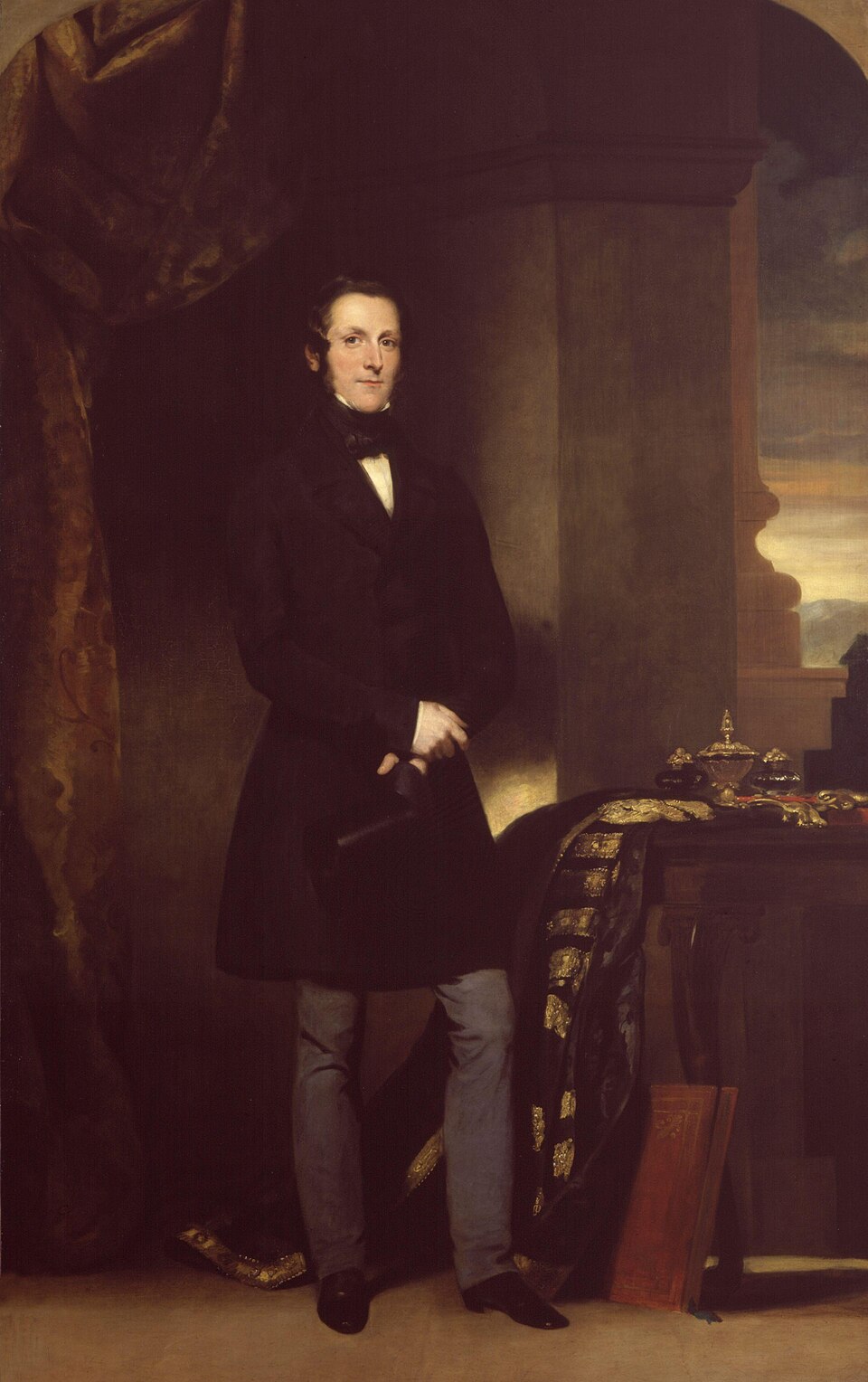
Why Awadh hurt most. When Wajid Ali Shah refused to hand over the administration, Awadh was annexed in February 1856. The king was deported to Calcutta, the taluqdars were disarmed and their forts demolished, and the court's soldiers, servants and luxury craftsmen lost their living. The British also saw Awadh as a place to invest in indigo and cotton and as a market for British goods.
Jhansi's grievance. The Rani of Jhansi had offered to keep Jhansi safe for the British if they reversed the annexation. When they refused, she turned against the Company in 1857. Rebel proclamations across north and central India attacked British annexations again and again.
What did this policy lead to? The lesson for every Indian ruler was frightening: friendship with the British was no protection. After what happened to the rulers of Awadh and Jhansi, no Indian ruler wanted the British anywhere near his own lands. So the policy that was meant to make the Company richer and stronger also created some of its most determined enemies in 1857.
Peasants, landlords and craftsmen: the cost of Company rule
Most Indians in the 1850s were not kings. They were farmers, and the biggest thing in a farmer's life is the tax on his land.
The Company earned most of its money from land revenue. It tried several systems: the Permanent Settlement (fixed with zamindars), the Ryotwari system (directly with the cultivator, the ryot) and the Mahalwari system (with the village or estate as a unit).
What matters here is the common result: the demand was high and rigid.
Why were the settlements made this way? The Company had two aims in mind. The first was to increase the government's revenue.
The second was to create a class of local agents, such as zamindars and taluqdars, who would stand in support of British rule. If the rain failed, the tax was still due.
Follow one family to see what that meant. A farmer cannot pay in a bad year, so he borrows from the moneylender at a high interest rate. Next year the debt is bigger.
In the end his land is auctioned to pay the debt or the revenue. Across the countryside the new settlements had disastrous consequences for cultivators. The revenue demands were so high that even taluqdars (large landholders) and chiefs were forced to sell their land.
Notice the irony here. The system was meant to build a loyal class of landholders, but its heavy demands ruined many of the very taluqdars it was meant to win over. That is why, in Awadh, taluqdars and peasants later fought the British side by side.
Now go to the town. India had been famous for centuries for its fine cloth and crafts. In the 19th century, machine-made cloth from British factories came in cheaply, and the Company did nothing to protect Indian industry.
Artisans and handicraft workers lost their markets. A weaver who could no longer sell his cloth often had to go back to the land, adding to the pressure on farming.
So by 1857 there were many people, in villages and in towns, who felt that the new rulers had made their lives worse. Their anger was economic, and it was very real.
The North-Western Provinces: a settlement against the taluqdars. In the region at the heart of 1857, Holt Mackenzie's Regulation VII of 1822 favoured direct settlement with village zamindars and was biased against taluqdars. In the 1840s R.M. Bird and James Thomason carried this bias into what is called the Thomasonian settlement.
Within a decade almost all taluqdars lost the bulk of their estates, and even the village zamindars it was meant to help were close to bankruptcy. In 1852-53 alone, 1,04,730 acres were sold for arrears.
Awadh: a settlement in a hurry. Right after the annexation, the summary settlement of 1856-57 followed the Thomasonian pattern. The overall demand was cut, but some pockets were over-assessed by 28 to 63 per cent, and some taluqdari estates shrank by 44 to 55 per cent. Before annexation the peasant shared his grain with the taluqdar after his own needs were met, but now he owed a fixed money demand even in a bad year.
Outsiders take the land. Every year the rights of landlords and peasants came up for sale for arrears or even for simple debts, and they were often bought by banias from outside the village. The sepoys of Awadh alone sent about 14,000 petitions about revenue hardships. This is why the rebels later attacked revenue offices, courts and the moneylender's records.
Faith, custom and the sepoy's grievance
Fear for faith and custom. In the first half of the 19th century the Company passed laws that changed old social customs. Sati (the burning of a widow on her husband's funeral pyre) was abolished, and the Widow Remarriage Act was passed in 1856. Today we see these as reforms.
But many ordinary people at the time saw them as foreigners interfering in their religion and family life. Along with this went a widespread fear of conversion to Christianity. When people already distrust a ruler, even a good law can look like an attack.
Why did reforms feel like an attack? Part of the answer lies in the attitude of the rulers. A section of British officials saw themselves as "modernising and civilising" India, and they were guided by a sense of racial superiority. Ordinary Indians could feel that attitude, so changes in custom looked like orders from people who looked down on them.
The sepoy. The Company's army was made up mostly of Indian soldiers called sepoys (from sipahi). The sepoy is the most important person in the story of 1857, because the Revolt began in the army. His grievances were:
- Low pay, compared with British soldiers.
- Racial discrimination: however long and well an Indian served, the top ranks, better pensions and better terms of service went to the British.
- Ties to the village: many sepoys were the sons of peasant families. When their families suffered under the new land settlements, the sepoy felt it too. He was, in a sense, a peasant in uniform.
Put this together with the last two sections and you can see why 1857 was so dangerous for the Company. The anger of the prince, the landlord, the peasant and the craftsman was not only outside the army. Through the sepoy, it was inside the army as well. All the dry wood was now stacked in one place.
A long record of protest. The sepoys had clashed with the Company over faith before. At Vellore in 1806, replacing the turban with a leather cockade caused a mutiny. In 1824 sepoys at Barrackpore refused to go to Burma, because crossing the sea meant loss of caste, and in 1844 Bengal army sepoys protested against being sent to distant Sind.
The numbers behind the grievance. Almost half of the Company's 2,32,224 sepoys rebelled in 1857. Most were upper-caste Hindus from the North-Western Provinces and Awadh, and nearly a third came from Awadh alone, so news and rumours spread fast among men who shared a home.
An infantry sepoy got only Rs 7 a month and a cavalry sawar Rs 27, out of which he paid for his uniform, food and horse. Annexations had also ended his batta, the extra pay for service outside Company territory, and he feared being edged out by new recruits from Punjab.
Religion as a rallying cry. Fear also grew from an 1850 law that let a convert to Christianity inherit ancestral property. A rebel proclamation from Delhi claimed the English planned to destroy the sepoys' religion and then force Christianity on the people. Bahadur Shah's proclamation raised the standards of both Muhammad and Mahavir, so Hindus and Muslims saw an equal stake in the fight.
The spark: greased cartridges and Mangal Pandey
Around January 1857 the army brought in a new gun, the Enfield rifle. Its ammunition came in paper cartridges, and a soldier had to bite the cartridge open before loading it.
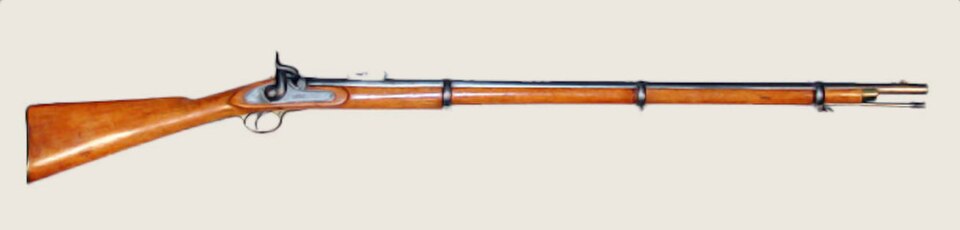
Then a story spread through the regiments: the cartridges were greased with pork and beef fat. For a Hindu sepoy, touching cow fat was a terrible sin; for a Muslim sepoy, pork was forbidden. Whether every cartridge was really greased this way mattered less than what the sepoys believed.
The cartridges were only reportedly greased with this fat, but the belief spread fast. Along with it came a rumour of bone dust mixed in the flour given to the soldiers. To the sepoys this looked like a plan to destroy their religion and caste, and it confirmed their deepest fears about faith and caste.
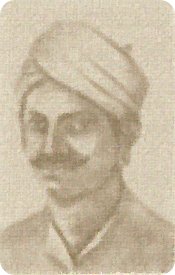
Barrackpore, March 1857. The first open trouble came on 29 March 1857 at Barrackpore, a military station near Calcutta. A sepoy named Mangal Pandey called on his fellow soldiers to rise and attacked a British officer, the Adjutant.
He was arrested and hanged. The sepoys at Barrackpore had refused to use the greased cartridges, and as punishment their regiment was disbanded. Mangal Pandey is remembered today as one of the first martyrs of 1857.
Notice the pattern from the start of the chapter. The cartridges did not create the anger. They were the spark that touched wood which had been drying for years.
Meerut to Delhi: 10 May 1857
Barrackpore was a warning. Meerut, a large cantonment north-east of Delhi, was the explosion.
At Meerut, sepoys of the 3rd Cavalry who refused the new cartridges were punished. As many as 85 of them were court-martialled and sentenced to long terms in prison. Their comrades watched this as a public humiliation.
On 10 May 1857 the Revolt broke out at Meerut. The sepoys shot their British officers, broke open the prison to free their comrades, and set off on the road to Delhi, which they reached on 11 May.
Why Delhi? Because Delhi still had a Mughal emperor, Bahadur Shah II. By 1857 he had no real power. The Company paid him a pension, and his authority hardly went beyond the Red Fort.
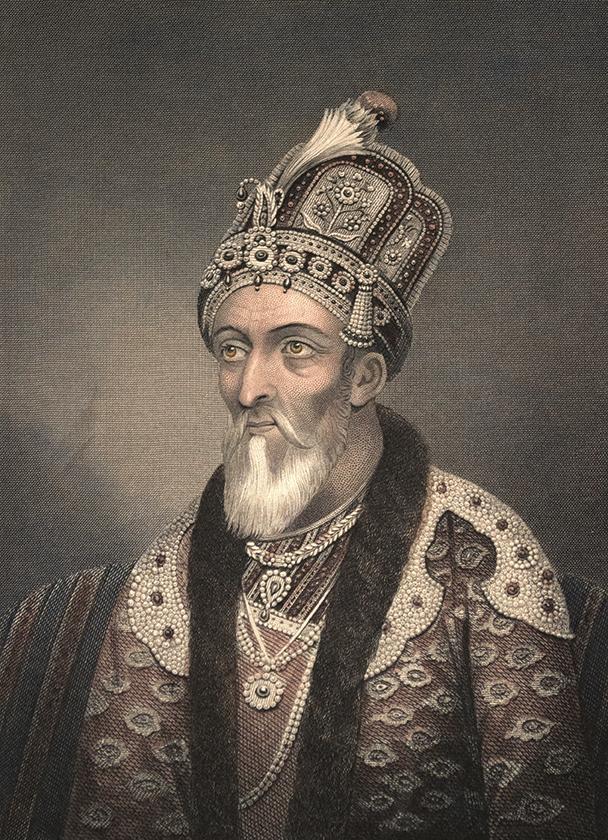
But his name still carried the memory of the great Mughal empire that had once ruled India. The rebels needed a leader whom everyone, Hindu and Muslim, prince and peasant, would recognise. They appealed to Bahadur Shah II to lead them, and he was proclaimed Emperor of India, Shahenshah-i-Hindustan.
This was the turning point. A mutiny in one cantonment had now become a political challenge with a symbolic head. Soon other rebels too would issue orders and strike coins in the emperor's name.
Quick revision
- Dalhousie was Governor-General from 1848 to 1856. Under the doctrine of lapse he took Satara, Jaitpur, Sambalpur, Nagpur and Jhansi, and he annexed Berar in 1854 and Awadh in 1856.
- The long-term causes were political (annexations), economic (land revenue, ruin of artisans), social-religious (end of sati, the Widow Remarriage Act of 1856, fear of conversion) and military (low pay, racial discrimination).
- The immediate cause was the greased cartridges of the Enfield rifle, which were rumoured to carry pork and beef fat.
- The first incident came at Barrackpore in March 1857, when Mangal Pandey attacked an officer. The Revolt then broke out at Meerut on 10 May 1857, the sepoys marched to Delhi, and Bahadur Shah II was proclaimed Emperor.
The story does not end at Delhi. How the Revolt spread, who led it, why it failed and what it changed are told in The Revolt of 1857: spread, defeat and legacy.