

GPSC Class 1-2 · Module 4 · Mains depth · 22 min
The Cholas and the Chalukyas of Kalyani
What GPSC Class 1-2 asks from this chapter
Syllabus lines this chapter covers:
- General Studies · History and culture of India and Gujarat.
GPSC Class 1-2 questions from this module are being sorted into our bank.
Read at full depth: basics, the standard layer and the Mains analysis.
Start from zero: a river valley that built an empire
In an earlier chapter we saw the Pallavas and Pandyas fight for the rich Kaveri delta. In the ninth century a new family, the Cholas, took that delta and built on it the most lasting state the Tamil country had ever seen. At its height, Chola fleets sailed to Sri Lanka and Southeast Asia.
The Cholas are remembered for two very different things. One is power: conquests, navies and huge temples such as those at Thanjavur and Gangaikondacholapuram. The other is local life: village assemblies, brahmana settlements with committees, and merchant towns that ran many of their own affairs.
Historians argue about how these two fit together. Was the Chola king the head of a tightly run empire, or a ritual overlord of many self-governing localities? This question makes the Cholas one of the most debated topics in early Indian history.
Why study this? Exams ask about ur, sabha, nadu, nagaram, Uttaramerur, valanadu, Rajaraja I's and Rajendra I's expeditions, and the Chalukyas of Kalyani. Mains asks whether the Chola state was centralised and how temples and local bodies held it together.
The Cholas at a glance
| Item | Key facts |
|---|---|
| Rise | Vijayalaya took Thanjavur from the Muttarayars (9th century); Aditya I ended the Pallavas |
| Setback | Parantaka I defeated by the Rashtrakuta Krishna III, 949 |
| Rajaraja I | Sri Lanka expedition; mandalams, valanadus, revenue survey; Thanjavur temple |
| Rajendra I | Naval expedition to Srivijaya; invaded Pala Bengal; Karantai plates |
| Local bodies | Ur, nadu (nattar), sabha of brahmadeya, nagaram |
| Rivals | Chalukyas of Kalyani, over Vengi and Gangavadi |
The key idea. Chola power rested on the Kaveri valley's surplus. Kings tied the localities to themselves through land grants, temples, revenue records and titles given to local landholders. Whether this made a centralised state is the big debate of this chapter.
From Thanjavur to across the sea
A new power in an old land. The Chola name was old: the Sangam poems already speak of Chola chiefs. The new Cholas rose in the ninth century when Vijayalaya seized Thanjavur from the Muttarayars, feudatories of the Pallavas. His successor Aditya I defeated the Pallava Aparajita and ended Pallava rule.
Why the Kaveri mattered. The Kaveri valley was the most fertile and best irrigated farming core of the Tamil region. Earlier, the Pallavas and Pandyas had both tried to control it. Whoever held it had the surplus to pay for armies, temples and grants.
A setback. The Cholas soon clashed with the Rashtrakutas, whom you met in the last chapter. In 949 the Rashtrakuta Krishna III defeated the Chola Parantaka I, annexed the northern Chola lands and marched as far as Rameshwaram. For a time Chola power was checked.
Rajaraja I (983-1014). Rajaraja I revived and enlarged the kingdom. He sent a military expedition to Sri Lanka, and Chola records claim the destruction of the Chera fleet at Kantalur Salai. He also reorganised government by creating mandalams (provinces), valanadus and a systematic revenue survey.
Rajendra I. His son Rajendra I went further. He sent a naval expedition to Srivijaya in Sumatra, a major trading power of Southeast Asia, and his army invaded Pala lands in Bengal, where Mahipala I resisted him. The new capital Gangaikondacholapuram and its great temple, like Rajaraja's temple at Thanjavur, became symbols of royal power.
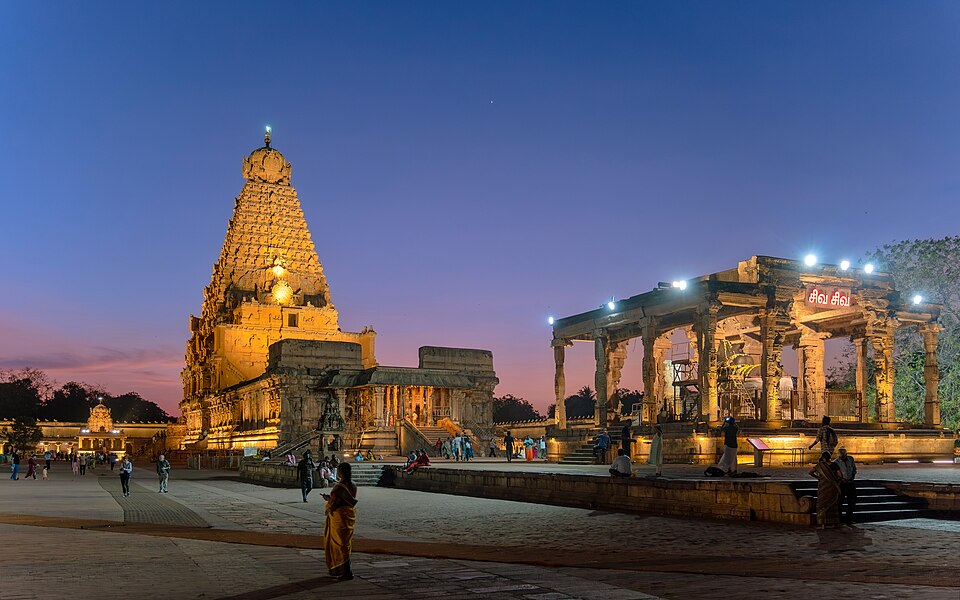
Why go overseas? The tenth century saw a revival of South Asian trade linking South India, Sri Lanka, Southeast Asia and China. The Cholas promoted this trade by sea expeditions and trade missions to China, and they protected their merchant bodies with royal charters. Their naval campaigns were about trade and prestige as much as conquest.
How kings claimed legitimacy. Chola copper plates such as the Tiruvalangadu, Larger Leiden and Anbil plates carry Sanskrit prashastis tracing the family to the solar line, and also link it to the Sangam Cholas. The grant details on these plates are in Tamil. Rajaraja took the title Kshatriyasikhamani, 'crest-jewel of kshatriyas'.
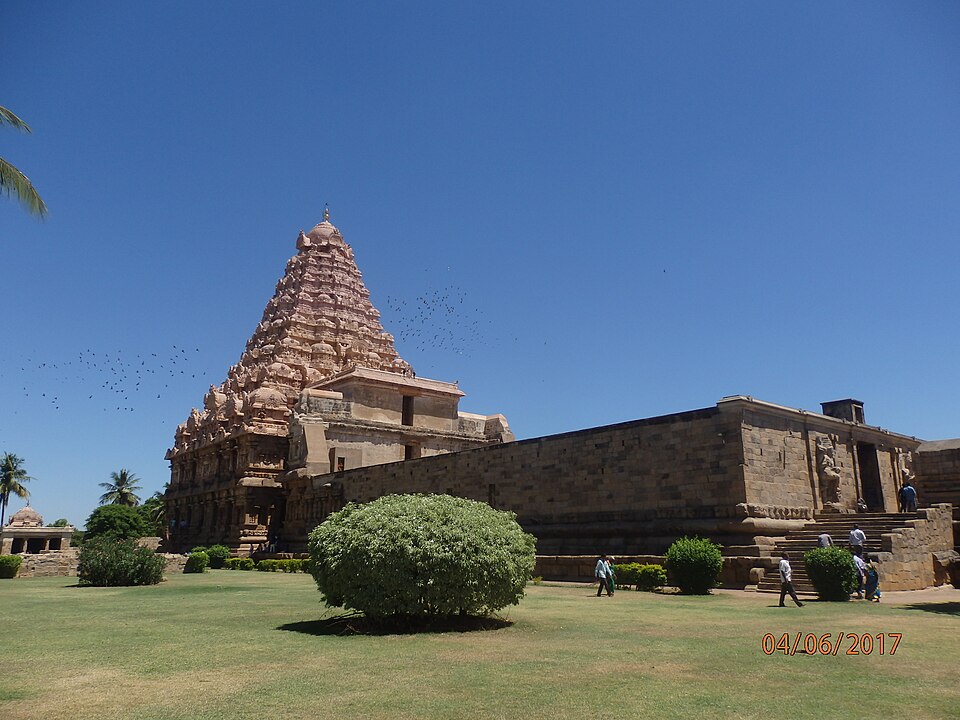
Rituals and titles. Kings added the Sanskrit suffix Varman to their names and took special names at coronation. They performed the hiranyagarbha and tulabhara gift ceremonies and made land grants to brahmanas. Above all, they promoted the bhakti of the Tamil Shaiva and Vaishnava saints through temple building, ritual and images, so that the temple became a symbol of both god and king.
Tamil praise poems. From Rajaraja's time, Chola inscriptions on stone began with meykirtis, Tamil praise poems narrating the king's military exploits. They were addressed to the Tamil landed magnates who read them on temple walls. This shows how kings sought the support of local elites.
Ur, nadu, sabha and nagaram: the local bodies
Why local bodies mattered. Chola copper plates recording land grants address several local groups: the nattar, the brahmana donees of brahmadeyas, the tax-free villages, and the nagarattar. The king's order worked only when these bodies carried it out. So to understand Chola government, we must start from below.
The ur. The ur was the assembly of the non-brahmana landholders of a village. To be a member one had to hold land, and members bore titles such as udaiyan, kilan and velan that point to landholding. The ur supervised the sale, purchase and gift of village land.
Inside the village. A village had farmland, pasture, irrigation works, a cremation ground and separate living areas for landholders, artisans (kammanacceri) and agricultural labourers (paraicceri). Historians disagree on how equal the village was. One view sees little difference among villagers, while another sees a clear ladder of cultivators, tenants, artisans and labourers.
The nadu. Several urs together formed a nadu, a locality of peasant settlements. Its assembly, the nattar, was made up of the heads of vellala (cultivator) families. Recent historians argue that the nadu was not created by the state but was a natural grouping, older than the Pallavas, which the Cholas took over; that is why nadus differ in size.
The nadu at work. The nattar carried out royal land grants by fixing boundaries, supervised irrigation, gave tax-free land to temples and helped assess and collect revenue. They kept the nadu's accounts (nattuk-kanakku), which were matched against royal registers. Over time royal officers such as the nadu vagai were posted in the nadus, linking them to the king.
The valanadu. The valanadu was different: it was an artificial unit created by the king for revenue. Under Rajaraja I, several nadus were grouped, or even split, into valanadus, often bounded by watercourses because of irrigation needs, and named after the kings. Unlike the nadu, the valanadu shows the planning hand of the state.
Brahmadeyas and the sabha. Brahmadeyas were tax-free villages granted to brahmanas, usually around a temple, which brought advanced irrigation and farming to new land. Their assembly was the sabha or mahasabha, working through committees called variyams that managed temple lands, cattle, tanks, tenants and accounts. The Karantai plates of Rajendra I record 1,080 brahmanas living in one such settlement.
Uttaramerur and the rules for members. Major brahmadeyas became separate units, called taniyur or tan-kuru, with their own revenue and justice. The best known is Uttaramerur near Chennai, an important brahmadeya from the eighth to the thirteenth century. Inscriptions lay down age, landholding, learning and good conduct as qualifications for membership of a sabha's committees.
The nagaram. The nagaram was a market centre run by merchants called the nagarattar, with a committee (nagaravariyam) and common land (nagarakkani). It kept its own accounts, paid royal dues in gold and paddy, and had direct revenue arrangements with the king. Big centres such as Kanchipuram and Thanjavur were called managarams, 'great nagarams'.
Merchants on the move. Merchant bodies such as the manigramam, the Ayyavole 500 and the foreign anjuvannam traded in luxury goods, exotic imports and South Indian textiles. Warehouses called erivirappattanas linked them with local markets. This network tied the Tamil plains to the Indian Ocean world.
The temple at the centre. The temple tied all these bodies together. With huge endowments of land, money and gold, and gifts from merchants, it managed resources across nadu boundaries and gave every group a place through ritual ranking. Royal officers audited temple endowments, which let the king reach into local affairs.
Officials, taxes and the army
Units of government. The smallest unit was the village. Villages formed a nadu, several nadus a valanadu, and above the valanadu was the mandalam, equal to a province. Mandalams were named after the king, and Chola princes and officers called mandala mudalis were appointed to rule them.
How a royal order travelled. The king often gave orders orally (tiruvaykkelvi), especially about gifts to temples. An executive officer wrote them up as a royal letter, other officers checked and registered it, and local magnates witnessed the final record. This chain shows a working bureaucracy behind the king.
The revenue department. The most impressive part of Chola administration was the land revenue department, the puravu-vari-tinaikkalam. It kept registers of land rights (varipottagam) and revenue, and had accountants, auditors (kankanis) and writers. Rajaraja I's revenue survey made this department central to the state.
Grades and titles. Officials were ranked as perundaram (higher grade) and sirutaram (lower grade). They were paid with land rights, and their titles such as udaiyan and kilan show they were landholders. The title Muvendavelan, given by the king to great vellala landed magnates holding important offices, shows how local elites were drawn into royal service.
Taxes. The main land tax was kadamai, a share of the produce. Other dues included vetti (labour), kudimai and cash payments, and most were paid in kind, mainly paddy. A statistical study of tax terms shows a fairly uniform land tax and a system of storing and transferring revenue from the ur through the nadu to the government.
Justice. Village committees with members called nyayattar settled local disputes. The central court, the dharmasana, worked through brahmanas learned in law. Crimes against the king or royal family were decided by the king himself, and punishments ranged from fines to death.
The army. Chola armies included cavalry, troops fighting on elephants, and archers. The Right Hand (valangai) velaikkarar were soldiers recruited from peasants, and there were Left Hand (idangai) units drawn from artisan groups. There is no conclusive evidence of a regular standing army, but inscriptions mention royal army camps at strategic points.
Chiefs. Local chiefs such as the Paluvettaraiyar, Vels, Malavas, Gangas and Banas remained important. They held land and collected dues in return for padi kaval, the 'protection of territory', and supplied soldiers to Chola campaigns. From Rajaraja's time many chiefs were reduced to the position of landed magnates, while still keeping their titles.
The Chalukyas of Kalyani: the Cholas' great rivals
Who were they? The Chalukyas of Kalyani are also called the Later Chalukyas, because they came after the Chalukyas of Badami. Their founder Taila II was a subordinate of the Rashtrakutas, granted lands by Krishna III, who overthrew Karka II and ended Rashtrakuta rule. Like many new dynasties, they claimed descent from an older line, here the Badami Chalukyas, though the evidence is thin.
War with the Cholas. Taila II defeated the Gangas and in 992 defeated Rajaraja Chola, who was intervening in a succession struggle in Vengi. In 1004 the Cholas invaded Gangavadi, captured Talakad and marched deep into Chalukya territory. Under Jayasimha II, a coalition including the Paramaras and Cholas attacked from several sides, but he drove them back.
The prize of Vengi. The Eastern Chalukyas of Vengi were cousins of the Kalyani Chalukyas but did not accept their overlordship. Vengi, in the rich Krishna-Godavari delta, became the bone of contention between the Chalukyas and the Cholas. Someshvara I made Kalyana his capital around 1048 and fought the Cholas repeatedly over Vengi.
Vikramaditya VI. Vikramaditya VI started a new era, the Chalukya Vikrama era, from his coronation in 1077. He campaigned in Lata and Malwa, sent an embassy to the Sri Lankan king who was an enemy of the Chola Kulottunga I, and even led an expedition to Kanchi. He patronised Bilhana, a Kashmiri poet who wrote the Vikramankadevacharita, and Vijnaneshvara, author of the Mitakshara, a famous work on Hindu law.
A learned king and a fading power. Someshvara III, known as Sarvajna ('all-knowing'), is credited with the encyclopaedic Manasollasa. Later, the Kalachuri feudatory Bijjala II seized power and ruled from 1162 to 1184, the Kalachuri interregnum. The Chalukyas returned briefly but faded by about 1200, leaving Karnataka to the Yadavas (Sevunas) of Devagiri and the Hoysalas of Dorasamudra.
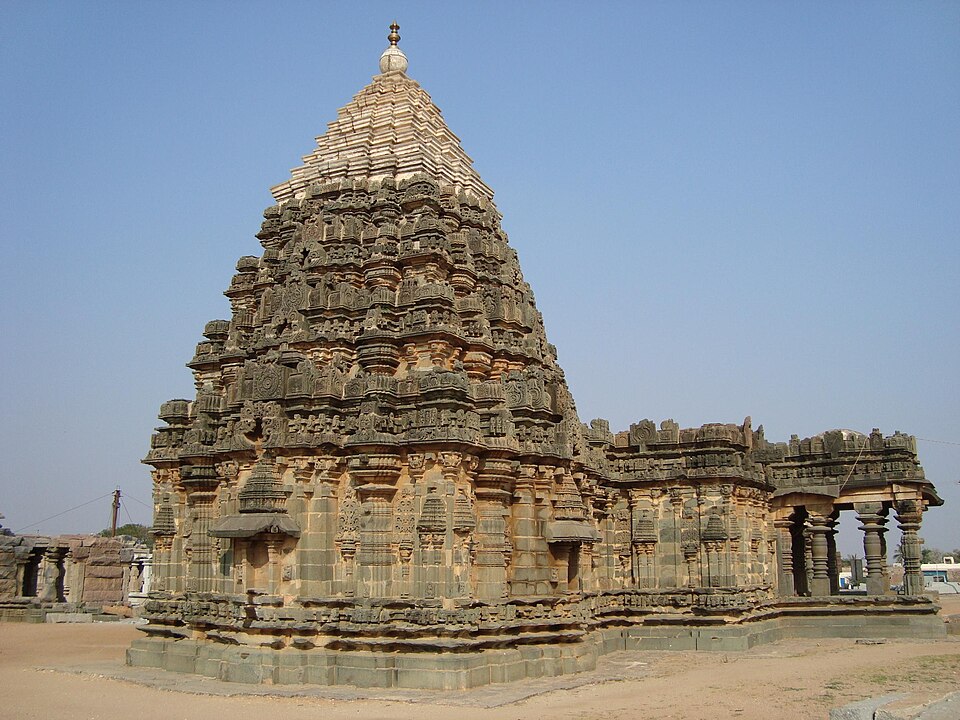
Guilds and temples. Merchant guilds flourished, above all the Ayyavole 500, which began at Aihole and spread across south India; others were the Nanadesi and Vira Bananju. These guilds took part in land grants and helped build temples. Temples of this dynasty survive at places such as Itagi, Kuruvatti, Lakkundi and Gadag, decorated with bracket figures and scenes from the epics and the Panchatantra.
Kannada literature. Sanskrit and Kannada literature flourished, with poets such as Pampa and Ranna, and the Kannada script took its elegant rounded shape. Agraharas, ghatikas and monasteries at places like Kalyana served as centres of learning, with libraries and hostels.
The Virashaiva movement. During the Kalachuri interregnum, Basavanna, with saints such as Allama Prabhu, led the Virashaiva movement. It denounced caste and untouchability, opposed priestcraft and hypocrisy, and spread its teachings through vachanas, short sayings in Kannada written by people from all walks of life. The movement is seen as a forerunner of later reform movements in Maharashtra and the north.
Mains lens: was the Chola state centralised?
View 1: a centralised empire. The pioneering historians of South India studied institutions such as kingship, the sabha and the temple. They saw a centralised monarchy with a strong bureaucracy, and they praised the village assemblies as 'local self-government'. Critics say these writers assumed that every feature of a modern state existed in the past and studied politics apart from society and economy.
View 2: a segmentary state. Burton Stein argued that the Chola state was a 'segmentary state'. In this view the real units were local segments such as the nadu, which were largely autonomous, and the king's authority was mostly ritual outside the Kaveri core. Stein denied that the Cholas had a regular bureaucracy, a standing army or a regular tax system.
View 3: an integrating state. A third group of historians made a statistical study of thousands of inscriptions. They found a fairly uniform land tax (kadamai), a graded bureaucracy with officers at centre and locality, and royal army camps. They argue that a centralised polity grew out of earlier independent peasant regions, reaching its peak in the eleventh century.
How integration worked. The Cholas did not simply crush local bodies; they wove them in. Land grants created brahmadeyas that acted as pacemakers of royal authority, the valanadu and revenue survey brought planning from above, and titles like Muvendavelan pulled local landholders into royal service. The temple, whose accounts royal officers audited, linked king and locality.
The role of ideology. The Cholas also ruled through ideas. Solar genealogy, links to the Sangam Cholas, and above all the promotion of Tamil bhakti through temples made the king appear as the protector of god and land. The fact that the ritual and political domains coincided in the royal temple is one more argument against a purely 'segmentary' picture.
Implications. The Chola model shows that a pre-modern Indian state could be strong without being uniform. Local bodies kept real power, but the king could reach into them through revenue, grants, temples and officials. This balance helps explain why the Chola state lasted about four centuries.
How to write it. Present the three views fairly, with one or two pieces of evidence for each. Then give your own balanced conclusion, such as 'integration without full centralisation', supported by the valanadu, revenue records and temple audits.
Mains practice: the Cholas
| Angle | Question | Key points to cover |
|---|---|---|
| Debate | Critically examine the 'segmentary state' model of the Chola polity. | Older centralised view; Stein's segments, ritual sovereignty; denial of bureaucracy, army, tax; statistical counter-evidence (kadamai, grades, camps); valanadu; temple; balanced conclusion. |
| Local government | Describe the role of the ur, sabha, nadu and nagaram in Chola administration. Were they truly 'self-governing'? | Membership by landholding; variyam committees; Uttaramerur; nattar and revenue; nagarattar; royal officers in nadus; revenue registers; temple audits; autonomy within a royal frame. |
| Economy and power | How did the temple become the centre of economic and political life in the Chola period? | Endowments of land, money, gold; merchant gifts; employer and redistributor; ritual ranking; royal audits; Thanjavur and Gangaikondacholapuram; bhakti ideology. |
These are practice questions written by us, not past papers. Past questions from your exam appear in the PYQ panel.
How to use this table: each answer should explain the what, then the why, and end with what it led to.
Quick revision
- Rise: Vijayalaya took Thanjavur from the Muttarayars (9th c.); Aditya I beat Pallava Aparajita; core = Kaveri valley.
- Parantaka I beaten by Rashtrakuta Krishna III (949); Rajaraja I (983-1014): Sri Lanka, Kantalur Salai, mandalam, valanadu, revenue survey, Thanjavur temple.
- Rajendra I: naval expedition to Srivijaya; invaded Pala Bengal; Karantai plates (1,080 brahmanas); Gangaikondacholapuram.
- Legitimacy: solar line in Sanskrit prashastis (Tiruvalangadu, Leiden, Anbil plates); Tamil grant text; Kshatriyasikhamani; hiranyagarbha, tulabhara; Tamil meykirtis; bhakti temples.
- Ur = non-brahmana landholders; nadu = natural peasant locality, nattar (vellalas), revenue and irrigation; valanadu = artificial revenue unit of Rajaraja I.
- Brahmadeya: tax-free brahmana village; sabha/mahasabha with variyam committees; taniyur/tan-kuru; Uttaramerur; qualifications: age, land, learning, conduct.
- Nagaram: merchants (nagarattar), nagaravariyam, nagarakkani; managaram (Kanchipuram, Thanjavur); manigramam, Ayyavole 500, anjuvannam.
- Admin: village > nadu > valanadu > mandalam; puravu-vari-tinaikkalam (revenue dept); perundaram/sirutaram; Muvendavelan; tax kadamai, vetti; dharmasana; Right/Left Hand troops.
- Debate: centralised (old) vs segmentary state (Burton Stein) vs inscription-statistics view (uniform tax, bureaucracy, peak 11th c.); temple as superordinate institution.
- Kalyani Chalukyas: Taila II (beat Karka II; beat Rajaraja 992); Vengi rivalry; Kalyana c. 1048; Vikramaditya VI (era 1077; Bilhana, Mitakshara); Manasollasa; Bijjala II 1162-1184; Basavanna, Virashaiva, vachanas.