

HPSC HCS · Module 16 · Mains depth · 21 min
Rock art and murals: Bhimbetka, Ajanta, Bagh, Sittanavasal, Lepakshi
What HPSC HCS asks from this chapter
Syllabus lines this chapter covers:
- Prelims Paper I: General Studies · Indian culture, polity and economy
- Mains · GS I: culture, modern and world history, society, geography, Haryana issues
HPSC HCS has asked 1 question from this chapter (2022); 6 from its whole module.
Read at full depth: basics, the standard layer and the Mains analysis.
Start from zero: why paint on rock and walls?
Long before paper or canvas, people painted on the surfaces around them: the walls of rock shelters, the walls of caves and later the walls and ceilings of temples and palaces. A painting on a wall is called a mural. Painting is a two-dimensional art: with line, colour and shading, the artist creates the feeling of volume, space and movement on a flat surface.
Why start here. India has one of the longest painting traditions in the world. It runs from prehistoric rock shelters, through the Buddhist caves of Ajanta, to temple murals in the south as late as the Vijayanagara age. Seeing this long line helps you understand later miniature painting, which grew out of the same habits of line and colour.
What this chapter covers. We begin with prehistoric rock art: who found it, where it is and what it shows. Then we study the classical murals of Ajanta and Bagh, the theory of Indian painting, and the murals of Ellora and the south, from Sittanavasal to Lepakshi. We end with conservation and a Mains lens.
Prehistoric rock art: discovery and sites
The first find. The first rock paintings in India were found in 1867–68 by the archaeologist Archibold Carlleyle. This was twelve years before the famous cave paintings of Altamira in Spain were found. Later archaeologists such as Cockburn, Anderson, Mitra and Ghosh found many more sites.
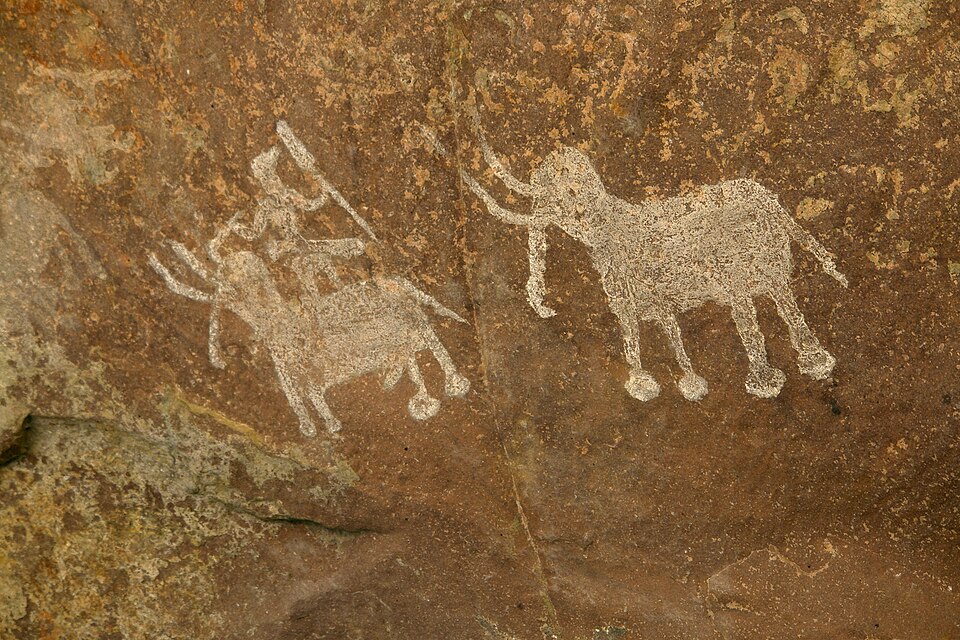
Bhimbetka. The richest area is the Vindhya range of Madhya Pradesh and its Kaimur extensions into Uttar Pradesh. Here lies Bhimbetka, about 45 km south of Bhopal, discovered for rock art by Wakankar (V.S.) in 1957–58. It has about 800 rock shelters in roughly 10 sq km, and about 500 of them carry paintings.
A World Heritage Site. The Rock Shelters of Bhimbetka were inscribed on the UNESCO World Heritage List in 2003. They lie in the foothills of the Vindhyan mountains, on the southern edge of the central Indian plateau, in five clusters of natural shelters. UNESCO also notes that 21 villages nearby still have cultural traditions that resemble the rock paintings.
Other sites. Lakhudiyar in the Kumaon hills of Uttarakhand, on the banks of the river Suyal, has paintings in white, black and red ochre, including dancers holding hands. In the Kaimur hills near Mirzapur (Uttar Pradesh), more than 250 shelters show hunting scenes. Pachmarhi in Madhya Pradesh has a famous "Rows of Cows" painting with white figures on a red ochre ground.
The south. In the granite hills of Karnataka and Andhra Pradesh, sites such as Kupgallu, Piklihal and Tekkalkota have paintings of bulls, elephants, sambhar, gazelles, goats, horses and tridents. Here artists often used white, and red ochre over white. Rock art thus appears in almost every part of India.
| Site | State | Remember for |
|---|---|---|
| Bhimbetka | Madhya Pradesh | ~800 shelters; Wakankar 1957–58; UNESCO 2003 |
| Lakhudiyar | Uttarakhand (Kumaon) | River Suyal; hand-linked dancers |
| Kaimur hills, Mirzapur | Uttar Pradesh | 250+ shelters; hunting scenes |
| Pachmarhi | Madhya Pradesh | "Rows of Cows" |
| Kupgallu, Piklihal, Tekkalkota | Karnataka, Andhra Pradesh | Granite sites; bulls, white and red ochre |
What the rock paintings show and how they were made
Layers of time. At Bhimbetka, scholars count seven periods of painting, one over another, sometimes up to about twenty layers on one rock. The earliest belong to the Upper Palaeolithic, followed by the Mesolithic and the Chalcolithic, and later historical periods. Layers may come from new generations reusing a sacred spot, or from an artist painting over older work.
Upper Palaeolithic. The earliest paintings are linear outlines in green and dark red. They show large animals such as bison, elephants, tigers, rhinos and boars, with stick-like human figures. Green is used for dancers and red for hunters.
Mesolithic. The Mesolithic group is the largest. Paintings are smaller and full of action: group hunts with barbed spears, bows, arrows, traps and snares, and also dancing, music, food gathering and family life. Animals are drawn naturally, while humans are stylised; hand prints, fist prints and fingertip dots also appear.
Colours and pigments. Artists used white, yellow, orange, red ochre, purple, brown, green and black, with white and red as favourites. Red came from haematite (geru), green from a green stone called chalcedony, and white probably from limestone. The stone was ground to powder and mixed with water and a binder such as animal fat, gum or resin, and brushes were made of plant fibre.
Why the colours survived. The paintings have lasted thousands of years because the pigments reacted chemically with the oxide on the rock surface. This is why we can still see them today.
Why did they paint? We cannot ask the painters, but there are good guesses. They may have decorated their homes, recorded daily life, told stories or performed rituals; some paintings are in places where nobody lived, which suggests a sacred purpose. Painting a hunt may also have given a feeling of power over animals.
Ajanta: the great gallery of Buddhist painting
Two phases. The earliest historical paintings in India belong to the Satavahana period (around the 2nd century CE) in the Deccan. The oldest Ajanta paintings, in caves 9 and 10, are from this phase. Later, under the Vakatakas (5th century CE), painting spread over the walls, pillars and ceilings, as you saw for the caves themselves in the rock-cut caves chapter.
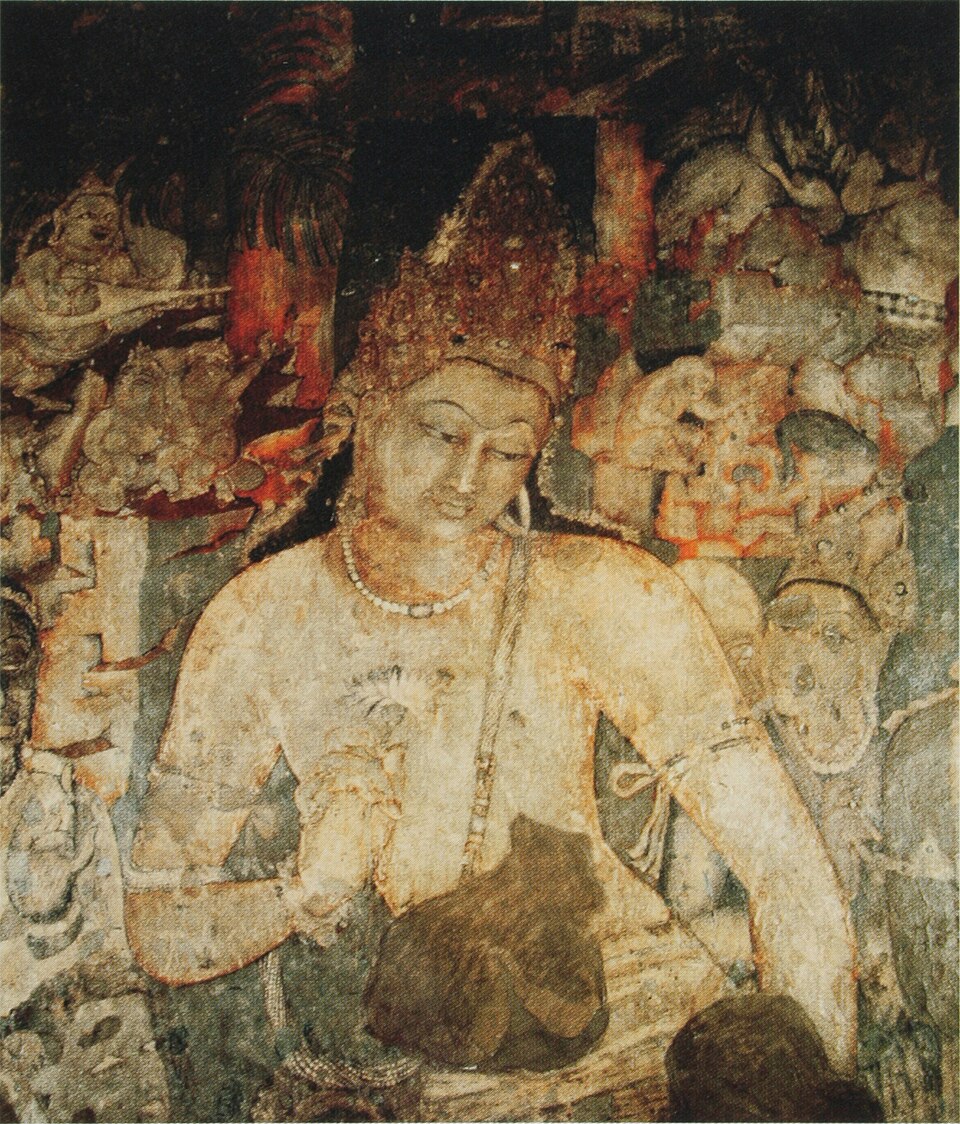
Themes. The paintings tell the life of the Buddha and his earlier lives in the Jataka and Avadana stories. Cave 10 has the worship of the Bodhi tree, and the Sama and Chhaddanta Jatakas. Floral and animal designs fill the spaces between scenes.
How Ajanta was painted. The method is tempera, with simple materials. A first coat of clay mixed with rice husk and gum was spread on the rock, then a coat of lime, carefully smoothed and polished. The outline was drawn in dark brown or black, and colours were added afterwards.
Five colours. The painters used the five colours named in the old craft texts: red ochre, yellow ochre, lamp black, lapis lazuli and white. Lapis lazuli, a costly blue stone, was used sparingly for important accents. Light and shade were shown with streaks and dots, the methods of stippling and hatching described in the texts.
Love of life. The Ajanta painter studied the world with deep sympathy. The elephants under a banyan tree in cave 10, the geese of the Hamsa Jataka and the deer of the Miga Jataka in cave 17 show great tenderness for animals. The painter was equally at home with the splendour of royal courts, village life and the calm of hermits in the forest.
Emotion on the wall. Two famous scenes show how Ajanta paints feeling, or rasa. In the mother and child before the Buddha, the mood is karuna (compassion). In the taming of the elephant Nalagiri, fear (bhayanaka) turns to peace (shanta) as the wild animal kneels at the Buddha's feet.
Famous paintings. The life-size Padmapani Bodhisattva in cave 1 (late 5th century) is the best-known image of Ajanta. Cave 1 also has the Mara Vijaya, the Buddha's victory over Mara, and cave 16 has the Dying Princess, the heartbroken Sundari, wife of Nanda. In cave 17, a flying apsara and the Vessantara Jataka are famous, and cave 2 has a richly painted ceiling with swans and lotuses.
The theory of Indian painting: shadanga and the Vishnudharmottara
Painting as a science. Indian painters did not work only by instinct. Old texts laid down rules for proportion, colour, shading and the moods a painting should create. Knowing these ideas helps you see why Indian murals and miniatures look the way they do.
The six limbs (shadanga). A famous list gives the six limbs of painting: rupabheda (variety of form), pramana (proportion), bhava yojana (infusing emotion), lavanya yojana (grace and lustre), sadrishya (likeness) and varnikabhanga (mixing colours and using the brush). This list is linked with the commentary on Vatsyayana's Kamasutra. Ajanta shows all six limbs at their best.
The Vishnudharmottara Purana. The Chitrasutra section of the Vishnudharmottara Purana is the most important old text on painting. It says the line is the highest achievement of a master. It also says that without knowing dance one cannot understand painting, because both share the language of the body.
Depth through shading. Indian art draws figures as the eye sees them and also as touch feels them, so painters tried to suggest depth. A figure in the round is called chitra, a relief ardhachitra, and a painting that looks like sculpture chitrabhasa. Shading was done by stippling (dots), cross-hatching and fine line shading.
Suggestion. The Vishnudharmottara values suggestion over plain statement. Blooming lotuses and sages hurrying to bathe suggest dawn; thieves and lovers on their way to meet suggest night. An overcast sky with white cranes means the rains, flower-filled forests mean spring, and tired travellers in the heat mean summer.
Why this matters later. These devices of mood and season appear again in Rajasthani miniatures, in Baramasa (twelve months) paintings and in pictures of lovers. Colour also carries mood: dark blue skies suggest longing, and red grounds suggest the passion of love or war. You will meet them in the Rajasthani and Pahari painting chapter.
Bagh, Badami and Ellora: murals after Ajanta
Bagh. The Bagh caves are cut into the slopes of the Vindhya hills above the river Bagh, in Dhar district of Madhya Pradesh. There are nine caves, and the most important are caves 2, 4 and 5. Most paintings are lost, but the best survivors are on the outer wall of the long verandah of caves 4 and 5.
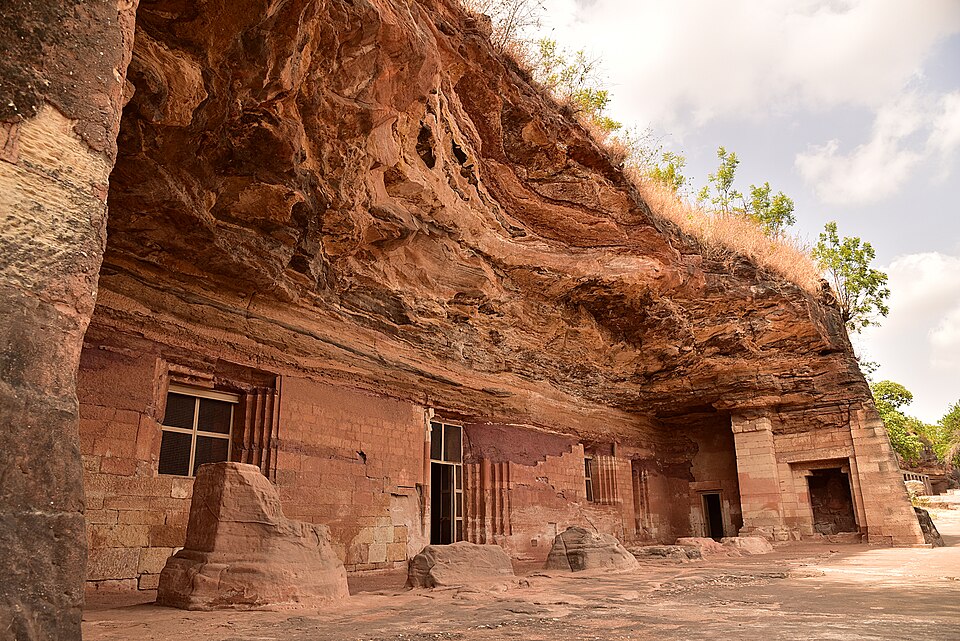
What Bagh shows. One scene shows a grieving princess being consoled by a companion. A grand royal procession follows, with horsemen, foot soldiers, princes on tuskers and noblewomen on elephants. The famous dancing panel of cave 4 shows court dancers in a circle keeping time to drums and cymbals; it is often said to show modelling as mature as Ajanta's.
Badami. At Badami, the cave-temples of the early Chalukyas carry painting on Brahmanical (Hindu) themes. Together with Ajanta, Bagh and Sittanavasal, Badami shows that wall painting flourished across the Deccan and south in the first millennium CE. You met the Badami caves as architecture in the Chalukya and Rashtrakuta temples chapter.
Ellora. In the 8th century, the Rashtrakutas carved the Kailasa temple at Ellora out of living rock. Its mandapa ceilings and walls were painted with gods, flowers, animals and birds. The Jain caves at the end of the group are also covered with paintings of Jain stories and decorative patterns.
A change of style. In the medieval murals of Ellora and later sites, a new style appears. Figures have sharp, angular elbows and shoulders, sharp noses, long eyes that project beyond the face and crescent-shaped lips. This style also shapes the manuscript painting of the next chapter, the miniature painting chapter.
Murals of the south: Pallava, Sittanavasal, Chola and Lepakshi
A long southern tradition. In south India, the tradition of painting cave-temples and temples continued for many centuries. Usually a part of the building was painted to catch the eye of the devotee. This makes the south the best place to follow Indian mural painting after Ajanta.
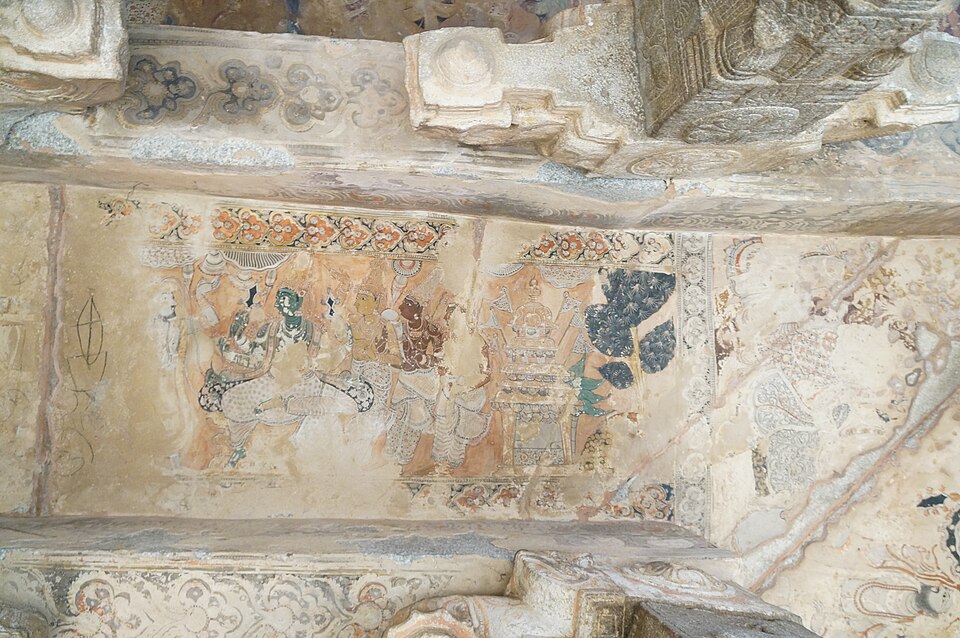
Pallava murals. At Mahabalipuram, traces of painting survive in the upper cells of the Dharmaraja ratha. Paintings also occur in other Pallava cave temples and in the Kailasanatha temple at Kanchipuram. Badami and Hampi too show this decorative habit.
Sittanavasal. The Arivar Koyil at Sittanavasal in Tamil Nadu is a Jain cave temple. It lies in the Pandya country, among the rock temples you read about in the Pandya and Vijayanagara chapter. Its paintings, of around the 9th century, carry Jain themes and show the sharp, angular medieval style.
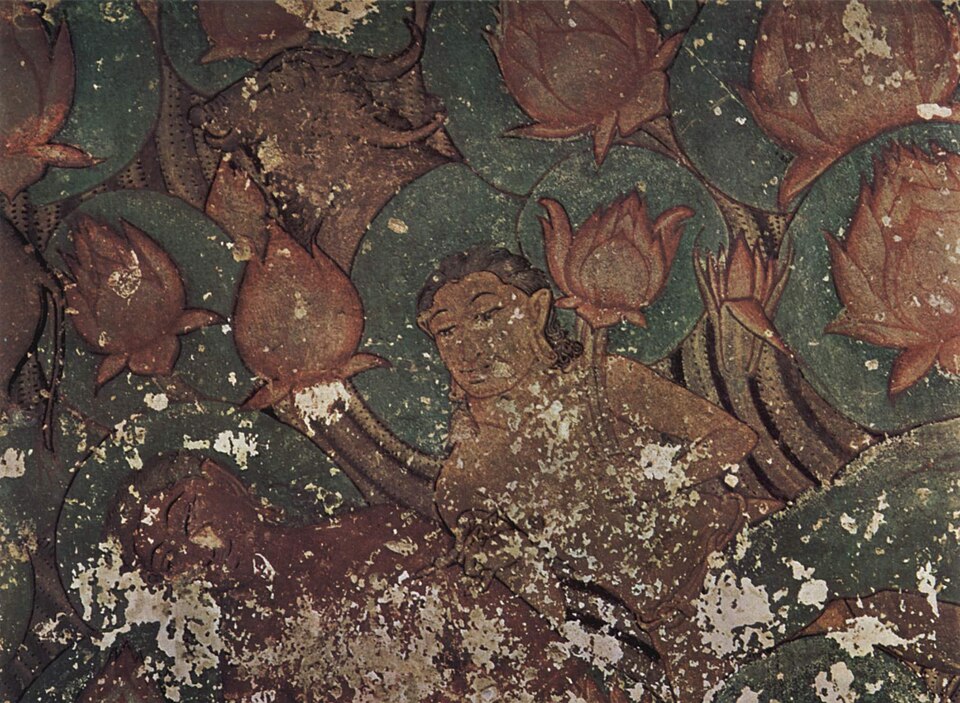
Chola murals. The paintings inside the Brihadisvara temple at Thanjavur are the most valuable record of painting under the Cholas (11th century). They show how the great temple was meant to be seen as a complete work of sculpture, architecture and colour. You met the temple itself in the Chola temples chapter.
Lepakshi. At Lepakshi in Andhra Pradesh, a temple of the Vijayanagara period has one of the most remarkable mural cycles of medieval India. A colossal Virabhadra is painted on the ceiling of the mandapa. Other scenes from the Mahabharata, Ramayana and Puranas include the coronation of Rama, Arjuna fighting Shiva as a Kirata, and Krishna as Vatapatrashayi (resting on a banyan leaf).
| Site | State | Dynasty or period | Remember for |
|---|---|---|---|
| Ajanta | Maharashtra | Satavahana, Vakataka | Jatakas; Padmapani; five colours |
| Bagh | Madhya Pradesh (Dhar) | c. 5th century | Royal procession; dancing panel |
| Badami | Karnataka | Early Chalukya | Brahmanical themes |
| Ellora (Kailasa) | Maharashtra | Rashtrakuta | Ceiling murals; Jain caves painted |
| Sittanavasal | Tamil Nadu | Pandya country, c. 9th century | Jain cave temple |
| Brihadisvara, Thanjavur | Tamil Nadu | Chola, 11th century | Best record of Chola painting |
| Lepakshi | Andhra Pradesh | Vijayanagara | Ceiling Virabhadra; epic scenes |
Conservation and the Mains lens
Rediscovery. The Ajanta caves, in Aurangabad district of Maharashtra on the river Waghora, were lost to the outside world for centuries. A British army officer, John Smith, came upon them in 1819. Since then, they have become one of India's best-known heritage sites.
Fragile beauty. Wall paintings are among the most fragile works of art. Floodlights used to show paintings inside caves slowly fade their brightness. Old methods of putting varnish over paintings kept them bright for a while but turned them yellow over time.
Tourism, a double-edged sword. Tourism brings crowds, breath, dust and light into fragile caves like Ajanta, Ellora and Bagh. Yet tourism also brings money and attention for conservation, and an incentive to clean up the surroundings. Prehistoric sites, by contrast, are often far from cities and poorly connected, so they get little care or attention.
Debate: art for whom? Rock art was made by forest communities, while Ajanta was made for Buddhist monasteries with royal and merchant support. Yet both show the same love of animals, movement and storytelling. A good answer shows how Indian painting carried one visual language from hunter-gatherers to courts.
These are practice questions written by us, not past papers. Past questions from your exam appear in the PYQ panel.
| Angle | Question | Key points to cover |
|---|---|---|
| History | Prehistoric rock paintings are a window into early human life. Discuss with examples. | Carlleyle 1867–68; Bhimbetka, Lakhudiyar, Kaimur, granite sites; periods; hunting, dance, family; pigments; ritual purpose; UNESCO 2003. |
| Art | Ajanta paintings mark the high point of Indian classical painting. Explain. | Satavahana and Vakataka phases; Jatakas; tempera method; five colours; shadanga; rasa (Nalagiri, mother and child); love of nature. |
| Continuity | Trace the continuity of mural painting in south India from the Pallavas to Vijayanagara. | Mahabalipuram, Kanchipuram; Badami; Sittanavasal (Jain); Brihadisvara (Chola); Lepakshi (Vijayanagara); shift to angular style. |
| Heritage | How can tourism and conservation of fragile cave paintings be balanced? | Light, humidity, crowds; varnish damage; visitor limits; replicas and digital access; funds from tourism; community role. |
Answer plan for the Ajanta question. Open with the dates and patrons of the two phases. In the body, cover technique and colours, themes, the six limbs and rasa with one named painting each. Conclude with Ajanta's influence on later Indian and Asian painting and the need to protect it.
Quick revision
- First rock paintings found 1867–68 by Carlleyle, before Altamira; Bhimbetka (MP, ~45 km S of Bhopal, ~800 shelters, Wakankar 1957–58, UNESCO 2003, 21 nearby villages).
- Other rock art: Lakhudiyar (Uttarakhand, Suyal river), Kaimur/Mirzapur (UP), Pachmarhi (MP, Rows of Cows), Kupgallu, Piklihal, Tekkalkota (Karnataka/AP).
- Periods: Upper Palaeolithic (green and dark red, big animals), Mesolithic (largest; hunting, dance), Chalcolithic. Red = haematite, green = chalcedony; binders fat, gum, resin.
- Ajanta: Satavahana caves 9, 10; Vakataka phase; tempera on clay-husk and lime; five colours incl. lapis lazuli; Padmapani (cave 1), Dying Princess (16), apsara and Vessantara (17); discovered 1819 (John Smith).
- Theory: shadanga (rupabheda, pramana, bhava, lavanya, sadrishya, varnikabhanga); Chitrasutra of the Vishnudharmottara; chitra, ardhachitra, chitrabhasa; suggestion of seasons.
- Bagh (Dhar, MP; procession, dancing panel), Badami (Brahmanical), Ellora (Rashtrakuta, Kailasa; Jain caves).
- South: Pallava (Mahabalipuram, Kanchi Kailasanatha), Sittanavasal (Jain, TN, c. 9th c), Brihadisvara (Chola), Lepakshi (AP, Vijayanagara, Virabhadra).
HPSC HCS questions from this chapter
Statement I: The walls of the Buddhist cave shrines were covered with murals illustrating Buddhist narratives. Statement II: A more distant region where this tradition of Indian painting was adopted was Central Asia. Commencing at Bamiyan in Afghanistan and traversing Central Asia were a series of Buddhist monasteries with shrines cut into the hills and covered with murals.
- (a) Both Statements I and II are true.
- (b) Both Statements I and II are false.
- (c) Statement I is correct but Statement II is false.
- (d) Statement I is incorrect but Statement II is true.
Show answer
(a) Both Statements I and II are true. · our answer; official key awaited