

HPSC HCS · Module 49 · Mains depth · 20 min
MSP, procurement, PDS and food security
What HPSC HCS asks from this chapter
Syllabus lines this chapter covers:
- Prelims Paper I: General Studies · Indian culture, polity and economy
1 HPSC HCS questions in our bank come from this module (Agriculture).
Read at full depth: basics, the standard layer and the Mains analysis.
Start from zero: a guaranteed price and a full plate
Ramesh grows wheat in Madhya Pradesh. At harvest time, every farmer brings wheat to the market at once, and traders offer low prices. If Ramesh had no other option, he might have to sell at a loss.
But the government has announced a Minimum Support Price (MSP) for wheat. If market prices fall too low, government agencies buy his wheat at that price. This gives Ramesh a floor below which his price should not fall.
Now look at Sunita, a daily wage worker in a city. She has a ration card. Every month, she collects free foodgrains from a nearby fair price shop. The wheat she gets may well have been grown by a farmer like Ramesh.
This chain links farmers, the government and the poor. This chapter explains MSP, procurement, the Public Distribution System (PDS) and the National Food Security Act.
Minimum Support Price
Who decides. Each year, the government announces MSPs for 22 mandated crops on the recommendations of the Commission for Agricultural Costs and Prices (CACP). MSPs for toria and de-husked coconut are then fixed on the basis of rapeseed-mustard and copra.
The 1.5 times rule. Since the Union Budget 2018-19, MSP is fixed at at least 1.5 times the all-India weighted average cost of production. In other words, farmers are meant to get at least a 50% margin over cost.
The 2026-27 numbers:
| Crop | Cost of production (₹/quintal) | MSP (₹/quintal) | Margin over cost |
|---|---|---|---|
| Paddy (common) | 1,627 | 2,441 | 50% |
| Wheat | 1,239 | 2,585 | 109% |
Highest margins in kharif 2026-27. The expected margin is highest for moong (61%), followed by bajra (56%), maize (56%) and tur (54%). These higher margins aim to encourage farmers to grow pulses and coarse grains.
Procurement: who buys the crop
Cereals. Rice and wheat are procured by the Food Corporation of India (FCI) and designated state agencies. Under the Decentralised Procurement System (DCP), state governments themselves buy, store and distribute paddy, rice and wheat for NFSA and other schemes.
Other crops. There are separate channels:
- Pulses, oilseeds and copra: under PM-AASHA, through NAFED and NCCF.
- Cotton: Cotton Corporation of India (CCI).
- Jute: Jute Corporation of India (JCI).
PM-AASHA. Launched in September 2018, it has four components: the Price Support Scheme (PSS), the Price Stabilisation Fund (PSF), the Price Deficiency Payment Scheme (PDPS) and the Market Intervention Scheme (MIS). Its budget for 2026-27 is ₹7,200 crore.
Why this matters: an MSP helps a farmer only if someone actually buys at that price. Where procurement is weak, many farmers sell below MSP.
Food security: NFSA and free grain
The National Food Security Act, 2013. Notified on 10 September 2013, it gives a legal right to subsidised food. It covers up to 75% of the rural and up to 50% of the urban population, about two-thirds of all people.
Entitlements under NFSA:
- Priority households: 5 kg of foodgrains per person per month.
- Antyodaya Anna Yojana (AAY) households, the poorest: 35 kg per household per month.
When the Act began, grain was sold at ₹3, ₹2 and ₹1 per kg for rice, wheat and coarse grains.
Free grain under PMGKAY. From 1 January 2023, NFSA foodgrains became free under the Pradhan Mantri Garib Kalyan Anna Yojana (PMGKAY). It was extended for five years from 1 January 2024, with an outlay of ₹11.80 lakh crore, fully paid by the Centre. In October 2025, 78.90 crore people were receiving free grain.
Delivery. Official figures show that 99.8% of about 5.51 lakh fair price shops are automated for Aadhaar-based distribution, and ration cards are fully digitised.
What the price covers, and what the warehouses hold
Start with a farmer's account book. A farmer spends money on seeds, fertiliser, diesel, hired workers and rent for land. The farmer's own family also works in the field, though nobody pays them a wage. A fair price must cover both kinds of cost, or the family is working for free.
What the cost includes. The cost used to set MSP includes all paid-out costs, such as hired labour, rent, seeds, fertiliser, machinery, depreciation and interest on working capital. It also adds the imputed value of family labour, which is the wage the family's work would have earned elsewhere. MSP is then fixed at least 1.5 times this all-India average cost.
Why the definition matters. Farm groups have long argued that the cost should also include the rent value of the farmer's own land and interest on the capital they own. Including these would raise the cost figure, and so the MSP. This is why debates about MSP are often really debates about which costs to count.
The other side: big stocks. When the government buys a lot of rice and wheat, it must store it. The government keeps a minimum buffer stock for food security and emergencies. On 1 July 2025, stocks in the central pool were 736.61 lakh tonnes, far above the buffer norm of 411.20 lakh tonnes.
What happens to extra grain. Part of the extra stock is sold in the open market under the Open Market Sale Scheme (Domestic), to increase supply and moderate prices for consumers. But holding large stocks costs money for storage, interest and losses. This creates a link between MSP, procurement and the food subsidy bill.
Why it matters. High procurement protects farmers and feeds the poor, but can also lead to costly surplus stocks and push farmers towards rice and wheat. A good Mains answer connects the cost formula, procurement and stocks, and suggests ways to diversify crops without hurting farmers' incomes.
Ration anywhere: One Nation, One Ration Card
Start with a migrant worker. A worker from a village moves to a city to work on a building site. Earlier, the ration card tied the family to one fair price shop in the home village. In the city, the worker could not get subsidised grain, even though the family was entitled to it.
What changed. Under One Nation, One Ration Card, people covered by the National Food Security Act can lift their foodgrains from any fair price shop of their choice in the country. They prove who they are through biometric authentication on an electronic Point of Sale machine at the shop. So the benefit now moves with the person, not the address.
How it was built. The scheme rests on the Integrated Management of the Public Distribution System, which has run since April 2018. This linked ration cards with Aadhaar and put electronic machines in ration shops across states. Once these records were online, a person's entitlement could be checked from anywhere.
Why it was needed. India has a large number of internal migrants who move for seasonal or long-term work. Without portability, they either paid market prices or the grain stayed unclaimed at home. The COVID-19 lockdown of 2020, when many migrants were stranded, showed how important this was.
Why it matters. Portability makes the food safety net fairer and reduces leakages, because each transaction is checked digitally. But it depends on working internet, machines and fingerprints, which can fail for the elderly or manual workers. A good Mains answer weighs the gains against these exclusion risks and suggests backups such as other forms of identification.
Inside the grain machine: from field to fair price shop
Start with one sack of wheat. A farmer in Punjab sells it at a purchase centre at MSP. It is cleaned, weighed, bagged and stored, then moved by train to a deficit state and sold at a fair price shop months later.
How the machine was built. After the food crisis of the mid-1960s, India set up the Agricultural Prices Commission in January 1965 to advise on prices, and it was renamed the CACP in 1985. The Food Corporation of India came up in 1965 under the Food Corporations Act, 1964, to buy, store and move grain. The ration system itself began as wartime rationing in the 1940s, became Targeted PDS in 1997, added Antyodaya Anna Yojana in 2000 for the poorest, and became a legal right under the NFSA in 2013.
Why decentralised procurement came. Before 1997-98, the FCI bought grain mostly in a few surplus states and carried it across the country. Under decentralised procurement, states buy and distribute locally, which cuts transport cost and spreads MSP benefits to farmers in more states.
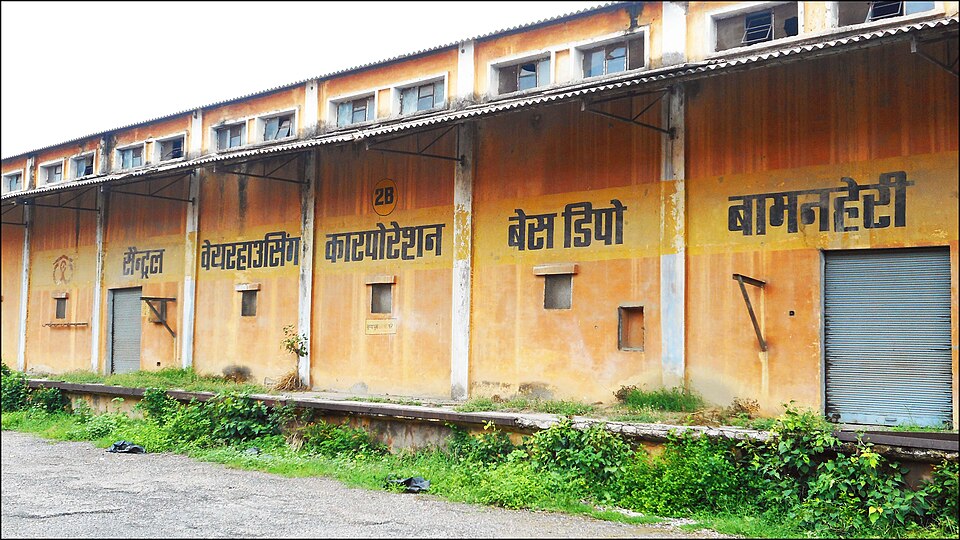
Why the Centre holds stocks. Central stocks serve four purposes: meeting buffer norms for food security, monthly supply for the PDS and welfare schemes, emergencies such as droughts, and market intervention to cool prices through open-market sales. The buffer norms set in January 2015 include a food security reserve of 3 million tonnes of wheat and 2 million tonnes of rice.
How grain is stored. Grain is kept in godowns, in modern silos, and in Cover and Plinth (CAP) storage, where bags sit on raised plinths under polythene covers. Wheat and paddy may be kept in CAP, but rice only in covered godowns. CAP is cheap but causes more losses, which is why the policy push is towards silos.
What food security really means
A puzzle to start. In some years India's godowns overflowed with grain, yet many children stayed underweight. How can a country have too much food and too many hungry people at the same time? The answer is that food security is about people, not just about national stocks.
The definition. Food security means that all individuals have food in the required quantity and quality for a healthy and active life, on a lasting basis. It has four elements: availability (enough food produced or imported), access (money or entitlement to get it), utilisation (a body that can absorb it, which needs clean water, sanitation and health care) and stability (no sudden loss of access).
Self-sufficiency is not the same thing. A country is self-sufficient when its own output meets its needs without imports. Singapore imports most of its food yet is food secure. India became broadly self-sufficient in cereals, but not every Indian is food secure.
What happened to the plate. Per person, the daily availability of wheat rose from about 66 g in 1951 to about 155 g in 2009, but pulses fell from about 61 g to about 37 g. So the plate got more cereal but less protein, which is one reason for the focus on pulses and millets today.
Two kinds of targeting errors. When aid goes only to the poor, two mistakes can happen. An exclusion error leaves out a deserving poor family, and an inclusion error gives aid to someone who is not poor. Universal schemes reduce exclusion but cost more, while tight targeting saves money but risks leaving the hungry out.
Why MSP and food security go together: the logic
Why a support price? Farm prices swing with the weather and the market, and at harvest time prices often crash because everyone sells at once. A Minimum Support Price promises that the government will buy at a pre-set price. The government says this lets farmers invest in quality seeds and technology without fear of distress sales.
Why buy the grain? Procurement by the FCI and state agencies turns MSP from a promise into real money for farmers. The grain bought then feeds the public distribution system, so the same stock supports farmers on one side and poor families on the other.
Why a law for food (2013)? The National Food Security Act made subsidised grain a legal right for about 82 crore people, covering up to 75% of rural and 50% of urban people. Its aim is food and nutritional security so that people can live with dignity. Since 2023 the grain under NFSA has been free (PMGKAY).
Implications. MSP that favours rice and wheat can push farmers towards these crops even where water is scarce, and large stocks are costly to hold. That is why PM-AASHA tries to support pulses and oilseeds too, and why the debate on crop diversification continues.
Mains lens: the MSP debate
1. The case for MSP. It protects farmers from price crashes at harvest. It supports food security by feeding grain into the PDS. Higher margins on pulses and millets can shift farmers towards crops India needs.
2. The concerns.
- Uneven reach: procurement is strong in some states and crops, and weak in others, so many farmers don't benefit.
- Crop bias: assured buying of rice and wheat can encourage water-hungry crops in water-scarce regions.
- Cost: procuring, storing and distributing grain is expensive for the government.
- Trade rules: price support is judged against WTO farm-support limits (see IMF, World Bank, WTO and India).
3. The demand for a legal guarantee. Farmer groups have asked for a legal right to MSP. Supporters say it would secure incomes; critics worry about cost and market distortion.
A good conclusion: MSP and the PDS are pillars of farm income and food security. Better reach to small farmers, a shift towards diverse crops, and efficient delivery can make them work better.
Mains practice: three questions, three angles
These are practice questions written by us, not past papers. Past questions from each exam are in the PYQ panel of this module.
| Angle | Question | Key points to cover |
|---|---|---|
| Why (origin) | What is the economic rationale of MSP? Examine its limitations. | Explain that MSP protects farmers from price risk and distress sales and is set at 1.5 times cost. Then show its skew towards rice and wheat and the limited reach of procurement. |
| Rights | How did the NFSA, 2013 change India's approach to food security? | Explain that it made food a legal right for about 82 crore people with a life cycle approach. Then mention coverage of 75% rural and 50% urban and free grain since 2023. |
| Way forward | How can price support be made more crop-neutral and sustainable? | Explain the PM-AASHA tools of PSS, PDPS and MIS. Then show how they could support pulses and oilseeds, especially in water-scarce regions. |
How to use this table: each answer should explain the what, then the why from the section above, and end with a way forward.
Quick revision
- The government announces MSP for 22 mandated crops on the advice of the CACP.
- Since Budget 2018-19, MSP is fixed at no less than 1.5 times the all-India weighted average cost of production.
- For 2026-27, MSP is ₹2,441 per quintal for common paddy and ₹2,585 for wheat, where the wheat cost is ₹1,239, giving a margin of 109%.
- Cereals are procured by the FCI and state agencies, and under decentralised procurement (DCP) the states themselves buy, store and distribute.
- Pulses and oilseeds are bought under PM-AASHA through NAFED and NCCF, while cotton is bought by the CCI and jute by the JCI.
- PM-AASHA, launched in September 2018, has four parts: PSS, PSF, PDPS and MIS.
- The National Food Security Act, 2013 was notified on 10 September 2013 and covers up to 75% of rural and 50% of urban people.
- It gives 5 kg of grain per person per month, and the poorest families under Antyodaya get 35 kg per household per month.
- Under PMGKAY, grain has been free since 1 January 2023, and the scheme was extended for five years from 1 January 2024 at a cost of ₹11.80 lakh crore.
- By October 2025, 78.90 crore people were receiving this free grain.
- MSP cost includes all paid-out costs + imputed value of family labour; on 1 July 2025 central pool stocks were 736.61 lakh tonnes against a buffer norm of 411.20; extra grain is sold under OMSS (Domestic) to moderate prices.
- One Nation, One Ration Card lets NFSA beneficiaries lift grain from any fair price shop in India after biometric authentication on ePoS, built on IM-PDS (from April 2018).
- Grain machine: APC Jan 1965 (CACP from 1985), FCI 1965 (Act of 1964), TPDS 1997, AAY 2000, NFSA 2013, DCP 1997-98; stocks serve buffer, PDS, emergencies and price control; rice only in covered godowns, not CAP.
- Food security = availability, access, utilisation, stability; self-sufficiency is neither necessary nor sufficient; pulses fell from about 61 g to 37 g per day (1951-2009); exclusion vs inclusion errors.
Common confusions and exam traps:
- AAY gets 35 kg per household; others get 5 kg per person.
- CACP recommends MSP; the government announces it.