

HPSC HCS · Module 73 · Mains depth · 15 min
Integration of the princely states
What HPSC HCS asks from this chapter
HPSC HCS questions from this module are being sorted into our bank.
Read at full depth: basics, the standard layer and the Mains analysis.
Start from zero: one country, hundreds of rulers
Imagine a large housing colony where most houses are run by one society, but hundreds of other houses are owned by separate landlords. Each landlord has his own rules, his own guards and his own idea of whether to stay in the colony at all. If even a few landlords walk away, the colony breaks into scattered pieces. Somebody has to persuade them, one by one, to join a single society.
India in 1947 faced exactly this problem. Large parts of the country were British provinces, but more than five hundred princely states were ruled by Indian kings, nawabs and maharajas under British protection. Together these states covered about two-fifths of the land. Many of them sat right in the middle of the provinces, like islands.
When the British left, the question was simple and frightening. Would these states join India, join Pakistan, or try to stay independent? A map full of independent states would have made India impossible to defend, govern or develop. This chapter tells how that danger was met.
Keep one question in mind as you read. How did India bring hundreds of separate states into one Union within a few years, and why did the method work?
Key events at a glance
This table lists the main steps from 1947 to 1975. Each is explained in the sections below.
| When | What happened | Why it matters |
|---|---|---|
| 25 June 1947 | States Department set up under Patel, with V.P. Menon as Secretary | One office now handles all the states. |
| 5 July 1947 | Patel's appeal to the rulers | Persuasion comes before pressure. |
| October 1947 | Kashmir attacked from Pakistan; Instrument of Accession signed | Kashmir joins India in a crisis. |
| February 1948 | Plebiscite in Junagadh | The people overrule the Nawab's choice. |
| 17 September 1948 | Nizam announces ceasefire after Operation Polo | Hyderabad becomes part of India. |
| 1954 | French hand over Pondicherry | Colonial enclaves begin to end. |
| December 1961 | Goa freed through Operation Vijay | Portuguese rule in India ends. |
| 26 April 1975 | Sikkim becomes a State (36th Amendment) | The map takes its later shape. |
Notice that most of the work was done in about fifteen months, between June 1947 and September 1948. The later steps dealt with foreign enclaves and with Sikkim, which were different cases.
What the princely states were, and why they were a problem
The British did not conquer every part of India directly. In many places they left Indian rulers on their thrones, as long as those rulers accepted British supremacy in defence and foreign affairs. These were the princely states. Some were as large as a European country, like Hyderabad and Kashmir, while others were only a few villages.
Official counts of these states differ, from over 550 to about 565. The safe way to write it in an exam is "more than five hundred" princely states. What matters more is their size, since together they covered about two-fifths of the territory of undivided India. They were scattered across the map, not gathered in one corner.
Why was this a problem in 1947? British protection was ending, and in theory each ruler now had to decide his own future. If even a few large states stayed out, India would have holes in the middle of its territory. Railways, rivers, roads and armies would have to cross foreign borders inside the country.
There was also a deeper problem. Most of the states were not democracies, and their people had little say in government. A free India promising equal citizenship could not leave millions of people under unaccountable rulers. So integration was about both the map and democracy.
This is why the Constitution makers chose a strong Centre. They knew that more than five hundred states had to be joined and that new states would have to be created. A weak Centre could not have held this together. You will see the link to the federal design in the chapter on the Union and its territory.
The method: a department, two documents and an appeal
The States Department: On 25 June 1947, even before independence, a States Department was set up under Sardar Vallabhbhai Patel. V.P. Menon became its Secretary. This gave one clear address for every ruler, and one team that could negotiate with all of them. On 15 August 1947 Patel became India's first Deputy Prime Minister and Home Minister, so he carried this work into the new government.
Two simple documents: Patel and Menon designed two tools. The first was the Standstill Agreement, which kept existing arrangements running for the time being, so that trade, posts and railways did not suddenly stop. The second was the Instrument of Accession, by which a ruler joined his state to India. Think of the first as "nothing changes for now" and the second as "we are now part of India".
Why this design was clever: The rulers were not asked to give up everything at once. The Instrument of Accession let them join India first, and the deeper merger into Indian provinces and new states could follow. This lowered the fear of the rulers and made a quick "yes" easier. Speed mattered, because every week of delay gave room for doubt and outside pressure.
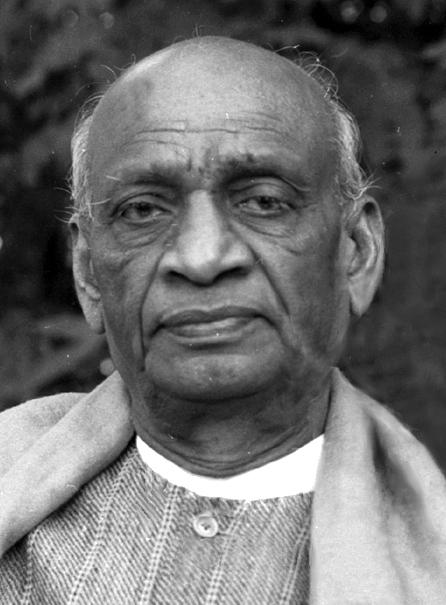
The appeal of 5 July 1947: Patel combined these tools with persuasion. In a statement on 5 July 1947 he told the rulers that it was better to make laws sitting together as friends than to make treaties as aliens. The message was that the states were part of one family, not foreign powers bargaining with India. Most rulers accepted this before 15 August 1947.
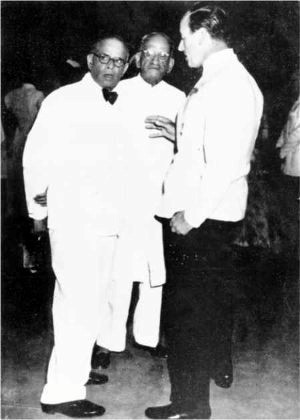
The difficult cases
A few states did not join easily, and each tested a different principle. Learn them as a set, because exams often compare them.
Travancore and Jodhpur: In July 1947 Travancore declared that it would be independent. Patel brought its ruler on board, and Jodhpur too joined India after negotiations. These cases show that persuasion alone was often enough when the ruler could be convinced.
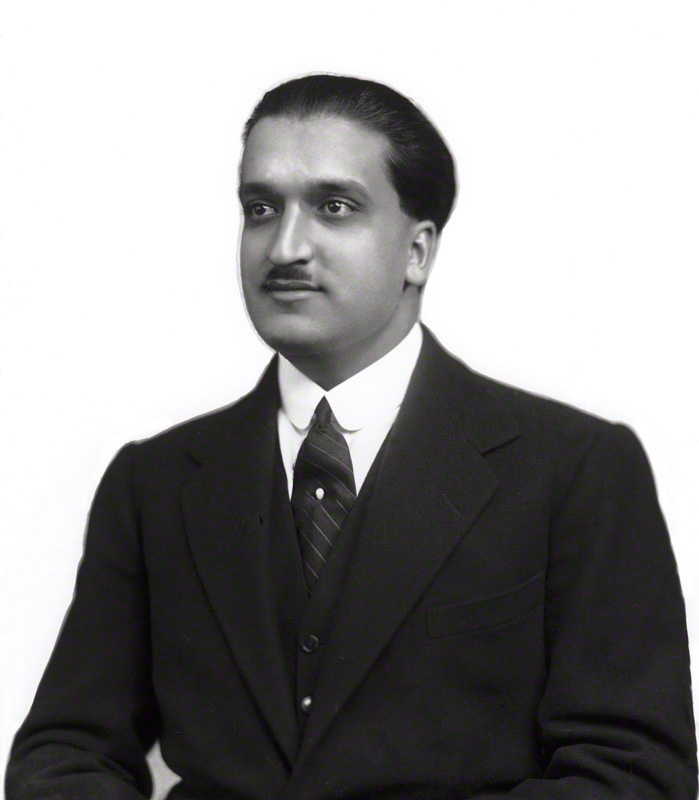
Junagadh: the people decide: Junagadh was a small state in western India, and its Nawab chose to join Pakistan. India held that the choice of a ruler could not override the wishes of the people. A plebiscite was held in February 1948, and the people voted overwhelmingly for India. The principle here was popular consent.
Kashmir: accession in a crisis: In October 1947 Kashmir was attacked from the Pakistan side. Maharaja Hari Singh then signed the Instrument of Accession to India. Jammu and Kashmir was later given a special position under Article 370, which was abrogated on 5 August 2019. The details of the conflict belong to the chapter on wars and crises.
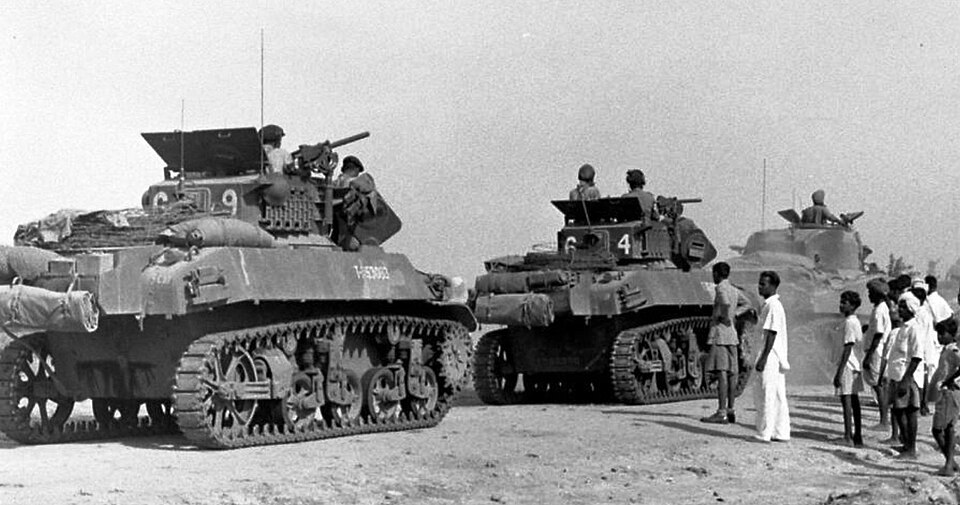
Hyderabad: from standstill to Operation Polo: Hyderabad was the largest of the states and lay in the heart of the Deccan. Its Nizam signed a Standstill Agreement but did not accede. India then launched Operation Polo, and on 17 September 1948 the Nizam announced a ceasefire. Hyderabad was then absorbed into India.
Completing the map: enclaves, Sikkim and new states
By the end of 1948 the princely states were inside India, but the work was not over. Sardar Patel, who had led this effort, died on 15 December 1950. The tasks that remained were of three kinds: foreign colonial enclaves, the special case of Sikkim, and the redrawing of internal boundaries.
French and Portuguese enclaves: Britain was not the only European power with territory in India. The French handed over Pondicherry in 1954. Portugal refused to leave Goa, and Goa was freed in December 1961 through "Operation Vijay". These were not princely states, so do not mix them up with accession.
Sikkim, a later and different case: Sikkim in the eastern Himalaya joined India much later, in 1975. The Constitution (Thirty-fifth Amendment) Act of 1975 first made it an associate State. Then the Thirty-sixth Amendment, in force from 26 April 1975, made Sikkim a full State of India.
From many units to a cleaner map: The joined states were first grouped in different classes, called Part A, Part B and Part C States. The Constitution (Seventh Amendment) Act, in force from 1 November 1956, replaced the First Schedule and ended these classes. That change came with the reorganisation of states, which is the subject of the next chapter.
Mains lens: why integration worked, and what it left behind
Why it worked so fast: Several factors came together. First, there was a clear structure, with one department under one leader and two standard documents. Second, the offer was gentle at the start, since joining India did not mean losing everything on the first day. Third, there was a deadline, because British protection was ending in August 1947 and most rulers had no real alternative.
Persuasion first, firmness when needed: The record shows a graded approach. Most rulers were persuaded, as Patel's appeal of 5 July 1947 shows. Junagadh was settled by the vote of its people.
Only in Hyderabad, after the standstill dragged on, was military action, Operation Polo, used. A good answer shows this ladder rather than calling the whole process either peaceful or forced.
The role of the people: It is easy to tell this story only through Patel, Menon and the rulers. But the Junagadh plebiscite shows that popular will was used as a principle. The people of the states also wanted the same rights as other Indians. Mentioning this makes an answer more balanced.
Implications for the Constitution: The integration shaped India's federal design. Because hundreds of units had to be joined and new states created, the Constitution gave the Centre strong powers, including the power of Parliament to form new states and change boundaries. So the Union stays fixed, while the boundaries of its states can be redrawn by Parliament.
Lasting legacies: Two legacies still shape politics today. One is Kashmir, whose accession in a war began a long dispute; its special status under Article 370 was abrogated in 2019. The other is the internal map, which kept changing as language and identity movements grew. Patel's work created the frame, and later decades filled it in.
Mains practice: integration of the states
| Angle | Question | Key points to cover |
|---|---|---|
| Process | Explain how the princely states were integrated into the Indian Union between 1947 and 1949. | States Department 25 June 1947; Patel and Menon; Standstill Agreement; Instrument of Accession; 5 July 1947 appeal; hard cases. |
| Comparison | Compare the cases of Junagadh, Hyderabad and Kashmir. What principle did each establish? | Junagadh plebiscite February 1948 (popular will); Hyderabad standstill then Operation Polo, 17 September 1948; Kashmir accession October 1947 after attack; Article 370. |
| Legacy | "The integration of princely states shaped the federal character of the Indian Constitution." Discuss. | 500+ states; strong Centre; Parliament's power to form states; Part A/B/C classes; 7th Amendment 1956; later reorganisation. |
These are practice questions written by us, not past papers. Past questions from your exam appear in the PYQ panel.
How to use this table: each answer should explain the what, then the why, and end with what it led to.
Quick revision
- More than 500 princely states (counts: over 550 to about 565); about two-fifths of the territory.
- States Department: 25 June 1947, under Patel; V.P. Menon Secretary.
- Tools: Standstill Agreement (keep things running) and Instrument of Accession (join India).
- 5 July 1947: Patel's appeal, "laws together as friends, not treaties as aliens".
- 15 August 1947: Patel first Deputy PM and Home Minister; died 15 December 1950.
- Travancore (July 1947, wanted independence) and Jodhpur joined after talks.
- Junagadh: Nawab chose Pakistan; plebiscite February 1948 for India.
- Kashmir: attack October 1947; Hari Singh signs Instrument of Accession; Article 370 abrogated 5 August 2019.
- Hyderabad: Standstill, then Operation Polo; Nizam's ceasefire 17 September 1948.
- Pondicherry 1954 (French); Goa December 1961, Operation Vijay (Portuguese).
- Sikkim: 35th Amendment (associate State), 36th Amendment in force 26 April 1975 (full State).
- 7th Amendment, 1 November 1956: Part A/B/C classes ended.