

KPSC KAS · Module 40 · Mains depth · 16 min
Exchange rate, forex reserves and convertibility
What KPSC KAS asks from this chapter
Syllabus lines this chapter covers:
- Paper I: General Studies · Indian polity and economy.
- GS 2 · International relations.
KPSC KAS has asked 2 questions from this chapter (2020); 9 from its whole module.
Read at full depth: basics, the standard layer and the Mains analysis.
Start from zero: the price of a dollar
Priya has a place at a US university, and the yearly fee is 20,000 US dollars. Her father has to buy those dollars with rupees. If one dollar costs ₹80, he needs ₹16 lakh. If one dollar costs ₹90, he needs ₹18 lakh, for exactly the same course.
That "price of a dollar in rupees" is the exchange rate. When a dollar costs more rupees, we say the rupee has depreciated, or become weaker. When it costs fewer rupees, the rupee has appreciated.
A weaker rupee hurts Priya's father and anyone who imports oil, phones or gold. But it helps an exporter in Tiruppur, who now gets more rupees for every dollar of shirts sold abroad.
According to the Economic Survey 2025-26, the rupee depreciated by about 5.4% against the dollar between 1 April 2025 and 15 January 2026. This chapter explains how the rupee's price is set, why India keeps large reserves, and what convertibility means.
How the rupee's price is set
Fixed vs floating. Under a fixed exchange rate, the government or central bank sets the price of its currency. Under a floating rate, the price is set by demand and supply in the market. Many countries, including India, are in between: the market sets the rate, but the central bank steps in to smooth sharp swings.
What moves the rupee. Demand for dollars comes from importers, Indians travelling or studying abroad, and foreign investors taking money out. Supply of dollars comes from exporters, remittances, and foreign investors bringing money in. When demand for dollars rises faster than supply, the rupee weakens.
The steps India took. RBI's chronology records the move away from a fixed rate:
- March 1992: a dual exchange rate system, the Liberalised Exchange Rate Management System (LERMS), as the first step towards a market-determined rate.
- 1993: a unified exchange rate.
Why this matters: in a managed market like India's, the central bank can buy or sell dollars from its reserves to calm sharp swings. That is one big reason reserves matter.
Forex reserves: India's safety net
What they are. Forex reserves are foreign assets held by RBI that can be used to pay for imports, repay foreign debt, or steady the rupee. RBI's weekly data show four parts:
| Component | US$ million, 25 Sep 2026 |
|---|---|
| Foreign currency assets | 6,15,411 |
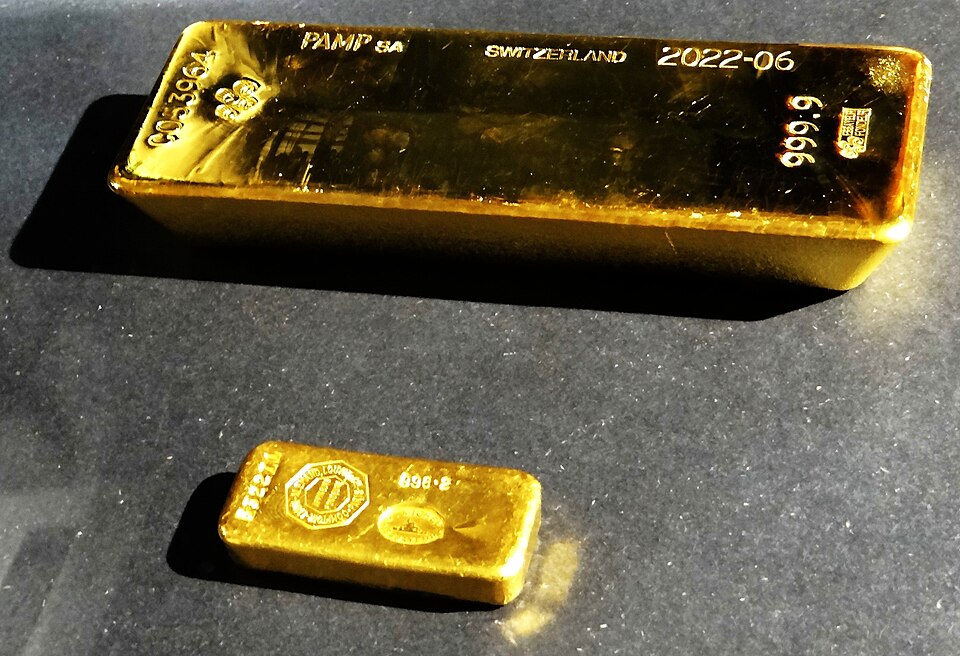
| Gold | 1,08,701 |
| Special Drawing Rights (SDRs) | 18,642 |
| Reserve position in the IMF | 4,804 |
| Total | 7,47,557 |
How big is enough? The usual tests are how many months of imports the reserves can pay for, and how much of the external debt they cover. In his statement of 7 October 2026, RBI's Governor gave reserves of US$ 734.6 billion on 2 October 2026, an import cover of around 11 months and external debt cover of 94.4%.
Note on the two numbers. Reserves change every week, with flows and with the value of gold and other currencies. So the 25 September and 2 October figures differ; always quote the date with the number.
Convertibility and FEMA
What convertibility means. A currency is convertible when people can freely change it into foreign currency at the market rate for a given purpose. Current account convertibility covers trade, travel, education, remittances and similar payments. Capital account convertibility would cover buying foreign assets or borrowing abroad freely.
India's position. RBI's chronology records that in August 1994 the rupee was made convertible on the current account, with India's acceptance of Article VIII of the IMF's Articles of Agreement. On the capital account, India has opened up step by step but keeps limits and rules, so the rupee is not fully convertible on the capital account.
FEMA. The Foreign Exchange Management Act, 1999 (Act 42 of 1999) replaced the older FERA, 1973 and came into force on 1 June 2000. Its stated objective is "facilitating external trade and payments" and "promoting the orderly development and maintenance of foreign exchange market in India."
Why this matters: FERA treated foreign exchange as something to be controlled; FEMA treats it as something to be managed. This shift matches India's wider move towards an open economy.
What moves the rupee
Start with a vegetable market. When many buyers want tomatoes and few farmers bring them, the price rises. The rupee's price in dollars works the same way, because it is set mostly in a market where people buy and sell currencies. When more people want dollars than want rupees, the dollar becomes dearer and the rupee depreciates.
Who wants dollars? Importers need dollars to pay for oil, gold and electronics, and foreign investors want dollars when they pull money out of India. On the other side, exporters, software firms, families receiving remittances and foreign investors coming in bring dollars and sell them for rupees. So a rising oil bill or an FPI outflow tends to weaken the rupee, while strong service exports and FDI support it.
Prices and interest rates. Over long periods, a currency tends to lose value when its prices rise faster than in other countries, because its goods become costlier and less competitive. This idea is called purchasing power parity. In the short run, interest rates matter more: when US interest rates rise faster than India's, investors move money to the US and the rupee weakens.
Nominal and real exchange rates. The rupee-dollar rate is a nominal rate against one currency. The NEER (nominal effective exchange rate) measures the rupee against a basket of trading partners' currencies, and the REER (real effective exchange rate) also adjusts for differences in inflation. A rising REER means Indian goods are becoming costlier abroad, even if the rupee looks stable against the dollar.
The impossible trinity. Economists say a country cannot have all three of these at once: a fixed exchange rate, free movement of capital and an independent monetary policy. India keeps an independent monetary policy, allows capital to move fairly freely, and so lets the rupee float, while RBI steps in only to smooth sharp swings. This is why RBI uses reserves to manage volatility rather than to hold the rupee at one fixed level.
Why it matters. A weaker rupee helps exporters but makes oil and other imports dearer, which can push up inflation. A stronger rupee does the opposite. A good Mains answer explains these trade-offs instead of treating a falling rupee as simply good or bad.
Taking the rupee abroad
Start with a shared currency at a border market. Imagine traders from two neighbouring towns who must first change their money into a third town's coins before they can trade. Every exchange costs a fee, and if the third town's coins run short, trade stops. Most world trade works like this today, with the US dollar as that third currency.
The 2022 step. On 11 July 2022, RBI put in place an arrangement for invoicing, payment and settlement of exports and imports in Indian rupees. Under it, an Indian bank may open a Special Rupee Vostro Account for a bank of the partner country, so that the partner's traders can pay and receive rupees directly. The exchange rate between the two currencies may be set by the market.
Why RBI did it. RBI said the aim was to promote the growth of global trade, with emphasis on exports from India, and to support the growing interest of world traders in the rupee. It also gives Indian firms a way to trade with partners who are short of dollars. The government later linked rupee settlement to export benefits under the Foreign Trade Policy.
The limits. A currency becomes truly international only when foreigners want to hold it, save in it and invest it. That needs deep financial markets, easy convertibility and trust in stable prices. Rupee trade settlement is a first step, but most of India's trade is still invoiced in dollars.
Why it matters. Wider use of the rupee can cut conversion costs, reduce India's need to hold huge dollar reserves, and give Indian firms some protection from dollar shortages. It also raises the question of how far India should open its capital account. A good Mains answer weighs these gains against the risks of more volatile capital flows.
Why India moved to a market exchange rate and keeps big reserves
Why let the market set the rupee? A fixed rate set by the government can drift far from what the market thinks the rupee is worth, until a crisis forces a sudden jump, as in July 1991. So India moved in steps: LERMS (March 1992), a unified rate (1993) and current account convertibility (August 1994). A market rate adjusts a little every day instead of breaking all at once.
Why replace FERA with FEMA (2000)? FERA (1973), as its name says, was built around regulating foreign exchange. FEMA (in force from 1 June 2000) instead aims at facilitating external trade and payments and the orderly development of the forex market. The shift from "regulation" to "management" mirrors the shift from control to openness.
Why large reserves? The 1991 crisis showed what happens when reserves run out. Today reserves of about US$ 735-748 billion give an import cover of around 11 months, enough to calm markets when money flows out. They also give the RBI room to act if the rupee swings sharply.
Implications. Holding reserves has a cost, because they earn little, but they buy confidence. A Mains answer should weigh this insurance value against the cost.
Mains lens: should India allow a weaker rupee?
1. Arguments for letting it weaken. A weaker rupee makes Indian exports cheaper abroad and imports dearer at home. This can help labour-heavy exports such as textiles and leather. Defending a fixed level can also burn through reserves.
2. Arguments against. India imports a large part of its crude oil, so a weaker rupee raises fuel prices and inflation (Module 3). Companies with foreign-currency loans face higher repayment costs. Sharp falls can also scare away foreign investors.
3. The middle path. The market sets the trend, while the central bank can use reserves to smooth sudden swings. Large reserves, around 11 months of import cover in October 2026, give it room to do this.
A good conclusion: a stable but flexible rupee, backed by strong reserves and a gradual approach to capital account opening, balances export competitiveness with price stability.
Mains practice: three questions, three angles
These are practice questions written by us, not past papers. Past questions from each exam are in the PYQ panel of this module.
| Angle | Question | Key points to cover |
|---|---|---|
| Why (reform) | Trace India's move to a market-determined exchange rate after 1991. Why was it needed? | Start with the devaluation of 1991 and the dual rate under LERMS in 1992. Then show the unified rate of 1993 and current account convertibility in 1994. |
| Law | Distinguish between FERA and FEMA. What does the change signify? | Explain that FERA aimed to regulate and control, while FEMA, in force from 1 June 2000, aims to facilitate trade and payments. Then state FEMA's aims of an orderly forex market. |
| Debate | Are India's forex reserves adequate, or excessive? Discuss. | Use import cover of about 11 months and debt cover of 94.4%. Then weigh the cost of holding reserves against the protection they give from volatility. |
How to use this table: each answer should explain the what, then the why from the section above, and end with a way forward.
Quick revision
- The exchange rate is the price of a foreign currency in rupees, so when it takes more rupees to buy a dollar, the rupee has depreciated.
- India moved step by step: devaluation in July 1991, a dual rate under LERMS in March 1992, a unified market rate in 1993, and current account convertibility under IMF Article VIII in August 1994.
- On 25 September 2026, reserves were US$ 747.6 billion, made up of foreign currency assets of 615.4, gold of 108.7, SDRs of 18.6 and the IMF reserve position of 4.8.
- By 2 October 2026 they were US$ 734.6 billion, enough to cover about 11 months of imports and 94.4% of external debt.
- FEMA, 1999 (Act 42 of 1999) came into force on 1 June 2000 and replaced FERA, 1973.
- Between 1 April 2025 and 15 January 2026, the rupee fell about 5.4% against the dollar.
- The rupee weakens when dollar demand (oil, gold, FPI outflow) exceeds supply (exports, remittances, FDI); REER adjusts NEER for inflation; under the impossible trinity India keeps independent monetary policy and fairly open capital flows, so the rupee floats with RBI smoothing swings.
- Since 11 July 2022, trade can be invoiced and settled in INR through Special Rupee Vostro Accounts opened by Indian banks for partner-country banks, at a market-determined rate.
Common confusions and exam traps:
- The rupee is convertible on the current account, not fully on the capital account.
- Foreign currency assets, not gold, are the largest part of reserves.
- Depreciation happens in the market; devaluation is a deliberate official cut, as in July 1991.
KPSC KAS questions from this chapter
Liberalised Exchange Rate Management System (LERMS) was instituted in _____ .
- (a) April, 1991
- (b) April, 1993
- (c) March, 1992
- (d) April, 1995
Show answer
(c) March, 1992
In an efficient foreign exchange rate market, an unexpected increase in domestic money supply growth can lead to ____________ .
- (a) An immediate appreciation of a currency
- (b) An immediate depreciation of a currency
- (c) An immediate decrease in direct foreign investment
- (d) None of the above
Show answer
(b) An immediate depreciation of a currency