

KPSC KAS · Module 5 · Mains depth · 26 min
The Bhakti and Sufi movements
What KPSC KAS asks from this chapter
Syllabus lines this chapter covers:
- Paper I: General Studies · History of India with emphasis on the national movement and Karnataka.
- GS 1 · History and cultural heritage of India and Karnataka.
KPSC KAS has asked 4 questions from this chapter (2020, 2017, 2014); 8 from its whole module.
Read at full depth: basics, the standard layer and the Mains analysis.
Start from zero: two paths of love and devotion
In the chapter on Sultanate society we saw towns grow, new crafts arrive and a new ruling class settle in India. In the same centuries, two great religious movements spread among ordinary people: bhakti among Hindus and others, and Sufism within Islam.
Both said that a person could reach God directly through love and devotion, without depending on priests, rituals or legal scholars. Both used the languages of the people, music and poetry. And both, at their best, cut across caste and creed.
The bhakti saints ranged from Kabir and Nanak, who rejected idols and caste, to Chaitanya and Ramananda, who worshipped Krishna or Rama. The Sufis ranged from the Chishtis, who kept away from kings, to the Suhrawardis, who accepted royal gifts.
Why study this? Exams ask about saints, their regions, orders, texts and teachings, and about the difference between nirguna and saguna bhakti. Mains asks what caused these movements, how far they challenged caste and orthodoxy, and how they shaped a composite culture.
Saints and orders at a glance
| Name | Region | Key point |
|---|---|---|
| Kabir | Banaras | Nirguna; weaver; ridiculed orthodoxy of both religions |
| Guru Nanak | Punjab | Nirguna; Khatri; hymns in Adi Granth (1604) |
| Ramananda | Banaras | Rama bhakti; common language; relaxed caste |
| Chaitanya | Bengal, Puri | Krishna bhakti; sankirtan |
| Jnaneswar, Namdev | Maharashtra | Jnanesvari; Namdev carried bhakti to Punjab |
| Sankaradeva | Assam | Eka-sarana-dharma; satras |
| Bahauddin Zakariya | Multan | Suhrawardi; accepted state patronage |
| Muinuddin Chishti | Ajmer | Founder of the Chishti order in India |
| Nizamuddin Auliya | Delhi | Greatest Chishti; never visited the court |
| Nuruddin Wali | Kashmir | Rishi order, influenced by Lal Ded |
The key idea. Bhakti and Sufism grew side by side and influenced each other, but they were separate movements with their own roots.
The roots of bhakti in the south
What bhakti means. Bhakti is devotional surrender to a personally conceived Supreme God in order to attain salvation. The idea is old: it appears in Brahmanical and Buddhist traditions and in scriptures such as the Gita. What was new in the south was that bhakti became a popular movement.
Nayanars and Alvars. Between the seventh and tenth centuries, the Shaiva Nayanar and Vaishnava Alvar saints of South India spread bhakti among people of every caste and both sexes. Some saints came from the 'lower' castes, and some were women. They sang and danced their devotion, and composed their songs in Tamil, not Sanskrit.
Who they opposed. These saints were critical of Buddhists and Jains, who then enjoyed privileged status at southern courts. They won many followers away from those faiths. At the same time, by opening bhakti to all, they quietly resisted the authority of orthodox Brahmans.
The limits. The southern movement never consciously opposed caste or Brahmanism. Idol worship, Vedic mantras and pilgrimages continued, and Brahman-run temples helped the movement grow. In the long run it strengthened rather than weakened caste, and after the tenth century it was absorbed into Brahmanical religion.
The acharyas. As the popular movement faded, scholar-saints called acharyas defended bhakti through philosophy. Ramanuja (eleventh century) balanced orthodoxy with bhakti: he did not give Shudras access to the Vedas, but he opened bhakti to all, including Shudras and outcastes, and tried to remove untouchability.
Nimbarka and Madhava. Nimbarka, a Telugu Brahman and a younger contemporary of Ramanuja, spent most of his life at Vrindavan and preached devotion to Krishna and Radha. Madhava (thirteenth century) based his system on the Bhagavata Purana and saw bhakti as an alternative path for Shudras. The Bhagavata, a Vaishnava text of about the ninth century, links most later Vaishnava movements.
Bhakti in the north: why it rose and the monotheists
Many movements, not one. In the Sultanate period, bhakti movements arose in North and East India and Maharashtra. They shared an emphasis on bhakti and religious equality, but each had its own region and context. They should be studied separately, especially the monotheistic movement of Kabir and Nanak, which was fundamentally different from the rest.
Political causes. Before the Turks, the religious life of the north was dominated by a Rajput-Brahman alliance hostile to heterodox movements. The Turkish conquest ended this alliance and took away the Brahmans' temple wealth and state patronage. This weakened them materially and ideologically, and made room first for the Nathpanthis and then for anti-caste movements.
Social and economic causes. The Turkish ruling class lived in towns and spent its large revenue on goods and luxuries. This expanded the class of urban artisans, who were unhappy with their low place in the caste order and were drawn to the egalitarian message. Traders such as the Khatris of Punjab joined too, and in Punjab Jat peasants later gave Nanak's movement a mass base.
What bhakti was not. Some scholars call bhakti an Indian Protestant Reformation or a revolt against feudal oppression. But the saints did not speak for the peasants against the state or call for the overthrow of the ruling class. The Protestant Reformation was a far greater upheaval linked to the rise of capitalism, so the comparison does not hold.
Kabir. Kabir (c. 1440-1518) was the earliest and most powerful monotheist.
He came from a family of Julaha weavers who had converted to Islam and lived mostly in Banaras. More of his verses entered the Adi Granth than those of any other monotheist, and later saints called themselves his followers.
Other monotheists. Raidas (Ravidas), a tanner of Banaras, belonged to the next generation; Kabir called him a 'saint among saints'. Dhanna was a Jat peasant from Rajasthan, Sen was a barber, and Pipa another saint of the time. They mention one another with respect, showing a shared outlook.
Guru Nanak. Guru Nanak (1469-1539) was a Khatri (trader caste) born in the Punjab village now called Nankana Sahib. He travelled widely and settled at Dera Baba Nanak. His hymns, with those of Kabir, Raidas, Namdev and others, were compiled in the Adi Granth by the fifth Guru, Arjan, in 1604, and his followers grew into Sikhism.
One formless God. The monotheists believed in one God, who was formless (nirankar), eternal (akal) and beyond words (alakh). Their bhakti was therefore nirguna (without attributes), unlike the saguna bhakti of the Vaishnavas, who worshipped incarnations. Kabir often called God Ram, but made clear that his Ram was not the king born at Ayodhya.
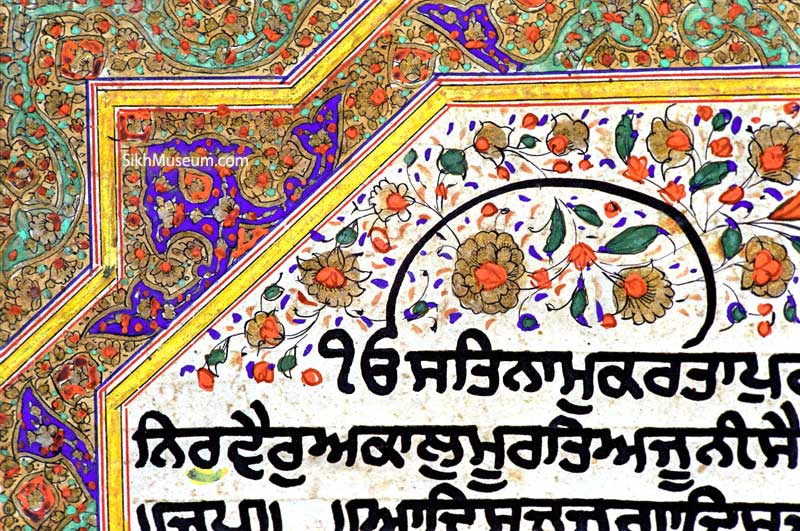
Against orthodoxy of both faiths. The monotheists followed a path independent of both Hinduism and Islam. They attacked caste and idolatry, rejected the authority of Brahmans and scriptures, and criticised the superstitions of both religions. Kabir used ridicule and a harsh style, and his 'upside-down' sayings (ulatbasi) were full of paradoxes.
Life among the people. Most monotheists were not ascetics; they married, worked at their family trades and preached among ordinary people. They wrote in a mixed common language understood across the north, in short, easy verses. They stressed the divine name, the guru, group singing (kirtan) and the company of saints (satsang).
Panths. Over time, the followers of each saint formed panths, such as the Kabir panth and the Raidasi panth. Of these, only the Nanak panth grew into a mass religion. The others survive with smaller followings.
Vaishnava bhakti and regional movements
Ramananda. Ramananda (late fourteenth and early fifteenth century) lived in the south early in life and later settled in Banaras. He is seen as the link between southern and northern Vaishnava bhakti. He made Rama, with Sita, the object of devotion, preached in the language of the people and relaxed caste rules, even eating with his 'low-caste' followers.
Ramananda and the monotheists. Because of his openness, later traditions call Kabir, Raidas, Dhanna, Pipa and Sen his disciples. But none of them mentions him, and they went much further, rejecting Brahmanical religion entirely. His followers are called Ramanandis, and a hymn attributed to him is in the Adi Granth.
Vallabhacharya. Vallabhacharya, a Telugu Brahman of the late fifteenth and early sixteenth century, founded the Pushtimarga ('way of grace') of Krishna bhakti. The poet Surdas and the other ashtachhap poets are believed to have been his disciples. His sect later became popular among merchants and landowners in Gujarat.
Bengal: the background. Bengali Vaishnavism drew on the Bhagavata Purana and on local Sahajiya Buddhist and Nathpanthi cults. Jayadeva (twelfth century) wrote the Gita Govinda in Sanskrit on the love of Radha and Krishna. Chandidas, the first Bengali bhakti poet, and Vidyapati, who wrote in Maithili, sang of the same theme.
Chaitanya. Chaitanya (1486-1533) turned this tradition into a mass movement. He was seen as an incarnation of Krishna even in his lifetime, disregarded caste, creed and sex in devotion, and popularised sankirtan, group singing with ecstatic dancing. One of his favourite disciples, Haridas, was a Muslim.
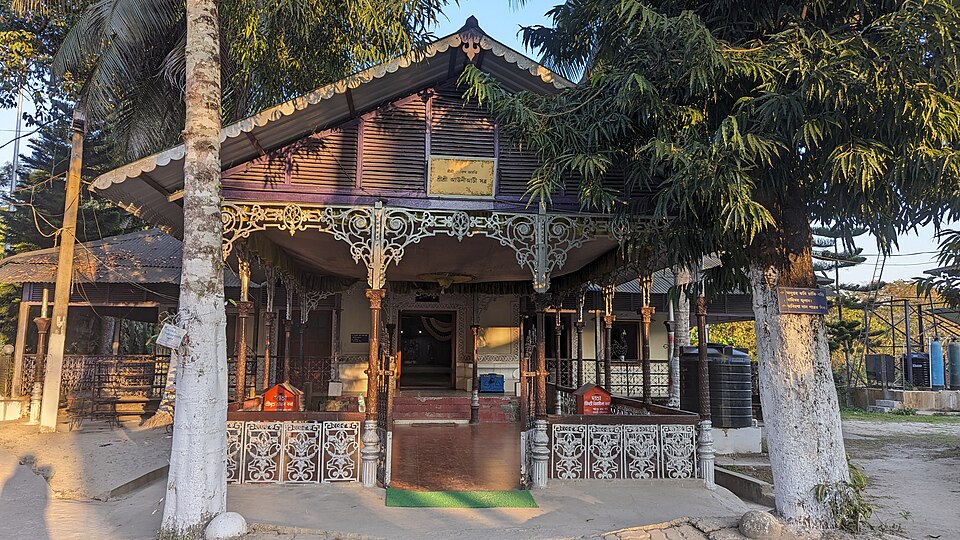
Chaitanya's limits. Yet Chaitanya did not question the authority of Brahmans or scriptures, and upheld his Brahman disciples' caste prejudices. The six Goswamins he sent to Vrindavan set up an order that kept caste restrictions. Still, his movement promoted a sense of equality in Bengal and remained popular in Bengal and Puri.
Maharashtra. Jnaneswar (1275-1296) pioneered bhakti in Maharashtra with the Jnanesvari, a Marathi commentary on the Gita and one of the earliest works of Marathi literature. Namdev (1270-1350), a tailor of Pandharpur, travelled to Punjab; his songs are in the Adi Granth. In Maharashtra he belongs to the Varkari tradition, while in the north he is remembered as a nirguna saint.
Other regions. In Kashmir, the woman saint Lal Ded led Shaiva bhakti in the fourteenth century. In Karnataka, the Virashaivas of the twelfth and thirteenth centuries preached a radical bhakti with sharp social criticism. In Gujarat, Narsimha Mehta carried bhakti forward.
Assam: Sankaradeva. Sankaradeva (1449-1568), from a family of non-Brahman chiefs, preached devotion to Vishnu or Krishna as eka-sarana-dharma, 'the religion of refuge in One'. Persecuted by orthodox priests of the Ahom kingdom, he moved to Cooch-Behar. He denounced caste, used dance-drama to teach, and founded satras, gatherings that grew into monasteries.
What Sufism is and how it grew
Meaning. Sufism, or tasawwuf, is the name for the mystical movements within Islam. It seeks direct communion with God through personal experience. Sufis accepted the sharia but did not stop at formal observance; they cultivated inner religious experience.
The path. The Sufi path (tariqa) leads towards divine reality (haqiqat). The disciple (murid) passes through stations (maqamat) and states (hal), under the strict guidance of a master (shaikh, pir or murshid). Practices included zikr (repeating God's name), self-discipline and contemplation.
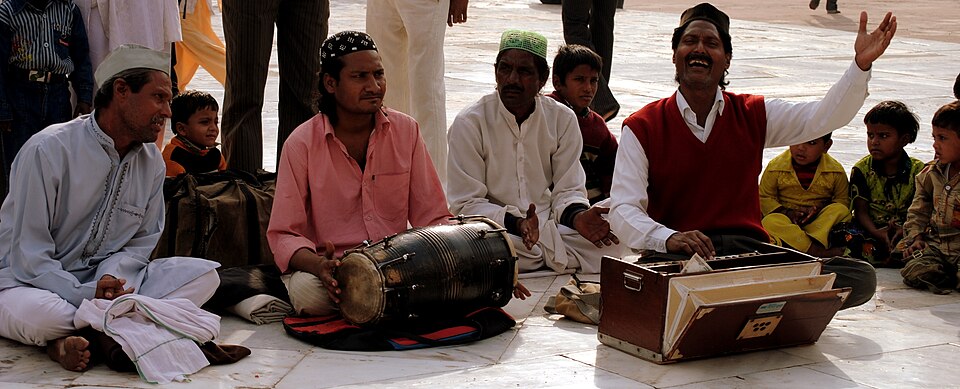
Sama and khanqah. Many Sufis held sama, musical recitals meant to induce a state of mystical ecstasy, though some orders and the ulema disapproved of it. Sufis were organised into orders (silsilahs), each named after a founder. The khanqah (hospice) was the centre of an order, supported by endowments and charity.
Early Sufis abroad. The earliest centres were Mecca, Medina, Basra and Kufa, where the woman mystic Rabia (d. 801) lived.
Bayazid Bistami of Khurasan introduced ecstasy and the idea of fana (annihilation of the self). Al-Junaid of Baghdad stood for a sober, disciplined Sufism close to orthodoxy.
Hallaj and Ghazzali. Mansur al-Hallaj (d. 922) declared 'I am God'; the ulema called him a blasphemer, and he was imprisoned and hanged. Al-Ghazzali (1058-1111), a theologian who became a Sufi, tried to reconcile Sufis with the ulema by stressing the outward observance of Islamic law.
Orders take shape. In the tenth to twelfth centuries, under the Ghaznavid and Seljuq Turks, the khanqah became a permanent, endowed institution beside the official madrasa. From the late twelfth century, distinct orders formed: the Qadiri (Abdul Qadir Jilani), Suhrawardi (Shahabuddin Suhrawardi), Chishti and later Naqshbandi. Persian Sufi poetry peaked with Attar and Rumi.
Sufi orders in Sultanate India
The first Sufis. Al-Hujwiri (d. c.
1088), author of the Persian treatise Kashf-ul Mahjub, was the earliest eminent Sufi to settle in India; his tomb is at Lahore. Sufi orders came after the Delhi Sultanate was founded, and many Sufis arrived as refugees from the Mongol conquests. By the fourteenth century there were said to be two thousand hospices in and around Delhi.
The Suhrawardis. The Suhrawardi order was founded in India by Shaikh Bahauddin Zakariya (1182-1262) at Multan. He sided with Iltutmish against Qubacha, received the title Shaikh-ul Islam, and accepted state patronage and built up great wealth. Shaikh Jalaluddin Tabrizi took the order to Bengal, where his khanqah ran a free kitchen (langar).
Muinuddin Chishti. The Chishti order began at Chisht near Herat and was brought to India by Khwaja Muinuddin Chishti, who settled at Ajmer around 1206. Later legends made him a missionary, but he was not actively involved in conversions and was tolerant towards non-Muslims. His tomb at Ajmer became a great place of pilgrimage.
His successors. Qutbuddin Bakhtiyar Kaki (d. 1235) succeeded him in Delhi.
Hamiduddin Nagauri lived like an ordinary Rajasthani peasant at Nagaur, was a strict vegetarian, and translated Persian Sufi verses into Hindavi. Baba Farid (Ganjshakar) moved to Ajodhan in Punjab, avoided the rich and powerful, and his verses were later included in the Adi Granth.
Nizamuddin Auliya. The greatest Chishti saint was Shaikh Nizamuddin Auliya (1236-1325). He saw seven Sultans but never visited the court. His langar was open to Hindus and Muslims alike, he talked with Nathpanthi yogis, and his conversations were recorded in Fawaid-ul Fuwad by Amir Hasan Sijzi; Amir Khusrau was his devoted disciple.
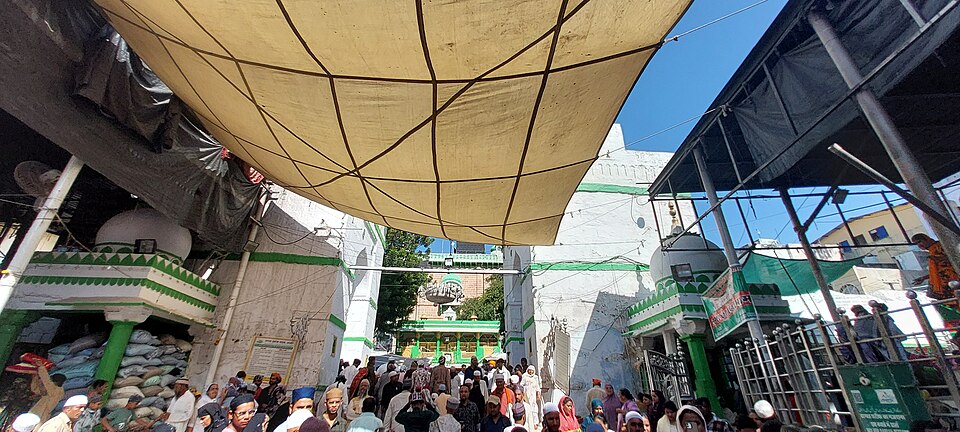
Chiragh-i Delhi and the decline. Shaikh Nasiruddin Mahmud, called Chiragh-i Delhi ('lamp of Delhi'), succeeded Nizamuddin and softened practices that offended the ulema. He died in 1356 without naming a successor, and Delhi lost its commanding Chishti figure. Muhammad Tughluq had made some Sufis accept state service and sent others south, but Feroz later gave gifts to the khanqahs.
Spreading to the regions. As the Sultanate weakened, Chishtis dispersed to regional kingdoms. Burhanuddin Gharib took the order to Daulatabad, and Gesu Daraz, who left Delhi around Timur's invasion, settled at Gulbarga, received villages from Feroz Shah Bahmani, and gave the order an orthodox turn. Later Chishti centres grew at Jaunpur, Rudauli, Gangoh (Abdul Quddus Gangohi) and the Shahpur Hillock near Bijapur, and unlike the early masters, most accepted state patronage.
Other orders. The Firdausi order, a branch of the Suhrawardi, settled at Rajgir in Bihar; its leading Sufi was Shaikh Sharfuddin Yahya Maneri (d. 1380).
The Qadiri (late fourteenth century) and Shattari (fifteenth century) were orthodox and close to courts. The Qalandars were wandering dervishes who broke social norms.
The Rishis of Kashmir. In Kashmir, the missionary Mir Saiyyid Ali Hamadani made little impact. The Rishi order founded by Shaikh Nuruddin Wali (d.
- was indigenous, rooted in rural Kashmir and inspired by the Shaiva bhakti of Lal Ded. It shaped the religious life of the valley in the fifteenth and sixteenth centuries.
Why the Chishtis spread, and Sufi-bhakti meeting points
Why the Chishtis were popular. Many early Chishti practices, such as bowing before the master, shaving a new entrant's head and spiritual music, resembled existing Indian non-conformist traditions. The Chishtis were tolerant, used popular images and Hindavi, and adapted to a mostly non-Muslim environment. So they came to be seen as part of an Indian tradition.
Equality in the khanqah. Chishti khanqahs had no caste distinctions and rejected the Turkish nobles' division of people into 'high-born' and 'low-born'. Merchants, artisans, peasants and even sweepers became followers. Life in the khanqah was based on unsolicited charity (futuh), and the langar fed all.
Aloof from power. Early Chishti masters kept away from the court, refused state patronage and rejected the externalism of the ulema. Their combination of simple Islamic precepts with Sufi teaching won wide respect. The ulema in turn disliked sama and the Chishti search for common ground.
Sufis and the state. Except for the early Chishtis and the Shahpur Hillock Chishtis, most Sufis accepted state endowments. Even the great Chishtis never questioned the political system or class structure; at most they urged officials to be lenient with peasants. This made the later Chishti shift towards court patronage easy.
Sufis and conversion. Later legends portrayed Sufis as active missionaries, and some Suhrawardis and Hamadani's followers were evangelists. But conversion was not part of all Sufis' work: Nizamuddin Auliya said every community had its own path and way of worship. Many low-caste people were drawn to dargahs, and over generations some groups came under Islamic influence.
Khanqahs and the economy. Some khanqahs cultivated waste land, built public buildings and planted gardens. The yearly urs at a saint's tomb boosted trade and local crafts. Khanqahs also played a part in the growth of towns.
Where bhakti and Sufism met. The two movements shared monotheism, the central role of the guru or pir, the idea of mystical union with God, and criticism of orthodoxy in their own religions. Kabir's links with Sufis lack firm evidence, but Nanak's meetings with Sufis appear in the janam-sakhis.
Nathpanthis as a bridge. Nathpanthi yogis visited Chishti khanqahs and discussed mysticism, and a yoga text, Amrit-kund, was translated into Persian. Kabir took the Nathpanthis' heterodox attitude and paradoxical style, but rejected their asceticism and breath-control practices. The Rishi order shows influence flowing the other way, from Lal Ded to Sufism.
A shared culture. Chishtis spoke and wrote in Hindavi, and khanqahs inspired mystical poetry in regional languages; Mulla Daud's Chandayan combined mysticism with Indian themes. Chishti sama gave rise to qawwali, said to begin with Amir Khusrau. Both movements also helped the growth of vernacular languages.
Mains lens: reform, challenge or synthesis?
A wide movement. The bhakti movements were the most widespread socio-religious movements in India since the heterodox movements of the sixth century BCE. Many practices of popular Hinduism today, such as repeating the divine name, satsang and kirtan, go back to them. They also fed the growth of modern vernacular languages and of organised communities like the Sikhs.
How far did they challenge caste? The answer differs by stream. The monotheists attacked caste and Brahmanical authority directly. The Vaishnava saints, including Chaitanya and Ramananda, offered religious equality but left the caste order and scriptures in place, and were later absorbed into Brahmanical religion.
Rejecting easy theories. Two popular explanations do not fit the evidence. Bhakti was not an Indian Protestant Reformation, because the saints did not seek to overturn the social order. Nor was it simply a Hindu defence against Islam: the monotheists criticised both religions, most of the population stayed Hindu, and Hindus and Muslims stood side by side among the followers of Chaitanya, Kabir and Nanak.
Islam's real influence. Islam did influence the monotheists, in their uncompromising faith in one God, rejection of incarnation and attack on idols and caste. The Vaishnava movements, which kept idols, caste and incarnations, cannot be explained this way. The relationship was one of mutual influence, with Sufism as the meeting ground.
Sufism's double face. Sufis built bridges through tolerance, langar, Hindavi and music. But most also accepted state patronage, none challenged the political or class order, and later legends recast some as missionaries. A balanced answer shows both sides.
How to write it. Separate the nirguna and saguna streams, and the Chishti and Suhrawardi attitudes to power. Explain the political, social and economic causes, test the popular theories against evidence, and end on the composite culture they produced in language, music and devotion.
Mains practice: Bhakti and Sufi
| Angle | Question | Key points to cover |
|---|---|---|
| Causes | Examine the political and socio-economic factors behind the rise of the bhakti movement in North India. | End of Rajput-Brahman alliance; Brahmans lose temple wealth; Nathpanthis; town-based rulers, urban crafts, artisans; Khatris, Jats; Reformation and Islamic-threat theories tested. |
| Comparison | Distinguish between the nirguna and saguna streams of medieval bhakti with examples. | Formless God vs incarnations; Kabir, Raidas, Nanak vs Ramananda, Vallabha, Chaitanya; caste and scripture; language; panths vs absorption; common features. |
| Culture | 'The Chishti silsilah became an essentially Indian order.' Discuss its role in the growth of a composite culture. | Muinuddin, Nizamuddin; Indian-like practices; Hindavi; langar; futuh; aloofness from court; Nathpanthi contacts; sama and qawwali; Amir Khusrau; limits: no challenge to state, later patronage. |
These are practice questions written by us, not past papers. Past questions from your exam appear in the PYQ panel.
How to use this table: each answer should explain the what, then the why, and end with what it led to.
Quick revision
- Nayanars (Shaiva), Alvars (Vaishnava), 7th-10th c., Tamil; against Buddhists and Jains; did not attack caste.
- Acharyas: Ramanuja (bhakti for all, not Vedas), Nimbarka (Vrindavan, Krishna-Radha), Madhava (Bhagavata Purana).
- Causes in north: end of Rajput-Brahman alliance; Brahmans lose temple wealth; urban artisans, Khatris, Jats; not a Protestant Reformation; not a Hindu defence against Islam.
- Nirguna: Kabir (Julaha, Banaras), Raidas (tanner), Dhanna (Jat), Sen (barber), Pipa, Nanak (Khatri; Nankana Sahib; Dera Baba Nanak); Adi Granth 1604 (Guru Arjan); panths.
- Saguna: Ramananda (Rama, Banaras), Vallabha (Pushtimarga; Surdas, ashtachhap), Chaitanya (sankirtan; Haridas; Goswamins at Vrindavan).
- Bengal background: Jayadeva (Gita Govinda), Chandidas, Vidyapati (Maithili). Maharashtra: Jnaneswar (Jnanesvari), Namdev (tailor, Varkari). Lal Ded (Kashmir), Virashaivas (Karnataka), Sankaradeva (Assam, eka-sarana-dharma, satras).
- Sufi terms: tasawwuf, tariqa, pir/murid, maqamat, hal, zikr, sama, silsilah, khanqah, futuh; abroad: Rabia, Bistami (fana), Junaid, Hallaj ('I am God'), Ghazzali.
- Hujwiri (Kashf-ul Mahjub, Lahore); Suhrawardi: Bahauddin Zakariya (Multan, Shaikh-ul Islam), Jalaluddin Tabrizi (Bengal).
- Chishti: Muinuddin (Ajmer), Bakhtiyar Kaki (Delhi), Hamiduddin Nagauri (Nagaur, Hindavi), Baba Farid (Ajodhan, Adi Granth), Nizamuddin Auliya (7 Sultans, never at court, Fawaid-ul Fuwad, Amir Khusrau), Chiragh-i Delhi (d. 1356).
- Spread: Burhanuddin Gharib (Daulatabad), Gesu Daraz (Gulbarga), Gangoh, Jaunpur; Firdausi (Maneri, Bihar), Qadiri, Shattari, Qalandari; Rishi (Nuruddin Wali, Kashmir).
- Chishti popularity: Indian-like practices, tolerance, Hindavi, equality, futuh, aloof from court; meeting with Nathpanthis; qawwali from sama (Amir Khusrau); Chandayan.
KPSC KAS questions from this chapter
Which of the following statement/s is true with reference to Nayanars ? A. They were Sangam poets. B. They were Shaiva saints. C. They composed devotional poetry. D. Also known as Puratanas, they were 64 in number. Choose the correct answer from the options given below :
- (a) A only
- (b) A and C only
- (c) B, C and D
- (d) B and C only
Show answer
(d) B and C only
Consider the following statements : A. Amir Khusro created a new literary style in Persian which came to be known as Sabaq-i-Hindi. B. Amir Khusro was a disciple of Nizamuddin Auliya. C. He introduced the Perso-Arabic ragas etc. Which of the above statements is/are correct ? Select the code for the correct answer from the options given below :
- (a) A only
- (b) A and C only
- (c) B and C only
- (d) A, B and C
Show answer
(d) A, B and C · our answer; official key awaited
Consider the following statements : A. Bhakti Saint Namdev was a tailor by profession. B. Bhakti Saint Kabir was a weaver by profession. C. Bhakti Saint Ravidas was a cobbler by profession. Which of the above statements is/are correct ? Select the code for the correct answer from the options given below :
- (a) C only
- (b) A and C only
- (c) B and C only
- (d) A, B and C
Show answer
(d) A, B and C · our answer; official key awaited
What do you think were the causes for rise of Sufism in Karnataka?