

KPSC KAS · Module 66 · Mains depth · 16 min
Wars, crises and the Emergency, 1962–1977
What KPSC KAS asks from this chapter
KPSC KAS questions from this module are being sorted into our bank.
Read at full depth: basics, the standard layer and the Mains analysis.
Start from zero: a young nation under stress
Think of a young person who has just started a career. For the first few years things go reasonably well, and plans for the future look bright. Then, within a short span, come an accident, a family quarrel, a lean harvest at home and a difficult decision that splits friends. How that person handles these years shapes the rest of life.
India between 1962 and 1977 went through such a stretch. It fought three wars, faced serious food shortages, helped a new nation called Bangladesh to be born and tested a nuclear device. Then, in 1975, it lived through a national emergency at home that is still debated today. Each crisis tested a different part of the system built in the 1950s.
This chapter follows these crises in order. It does not only list battles and dates. It asks what each crisis taught India about defence, food, diplomacy and democracy.
Keep one question in mind as you read. How did the crises of 1962 to 1977 change India's policies and test its democracy?
Key events at a glance
This table lists the main events from 1962 to 1977. Each is explained in the sections below.
| When | What happened | Why it matters |
|---|---|---|
| 1962 | Border conflict with China; first national emergency | A shock to defence and to Panchsheel. |
| 1965 | War with Pakistan; second national emergency | India holds firm; 'Jai Jawan Jai Kisan'. |
| January 1966 | Tashkent Agreement; Shastri dies on 11 January | Peace talks end in a national loss. |
| 1960s | Green Revolution | From food shortage towards self-sufficiency. |
| 9 August 1971 | Indo-Soviet Treaty signed | Diplomatic backing before a crisis. |
| 16 December 1971 | About 93,000 Pakistani soldiers surrender; Bangladesh born | A decisive victory; Vijay Diwas. |
| 2 July 1972 | Simla Agreement | Differences to be settled bilaterally. |
| 18 May 1974 | Peaceful nuclear explosion at Pokhran | India shows nuclear capability. |
| 25 June 1975 | Emergency proclaimed on ground of internal disturbance | Democracy faces its sternest test. |
| 1977 | Elections; Janata Party forms government | Power changes hands through the ballot. |
Notice the pattern. External crises came first, in 1962, 1965 and 1971, and the deepest internal crisis came last, in 1975.
1962: the border conflict with China
In the 1950s India and China spoke the language of Panchsheel, as you saw in the previous chapter. India had been the first non-socialist bloc country to recognise the new People's Republic. Many people believed that two large Asian neighbours with a shared history of colonial suffering would not fight. The events of 1962 broke that belief.
The border conflict of 1962 was a serious setback to India–China ties. It left a scar on the relationship that is still remembered. For the first time a national emergency was proclaimed under the Constitution, during the war with China. The country realised that its defences on the Himalayan frontier were not ready.
Why it mattered: The war forced a rethink of the Nehru years. Principles of peace were still valued, but they now had to be backed by stronger armed forces and better preparation. After 1962, defence preparedness became a central concern of policy. The shock also weighed heavily on the national mood in Nehru's last years.
1965: war with Pakistan and the Tashkent Agreement
Only three years later India faced another war, this time with Pakistan. The fighting stretched from the Rann of Kutch to the ceasefire that ended the war. Pakistan's war of 1965 violated the cease-fire line in Jammu and Kashmir that had been set by the Karachi Agreement of 1949. A national emergency was proclaimed for the second time.
Shastri's leadership: Lal Bahadur Shastri was Prime Minister during this war. He coined the slogan "Jai Jawan Jai Kisan", which honoured the soldier and the farmer together. The slogan was well chosen, because India needed both strong defence and enough food. It remains one of the most famous lines in Indian public life.
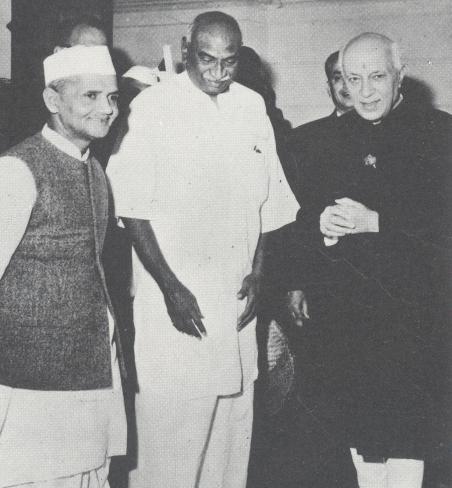
Tashkent, January 1966: After the ceasefire, India and Pakistan met at a summit in Tashkent in the Soviet Union. The Tashkent Agreement was signed there. A day later, on 11 January 1966, Shastri died in Tashkent. The nation lost its Prime Minister at the very moment of peace-making.
The food crisis and the Green Revolution
War costs more than soldiers. The wars of 1948, 1962 and 1965 drained resources and left India with acute food shortages. You saw in the last chapter that farm output had grown slowly in the 1950s. With a rising population, a weak harvest could mean hunger and dependence on food imports.
What the Green Revolution was: In the 1960s India set out to raise farm output quickly. Farmers were given high-yielding hybrid seeds, and farming was mechanised with tractors and other machines. Dams were built to provide irrigation, so that crops did not depend only on the monsoon. Together these turned India from a food-deficit country into a food-surplus one.
Why it mattered for security: A country that must import food can be pressured by those who sell it. By growing enough food at home, India gained more freedom in its foreign policy. That is why Shastri's slogan linked the soldier and the farmer. Food security became part of national security.
A balanced view: The Green Revolution solved the immediate problem of hunger. In a Mains answer, you can add that its gains were uneven across regions and that heavy use of water and chemicals later raised environmental questions. These points are covered in the geography and economy courses.
1971: the Bangladesh war and the Simla Agreement
The Indo-Soviet Treaty: In 1971 a grave crisis was building in East Pakistan. On 9 August 1971 India signed a treaty with the Soviet Union in New Delhi, signed by Swaran Singh and A.A. Gromyko for twenty years. It bound both sides to immediate mutual consultations if either was attacked or threatened. It was not a military alliance, so India could still describe itself as non-aligned.
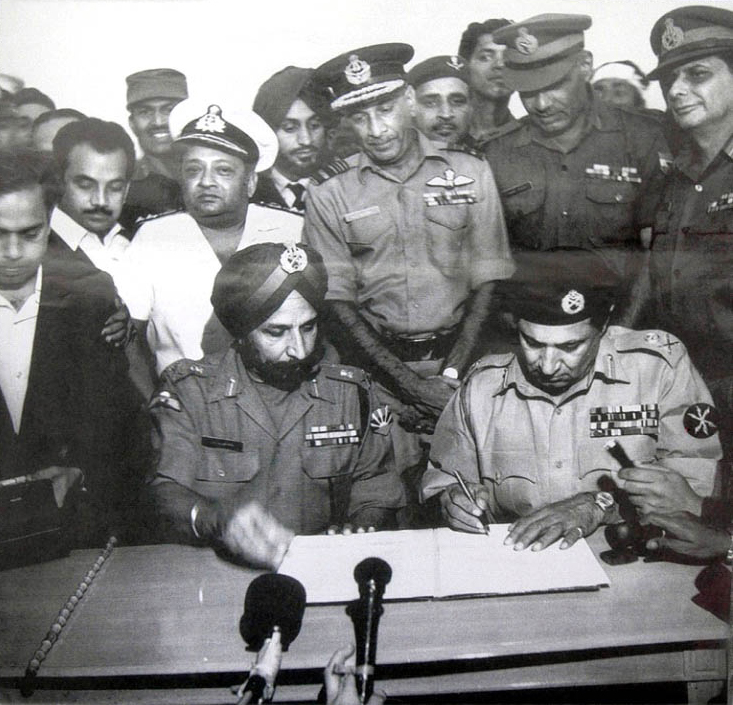
The war: In December 1971 Pakistan began the war with pre-emptive strikes on several Indian Air Force bases. A national emergency was proclaimed for the third time. On 16 December 1971 Lt Gen A.A.K. Niazi of Pakistan signed the Instrument of Surrender before Lt Gen Jagjit Singh Aurora, who commanded the Indian and Bangladesh forces. About 93,000 Pakistani soldiers surrendered, one of the largest surrenders since the Second World War.
The birth of Bangladesh: The war led to the creation of Bangladesh. India had recognised Bangladesh on 6 December 1971, among the first countries to do so. Today 16 December is observed in India as Vijay Diwas. The victory changed the map of South Asia.
The Simla Agreement: Peace talks followed. Under the Simla Agreement of 2 July 1972, India and Pakistan undertook to settle all their differences bilaterally and peacefully. This moved the Kashmir question from the international stage to direct talks between the two countries. The wider diplomacy of these years is in the international relations course.
1974: Pokhran
On 18 May 1974 India carried out its first peaceful nuclear explosion at Pokhran. It was described as peaceful, a test of scientific and technical capability. The test showed that India's scientific institutions, built since the 1950s, could match those of far richer countries. It also meant that India would face new questions and pressures in world nuclear politics.
For an exam, remember the place and the date together: Pokhran, 18 May 1974. Do not confuse it with later nuclear tests, which belong to a different period and a different policy.
1975–1977: the Emergency and the return of democracy
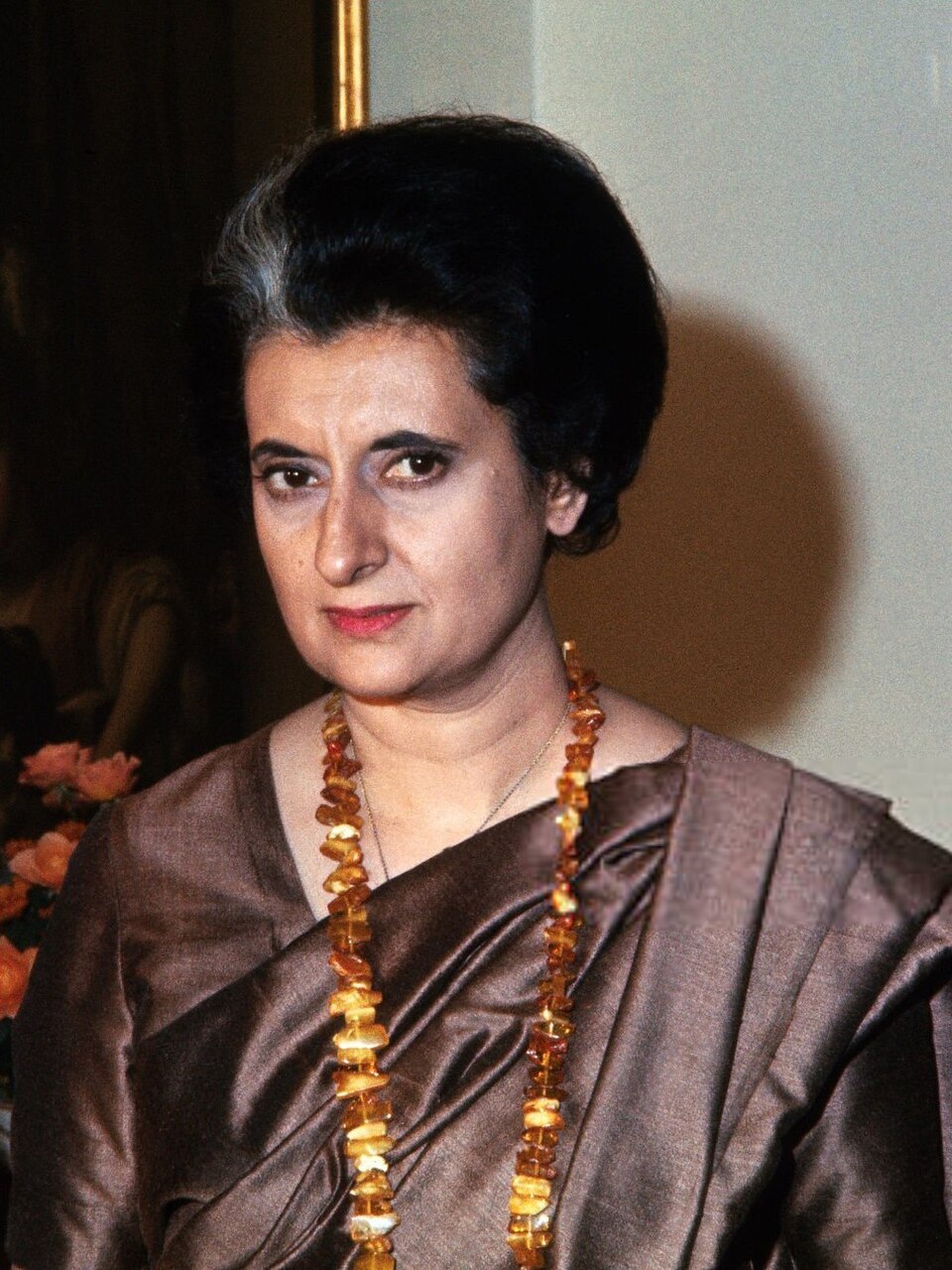
The proclamation: On 25 June 1975 a national emergency was proclaimed on the ground of internal disturbance. President Fakhruddin Ali Ahmed signed the proclamation on the recommendation of the Cabinet headed by Prime Minister Indira Gandhi. This was the fourth national emergency, but the first proclaimed because of internal conditions rather than war. A financial emergency, by contrast, has never been declared in India.
Why it is remembered: During an emergency the Centre gains wide powers, and normal rights and political activity can be curtailed. Because the 1975 Emergency was proclaimed in peacetime on internal grounds, it is widely described as controversial. In 2024 the Government of India notified 25 June as Samvidhaan Hatya Diwas. In an exam answer, describe these events in neutral, factual language and support each point with what the record shows.
Constitutional changes: The 42nd Amendment of 1976, in force from 3 January 1977, made many changes to the Constitution. One lasting change was the addition of ten Fundamental Duties in Article 51A, which you can study in the chapter on Fundamental Duties. Many other changes made during this period were reviewed afterwards.
The ballot decides: Elections were held in 1977, and the Janata Party formed the government. This opened a phase of coalition politics in India. The new Parliament passed the 44th Amendment in 1978, in force from 20 June 1979, which among other things removed the right to property from the list of Fundamental Rights. Power had changed hands peacefully through the vote, which is the strongest test of a democracy.
Mains lens: what the crises taught India
Defence and diplomacy: The defeat of 1962 showed that ideals needed hard power behind them. By 1971 India combined military preparation with careful diplomacy, including the Indo-Soviet Treaty, and won decisively. The Simla Agreement then tried to turn victory into a lasting framework of bilateral settlement. A strong answer traces this learning curve from 1962 to 1972.
Food and self-reliance: The food shortages after the wars exposed a weak point in the planning model. The Green Revolution answered it with new seeds, machines and irrigation. The lesson was that self-reliance needed a strong farm base, not only heavy industry. This shift also changed rural society, as later chapters on economy show.
Non-alignment adapted: Critics argue that the 1971 treaty moved India closer to the Soviet Union. Supporters reply that the treaty was explicitly not a military alliance and that India kept its independence of judgment. You can present both views and conclude that non-alignment was flexible enough to secure national interests in a crisis.
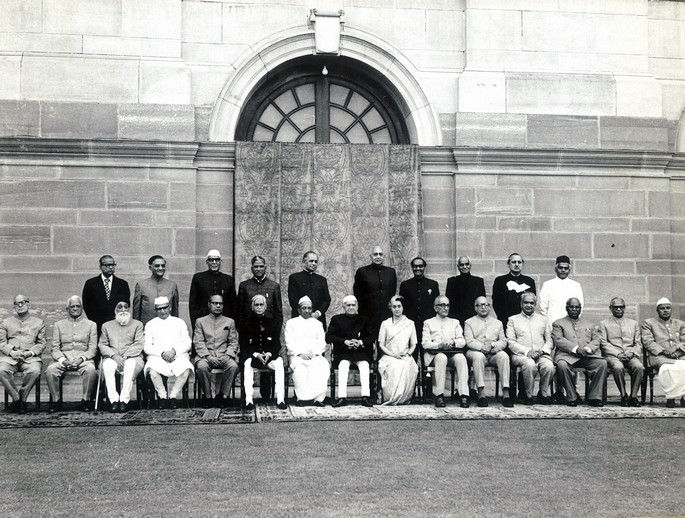
Democracy tested and renewed: The Emergency of 1975 showed that constitutional powers meant for war could also be used in peacetime on internal grounds. The elections of 1977 showed that the people could change a government peacefully. The 44th Amendment and the later review of Emergency-era changes reflected this experience. The lesson for Mains is that institutions and an alert citizenry together protect democracy.
Mains practice: 1962–1977
| Angle | Question | Key points to cover |
|---|---|---|
| Security | "From 1962 to 1971, India learned to back its ideals with power." Discuss. | 1962 setback; emergencies of 1962, 1965, 1971; 1965 war and Tashkent; Indo-Soviet Treaty; 16 December 1971; Simla 1972. |
| Economy | How did the wars of the 1960s change India's approach to agriculture? Evaluate the Green Revolution. | Food shortages after 1948, 1962, 1965; 'Jai Jawan Jai Kisan'; hybrid seeds, mechanisation, irrigation; deficit to surplus; uneven gains; environment. |
| Democracy | "The Emergency of 1975–77 was both a test and a reaffirmation of Indian democracy." Examine. | 25 June 1975, internal disturbance; Cabinet recommendation; 42nd Amendment; 1977 elections, Janata government; 44th Amendment; neutral, factual tone. |
These are practice questions written by us, not past papers. Past questions from your exam appear in the PYQ panel.
How to use this table: each answer should explain the what, then the why, and end with what it led to.
Quick revision
- 1962: border conflict with China; setback and a "scar"; first national emergency.
- 1965: war with Pakistan, Rann of Kutch to ceasefire; violated the 1949 Karachi cease-fire line; second emergency.
- Shastri: "Jai Jawan Jai Kisan"; died in Tashkent, 11 January 1966, a day after the Tashkent Agreement.
- Wars of 1948, 1962, 1965 → food shortage; Green Revolution (1960s): hybrid seeds, mechanisation, irrigation dams.
- Indo-Soviet Treaty: 9 August 1971, Swaran Singh and Gromyko, 20 years, consultations, not an alliance.
- 1971: Pakistan's pre-emptive strikes; third emergency; 16 December: Niazi surrenders before Aurora; about 93,000; Vijay Diwas.
- India recognises Bangladesh on 6 December 1971.
- Simla Agreement: 2 July 1972, bilateral and peaceful settlement.
- Pokhran: 18 May 1974, first peaceful nuclear explosion.
- Emergency: 25 June 1975, internal disturbance; President Fakhruddin Ali Ahmed; Cabinet under Indira Gandhi.
- 42nd Amendment (in force 3 January 1977): ten Fundamental Duties, Article 51A.
- 1977: Janata Party government; 44th Amendment (in force 20 June 1979): right to property removed from FRs.