

KPSC KAS · Module 56 · Mains depth · 17 min
UN Security Council reform and India's claim
What KPSC KAS asks from this chapter
Syllabus lines this chapter covers:
- Paper I: General Studies · Current events of national and international importance.
- Paper II: General Studies · Current events of state importance and state programmes.
- GS 2 · International relations.
KPSC KAS questions from this module are being sorted into our bank.
Read at full depth: basics, the standard layer and the Mains analysis.
Start from zero: a club with five keys
Imagine a school where the student council was formed decades ago. Five students who were strongest at the time got permanent seats and the power to block any decision. Since then, the school has grown many times, and new students now do much of the work, but the five permanent seats have never changed.
The UN Security Council works in a similar way. It was designed in 1945. Five countries named in the Charter were given permanent seats and a veto. Since then, the UN has grown to 193 members, but those five permanent seats remain the same.
India argues that this arrangement no longer reflects the world. Large parts of Asia, Africa and Latin America have no permanent voice, even though many of the Council's decisions affect them most. India wants the Council reformed and seeks a permanent seat for itself.
This chapter explains how the Council works, why reform is so hard, India's case for a seat, who supports it and what stands in the way.
Why it matters. Security Council reform is one of India's top diplomatic goals and a frequent Mains question, so you must be able to argue both the case and the hurdles.
How the Council works, and why it is hard to change
Fifteen members. Under Article 23 of the Charter, the Security Council has fifteen members. Five are permanent: China, France, Russia, the United Kingdom and the United States. The other ten are non-permanent members elected by the General Assembly for two-year terms.
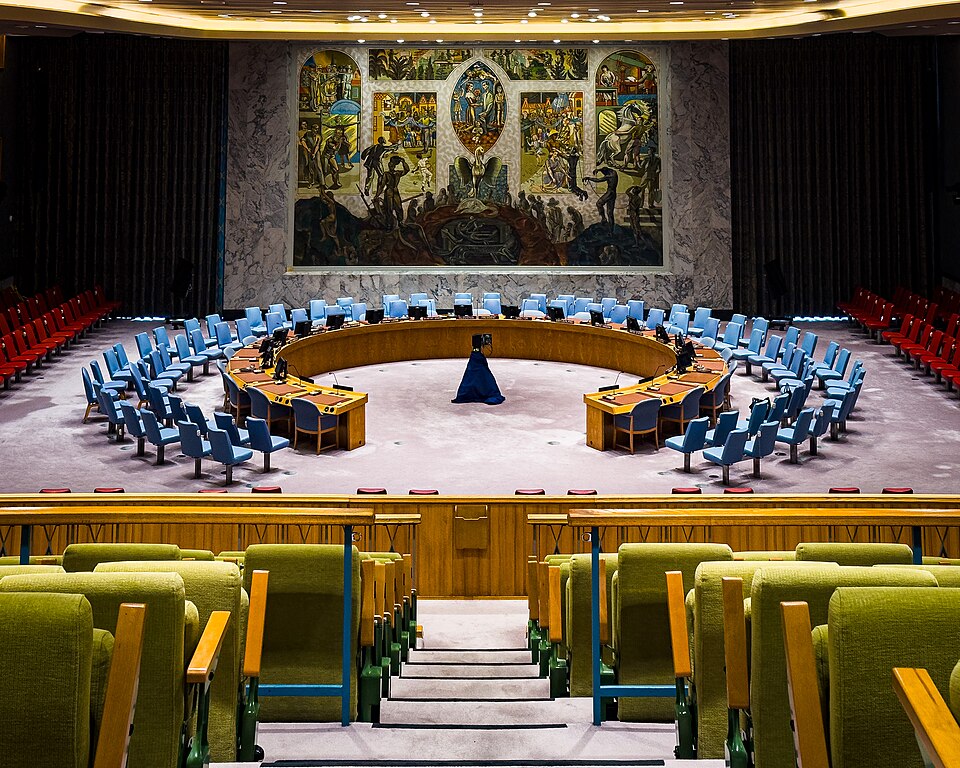
The power of the veto. Under Article 27, decisions on substantive matters need nine affirmative votes including the concurring votes of the permanent members. This means that a single permanent member can block a decision by voting against it, which is what we call the veto.
Why the Council is so powerful. Members give the Council primary responsibility for international peace and security and agree to carry out its decisions. Under Chapter VII, it can impose sanctions or authorise force. No other UN body has such binding power, which is why a permanent seat is so valuable.
The reform trap. To change the Council's membership, the Charter itself must be amended. Under Article 108, an amendment needs a two-thirds vote in the General Assembly and ratification by two-thirds of members, including all the permanent members. So any one of the five can block reform that reduces its own privileges.
Why it matters. The rules that protect the five permanent members also protect the status quo. This is why reform has been discussed for decades with little result, and why India works through coalitions to build pressure.
How the reform debate began, and what else was proposed
A new start in 1992. When the Cold War ended, the Security Council could act again, and its workload grew fast. On 31 January 1992, the Council held its first meeting at the level of heads of government. This set off a global debate on restructuring the UN so that it would reflect the world of the 1990s rather than 1945.
The early ideas. One popular proposal was to enlarge the Council to 23 or 25 members. It suggested new permanent seats for two industrial countries, Germany and Japan, and for large developing countries, with India among the names discussed. A key yardstick was the ability and willingness to contribute to UN peacekeeping, where India had served from Korea, Suez and the Congo onwards.
The veto dilemma, early on. Some proposals offered new permanent seats without the veto. Others asked the five existing holders to give up the veto voluntarily until the Charter could be changed. India opposed any plan that would make new permanent members second-class by denying them rights the old ones keep.
Beyond the Council. Reformers also looked at other bodies. Ideas included replacing ECOSOC with an Economic Security Council to handle threats such as poverty, environmental damage and drug trafficking, and bringing the World Bank and IMF under closer UN coordination. To end the UN's money problems, some suggested levies on the arms trade, international travel or the use of outer space, but members adopted none of them.
Why it matters. The debate is now more than three decades old. Knowing how it began helps you explain in Mains why reform keeps stalling, and why India links its claim to its long record of service to the UN.
India's case for a permanent seat
What India wants. India seeks expansion of both categories of membership, permanent and non-permanent, to make the Council more representative, effective and credible. It does not just want more elected seats; it wants new permanent members so that the Council's core reflects today's world.
The record argument. India is a founding member of the UN and has been elected to the Council eight times, most recently in 2021-22. It has sent over 290,000 peacekeepers to more than 50 missions, and nearly 180 have died in service. India also pays its UN dues in full and on time.
The weight argument. India is home to a very large share of humanity and is among the world's largest economies; the German government's own description calls Germany and India the third- and fourth-largest economies. A Council that leaves out such a country, India argues, cannot claim to speak for the world.
The fairness argument. Whole regions, such as Africa and Latin America, have no permanent member. India argues that the Global South, which supplies many of the UN's peacekeepers, needs a permanent voice in decisions that affect it.
The process argument. Talks on reform take place in the Intergovernmental Negotiations (IGN) at the General Assembly. India calls for an early start of text-based negotiations, with clearly linked timelines and milestones, so that talks lead to a real draft rather than endless speeches.
Why it matters. India frames reform not as a favour to itself but as a way to make the UN legitimate again. As the Prime Minister has said, "Reform is the key to relevance!"
Friends of reform: the G4 and the P5
The G4. India works with Brazil, Germany and Japan in a group called the G4. The four support each other's candidature for permanent seats. Each is a major power in its region that is not a permanent member, so together they make a stronger case than any one could alone.
The 2015 summit. On 26 September 2015, the Prime Minister hosted a meeting of G4 leaders in New York, attended by Dilma Rousseff of Brazil, Angela Merkel of Germany and Shinzo Abe of Japan. They described themselves as legitimate candidates for permanent membership in an expanded Council. They noted that no substantial progress had been made since the 2005 World Summit and called for reform in a fixed time frame.
Standing with Africa. At the same meeting, the G4 supported Africa's representation in both the permanent and non-permanent categories. This matters because African countries are a large voting bloc in the General Assembly, and any reform needs their backing.
Support from the permanent members. Four of the five permanent members are on record backing India. In September 2023, the US President reaffirmed support for a reformed Council with India as a permanent member. In October 2025, the UK reiterated its long-standing support, in December 2025 Russia reiterated its steadfast support, and in February 2026 France reiterated its firm support.
The missing voice. China, the fifth permanent member, has not made a similar commitment in the sources available. Since every permanent member must ratify a Charter amendment, this gap is significant.
Why it matters. Broad support shows that India's claim is widely accepted in principle. Yet support from four permanent members is not enough, because the Charter's rules give every one of the five a decisive say.
The hurdles: why reform stalls
Rules that favour the status quo. As we saw, a Charter amendment needs ratification by all five permanent members. Any one of them can therefore stop a reform it dislikes, even after the General Assembly votes for it.
Disagreement among members. Countries agree that reform is needed but disagree on its shape. Some want only more elected seats, some want new permanent members, and others differ on whether new members should get a veto. Regional rivalries also play a role, since neighbours of a candidate may not want it to rise above them.
Slow negotiations. The Intergovernmental Negotiations have run for many sessions, and in 2026 India was taking part in the 80th session of the General Assembly's process. India's complaint is that talks have produced statements rather than a single negotiating text with deadlines.
The veto question. A key open issue is whether new permanent members would get the veto at once. Linking reform tightly to the veto could make it even harder to win the support of the existing five, so this question needs careful handling.
Why it matters. Understanding the hurdles helps you write balanced answers. India's claim is strong, but reform depends on building a wide coalition and on the consent of all five permanent members.
When, where and why: the reform story at a glance
This table brings together the key rules and moments in the reform debate.
| When | What | Why it matters |
|---|---|---|
| 1945 | Charter gives five permanent seats and the veto | Power fixed in the post-war order |
| Article 108 | Amendments need all P5 to ratify | Each P5 member can block reform |
| 2005 | World Summit discusses reform | Little progress afterwards |
| 26 Sep 2015 | G4 leaders meet in New York | Back each other and Africa |
| Sep 2023 | US backs India as a permanent member | Support from a key P5 member |
| Oct 2025 | UK reiterates support | Long-standing backing |
| Dec 2025 | Russia reiterates support | Steadfast backing |
| Feb 2026 | France reiterates support | Firm backing |
Read across each row: a rule or date, what happened and why it matters. Notice that support has grown, but the rules still give each permanent member a block.
Mains lens: arguing India's claim
1. The case for reform. The Council reflects the power balance of 1945, while UN membership has grown to 193. A body without permanent members from Africa, Latin America or the world's most populous democracy faces a crisis of legitimacy. India argues that reform will make the UN more effective, not weaker.
2. India's strengths. India brings a strong record: founding member, eight elected terms, one of the largest peacekeeping contributions, full payment of dues and a growing economy. Four of the five permanent members and its G4 partners back its claim.
3. The obstacles. Charter rules let any permanent member block change, members disagree on the model of reform and regional rivalries slow progress. The question of the veto for new members adds further difficulty.
4. A balanced conclusion. India's strategy combines coalition-building through the G4 and with Africa, pressure for text-based negotiations and steady contributions that strengthen its case. Even without a permanent seat, India continues to shape global decisions through its elected terms and other groupings.
Mains practice: five questions, five angles
These are practice questions written by us, not past papers. Past questions from each exam are in the PYQ panel of this module.
| Angle | Question | Key points to cover |
|---|---|---|
| Legitimacy | "The UN Security Council reflects the world of 1945, not of today." Discuss. | Compare 193 members with 5 permanent seats. Note missing regions. |
| India's claim | Examine the strengths of India's claim to a permanent seat. | Use the record, peacekeeping, economy and support from four P5 members. |
| Process | Why has Security Council reform been so slow? | Explain Articles 27 and 108, disagreement on models and the veto question. |
| Coalitions | Assess the role of the G4 in the campaign for reform. | Cite the 2015 summit, mutual support and backing for Africa. |
| Strategy | "Reform is the key to relevance." How does this idea shape India's multilateral diplomacy? | Link reformed multilateralism, NORMS, G20 and Global South leadership. |
How to use this table: each answer should cite one Charter article or dated statement, give India's argument, admit one hurdle and end with India's strategy for building support.
Quick revision
- The Security Council has 15 members: five permanent (China, France, Russia, UK, US) and ten elected for two years (Article 23).
- Substantive decisions need nine votes including the concurring votes of the permanent members, which creates the veto (Article 27).
- Charter amendments need two-thirds of the General Assembly and ratification by two-thirds of members including all P5 (Article 108).
- India seeks expansion in both permanent and non-permanent categories and text-based negotiations in the IGN.
- The G4 (Brazil, Germany, India, Japan) back each other; their leaders met in New York on 26 September 2015 and backed Africa in both categories.
- The US (2023), UK (2025), Russia (2025) and France (2026) have stated support for India's permanent seat.
- India's case rests on its founding role, eight terms, peacekeeping, full payment of dues and economic weight.