

MPPSC State Forest Service · Module 39 · standard depth · 18 min
Threats to biodiversity and the Red List: why species are vanishing, and how we keep score
What MPPSC State Forest Service asks from this chapter
Syllabus lines this chapter covers:
- Prelims Paper I: General Studies (shared with the State Service Exam) · Science, environment and health
- Mains Paper I: Section A General Studies (Madhya Pradesh) and Section B Forestry and General Science · Forest and forestry: definitions, history, roles of forests, forest cover and types of India and MP, silviculture, regeneration, important trees
- Mains Paper I: Section A General Studies (Madhya Pradesh) and Section B Forestry and General Science · Forest utilisation: wood products, seasoning, preservation, pulp and paper, logging, forest measurement, non-wood forest products
- Mains Paper I: Section A General Studies (Madhya Pradesh) and Section B Forestry and General Science · Forest policy and legislation: forest policies 1894/1952/1988, Indian Forest Act, Wildlife Protection Act 1972, Forest Conservation Act 1980, EPA 1986, Biodiversity Act 2002, Forest Rights Act 2006, JFM, social and agroforestry
- Mains Paper I: Section A General Studies (Madhya Pradesh) and Section B Forestry and General Science · Forest protection: injurious agencies, forest fires, grazing, afforestation, soil and watershed conservation, climate mitigation, national parks, biosphere reserves
- Mains Paper I: Section A General Studies (Madhya Pradesh) and Section B Forestry and General Science · Environment: biodiversity and conservation, pollution, solid waste, disaster management, population and environment, environment and health
MPPSC State Forest Service questions from this module are being sorted into our bank.
Cut to standard depth for MPPSC State Forest Service. 8 deeper paragraphs are in the full chapter.
Start from zero: how do you lose two billion birds?
In the middle of the nineteenth century, the passenger pigeon was probably the most common bird on Earth. Its flocks darkened the sky over North America; a single flock could stretch 400 km and hold some two billion birds. Branches broke under the weight of perching pigeons, and a flock took hours to pass overhead.
Today there is not a single passenger pigeon alive. Millions were shot and netted for cheap meat, year after year, and the birds that nested together in huge colonies were easy to kill in bulk. Within a few decades, the most abundant bird in the world was gone.
The story teaches a hard lesson. Even a species that seems impossible to exhaust can vanish when people use it faster than it can breed. Large numbers do not guarantee safety.
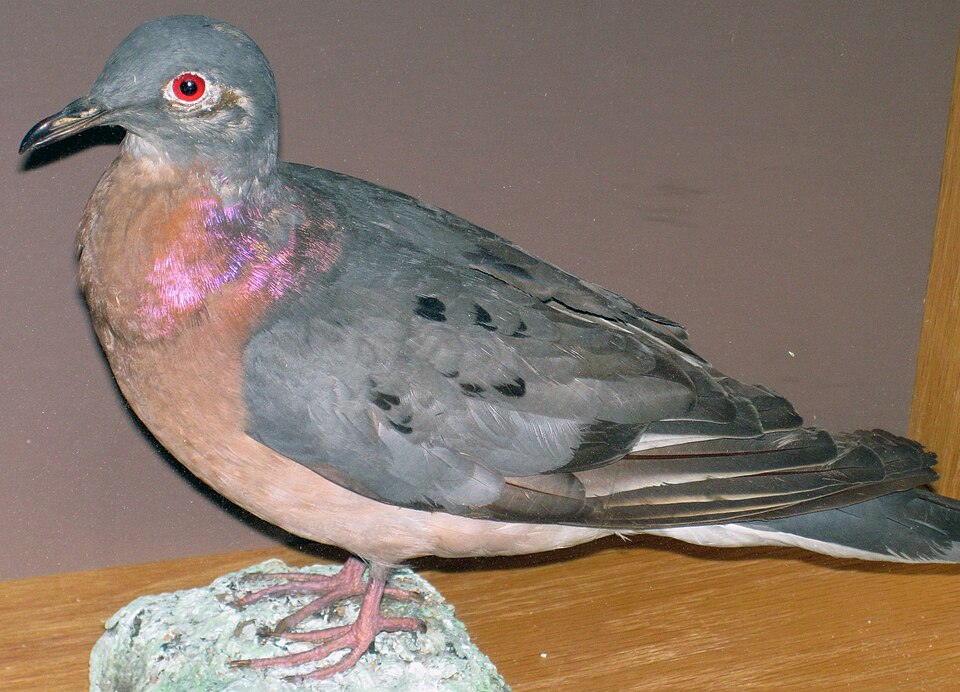
This chapter looks at the forces driving species towards extinction today, from habitat loss to invasive species, and at the global scorecard, the IUCN Red List, that tells us how close each species is to the edge. It ends with the reasons why all this loss should worry us.
Extinction is natural; today's pace is not
Life began on Earth about 3.5 billion years ago, and since then a vast number of species have come and gone. Scientists have described about 1.7 million species so far, while many more remain unknown, especially in tropical rainforests. Extinction itself is part of nature: species slowly disappear and new ones evolve.
Five great crashes. Sometimes, however, a large fraction of all species vanished within a short span of geological time. Scientists have documented five mass extinctions. Each is thought to have been caused by a natural catastrophe, such as massive volcanic eruptions or an asteroid impact.
The sixth. Today, species are again disappearing far faster than the normal background rate. This time the cause is not a natural disaster but human activity: a growing population, over-use of living resources and the destruction of habitats. That is why many scientists describe the present as the sixth extinction.
Why this matters. Earlier mass extinctions took life millions of years to recover from. Because today's loss is caused by people, it can also be slowed by people. This makes biodiversity loss a question of policy and choices, not just of natural history.
Habitat loss and fragmentation: the biggest threat
A habitat is where a species finds food, shelter and a place to breed. When it is destroyed, the species must adapt, move or die. Moving rarely works: nearby habitat is usually already occupied, so the newcomer must compete with residents or settle in poorer land where predators, hunger or disease await. This is why habitat destruction is recognised as the greatest single threat to biodiversity worldwide.
How habitats are lost. Forests are cleared for farms, towns and roads, and logged on a large scale. Mangroves are cut for fish and shrimp ponds, wetlands are drained and filled, corals are mined and grasslands are burnt to improve fodder. Silt chokes rivers and lakes, and industrial pollution degrades the water that remains.
Fragmentation. Often a habitat is not wiped out but broken into pieces, leaving islands of habitat in a sea of development. Each piece has more edge, so species inside face more light, wind and heat than they evolved for. Small patches hold fewer mates and less food, so populations shrink, become isolated, inbreed and lose genetic diversity. Eventually many die out locally.
Fragile habitats. Some habitats lose species especially fast. Coral reefs need warm, clean, clear water and suffer from heat, rising seas, sediment and pollution. Oceanic islands are even more vulnerable: about 75% of recorded animal extinctions since 1600 have been on islands, because island species have small ranges, have evolved without many predators and are easily overrun by introduced species. Mountain tops and isolated lakes behave like islands too, and lakes often hold endemic species found nowhere else.
Why this matters. Protecting a species without protecting its habitat rarely works. For policy, this means looking beyond the size of protected areas to their connectivity: corridors that link patches can matter as much as adding new land. Linear projects such as highways, railways and canals should be planned to avoid cutting habitats into pieces.
Over-exploitation and poaching: taking faster than nature can replace
Over-use. People harvest many plants and animals faster than they can replace themselves. Several of the world's major ocean fisheries, such as southern bluefin tuna, Atlantic halibut and salmon, have declined through over-fishing, pollution and habitat damage. Slow-growing trees such as mahogany are logged faster than they can regrow.
Three kinds of hunting. Subsistence hunting kills animals for food to survive; it once drove some extinctions but has declined in most areas. Sport hunting kills for recreation and is now closely regulated in most countries. Commercial hunting kills animals for profit from their skins, bones, tusks or horns, and this is now the hunting that threatens many large animals.
What poachers want. Tigers, snow leopards, jaguars and cheetahs are killed for their skins, elephants for ivory and rhinoceroses for their horns. A rhino horn is only keratin, the same protein found in hair and fingernails, yet false beliefs about its medical powers keep its black-market price very high. Many countries have agreed not to trade rhino horn, but illegal trafficking continues because the profits are so large. A global wildlife trade in pets, folk medicines, food and decorative objects also threatens sea horses, corals, birds, bears and tropical plants.
Boom and bust. Commercial whaling shows a common pattern. The industry targeted large whales for oil and baleen, over-hunted them, and moved on or collapsed when the whales became too few. Over-exploitation is often followed by abandonment, leaving a depleted species behind.
Why this matters. Poaching is driven by demand far from where the animals live, so protecting forests alone cannot stop it. Effective answers combine strong field protection, intelligence-led enforcement against trafficking networks, international cooperation and campaigns to cut demand. They also involve local communities, who are the first line of defence.
Invasive species: guests that take over the house
People move plants and animals around the world, sometimes on purpose and sometimes by accident. Most newcomers fail, but a few find themselves in a place with no natural predators or diseases to keep them in check. These spread rapidly and crowd out native species. They are called invasive, alien, introduced or exotic species, and they range from microbes to mammals.
How they do harm. Invasive species compete with native plants and animals, prey on them or carry new diseases. They can also change how a whole ecosystem works, altering fire cycles, nutrient cycling and water flows. They are considered among the most important causes of loss of native biodiversity, and the problem is expected to grow with climate change.
Examples in India. Water hyacinth, a floating plant with a showy purple flower, is native to Brazil. It was brought to Bengal in 1886 as an ornamental pond plant and has spread across India, clogging water flow, power generation, transport and fisheries, and damaging fish and rice crops. Parthenium, called congress grass, came with food grain imported from the USA; it spreads freely by seed across neglected land and its pollen causes skin allergies. Prosopis juliflora (mesquite) has spread through semi-arid India and displaced native plants.
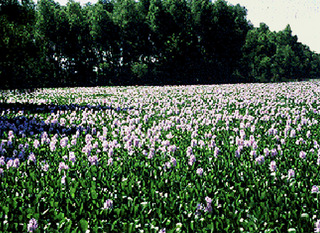
Beyond India. The golden apple snail, brought from Latin America to South-East Asia in the 1980s, became one of the most destructive invaders of rice fields. Islands suffer most, because their species often evolved without such competitors and predators.
Why this matters. Once established, invasive species are very hard and costly to remove. Prevention is far cheaper than cure: checks on imported goods and seeds, care before introducing new plants for forestry or gardens, and early action when a new invader is spotted.
Pollution, livestock and a changing climate
Pesticides and pollution. In the 1950s and 1960s, chlorinated pesticides such as DDT built up in food chains and sharply reduced birds such as the bald eagle and brown pelican. Pesticides also kill pollinators, including honeybees, which can lower crop yields, and farm runoff harms rivers, lakes and coasts. Some of these chemicals mimic hormones and have caused reproductive problems in birds, fish and reptiles.
Livestock. Large herds of domestic animals can overgraze land, destroying the vegetation that both they and wild animals depend on. Native wildlife uses native plants more efficiently and is less likely to turn fertile land into desert. Livestock also pass on diseases: rinderpest caught from domestic cattle seriously set back the recovery of the Indian rhinoceros.
Over-bred crops. Intense breeding has made some crops so dependent on people that they cannot survive on their own; maize is a clear example. As farmers switch to a few high-yielding varieties, older varieties and their useful genes can be lost.
Climate change. Burning fossil fuels and forests has raised carbon dioxide in the air, warming the planet, raising sea levels and changing weather patterns. Many species could adapt to slow change, but the speed of today's change, combined with habitat loss, may leave them no time. Coral reefs, mountain species and island species are among the most exposed.
Why this matters. Threats rarely act alone. A fragmented forest that is also hunted, invaded and warming loses species much faster than one facing a single threat. Good policy therefore tackles threats together rather than one at a time.
The IUCN Red List: a barometer of life
How do we know which species are in trouble, and how badly? The International Union for Conservation of Nature (IUCN) keeps the Red List of Threatened Species, the world's most comprehensive source on the extinction risk of animals, fungi and plants. Because it shows the overall health of the world's biodiversity, it is often called a barometer of life.
Nine categories. Every assessed species is placed in one of nine categories, running from gone to safe, plus two for gaps in knowledge.
| Category | What it means | |---|---|---| | Extinct (EX) | No individuals remain anywhere | | Extinct in the Wild (EW) | Survives only in captivity or outside its natural range | | Critically Endangered (CR) | Extremely high risk of extinction in the wild | | Endangered (EN) | Very high risk of extinction in the wild | | Vulnerable (VU) | High risk of extinction in the wild | | Near Threatened (NT) | Close to qualifying as threatened | | Least Concern (LC) | Widespread and abundant; low risk | | Data Deficient (DD) | Not enough information to judge | | Not Evaluated (NE) | Not yet assessed |
What "threatened" means. Only three categories count as threatened: Critically Endangered, Endangered and Vulnerable. Near Threatened species are close but not yet threatened, and Least Concern species are at low risk. A species can move between categories as its situation changes: the Asiatic lion was moved from Critically Endangered to Endangered in 2008 as its numbers recovered.
Why this matters. The Red List turns scattered field data into a clear signal that governments, scientists and courts can use. It guides where conservation money goes and which species need urgent plans. It also tracks progress over time, so a species moving to a lower-risk category is real evidence that conservation works.
Why save biodiversity at all?
Present and future uses. Biodiversity gives us food, medicine, fibre and materials, and we cannot predict which species will prove useful tomorrow. A wild plant ignored today may hold the gene for a disease-resistant crop or the chemical for a new medicine. Losing it closes that door for ever.
Life support. Living things maintain the systems that keep the planet habitable: clean air and water, fertile soil, pollination and a stable climate. These services are hard to replace with technology at any price.
Ethics. Many people hold that other living things have a right to exist, whether or not they are useful to us. On this view, causing the extinction of a species is a moral wrong, not just an economic loss.
All three levels. Conservation must work at the level of genes, species and ecosystems. The more individuals and separate populations of a species we keep, the more of its genetic diversity survives, and high genetic diversity makes a species better able to adapt and less likely to go extinct. A wide range of ecosystems gives more species a place to live, and many species keep each ecosystem stable.
Quick revision
- Five past mass extinctions had natural causes; the sixth is human-driven.
- Habitat loss is the biggest threat; fragmentation adds edge effects, isolation and inbreeding.
- About 75% of recorded animal extinctions since 1600 were on islands; coral reefs, islands and mountain tops are fragile habitats.
- Hunting is commercial, subsistence or sport; commercial poaching threatens large animals, and rhino horn is only keratin.
- Invasive species spread without natural enemies: water hyacinth (Brazil, Bengal 1886), Parthenium (with imported grain), Prosopis juliflora.
- DDT hit birds through food chains, and rinderpest from cattle set back the Indian rhino.
- The IUCN Red List has 9 categories; threatened = CR, EN, VU; the Asiatic lion moved from CR to EN in 2008.
- Conserve at the level of genes, species and ecosystems; high genetic diversity lowers extinction risk.