

MPPSC SSE (State Service) · Module 49 · Mains depth · 19 min
The Biological Diversity Act, the National Green Tribunal and India's environmental movements
What MPPSC SSE (State Service) asks from this chapter
MPPSC SSE (State Service) has asked 3 questions from this chapter (2025, 2023, 2018); 12 from its whole module.
Read at full depth: basics, the standard layer and the Mains analysis.
Start from zero: laws need people
A law written in Delhi does not protect a forest in a faraway valley by itself. Someone has to watch the forest, record what grows in it, and complain when it is harmed. And when a complaint is made, it must be heard quickly by someone who understands the science.
This chapter brings together three answers India has found. The Biological Diversity Act puts local communities at the base of the system, so that villages record and benefit from their own biodiversity. The National Green Tribunal gives environmental cases a specialised, faster court.
The third answer came from the people themselves. Long before many of these laws, villagers in the Himalayas hugged trees to save them, and citizens in Kerala saved a rainforest from a dam. These environmental movements shaped how India thinks about development and nature.
Together they show a key idea for the exam: environmental protection works best when law, institutions and people support each other.
The Biological Diversity Act, 2002
Why India needed it. India ratified the CBD in 1994, which recognised each country's sovereign rights over its biological resources, as explained in the chapter on biodiversity treaties. India is one of the world's most biodiverse countries, rich in medicinal plants and traditional knowledge. Without a national law, foreign companies could take samples and patent products based on them, while the communities that conserved them got nothing.
When. A Biodiversity Bill was introduced in Parliament in May 2000 and finally passed in December 2002. Its aims follow the CBD: conservation, sustainable use, and fair sharing of benefits, while checking biopiracy.
The three-tier structure. The Act is implemented through a three-tiered institutional structure. At the top is the National Biodiversity Authority (NBA). In the middle are State Biodiversity Boards, constituted by state governments, and at the base are Biodiversity Management Committees (BMCs) set up by local bodies.
What each tier does. The NBA deals with all cases of access by foreigners to India's biological resources. Its approval is required before obtaining any intellectual property right on an invention based on a biological resource from India or on associated traditional knowledge, and it can oppose such rights granted abroad. The BMCs document local plants, animals and knowledge in People's Biodiversity Registers (PBRs), which act as evidence of prior knowledge against wrongful patents.
The 2023 amendment. The Biological Diversity (Amendment) Act, 2023 was passed by the Lok Sabha on 25 July 2023 and the Rajya Sabha on 1 August 2023. It came into force on 1 April 2024.
Why benefit sharing matters on the ground
A simple example. Suppose a company wants to make a herbal medicine from a plant that grows in a forest village. Under the Act, it must take approval, and the benefits it earns can be shared with the people who conserved the plant. The money can flow back to the village through its Biodiversity Management Committee.
Why the registers matter. Traditional knowledge is often oral, passed from elders to children. If it is not written down, a company abroad may claim it as a new invention. A People's Biodiversity Register records such knowledge with dates, so it can be shown as prior knowledge when a wrongful patent is challenged.
The difficulties. Many BMCs exist only on paper, and many registers are incomplete. Villagers often do not know their rights, and benefit-sharing payments have been small and slow. Balancing ease of research and business with fair returns to communities remains the central challenge of this law.
The National Green Tribunal
Why a green court. Environmental cases were piling up in the High Courts and the Supreme Court, and they often involved difficult science. The Supreme Court and the Law Commission had suggested specialised environmental courts. The answer was a tribunal with both judges and experts.
When and where. The National Green Tribunal (NGT) was established on 18 October 2010 under the National Green Tribunal Act, 2010. Its principal place of sitting is New Delhi. Its other sittings are at Bhopal, Pune, Kolkata and Chennai.
How it works. The NGT is meant for effective and expeditious disposal of cases on environmental protection and the conservation of forests and other natural resources. It can give relief and compensation to victims of pollution and other environmental damage. It is not bound by the Code of Civil Procedure, but is guided by the principles of natural justice, and it aims to dispose of cases within six months of filing.
Which laws it covers. Its jurisdiction includes the main environmental laws, such as the Water Act, the Air Act, the Environment (Protection) Act, the forest conservation law and the Biological Diversity Act. It applies the principles of sustainable development, precaution and polluter pays, which the Supreme Court had made part of Indian law, as explained in the chapter on the Constitution and the courts.
Implications and debates. The NGT has passed far-reaching orders on river cleaning, waste and air pollution, and has made polluters pay heavy environmental compensation. Critics say some orders are hard to enforce or affect livelihoods, and vacancies have at times slowed its work.
Chipko: the movement that hugged trees
The background. From the late nineteenth century, the forests of the Himalayas were cut on a large scale for timber. Hill people saw the results first: soil erosion, more floods and landslides, drying springs, and less firewood and fodder. They also resented natural forests being replaced by plantations and their own needs being ignored while contractors felled trees for distant markets.
What happened. In the 1970s, village organisations such as the Dasholi Gram Swarajya Mandal in Gopeshwar started what became the Chipko movement in the Garhwal Himalayas. "Chipko" means to hug or cling. Villagers, often led by women, threatened to hug the trees if the saws came near them.
The people. Chandi Prasad Bhatt, who later received the Gandhi Peace Prize for 2013, and Sunderlal Bahuguna were among its leaders. Gaura Devi, a village woman, became a symbol of the movement. Folk songs and street plays spread its message about forests as the basis of soil, water and pure air.
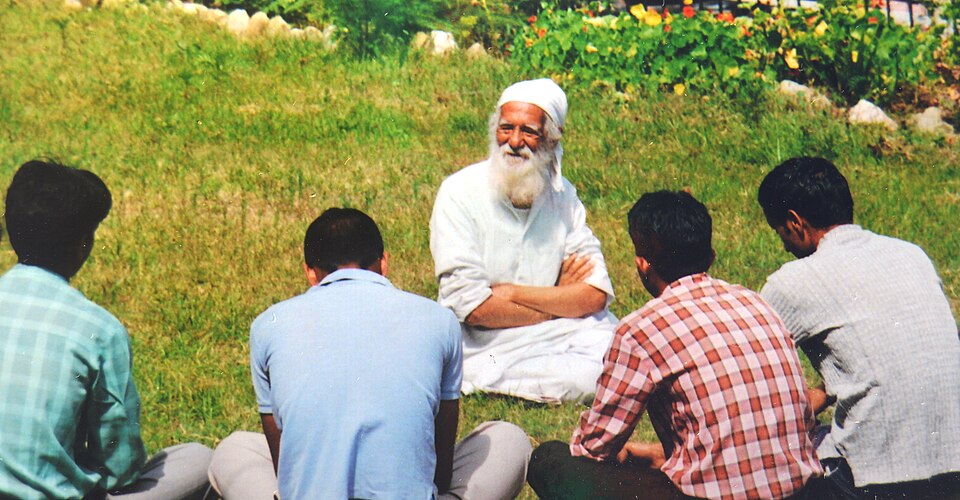
The result. The government replaced the contractor system for felling, and in 1981 an expert committee was set up after Bahuguna's fast. A fifteen-year moratorium on commercial felling in the Uttarakhand Himalayas followed. Chipko showed that ordinary rural people, especially women, could change forest policy.
Silent Valley and the meaning of people's movements
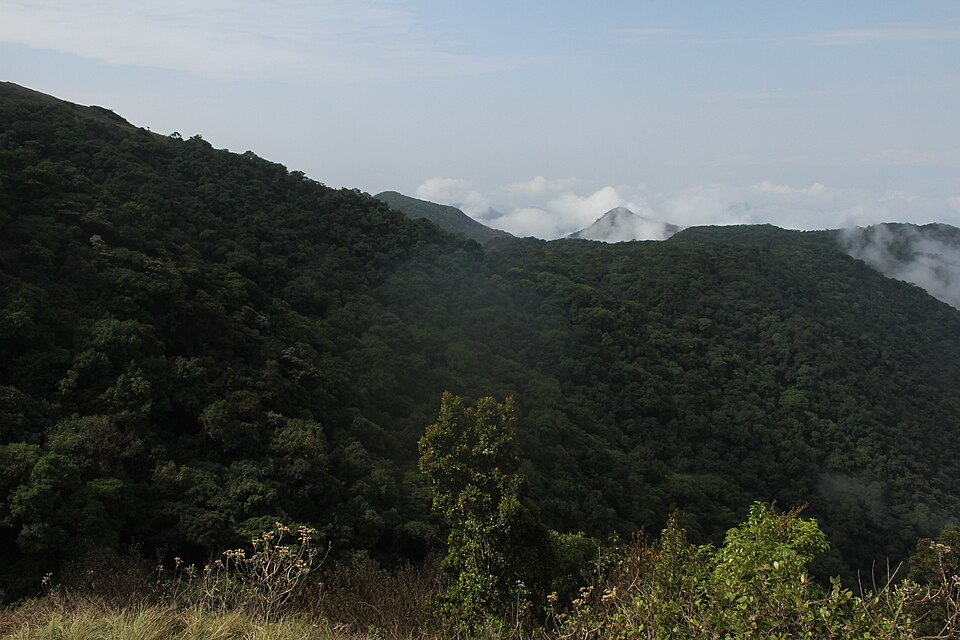
Silent Valley: saving a rainforest. Silent Valley is a valley of the Kunthipuzha river in Kerala, covered with evergreen rainforest rich in rare plants and animals. In 1973 the state government decided to build a hydroelectric dam there, which would have flooded part of the forest. Even official experts were unhappy about the loss of forest and wildlife.
By 1979, students, teachers, scientists, journalists and the Kerala Sastra Sahitya Parishad, a people's science movement, campaigned against the project, and a Save Silent Valley Committee was formed. The central government set up a high-level committee chaired by M.G.K. Menon, accepted its advice, and the project was dropped. The area was notified as a national park on 15 November 1984.
Other strands. India's environmental thinking also draws on older traditions of protecting nature. The Ministry's Amrita Devi Bishnoi Wildlife Protection Award is named after a woman remembered in the Bishnoi tradition for giving her life to protect trees. Movements against large dams, mining and displacement raise the question of who pays the cost of development.
What these movements teach. They show that environmental issues in India are often about livelihoods and rights, not only scenery. They raised the voice of local people, women and tribal communities, and pushed the State towards laws on participation, such as forest rights. For Mains, they are useful examples of the link between environment, equity and democracy.
Mains lens: three live debates on biodiversity law, the tribunal and movements
1. Easier access or stronger protection of biological resources? The Biological Diversity Act of 2002 makes anyone who wants to use India's biological resources or the traditional knowledge linked to them seek approval and share benefits. Its local bodies, the Biodiversity Management Committees, record what grows in each area and what people know about it in People's Biodiversity Registers. The 2023 amendment, in force since 1 April 2024, aimed to make the law simpler for research, Indian industry and traditional medicine.
Supporters say that the old process was slow and discouraged even Indian researchers and small firms. Critics fear that easier access may weaken the share of benefits for the communities who kept these plants and this knowledge alive. A balanced answer supports simpler rules with strong benefit sharing, and stresses that local committees need money, training and a real voice.
2. Has the green tribunal delivered speedy justice? The National Green Tribunal was set up in 2010 to decide environmental cases quickly, ideally within six months, without being bound by the usual civil procedure. It has heard a very large number of cases, imposed heavy costs on polluters and taken up issues on its own from news reports. For many people, it became a closer and faster forum than the High Court.
Critics point to vacancies among judges and experts, few regional benches for a big country, and orders that are not always carried out on the ground. Some also say that it sometimes acts like an executive body, issuing broad directions rather than deciding disputes. In Mains, call the tribunal a valuable specialised court that needs full staffing, more benches and follow-up of its orders.
3. Do people's movements still matter? Chipko in the 1970s and the Silent Valley campaign showed that ordinary people, especially women and village communities, could stop forest felling and a dam. Chipko led to a fifteen-year ban on commercial felling in the Uttarakhand Himalayas, and Silent Valley became a national park in 1984. These movements shaped later laws on forests, rights and environmental clearance.
Some argue that movements slow down development and that courts and laws now do their job. Others argue that laws work only when people watch and protest, and that the voice of those who live with nature is still the best early warning. A balanced answer says that movements, courts and laws are partners, because each one keeps the others honest.
Why it matters: Laws, tribunals and movements are three ways in which society protects nature. Mains questions on governance and society often ask you to show how they connect, so use these debates to show the link.
Mains lens: two kinds of questions and how to answer them
Type 1: "Has the institution delivered?" (assessment). Example: "Has the National Green Tribunal delivered on its promise of speedy environmental justice?"
- Intro: Note that the tribunal was set up on 18 October 2010 for effective and speedy disposal of environmental cases, with its main bench in New Delhi and others at Bhopal, Pune, Kolkata and Chennai.
- Body, design strengths: Explain that it has judicial and expert members, follows natural justice instead of the full civil procedure, and aims to decide cases within six months.
- Body, achievements: Show that it made polluters pay for damage, took up matters on its own and became a forum ordinary people could reach.
- Body, gaps: Point out vacancies, the small number of benches and weak follow-up of its orders by agencies.
- Conclusion: Conclude that the tribunal has proved its value, and that its promise depends on staffing and enforcement.
Type 2: "Illustrate the role" (society). Example: "What role have people's movements played in shaping environmental policy in India? Illustrate."
- Intro: Explain that many of India's green policies grew from protests by people whose lives depended on forests, rivers and land.
- Body, Chipko: Show that villagers in the Garhwal Himalayas, with leaders like Chandi Prasad Bhatt, Sunderlal Bahuguna and Gaura Devi, stopped commercial felling and won a fifteen-year moratorium.
- Body, Silent Valley: Show that a citizens' campaign stopped a dam in Kerala's rainforest and led to a national park in 1984.
- Body, the wider effect: Add that such movements pushed later laws on forest conservation, forest rights and environmental clearance, and brought women's voices into policy.
- Conclusion: Conclude that movements turned environmental protection from a government task into a people's cause.
Linking across papers. This chapter feeds GS-III (conservation and biodiversity), GS-II (tribunals, statutory bodies and decentralisation) and GS-I (social movements and women's role). Chipko and Silent Valley also make strong Essay and GS-IV examples.
Mains practice: six questions, six angles
These are practice questions we have written, not past papers. Past questions for each exam are in this module's PYQ panel.
| Angle | Question | How to approach |
|---|---|---|
| Law | How does the Biological Diversity Act, 2002 protect India against biopiracy? Assess its working. | Explain the three tiers, NBA approval for IPR and the PBRs. Then discuss paper BMCs, weak awareness and small benefit-sharing payments. |
| Decentralisation | "Biodiversity governance must begin in the village." Discuss with reference to Biodiversity Management Committees. | Link BMCs and registers to local knowledge and benefit flows. Suggest capacity building and links with panchayats. |
| Justice | Has the National Green Tribunal delivered on its promise of speedy environmental justice? | Give its 2010 origin, expert design and six-month target. Weigh landmark orders against enforcement gaps, vacancies and livelihood concerns. |
| Society | What role have people's movements played in shaping environmental policy in India? Illustrate. | Use Chipko and Silent Valley, with their outcomes. Draw the lesson that environment in India is tied to livelihoods and rights. |
| Gender | Women have been at the forefront of environmental movements in India. Why? | Explain women's dependence on forests for fuel, fodder and water. Use Chipko and Gaura Devi, and link to women's role in BMCs today. |
| Development | The Silent Valley decision is often called a turning point in India's development debate. Why? | Explain the dam, the campaign and the expert committee. Show how it made ecological cost a part of project decisions, and link to today's impact assessment. |
How to use this table: each answer should first explain the what, then give the why from this chapter, and end with a way forward.
Quick revision
- Biological Diversity Act: bill May 2000, passed Dec 2002; gives effect to CBD; checks biopiracy.
- Three tiers: NBA (national; foreign access, IPR approval) → State Biodiversity Boards → BMCs (local; People's Biodiversity Registers).
- BD (Amendment) Act 2023: LS 25 Jul 2023, RS 1 Aug 2023, in force 1 Apr 2024.
- NGT: est. 18 Oct 2010 (NGT Act 2010); principal sitting New Delhi; also Bhopal, Pune, Kolkata, Chennai; not bound by CPC, natural justice; 6-month target.
- Chipko (1970s, Garhwal Himalayas): DGSM Gopeshwar; Chandi Prasad Bhatt (Gandhi Peace Prize 2013), Sunderlal Bahuguna, Gaura Devi; 15-year felling moratorium.
- Silent Valley (Kerala, Kunthipuzha): dam dropped; KSSP; Save Silent Valley Committee 1979; M.G.K. Menon committee; national park notified 15 Nov 1984.
MPPSC SSE (State Service) questions from this chapter
Under which Act was the National Green Tribunal established?
National Green Tribunal's (NGT) headquarters is situated at:
- (a) Kolkata
- (b) New Delhi
- (c) Mumbai
- (d) Chennai
Show answer
(b) New Delhi · our answer; official key awaited
What is the full form of NGT?
- (a) National Green Tribunal
- (b) National General Tribe
- (c) New General Tribunal
- (d) National Green Tribe
Show answer
(a) National Green Tribunal · our answer; official key awaited