

MPPSC SSE (State Service) · Module 50 · Mains depth · 21 min
Water security: groundwater, harvesting and India's water programmes
What MPPSC SSE (State Service) asks from this chapter
MPPSC SSE (State Service) has asked 2 questions from this chapter (2020, 2016); 30 from its whole module.
Read at full depth: basics, the standard layer and the Mains analysis.
Start from zero: a planet of water, short of water
Seen from space, the Earth is a blue planet, with oceans covering most of its surface. Yet many Indian cities queue for tankers every summer, and farmers in Punjab and Rajasthan dig their tube wells deeper each year. How can a planet so full of water be short of it?
The answer is that most of the Earth's water is salty, frozen or deep underground, and what we can use is unevenly spread. India gets heavy rain, but mostly in a few monsoon months, and much of it rushes off to the sea. The rest of the year, people depend heavily on water stored underground.
For decades, India has pumped that groundwater faster than the rain refills it. This has fed the Green Revolution and growing cities, but in many districts the water table is falling and the water is turning salty or toxic. Water security is now one of India's biggest environmental and development challenges.
This chapter explains how fresh water and groundwater work, the state of India's groundwater, and why it is being over-used. It then looks at water harvesting, traditional wisdom and India's main water programmes. Water pollution is covered in the chapter on water pollution, and floods and droughts as disasters in the chapter on disasters.
Fresh water and groundwater: the basics
How little is usable. Less than 3% of the world's water is fresh, and most of that is locked in ice caps and glaciers. Only about one per cent of all the water on the planet is readily accessible for human use. Of the fresh water in liquid form, most lies underground, and only a small share is in lakes, rivers and the soil.
Water is renewable, but limited. Water is a renewable resource because the water cycle, driven by the sun, keeps recycling it, as explained in the chapter on biogeochemical cycles. But the usable amount in a place at a time is limited, and it varies sharply by season and year. Using water faster than it is replaced turns a renewable resource into a shrinking one.
How groundwater is stored. Rain that soaks into the ground moves down through soil and rock and collects as groundwater. The layer of rock or sediment that holds and yields this water is an aquifer. Near the surface lies the zone of aeration, where pores hold both air and water, and below it is the zone of saturation, where pores are full of water.
The water table. The water table is the boundary between the unsaturated and saturated zones. It rises when rain recharges the ground and falls when water is pumped out faster than it is replaced. A falling water table is the clearest sign of groundwater over-use.
Who uses the water. Worldwide, agriculture is by far the biggest user of water, followed by industry and then homes. In Asia, the share of farming is even higher. So any serious plan to save water must start with how crops are grown and irrigated.
India's groundwater: the numbers
India's lifeline. Groundwater meets nearly 62% of India's irrigation needs, 85% of rural water consumption and 50% of urban demand. Tube wells changed Indian farming, because a farmer with a pump no longer had to wait for a canal or the rain. That independence is also why groundwater is so hard to manage.
The 2024 assessment. India's groundwater is assessed jointly by the Centre and the states, unit by unit. The 2024 assessment put the country's annual groundwater extraction for all uses at 245.64 billion cubic metres. The average stage of extraction, meaning the share of the yearly usable recharge that is actually drawn, was 60.47%.
Over-exploited areas. Out of 6,746 assessment units, 751 (11.1%) were classed as over-exploited, meaning more water is being drawn each year than is recharged. The national average hides deep regional problems. Parts of the north-west and some hard-rock areas of the south and west draw far more than they recharge.
Why the average misleads. A national figure of about 60% sounds safe, but water cannot be moved easily from a surplus district to a deficit one. A farmer in an over-exploited block faces a falling water table whatever the national number says. This is why groundwater must be managed locally, aquifer by aquifer.
Why groundwater is over-used, and what it costs
The Green Revolution legacy. Water was a critical input to the Green Revolution, which raised wheat and rice output through irrigation. Paddy and sugarcane, both very thirsty crops, spread into dry regions where they would not grow naturally. Assured government purchase of these crops encouraged farmers to keep growing them.
Cheap power and no limits. In many states, electricity for farm pumps is free or very cheap. With little cost to pumping, there is little reason to save water. Groundwater is also linked to land ownership, so anyone with land can drill as deep as they can afford.
A crisis of the commons. An aquifer is shared by everyone above it, but each farmer pumps for himself. If one farmer saves water, his neighbour may pump it instead, so no one has a reason to stop. This is a classic tragedy of the commons, and it can be solved only through community rules.
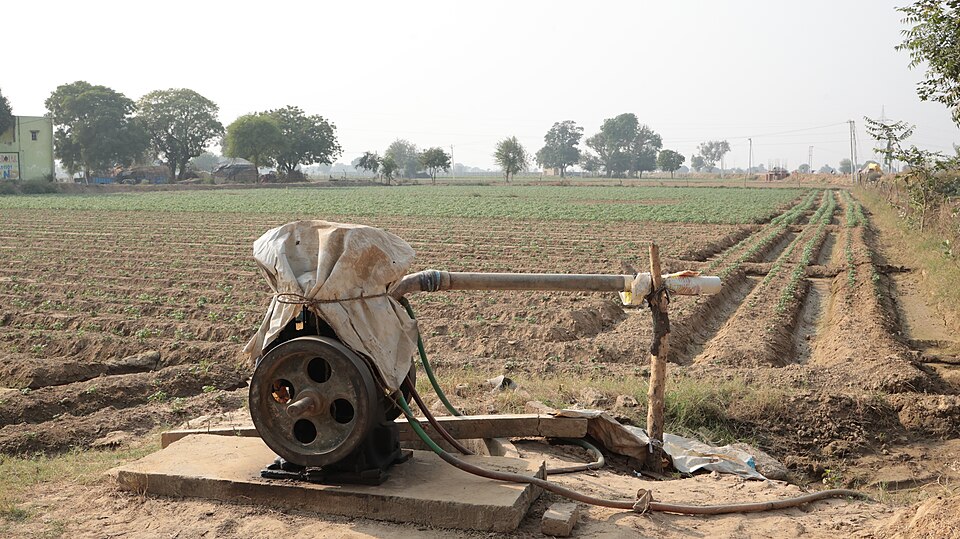
What it costs. Falling water tables mean deeper borewells, higher pumping costs and dry wells for poorer farmers who cannot dig deeper. Over-pumping can also draw in salty water near coasts and concentrate natural fluoride and arsenic, as explained in the chapter on water pollution. Shrinking groundwater also reduces the base flow that keeps rivers running in the dry season.
Water harvesting: old wisdom, new need
What water harvesting means. Water harvesting means capturing rain where it falls, or capturing runoff in your own village or town, and keeping it clean. It can be done by collecting runoff from rooftops, from local catchments and from seasonal floodwaters, and by watershed management. It supplies drinking and irrigation water and recharges groundwater.
Wider benefits. Harvesting rain also reduces storm-water flows, urban floods and the overloading of sewage treatment plants. In coastal areas, it helps hold back the entry of sea water into aquifers. Local systems are often cheaper than large, centralised projects and can work alongside them.
Traditional systems. India has a long tradition of water harvesting suited to local conditions. Johads and talaabs store surface water in villages, while kunds are covered underground tanks used in dry areas. In the north-eastern hills, bamboo drip irrigation carries water down slopes through bamboo pipes.
Kuls of Spiti. In the cold desert of Spiti in Himachal Pradesh, farmers have long used kuls, channels that carry melt water from glaciers to villages. Some kuls run for about 10 km down steep slopes. They show how communities built and maintained shared water systems long before modern schemes.
Modern harvesting. Rooftop harvesting in cities and recharge pits beside borewells are now encouraged by many local bodies. Even large public buildings, such as Rashtrapati Bhavan, store and recharge rainwater. The key is that harvested water is used and recharge structures are maintained, not just built.
India's water programmes
Atal Bhujal Yojana. The Prime Minister launched the Atal Bhujal Yojana (Atal Jal) on 25 December 2019, the birth anniversary of former Prime Minister Atal Bihari Vajpayee. It has an outlay of ₹6,000 crore over 2020-21 to 2024-25, half of it a World Bank loan repaid by the Centre. It covers seven states: Gujarat, Haryana, Karnataka, Madhya Pradesh, Maharashtra, Rajasthan and Uttar Pradesh.
What makes Atal Jal different. Atal Jal works in about 8,350 gram panchayats in 78 districts, many in water-stressed areas. Its focus is panchayat-led groundwater management and behaviour change, not just new structures. The idea is that a community that understands how much water it has and how much it uses can agree on how to share it.
Jal Shakti Abhiyan: Catch the Rain. The Jal Shakti Abhiyan: Catch the Rain campaign was launched on 22 March 2021. It asks people to capture rainwater, especially before and during the monsoon. It spreads the message that every drop counts, and it builds and repairs water harvesting structures across the country.
Ponds and lakes. The Amrit Sarovar mission, launched in 2022, aims to build or revive ponds in every district. Reviving village ponds and urban lakes recharges groundwater, supports wildlife and reduces floods. Their success depends on clear catchments and regular desilting.
Why community action is central. Groundwater cannot be policed well from far away, because there are millions of private wells. When a village knows its water budget and agrees on crops and pumping, it can stop decline. This is why the newer programmes put panchayats and communities at the centre.
Saving water on the farm
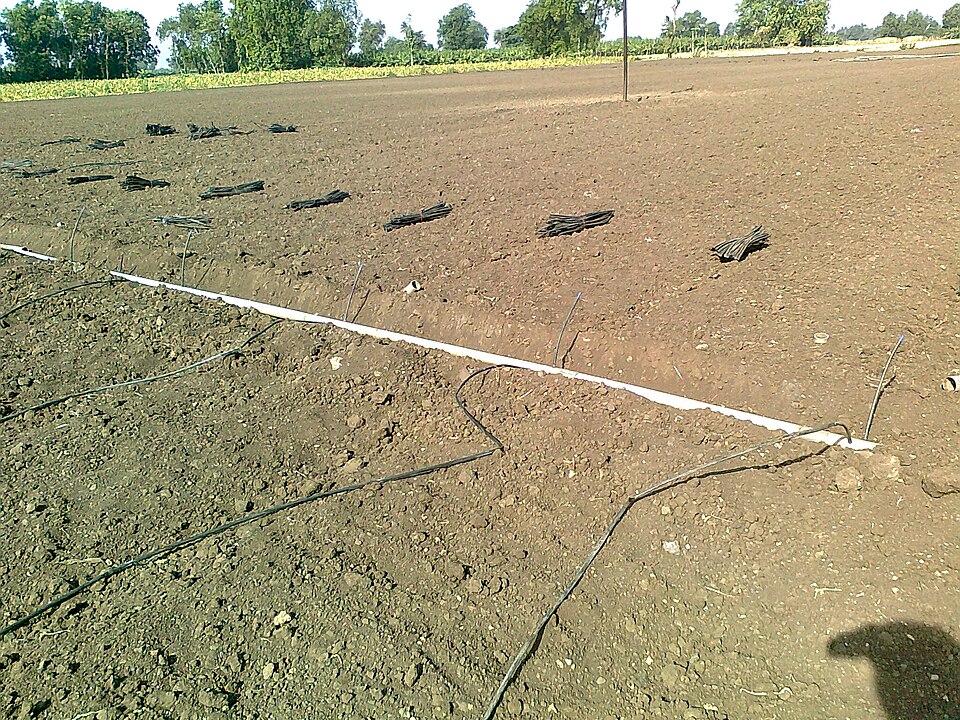
More crop per drop. Because farming uses most of the water, the biggest savings lie there. The goal is more productivity per unit of water, through efficient irrigation systems, water-saving technologies and better soil and water conservation. Drip and sprinkler irrigation deliver water close to the plant roots and waste far less than flooding a field.
Changing what is grown. Shifting part of the area from paddy and sugarcane to pulses, millets and oilseeds in dry regions can save huge amounts of water. This needs fair prices and assured buying for the new crops, otherwise farmers will not switch. Millets also fit dry climates and are nutritious, which links water saving with nutrition.
Getting incentives right. Free power for pumps encourages waste, but simply ending it would hurt poor farmers. Options include separate feeders that give farm power for fixed hours, paying farmers for saved power, and solar pumps linked with water-saving rules. Solar pumps and their risks are discussed in the chapter on clean energy.
Industry and cities. Industries must cut water use and treat and reuse their wastewater instead of dumping it. Cities can recycle treated sewage for parks, construction and industry, and fix leaking pipes. Every litre saved in a city or factory is a litre left in an aquifer or a river.
Mains lens: three live debates on water security
1. Is free power drying our wells? Groundwater meets nearly 62% of India's irrigation needs. In many States, farmers get electricity for pumps free or at very low rates, and crops like paddy and sugarcane earn assured prices. Together, cheap power and water-hungry crops reward pumping as much as possible, even in dry regions.
One side argues that free power is a lifeline for poor farmers, and that removing it would hurt incomes and food output. The other side says that the subsidy drains aquifers that the next generation will need, and mostly helps farmers with deeper and bigger pumps. A balanced answer suggests gradual reform, such as separate feeders for farm power, metered supply with cash support, and incentives to shift to less thirsty crops and drip irrigation.
2. Average or local: what does 60% really mean? The 2024 assessment put India's average stage of groundwater extraction at about 60%, which sounds safe. But averages hide hot spots: 751 of 6,746 assessment units were over-exploited, meaning that more water is taken out each year than is recharged. A farmer in an over-exploited block faces falling water tables no matter what the national average says.
So the debate is about how to plan. National figures help set policy, but water is used and recharged locally. In Mains, argue that groundwater must be managed aquifer by aquifer and village by village, with local data, local rules and local responsibility.
3. Government or community: who should manage water? Groundwater is a shared resource under private land, so one farmer's deep tube well can dry a neighbour's well. Rules from the top are hard to enforce across millions of wells. That is why the Atal Bhujal Yojana, launched in 2019, works through gram panchayats that make water budgets and plans for their own area.
Supporters say that community management builds a sense of ownership and changes behaviour where laws fail. Critics say that powerful farmers may still dominate decisions, and that panchayats need data, skills and money to manage complex aquifers. A balanced view says that community management backed by science, data and State support is the best path, together with old ideas like johads, talaabs and kuls that capture rain locally.
Why it matters: Water security links farming, cities, health and climate. Mains questions often ask why scarcity exists in a land of monsoons, and these debates give you the reasons and the remedies.
Mains lens: two kinds of questions and how to answer them
Type 1: "Explain the paradox" (reading data). Example: "India's average stage of groundwater extraction is about 60%, yet many districts face a crisis. Explain."
- Intro: Give the 2024 figures of 245.64 billion cubic metres extracted a year and an average extraction stage of 60.47%.
- Body, the hidden hot spots: Explain that 751 assessment units, about 11%, were over-exploited, so the average hides severe local stress.
- Body, the reasons: Point to water-hungry crops in dry regions, cheap farm power and the fact that groundwater serves 85% of rural drinking needs.
- Body, the fixes: Suggest local water budgets, recharge through rainwater harvesting and crop shifts supported by prices.
- Conclusion: Conclude that water is managed where it is used, so national averages must give way to local plans.
Type 2: "Discuss the lesson" (tradition and modern needs). Example: "Traditional water harvesting systems hold lessons for modern India. Discuss."
- Intro: Explain water harvesting as catching rain where it falls, from roofs, local catchments and seasonal streams.
- Body, the examples: Describe johads, talaabs and kunds in dry regions, bamboo drip irrigation in the north-eastern hills and glacier-fed kuls in Spiti.
- Body, the lessons: Show that these systems were local, low-cost, community-run and matched to each landscape.
- Body, modern use: Link them to campaigns like Catch the Rain, launched in 2021, and to watershed management in villages and towns.
- Conclusion: Conclude that old wisdom and new science together can make India water secure.
Linking across papers. This chapter feeds GS-III (agriculture, irrigation and environment), GS-I (water resources and geography) and GS-II (panchayats and government schemes). Water scarcity is also a frequent Essay topic.
Mains practice: six questions, six angles
These are practice questions we have written, not past papers. Past questions for each exam are in this module's PYQ panel.
| Angle | Question | How to approach |
|---|---|---|
| Data | India's average stage of groundwater extraction is about 60%, yet many districts face a crisis. Explain. | Use the 2024 assessment figures and the over-exploited units. Explain regional variation and why water cannot be moved easily. |
| Causes | Examine the role of cropping patterns and power subsidies in groundwater depletion. | Cover paddy and sugarcane, assured procurement, free power and the commons problem. Suggest diversification and feeder separation. |
| Community | Why is community participation essential for groundwater management? Discuss with reference to Atal Bhujal Yojana. | Explain the commons problem. Use Atal Jal's panchayat-led approach, and note limits. |
| Tradition | "Traditional water harvesting systems hold lessons for modern India." Discuss. | Give johads, kunds, bamboo drip and kuls. Link them to Catch the Rain and community upkeep. |
| Cities | How can Indian cities move towards water security? | Cover rooftop harvesting, lake revival, reuse of treated sewage and leak control. Link to urban floods. |
| Essay | "Water, water everywhere, nor any drop to drink." | Use fresh-water scarcity, groundwater decline and pollution. End with harvesting, efficiency and community action. |
How to use this table: each answer should first explain the what, then give the why from this chapter, and end with a way forward.
Quick revision
- Fresh water <3%; readily usable ~1%; agriculture the biggest user.
- Aquifer; zones of aeration and saturation; water table = boundary.
- Groundwater meets ~62% irrigation, 85% rural, 50% urban demand.
- 2024 assessment: extraction 245.64 BCM; stage 60.47%; 751 of 6,746 units (11.1%) over-exploited.
- Causes: thirsty crops, free power, commons problem; effects: fluoride, arsenic, salinity, dry wells.
- Traditional: johads, talaabs, kunds, bamboo drip (NE hills), kuls (Spiti).
- Atal Jal: 25 Dec 2019, ₹6,000 crore, 7 states, 50% World Bank, panchayat-led. Catch the Rain: 22 Mar 2021.
MPPSC SSE (State Service) questions from this chapter
Write any three merits of rainwater harvesting.
Who among the following environmentalists is known by the name of 'Jal Purush'?
- (a) Sunderlal Bahuguna
- (b) Rajendra Choudhary
- (c) B. Venkateswarlu
- (d) Salim Ali
Show answer
(b) Rajendra Choudhary · our answer; official key awaited