

MPPSC SSE (State Service) · Module 9 · Mains depth · 22 min
Rammohan Roy, the Brahmo Samaj and the Bengal Renaissance
What MPPSC SSE (State Service) asks from this chapter
Syllabus lines this chapter covers:
- Prelims Paper I: General Studies · History of India, from Indian knowledge traditions to post-independence reorganisation
MPPSC SSE (State Service) has asked 7 questions from this chapter (2026, 2024, 2021, 2019, 2017, 2015); 13 from its whole module.
Read at full depth: basics, the standard layer and the Mains analysis.
Start from zero: why change a custom everyone follows?
Every society has customs that people follow simply because their parents did. Most are harmless, and many are beautiful. Some, however, cause great suffering to the people with the least power to object.
In early 19th-century India, some such customs weighed most heavily on women. In some sections of society, a widow could be pushed onto her husband's funeral pyre, girls were married as children, and few women ever learnt to read. Only a few upper-caste men had access to the sacred texts, so hardly anyone could question what the priests said those texts meant.
A small group of Indians decided to question all this. They did not simply copy Europe. Instead, they went back to India's own scriptures and argued that many cruel customs had no religious sanction at all.
This chapter follows the first of these reformers in Bengal. Keep one question in mind as you read. How did a handful of educated Bengalis manage to change laws and customs that were centuries old, and why did their movement stay so small?
Key milestones at a glance
This table lists the turning points of reform in Bengal. Each one is explained in this chapter.
| Year | Event | Why it matters |
|---|---|---|
| 1814 | Rammohan Roy founds the Atmiya Sabha | Social and political issues are debated in public. |
| 1825 | Vedanta college opened by Rammohan Roy | Indian learning and modern education go together. |
| 1828 | Brahmo Sabha, later the Brahmo Samaj | An early modern reform society takes shape. |
| 1829 | Sati declared illegal (Bentinck) | Reformers and the government act together. |
| 1842 | Debendranath Tagore joins the Samaj | The Samaj is revived and organised. |
| 1856 | Widow Remarriage Act (Vidyasagar's campaign) | Widows can legally remarry. |
| 1866 | Brahmo Samaj splits | Radicals under Keshab separate from Debendranath. |
| 1867 | Prarthana Samaj founded in Bombay | The reform spirit spreads beyond Bengal. |
Notice the pattern. Reform began with ideas and debate, moved into organisations, and then reached the law. It also began in Bengal and slowly spread to other parts of India.
Why reform, and why then?
Two big obstacles. Reformers saw two causes behind India's social problems: lack of education and the subordination of women. Education was confined to a few upper-caste men, and only they could read the sacred texts in Sanskrit. Priests could interpret those texts to suit themselves and prescribe costly rituals, and few people could question them.
The position of women. In some sections of society, female infanticide, child marriage, sati and polygamy were practised. Women had no property rights and little access to education. A widow who escaped sati often lived a life of hardship.
Why reform religion? Most of these customs were followed in the name of religion. So the reformers held that society could not change without reforming religion first. This is why these movements are called socio-religious movements.
Arguing from India's own texts. The reformers studied the scriptures and argued that harmful practices had no religious sanction. They sought the logic of modernisation in India's own past, not simply in Western ideas. This made their case harder for orthodox opponents to dismiss as foreign.
Outside pressures. Contact with Europeans and the sharp criticism of Indian society by Christian missionaries pushed educated Indians to look hard at their own customs. At the same time, British scholars' study of India's past made educated Indians more aware of their own heritage. You can read how that scholarship began in the chapter on education and the press.
The historians' debate. Early writers traced the reform movements mainly to the West. J.N. Farquhar (1924) held that the stimulating forces were almost exclusively Western, and Charles Heimsath traced even their methods of organisation to Western inspiration. Sushobhan Sarkar replied that foreign conquest was bound to be a hindrance rather than a help to a subject people's regeneration.
Response to a challenge. Many historians now see reform as a response to the challenge of colonial rule, not a gift of it. Reform was not an end in itself but part of an emerging anti-colonial consciousness. It also expressed the hopes of a new middle class that colonial society had created.
A touch of revivalism. The urge to rejuvenate society after conquest made reformers look back to the Indian past and defend Indian culture. This revivalism gave some movements a conservative streak. Yet it also built cultural consciousness and confidence among the people.
Why does this matter? Reform was not simply imposed from outside. It was led by Indians who wanted to modernise their society while keeping their identity. That balance would shape Indian nationalism too.
What was the Bengal Renaissance?
The name. The burst of reform and new thinking in 19th-century Bengal is called the Bengal Renaissance. Writers such as Bankim Chandra Chatterji and Bipin Chandra Pal used the term. It borrows the name of the European Renaissance, the great revival of learning in Europe.
Three strands. The features of the Bengal Renaissance fall under three heads. The first is historical rediscovery, a new interest in India's past. The second is modernisation of language and literature, and the third is socio-religious reform.
A word of caution. The comparison with the European Renaissance is not fully appropriate. Bengal's context was different, because it was a colony ruled by foreigners, and the patterns of change were different too. An exam answer that simply equates the two misses this point.
Young Bengal: the radical stream. The most radical reformers were the Derozians, or 'Young Bengal', among them Dakshinaranjan Mukherjee, Ram Gopal Ghose and Krishna Mohan Banerji. Deeply influenced by Western thought, they rejected tradition and revolted against accepted social norms. Ram Gopal Ghose summed up their stand: "He who will not reason is a bigot, he who cannot is a fool and he who does not is a slave."
Bold, but cut off. Young Bengal tried to change society through symbols of change, personal acts of defiance against custom. Its weakness was that it did not draw on India's own cultural traditions. So it shocked society but won few followers.
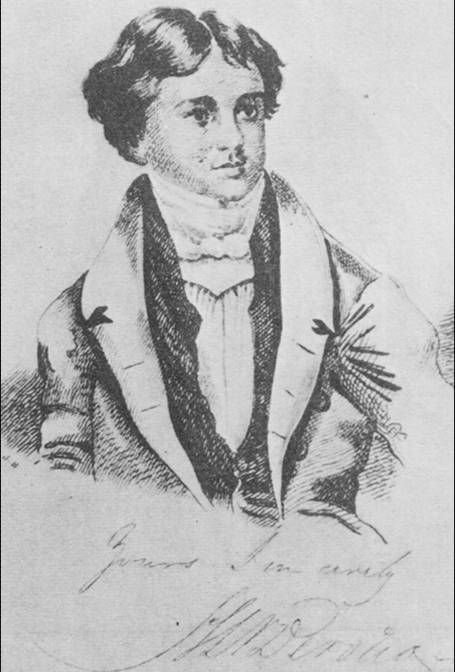
Reason as the test. A rationalist spirit ran through Bengal's reform. Akshay Kumar Dutt held that all natural and social events could be understood by the human intellect, and he opposed child marriage by citing medical opinion rather than scripture. Among the Brahmos, the same outlook led to rejecting the idea that the Vedas were infallible.
Beyond Bengal. Rationalism was even stronger in Maharashtra. Gopal Hari Deshmukh (Lokhitavadi) said that if religion did not sanction a needed reform, then religion itself should be changed. What the scriptures said, he argued, need not suit the present.
Why does this matter? The term reminds us that reform in Bengal was part of a wider cultural awakening. Literature, history and religion all changed together. Bengal was where Company rule began, so its educated people met Western ideas early.
Rammohan Roy: the first modern reformer
Who was he? Rammohan Roy was born into a Brahmin family in Bengal. He knew many languages and had studied the Quran, the Bible and the Hindu scriptures. He is regarded as the most notable modern reformer and among the first to bring political questions into public debate.
From a circle to a Samaj. In 1814 he founded the Atmiya Sabha, where friends discussed social and political issues. In 1828 it grew into the Brahmo Sabha, later renamed the Brahmo Samaj. It became one of the earliest modern reform societies in India.
His religious ideas. Rammohan Roy believed in one God and in the unity of all religions. He opposed idol worship and meaningless rituals. He saw the Upanishads as the basis of true Hinduism, which allowed him to argue for reform from within Hindu tradition.
The fight against sati. Rammohan Roy was deeply moved by the fate of his brother's widow, who was forced to commit sati. He made the fight against sati his lifelong cause and showed from the scriptures that it had no religious sanction. He faced fierce hostility from orthodox Hindus.
The law of 1829. Governor-General William Bentinck supported Rammohan Roy's campaign. A law passed in 1829 made sati illegal and punishable. This was a landmark, because a reformer's argument and government action worked together.
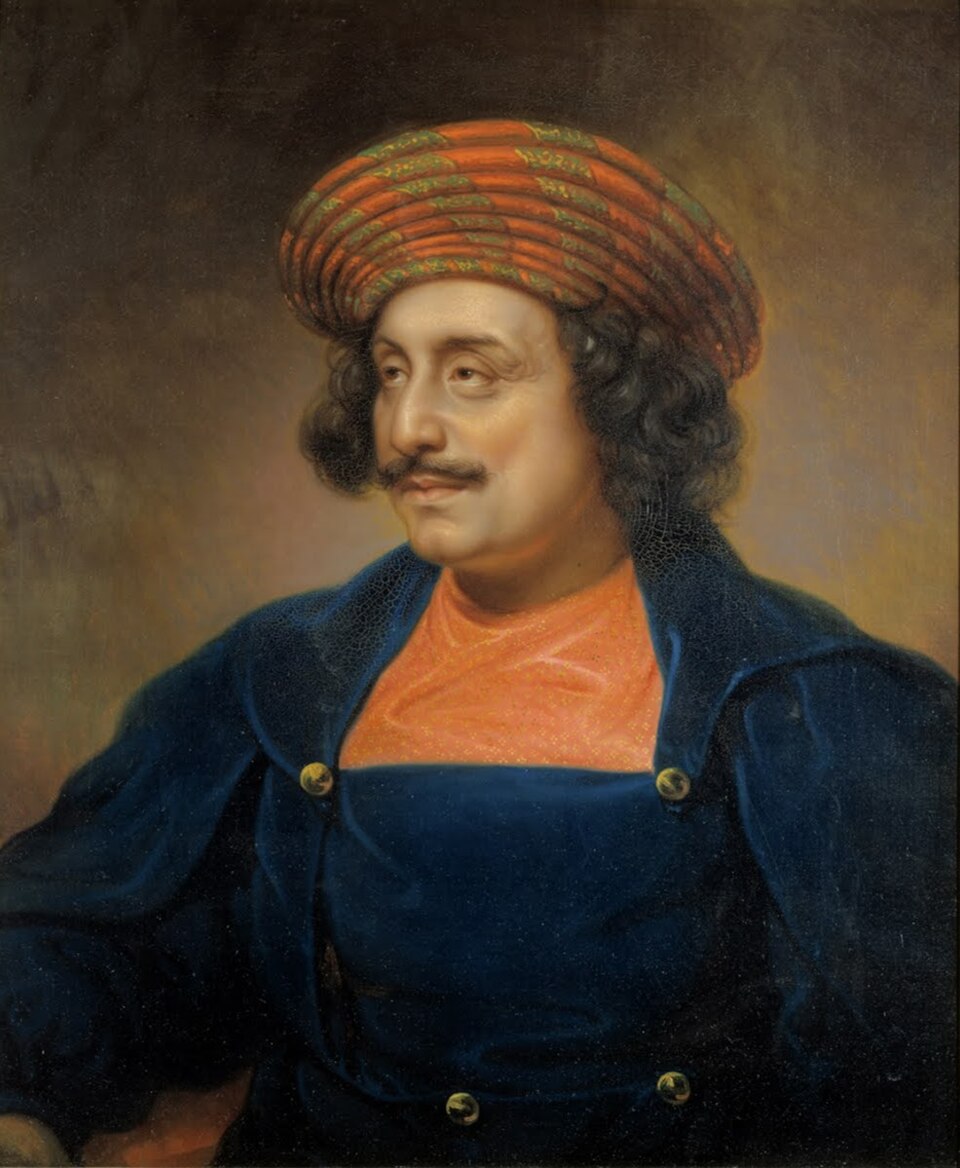
Women and the family. Rammohan Roy also condemned polygamy, opposed child marriage and supported widow remarriage. He spoke against the general subjugation of women. These causes would be taken further by those who came after him.
Education. He believed India needed English, modern science and technology. He ran an English school in Calcutta at his own cost and opened a Vedanta college in 1825. He also helped open the Hindu College in Calcutta, which shows how he combined Indian learning with Western knowledge.
Why does he matter? Rammohan Roy is often seen as a synthesis of Eastern and Western thought. He accepted what was useful in the West, but he rooted his arguments in Indian texts. That model of reform from within influenced almost every reformer who followed.
The Brahmo Samaj after Rammohan Roy
Decline and revival. After Rammohan Roy's death in 1833, the Samaj declined. It was revived when Debendranath Tagore joined in 1842. He gave it a definite shape and spread it beyond Calcutta.
The Brahmo Covenant. A year after joining, Debendranath wrote the Brahmo Covenant. It set out the creed of the Samaj and listed the duties of its members. This turned a loose circle of believers into an organised religious community.
Keshab Chandra Sen. Keshab Chandra Sen joined in 1858 and carried the Samaj to UP, Punjab, Madras and Bombay. He made it more radical. He attacked caste, stressed women's rights and widow remarriage, and emphasised universalism.
The split of 1866. Keshab's radicalism put him at odds with Debendranath. In 1866 the Samaj split into the Adi Brahmo Samaj, led by Debendranath, and the Brahmo Samaj of India, led by Keshab. The split shows a tension that ran through all reform: how far and how fast to break with tradition.
Spreading the spirit. Keshab's visits to Bombay in 1864 and 1867 greatly influenced reformers there. The Prarthana Samaj was founded in Bombay in 1867. Like the Brahmo Samaj, it worshipped one God and opposed idolatry and priestly domination, and its story continues in the chapter on reform movements across India.
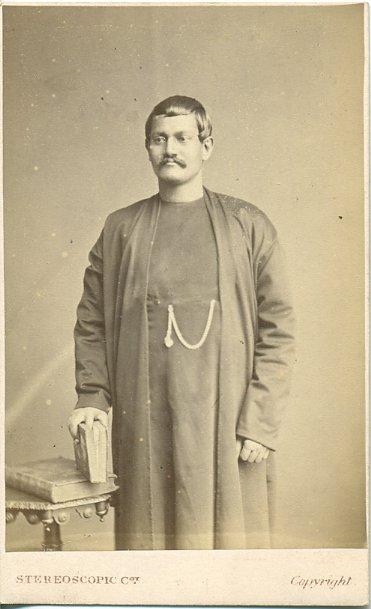
One God, many religions. A key idea of the Brahmos was religious universalism, the belief that all religions are essentially one. Rammohan Roy first conceived the Brahmo Samaj as a universalist church, defending the monotheism of the Vedas and the unitarianism of Christianity while attacking Hindu polytheism and the Christian Trinity. Keshab Chandra Sen went further in his breakaway Nav Bidhan: "all established religions of the world are true."
Why it mattered, and why it faded. Universalism shaped social attitudes too; Vidyasagar, for example, did not discriminate against Muslims in his humanitarian work. In the second half of the century, however, religious particularism gained ground. Faced with the challenge of colonial culture, universalism retreated instead of growing into a broad secular outlook.
Ishwarchandra Vidyasagar: education and widow remarriage
Who was he? Ishwarchandra Vidyasagar was a great Sanskrit scholar who was also open to Western thought. Unlike Rammohan Roy, he was not much concerned with religious questions. But he fought hard against anyone who blocked reform in the name of religion.
Education for girls. Vidyasagar believed that women's condition could improve only through education. With the Englishman Bethune, he set up many girls' schools in Bengal. He also encouraged Sanskrit and Bengali literature.
Opening the Sanskrit College. Vidyasagar introduced Western thought into the Sanskrit College. He also secured the admission of non-Brahmin students, which broke an old monopoly on Sanskrit learning. In this way he attacked caste privilege through education.
Widow remarriage. Vidyasagar attacked child marriage and polygamy and strongly supported widow remarriage. His campaign led to the Widow Remarriage Act of 1856, which made the remarriage of Hindu widows legal. He then arranged such marriages himself, and his own son married a widow.
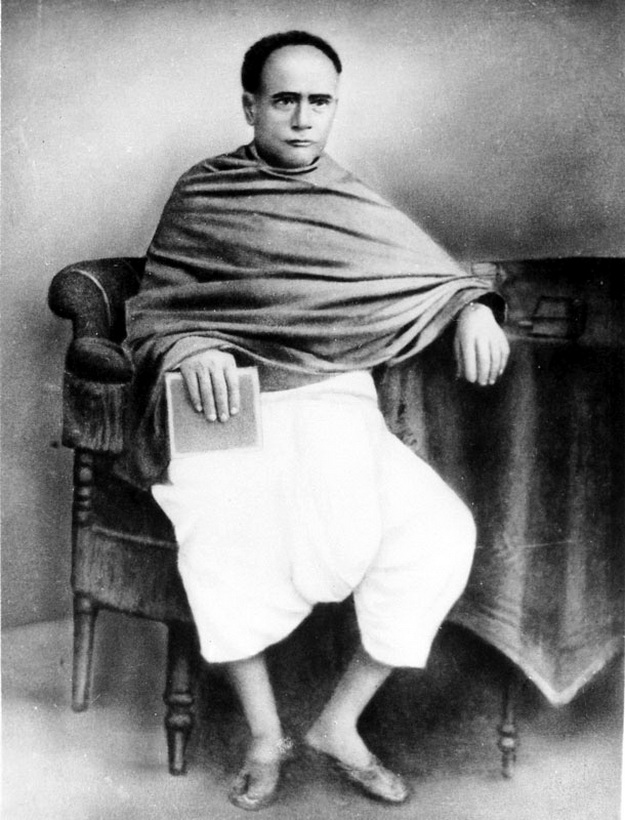
Defending Indian culture. Reform did not mean imitating the British. Vidyasagar once refused to attend a function hosted by the Lieutenant-Governor because it required European dress. Keshab Chandra Sen similarly refused to wear English dress or eat English food.
Why does this matter? Reformers like Vidyasagar and Keshab worked at two levels. They attacked harmful customs within Indian society, and they resisted colonial encroachment on Indian culture. Together these two strands formed what is called cultural nationalism.
Achievements and limits
Four ways to reform. Reformers used four broad methods. The first was reform from within: building awareness through tracts and debates, as in Rammohan Roy's campaign against sati, Vidyasagar's pamphlets on widow marriage and B.M. Malabari's efforts to raise the age of consent. The second was reform through legislation, urged by Keshab Chandra Sen, M.G. Ranade and Viresalingam, who believed reform needed the backing of the state.
The other two. The third was symbols of change through bold individual acts, the method of Young Bengal. The fourth was reform through social work, seen in Vidyasagar, the Arya Samaj and the Ramakrishna Mission. These groups relied less on the colonial state and made social work a creed.
Why each fell short. Those who relied on law forgot that the colonial government would act only when its own political and economic interests allowed, and that laws without popular support change little. Vidyasagar spent his life, energy and money on widow remarriage, yet only a few such marriages took place. The limits lay in the structure of colonial society itself.
What they achieved. The Bengal reformers changed the law on sati and on widow remarriage. They opened schools for girls and brought modern subjects into Indian education. Above all, they spread a rational and humanitarian outlook, the idea that a custom must be judged by reason and human dignity.
A new middle class. Reform helped create a modern middle class that was aware of its rights. These educated Indians read newspapers, formed associations and debated public questions. The same class later led the national movement.
Modern, but not totally Western. The reformers wanted Indian culture to become modern without becoming totally Western. They opposed both the negative features of tradition and colonial cultural intrusion. Historians see this double stance as the essence of 19th-century cultural nationalism.
The limits. The movements reached mainly a small educated section, mostly in towns. The peasants and the urban poor remained largely untouched, and their conditions stayed the same. Even within the Brahmo Samaj, disagreements about how far to go led to splits.
Upper castes and a providential Raj. Except for the lower-caste movements and the Arya Samaj, reform touched mainly the upper castes and classes; the Brahmo Samaj spoke largely for the Bengali bhadralok. The reformers also believed, wrongly, that British rule was providential, sent to lead India to modernity. They read Indian society sharply but missed the exploitative nature of colonial rule, though their vision of a modern India later passed into the national movement.
A Mains lens. An examiner may ask whether these reformers were collaborators who relied on British laws or pioneers of Indian nationalism. A balanced answer notes their reliance on government action, as in 1829 and 1856. It then shows how their pride in Indian texts and their defence of Indian culture prepared the ground for nationalism.
Mains practice: reform in Bengal
These are practice questions written by us, not past papers. Past questions from your exam appear in the PYQ panel.
| Angle | Question | Key points to cover |
|---|---|---|
| Origins | "The socio-religious reform movements were a response to the colonial challenge rather than a product of Western impact." Discuss. | Farquhar and Heimsath vs Sushobhan Sarkar; new middle class; revivalism; rationalism and universalism; providential view of British rule as a limit. |
| Methods | Examine the methods adopted by nineteenth-century social reformers and their limitations. | Reform from within; legislation; symbols of change (Young Bengal); social work; limits of each in a colonial society. |
| Person | Assess the contribution of Rammohan Roy to social and religious reform in India. | Cover the Atmiya Sabha, the Brahmo Samaj, sati and 1829, and his monotheism. Then add education and his synthesis of East and West. |
| Concept | Why were 19th-century reform movements "socio-religious"? Illustrate from Bengal. | Explain customs followed in religion's name and the use of scripture. Then use sati, widow remarriage and the Brahmo creed as examples. |
| Debate | "The Bengal Renaissance was a renaissance only in name." Critically examine. | Present the three strands and the achievements. Then weigh the colonial context, the small base and the splits. |
| Link | How did social reform in the 19th century contribute to the rise of Indian nationalism? | Show the new middle class and rational outlook. Then explain cultural nationalism at two levels, with Vidyasagar and Keshab as examples. |
How to use this table: each answer should explain the what, then the why, and end with what it led to.
Quick revision
- Bengal Renaissance: term used by Bankim Chandra Chatterji and Bipin Chandra Pal; three strands: history, language and literature, socio-religious reform.
- Rammohan Roy: Atmiya Sabha 1814; Brahmo Sabha 1828, later the Brahmo Samaj; died 1833.
- Sati made illegal in 1829, with Governor-General William Bentinck.
- Rammohan Roy: one God, unity of religions, Upanishads, against idol worship; Vedanta college 1825; helped open the Hindu College.
- Debendranath Tagore joined in 1842 and wrote the Brahmo Covenant.
- Keshab Chandra Sen joined in 1858; split of 1866: Adi Brahmo Samaj (Debendranath) and Brahmo Samaj of India (Keshab).
- Prarthana Samaj founded in 1867 after Keshab's visits to Bombay.
- Vidyasagar: girls' schools with Bethune; Widow Remarriage Act 1856; non-Brahmins admitted to the Sanskrit College.
- Origins debate: Farquhar (1924), Heimsath (Western impact) vs Sushobhan Sarkar (colonial rule a hindrance).
- Four methods: within (tracts; Malabari), legislation (Keshab, Ranade, Viresalingam), symbols of change (Young Bengal), social work (Vidyasagar, Arya Samaj, Ramakrishna Mission).
- Young Bengal: Dakshinaranjan Mukherjee, Ram Gopal Ghose ("He who will not reason is a bigot..."), Krishna Mohan Banerji.
- Rationalism: Akshay Kumar Dutt; Lokhitavadi (change religion if needed). Universalism: Rammohan's universalist church; Keshab's Nav Bidhan.
MPPSC SSE (State Service) questions from this chapter
What is the meaning of "Indian Renaissance"?
What is the name of the author of the historical novel 'Durgesh Nandini' written in Bengali language?
- (a) Devendra Nath
- (b) Bankim Chandra Chatterjee
- (c) Rabindranath Tagore
- (d) Hemchandra Bandopadhyay
Show answer
(b) Bankim Chandra Chatterjee · our answer; official key awaited
Who appointed Keshav Chandra Sen as the Chief Acharya of Brahmo Samaj?
- (a) Raja Ram Mohan Roy
- (b) N.G. Chandavarkar
- (c) Devendranath Thakur
- (d) Mahadev Govind Ranade
Show answer
(c) Devendranath Thakur · our answer; official key awaited
What do you mean by Indian renaissance of 19th century? Discuss the causes of Indian renaissance.
How did the Indian Renaissance support the discovery of Ancient Indian History? Explain.
Who adorned Ram Mohan Roy with the title of Raja?
- (a) Aurangzeb
- (b) Robert Clive
- (c) Mahatma Gandhi
- (d) Mughal Emperor Akbar II
Show answer
(d) Mughal Emperor Akbar II · our answer; official key awaited
In which year Sati System was abolished by William Bentinck?
- (a) 1825 A.D.
- (b) 1827 A.D.
- (c) 1829 A.D.
- (d) 1830 A.D.
Show answer
(c) 1829 A.D. · our answer; official key awaited