

MPSC Rajyaseva · Module 72 · Mains depth · 17 min
Classical dances II: Odissi, Manipuri, Mohiniyattam, Sattriya
What MPSC Rajyaseva asks from this chapter
Syllabus lines this chapter covers:
- GS I · Indian heritage and culture: art forms, literature and architecture from ancient to modern times, with Maharashtra.
MPSC Rajyaseva questions from this module are being sorted into our bank.
Read at full depth: basics, the standard layer and the Mains analysis.
Start from zero: four more classical dances
In the previous chapter you met four classical dances from Tamil Nadu, north India, Kerala and Andhra. This chapter completes the official eight with four more. Two come from the east and north-east, which exams love to ask about.
Odissi comes from the temples of Odisha, and its dancers look like temple sculptures come alive. Manipuri comes from Manipur, where dance is a form of prayer to Krishna. Mohiniyattam is Kerala's graceful women's dance, the gentle partner of Kathakali. Sattriya comes from the monasteries of Assam and was the last to be recognised, in 2000.
Notice one thread running through all four: devotion. Each grew in a temple or monastery, around Jagannath, Krishna or Vishnu. This links dance to the Bhakti movement, which you will study further in the religious traditions chapter.
Use the same four questions as before: where, who, how and why. At the end, one table brings all eight dances together.
Odissi: temple sculpture in motion
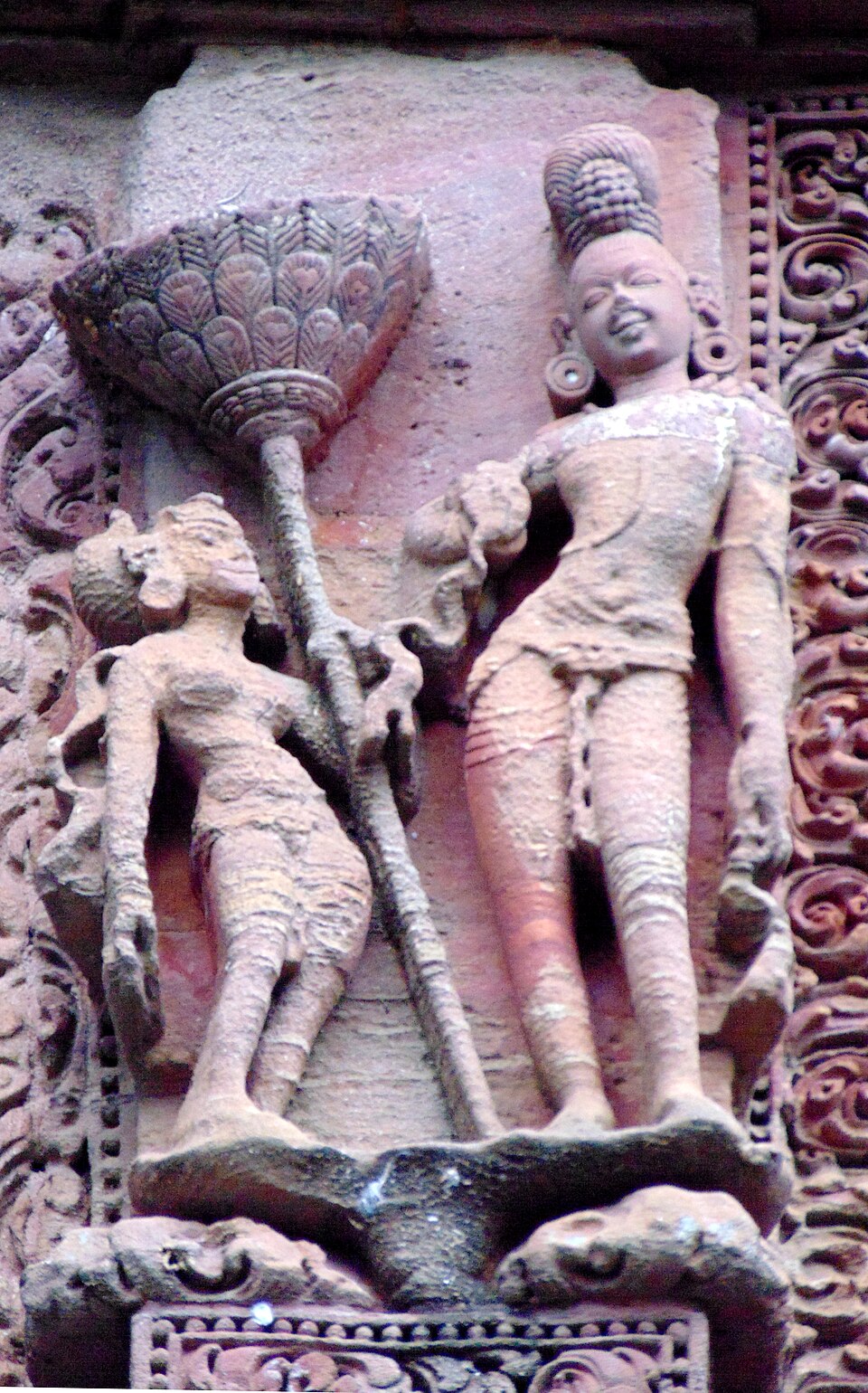
Old evidence. Odisha has some of India's oldest evidence of dance in stone. As you saw in the foundations chapter, sculptors at Bhubaneswar temples such as Rajarani, Parashurameshvara and Lingaraja carved the very stances and movements described in the dance texts. Odissi dancers today still copy these sculpted poses.
The maharis. At the Jagannath temple of Puri, women dedicated to the temple, called maharis, danced in worship. They were Odisha's devadasis. Their dance was part of the daily ritual of the god.
The gotipuas. From around the end of the 16th century, a new tradition arose: gotipua dance by young boys dressed as girls. Girls from orthodox families could not perform in public, so boys took their place. Gotipua dancers performed outside the temple, for festivals and for the public, and their dance was more acrobatic.
The Gita Govinda. Jayadeva's Gita Govinda, a 12th-century Sanskrit poem on the love of Radha and Krishna, is at the heart of Odissi abhinaya. Jayadeva is linked to Odisha, and his songs were sung in the Jagannath temple. Odissi songs are in Odia and Sanskrit.
Revival. Like other temple dances, Odissi declined in the colonial period. From the late 1940s, gurus such as Kelucharan Mohapatra rebuilt it from mahari and gotipua traditions, temple sculpture and old texts. The name 'Odissi' is credited to the scholar Kalicharan Pattanayak.
Famous dancers. Well-known Odissi dancers include Sanjukta Panigrahi, Madhavi Mudgal, Kiran Sehgal and Sonal Mansingh. Kelucharan Mohapatra's students carried the form across the world.
How Odissi looks and is performed
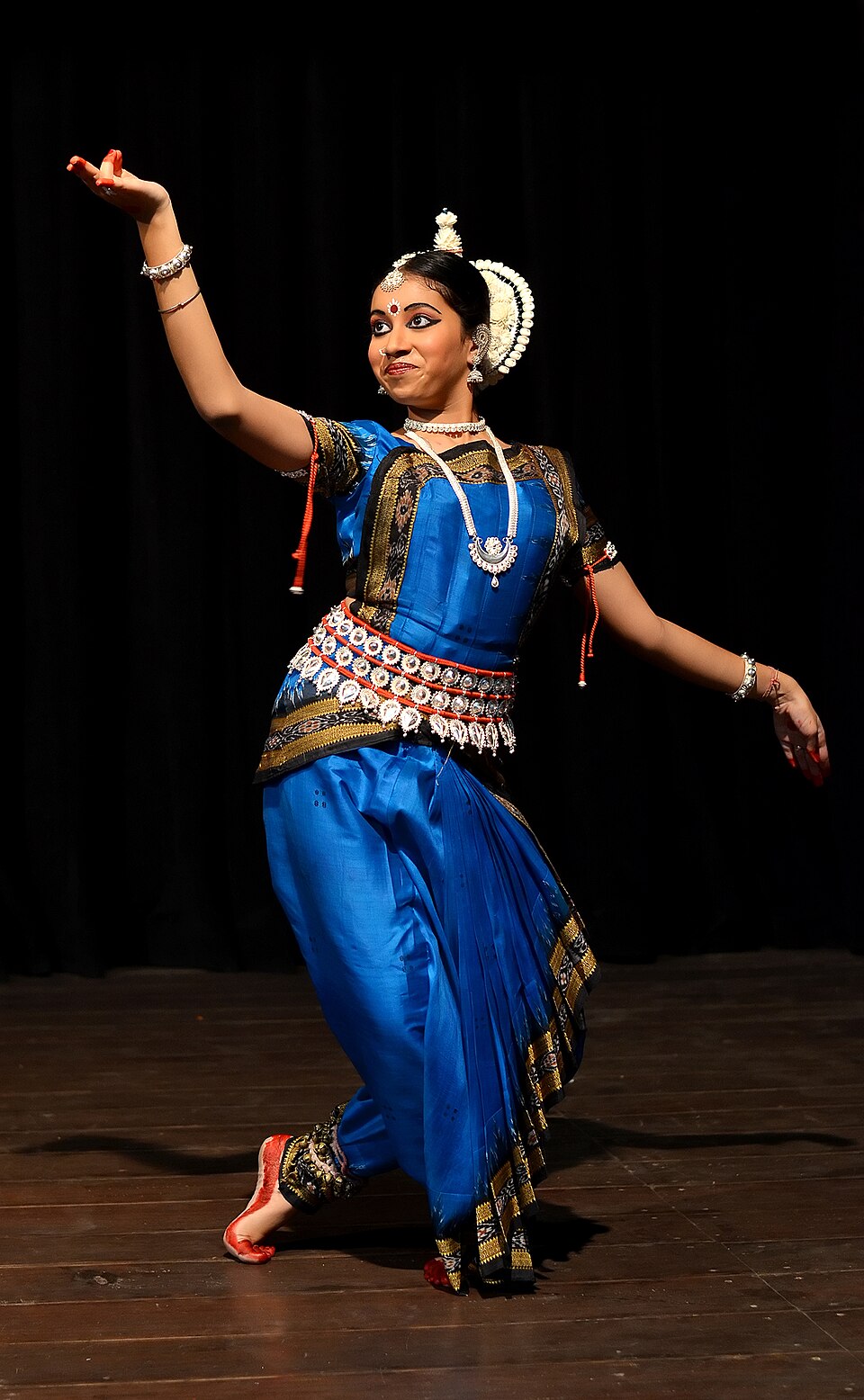
Two basic positions. Odissi rests on two positions. Chauka is a square stance, with knees bent outward and arms held out, said to recall the square form of Jagannath. Tribhanga bends the body at three points, the head, torso and hip, giving the S-shaped curve seen in temple sculpture.
Sculpture in motion. Odissi moves from one sculptural pose to another. The torso moves independently of the hips, which gives the dance its flowing, lyrical quality. The result is both strong, from the chauka, and soft, from the tribhanga.
The recital. A traditional Odissi recital moves from an invocation, through pure dance, to expressive items on the Gita Govinda or other poems. It ends with a closing piece of pure dance. This follows the same journey from nritta to nritya and back that you saw in Bharatanatyam.
Music. Odissi music is based on Odisha's own tradition, with songs in Odia and Sanskrit. The mardala (a barrel drum), manjira (cymbals) and flute accompany the singer.
Costume. Dancers wear pattasari, a silk saree of Odisha, often stitched for dance. The jewellery is silver filigree, a famous craft of Cuttack. A crown-like ornament called the tahiya is fixed in the hair bun, shaped like a temple spire.
Manipuri: dance as prayer
A devotional dance. In Manipur, dance is not entertainment first; it is worship. Manipuri is a religious dance-drama centred on the Ras Lila, the dance of Krishna with Radha and the gopis. It is performed in temples and at festivals, and the audience watches it as an act of devotion.
Two roots. Manipuri grew from two sources. The first is Lai Haraoba, an ancient festival of the Meitei people in which priestesses and villagers dance to please the local deities. The second is Vaishnavism, which spread in Manipur in the 18th century.
The king who codified it. King Bhagyachandra, who ruled from 1759 to 1798, gave the Manipuri Ras Lila its classical form. Tradition says the first Ras was performed in 1779. Several kinds of Ras, such as Maha Ras, Basanta Ras and Kunja Ras, are performed at different seasons.
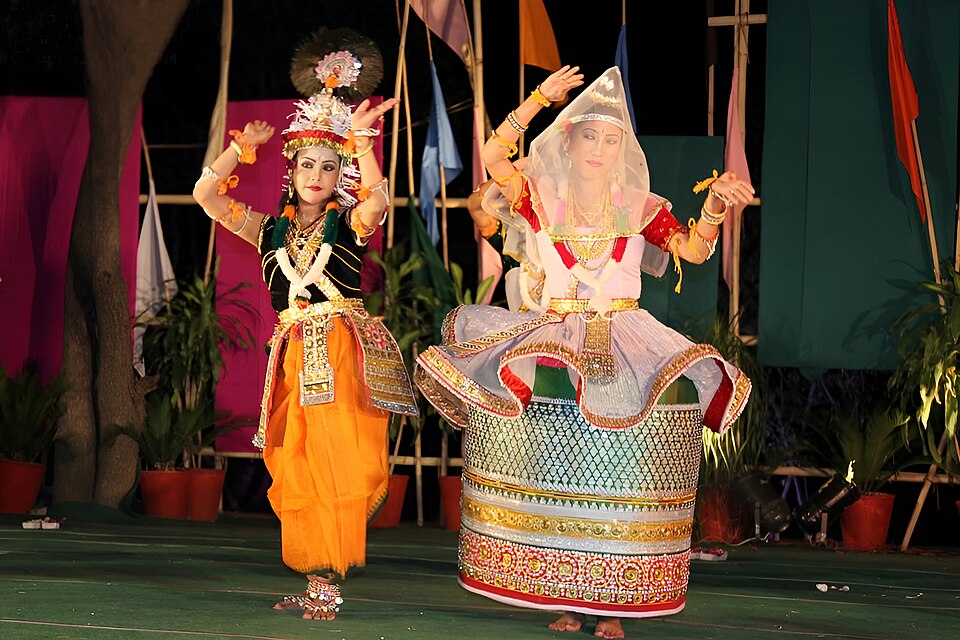
How it looks. Manipuri movements are soft, rounded and gliding, with no hard stamping of the feet. Faces are calm, and the beauty lies in the smooth flow of the whole body. Women in the Ras wear the poloi (also called potloi), a stiff, cylindrical, mirror-worked skirt, with a fine veil; men wear a white dhoti and turban.
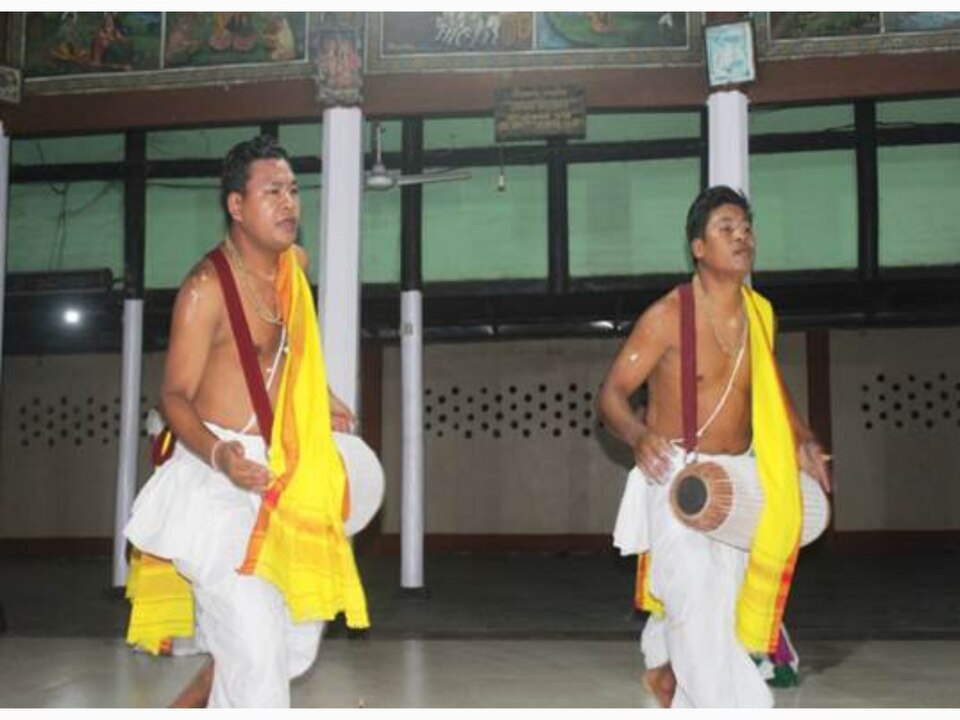
Sankirtana and pung cholom. Manipur's Sankirtana, ritual singing, drumming and dancing in praise of Krishna, was inscribed on UNESCO's intangible heritage list in 2013. In pung cholom, male dancers play the pung drum while leaping and spinning. The music also uses cymbals (kartal), the conch and the flute.
Reaching the nation. Rabindranath Tagore invited Manipuri teachers to Santiniketan after 1919, and the dance became known across India. The Jawaharlal Nehru Manipur Dance Academy in Imphal, which began in 1954, is a unit of the Sangeet Natak Akademi. It teaches Manipuri dance and music and the martial art Thang-Ta. Guru Bipin Singh is among the great modern masters.
Mohiniyattam: Kerala's dance of the enchantress
The name. Mohiniyattam means the dance of Mohini, the enchantress form that Vishnu took in the myths. The name tells you its mood: graceful, gentle and charming. It is the lasya dance of Kerala, as Kathakali is its tandava.
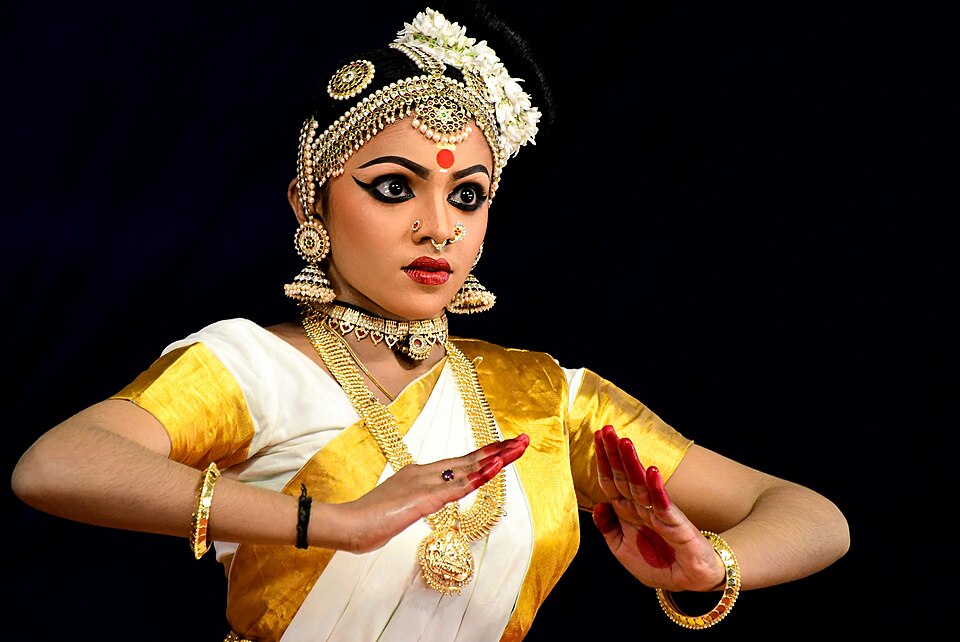
Women's dance. Mohiniyattam was traditionally performed only by women, as a solo dance. Its movements are soft, swaying and lyrical, like palm leaves in the breeze. The body sways gently from side to side, and the eyes and face carry the story.
History. Mohiniyattam took shape in the courts and temples of Kerala. Maharaja Swathi Thirunal of Travancore, a composer himself, patronised it in the early 19th century. Like other temple and court dances, it later declined and was looked down upon.
Revival. In the 1930s, the poet Vallathol, who also revived Kathakali, brought Mohiniyattam into the Kerala Kalamandalam. Teachers such as Kalamandalam Kalyanikutty Amma rebuilt its repertoire. Kalamandalam Leelamma and others carried it forward.
Music and language. The songs are in Manipravalam, a literary blend of Sanskrit and Malayalam. The music follows the Carnatic system. The mridangam or maddalam, the idakka (an hourglass drum), the flute and the veena accompany.
Costume. Dancers wear a white or cream kasavu saree with a gold border, the traditional dress of Kerala women. The hair is gathered in a bun to one side and decorated with jasmine. This simple white and gold look makes Mohiniyattam easy to recognise.
Sattriya: the monastery dance of Assam
The founder. Srimanta Sankaradeva (15th–16th century), saint, poet and reformer of Assam, created Sattriya. It was part of his Neo-Vaishnava movement, which preached devotion to Krishna through prayer, song, drama and dance. His disciple Madhavadeva carried the work forward.
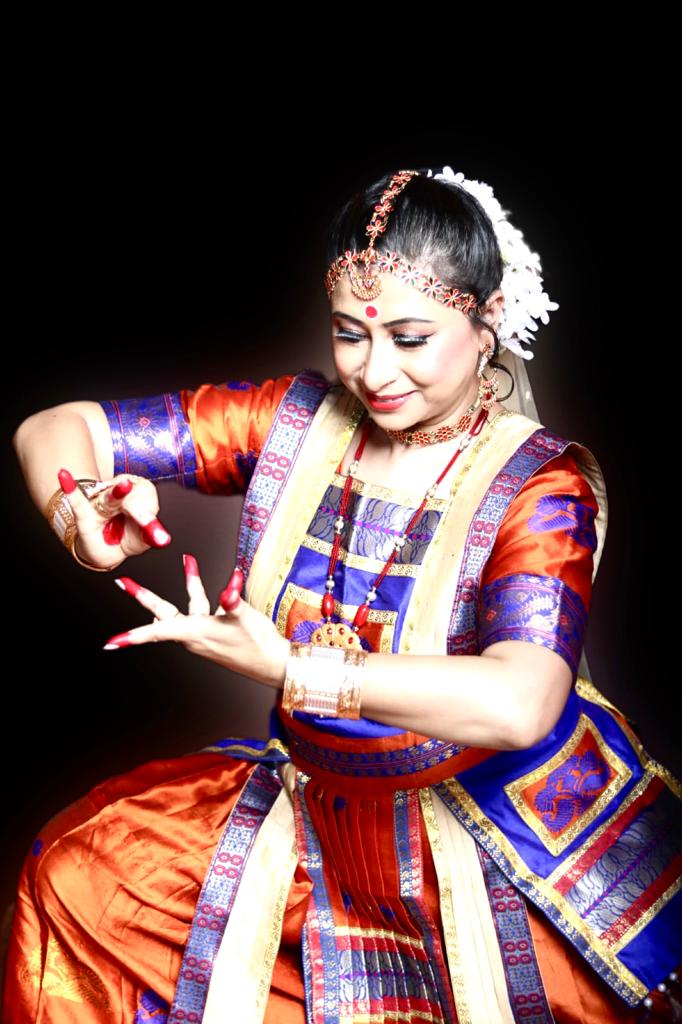
The sattras. Sankaradeva's followers set up sattras, Vaishnava monasteries. Each sattra has a namghar, a prayer hall, where dance and drama are offered as worship. The dance takes its name from these sattras.
Monks as dancers. For centuries Sattriya was performed by male monks called bhokots, who played female roles too. It was linked to Ankiya Nat (or Ankiya Bhaona), one-act plays written by Sankaradeva. In the later 20th century, women began to learn it, and it moved from the sattras to the public stage.
Recognition. The Sangeet Natak Akademi recognised Sattriya as a classical dance on 15 November 2000. That makes it the most recently recognised of the eight. A Sattriya Kendra in Guwahati has worked since 2008 to teach the dance, its music and Ankiya Bhaona.
How it looks. Training rests on 64 basic exercises called mati-akhora. Dances include the sutradhari dance, from the narrator of the plays, and gopi dances. Movements are divided into purusha (male, vigorous) and prakriti (female, gentle) styles, and many actions are realistic.
Music and costume. The khol drum and cymbals (taal) lead the music, with the flute. The songs, called borgeet, were composed by Sankaradeva and Madhavadeva. Dancers wear pat silk, the silk of Assam, with traditional Assamese jewellery.
All eight at a glance
The master table. This table brings together the four dances of this chapter and the four of the previous one. Learn it row by row; almost every Prelims question on classical dance can be answered from it.
| Dance | State | Roots | Signature | Key names |
|---|---|---|---|---|
| Bharatanatyam | Tamil Nadu | Devadasi temple dance (sadir) | Aramandi, varnam | Tanjore Quartet, Rukmini Devi |
| Kathak | North India | Storytellers, Mughal and Awadh courts | Spins, footwork, gharanas | Wajid Ali Shah, Birju Maharaj |
| Kathakali | Kerala | Rama and Krishna plays | Painted faces, crowns, men | Vallathol, Kalamandalam |
| Kuchipudi | Andhra Pradesh, Telangana | Village dance-drama | Speech, brass plate | Siddhendra Yogi, Vempati Chinna Satyam |
| Odissi | Odisha | Maharis and gotipuas | Chauka, tribhanga | Jayadeva, Kelucharan Mohapatra |
| Manipuri | Manipur | Lai Haraoba, Vaishnavism | Ras Lila, soft gliding, pung cholom | Bhagyachandra, Tagore |
| Mohiniyattam | Kerala | Court and temple dance of women | Lasya, white and gold saree | Swathi Thirunal, Vallathol |
| Sattriya | Assam | Sattras of Sankaradeva | Bhokots, mati-akhora, khol | Sankaradeva, Madhavadeva |
Patterns worth remembering. Kerala is the only state with two classical dances. Four forms began as dance-dramas or plays: Kathakali, Kuchipudi, Manipuri and Sattriya. Three grew from temple dancers or devadasi-like traditions: Bharatanatyam, Odissi and Mohiniyattam.
Who decides 'classical'? There is no law that lists the classical dances. The Sangeet Natak Akademi, India's national academy for the performing arts, recognises eight, and Sattriya joined the list only in 2000. For exams, the safe answer is these eight.
Mains lens: debates and practice
Debate 1: dance and the Bhakti movement. Odissi, Manipuri and Sattriya all grew around Vaishnava devotion: Jagannath, the Ras Lila and Sankaradeva's Krishna-bhakti. Bhakti spread through the language of the people, through song and dance. A strong answer shows dance as a vehicle of religious and social reform, not only an art.
Debate 2: the north-east and national culture. Manipuri and Sattriya give the north-east a central place in India's classical heritage. Tagore's Santiniketan and the Imphal academy helped Manipuri reach the nation. Recognising Sattriya in 2000 showed that the list of classical arts can grow, which matters for regional pride and for integration.
Debate 3: gender roles. Gotipua boys replaced girls in Odisha; male monks danced female roles in the sattras; Mohiniyattam was a women's dance. Today these lines are blurring. Mains answers can use this to show how social norms shaped art and how art now reshapes norms.
These are practice questions written by us, not past papers. Past questions from your exam appear in the PYQ panel.
| Angle | Question | Key points to cover |
|---|---|---|
| Religion | Examine the role of the Vaishnava Bhakti movement in shaping the classical dances of eastern and north-eastern India. | Jagannath and Gita Govinda; Bhagyachandra and Ras Lila; Sankaradeva, sattras, Ankiya Nat; dance as worship. |
| Art | Odissi is often called sculpture in motion. Explain. | Bhubaneswar sculpture, chauka and tribhanga, mahari and gotipua roots, revival from texts and sculpture. |
| Society | How have social norms about gender shaped Indian classical dance? Illustrate with examples. | Gotipua, bhokots, Kathakali men, Mohiniyattam women, devadasi stigma, change today. |
| Culture | What is the basis for calling a dance 'classical'? Discuss with reference to Sattriya's recognition. | Shastra base, codified technique, guru-shishya, long history; SNA recognition 2000; debate on wider list. |
Answer plan for the Bhakti question. Open by saying that in eastern India, dance grew as a form of prayer. In the body, take three cases: Odissi in the Jagannath temple with the Gita Govinda, Manipuri's Ras Lila under Bhagyachandra, and Sattriya in Sankaradeva's sattras. Conclude that Bhakti made dance popular, devotional and regional, and that these forms still carry that spirit.
Quick revision
- Odissi (Odisha): maharis of Puri's Jagannath temple + gotipua boys (from late 16th c); poses from Bhubaneswar sculpture; chauka and tribhanga; Gita Govinda; revived from late 1940s (Kelucharan Mohapatra); name by Kalicharan Pattanayak; silver filigree, tahiya.
- Manipuri (Manipur): Ras Lila of Radha-Krishna; roots in Lai Haraoba and Vaishnavism; Bhagyachandra (1759–98), first Ras 1779; soft, gliding, no stamping; poloi skirt; pung cholom; Sankirtana UNESCO 2013; Tagore, Santiniketan; JNMDA Imphal 1954.
- Mohiniyattam (Kerala): Mohini; women, solo, lasya; Swathi Thirunal; revived 1930s by Vallathol at Kalamandalam; Manipravalam songs; white/cream kasavu saree.
- Sattriya (Assam): Sankaradeva, Neo-Vaishnavism; sattras, bhokots; Ankiya Nat; SNA classical 15 Nov 2000; mati-akhora (64); khol, borgeet, pat silk.
- The eight: Bharatanatyam, Kathak, Kathakali, Kuchipudi, Odissi, Manipuri, Mohiniyattam, Sattriya. Kerala has two.