

MPSC Rajyaseva · Module 80 · Mains depth · 13 min
Infrastructure: roads, railways, ports, airports and Gati Shakti
What MPSC Rajyaseva asks from this chapter
Syllabus lines this chapter covers:
- GS III · Liberalisation, industrial policy, infrastructure and investment models.
MPSC Rajyaseva questions from this module are being sorted into our bank.
Read at full depth: basics, the standard layer and the Mains analysis.
Start from zero: why a road can raise a farmer's income
Think of a tomato farmer in a village 40 km from the city. If the road is broken, the truck takes five hours, many tomatoes are crushed, and the trader pays less. If the road is good, the truck reaches in one hour, fewer tomatoes are lost, and the farmer earns more.
Roads, railways, ports, airports, power lines and telecom networks are called infrastructure. They do not produce goods themselves, but they make every other activity cheaper and faster.
That is why governments spend on infrastructure even in slow times. This spending is part of capital expenditure (see The Union Budget: where the government's money comes from and where it goes), because it creates assets that last for many years.
The public capex push
The numbers. Official figures show that public capital expenditure rose from about ₹2 lakh crore in FY2014-15 to ₹12.2 lakh crore in FY2026-27. Budgetary support to railways alone went from about ₹32,000 crore (2014-15) to ₹2.78 lakh crore (FY2026-27).
Why capex matters. Spending on a highway pays wages and buys cement and steel today. It also lowers transport costs for years after the road is built.
Crowding in. Good public infrastructure can also attract private investment. A new port or freight corridor makes it worth building factories and warehouses nearby.
Sector by sector
| Sector | Then | Now |
|---|---|---|
| National highways (length) | 91,287 km (FY14) | 1,46,572 km (Mar 2026) |
| Four-lane and wider highways | 18,371 km (2014) | 45,516 km |
| Railway electrification | About 20% (before 2014) | 99.6% (Mar 2026) |
| Operational airports | 74 (2014) | 165 (2026) |
| Major port capacity | 873 MMTPA (2014) | 1,726 MMTPA (2026) |
| Major port cargo handled | 581 MMT | 915 MMT |
| Vessel turnaround time | 94 hours | 48.8 hours |
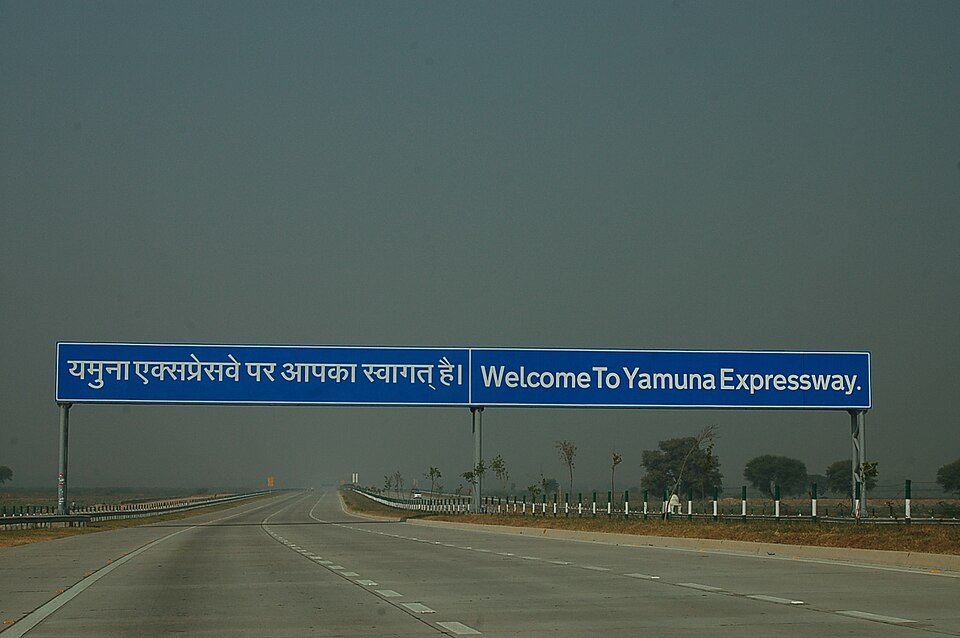
Reading the table. Highways grew by about 61%, and 3,644 km of access-controlled expressways are now operational. Under Bharatmala, 22,590 km of roads were completed by 31 March 2026.
Why turnaround time matters: when a ship waits less at port, freight costs fall and exporters become more competitive. Faster ports are as important as bigger ports.
PM GatiShakti: planning together
The problem. In the past, one department would build a road, and soon after, another would dig it up to lay a pipeline or cable. Projects were planned in silos, wasting time and money.
The solution. The PM GatiShakti National Master Plan, launched in October 2021, is a GIS-based digital platform. It puts maps of roads, railways, pipelines, power lines, forests and other layers in one place.
The scale. By June 2026 it covered 58 ministries and departments and more than 3,202 data layers. Planners can see all existing and proposed assets before choosing a route.
Why this matters: integrated planning reduces delays, avoids clashes between projects and helps build multimodal links, where road, rail, ports and airports connect smoothly.
Logistics: the cost of moving goods
Start with a box of tomatoes. A farmer in Maharashtra sells a box of tomatoes that must reach a shop in Delhi. On the way it is loaded onto a truck, waits at a warehouse, changes trucks and gets stuck in traffic, and each step adds cost and delay. If moving the box costs too much, the farmer earns less and the buyer pays more.
What logistics means. Logistics is everything involved in moving and storing goods: transport, warehouses, paperwork, loading and the information that connects them. When logistics is slow and costly, Indian goods become less competitive in world markets, even if they are cheap to make. At the launch of the national policy, the Prime Minister said India's logistics cost was about 13% and should come down to single digits.
The National Logistics Policy. On 17 September 2022, the government launched the National Logistics Policy. It aims to make India's logistics costs comparable to global benchmarks by 2030 and to place India among the top 25 countries in the World Bank's Logistics Performance Index by 2030. A Unified Logistics Interface Platform (ULIP) brings data from different ministries and transport modes onto one digital system.
Working with GatiShakti. The policy works together with PM GatiShakti, which plans roads, railways, ports and pipelines on one map. GatiShakti decides where infrastructure should go, while the logistics policy tries to make goods flow smoothly through it. India rose to 38th of 139 countries in the 2023 Logistics Performance Index.
Why it matters. Lower logistics costs help exporters, farmers and small firms more than almost any tax cut. They also attract manufacturers who want to join global supply chains. A good Mains answer links logistics to competitiveness, jobs and the growth of manufacturing.
Power: the weak link in distribution
Start with a village transformer. Electricity reaches a village, but some houses use it through illegal hooks, some meters are faulty and some bills are never paid. The power company, called a DISCOM, pays for all the power it buys but collects money for only part of it. Over time, it runs out of money to buy power or maintain lines.
AT&C losses. The share of power lost in this way is measured as aggregate technical and commercial (AT&C) losses. Technical losses happen in wires and transformers, while commercial losses come from theft, faulty metering and unpaid bills. A second measure, the ACS-ARR gap, is the difference between what it costs a DISCOM to supply each unit and what it earns per unit.
The 2021 scheme. On 30 June 2021, the government approved the Revamped Distribution Sector Scheme, with an outlay of ₹3,03,758 crore, including central support of ₹97,631 crore, for 2021-22 to 2025-26. It aimed to cut AT&C losses to 12-15% and the ACS-ARR gap to zero by 2024-25. A key tool is prepaid smart meters, which make billing accurate and payment automatic.
Early results. AT&C losses fell from 22.32% in FY2021 to 16.44% in FY2022, and the ACS-ARR gap narrowed sharply in the same period. Funds under the scheme are linked to reforms, so states must show progress to get money. This "reform-linked" design tries to avoid the earlier pattern of bailouts followed by fresh losses.
Why it matters. Without healthy DISCOMs, power plants are not paid, investment dries up and consumers face cuts. Electricity for factories, irrigation and homes depends on fixing this last link. A good Mains answer explains why distribution, not generation, is now the main bottleneck in India's power sector.
Why infrastructure comes first: the logic
Why roads, rails and ports? A factory is only as good as the roads, power and ports that link it to buyers. When goods take long to move, they cost more, and Indian products lose out to competitors. Better infrastructure lowers this cost for every business at once.
Why the government spends so much. Big infrastructure takes years to pay back, so private investors often hold back. That is why public capital expenditure rose from about ₹2 lakh crore (FY2014-15) to ₹12.2 lakh crore (FY2026-27). Spending on assets also creates jobs in construction straight away.
Why plan together (GatiShakti, 2021). Roads, rail lines, pipelines and power lines used to be planned by separate ministries, so one project could block another. PM GatiShakti puts 58 ministries and departments on one GIS map with over 3,202 data layers, so projects can be planned together.
Implications. The results show in faster ports, where average vessel turnaround fell from 94 hours to 48.8 hours. The challenge is to keep spending high without straining public finances, which is why private finance models matter (see Building with private partners: EPC, BOT, HAM, TOT, InvITs and monetisation).
Mains lens: infrastructure as a growth engine
1. The gains. Higher capex, longer and wider highways, near-full rail electrification and faster ports lower the cost of moving goods and people. This supports manufacturing (see MSMEs, Make in India and PLI), farm markets (see Farm credit, crop insurance and markets: KCC, PMFBY, e-NAM, FPOs) and exports.
2. The challenges.
- Fiscal space: large public capex must fit within deficit targets.
- Execution: land acquisition, clearances and contract disputes can delay projects.
- Maintenance: new assets need steady funds for upkeep.
- Private investment: the government cannot fund everything, so private capital is needed.
3. The way ahead. Integrated planning through GatiShakti, faster dispute resolution, and better models for private participation and asset recycling.
A good conclusion: infrastructure has been the main lever of public investment in recent years. Keeping the momentum needs private capital, good maintenance and timely execution.
Mains practice: three questions, three angles
These are practice questions written by us, not past papers. Past questions from each exam are in the PYQ panel of this module.
| Angle | Question | Key points to cover |
|---|---|---|
| Why | "Infrastructure is the backbone of growth." Explain with Indian examples. | Explain how better infrastructure lowers logistics costs. Then use highways of 1,46,572 km, electrification of 99.6%, 165 airports and port gains as evidence. |
| Planning | How does PM GatiShakti address the problem of fragmented infrastructure planning? | Explain how it links 58 ministries on one GIS platform with 3,202 data layers. That shared map leads to fewer clashes between projects and fewer delays. |
| Trade-off | Can public capital expenditure keep driving growth? Discuss its limits. | Use capex of ₹12.2 lakh crore and ask how much fiscal space is left. Then argue that private investment must take over and that maintenance needs funds too. |
How to use this table: each answer should explain the what, then the why from the section above, and end with a way forward.
Quick revision
- Public capital spending rose from about ₹2 lakh crore in FY15 to ₹12.2 lakh crore in FY27, and budget support to railways from about ₹32,000 crore to ₹2.78 lakh crore.
- National highways grew from 91,287 km in FY14 to 1,46,572 km by March 2026, an increase of about 61%.
- Over the same years, four-lane and wider highways grew from 18,371 to 45,516 km, expressways reached 3,644 km, and 22,590 km of Bharatmala was completed.
- Railway electrification rose from about 20% to 99.6%, and the number of working airports rose from 74 to 165.
- Major port capacity doubled from 873 to 1,726 million tonnes a year, while ship turnaround time fell from 94 to 48.8 hours.
- PM GatiShakti National Master Plan, launched in October 2021, is a GIS platform that links 58 ministries and departments through more than 3,202 data layers.
- The National Logistics Policy (17 Sep 2022) targets global-benchmark logistics costs and a top-25 LPI rank by 2030, with the ULIP data platform; India was 38th of 139 in the 2023 LPI.
- RDSS (30 Jun 2021, ₹3,03,758 crore) aims at AT&C losses of 12-15% and a zero ACS-ARR gap, using prepaid smart meters; AT&C losses fell from 22.32% (FY2021) to 16.44% (FY2022).
Common confusions and exam traps:
- GatiShakti is a planning platform, not a funding scheme.
- Capex creates assets; interest and salaries are revenue expenditure.
- Port capacity (MMTPA) and cargo handled (MMT) are different numbers.