

MPSC Rajyaseva · Module 7 · Mains depth · 27 min
Bengal: Plassey, Buxar, the Diwani and dual government
What MPSC Rajyaseva asks from this chapter
Syllabus lines this chapter covers:
- Paper I: General Studies · History of India, with special reference to Maharashtra, and the Indian National Movement.
- GS I · Modern Indian history from the mid-eighteenth century; the freedom struggle and its contributors from Maharashtra.
MPSC Rajyaseva questions from this module are being sorted into our bank.
Read at full depth: basics, the standard layer and the Mains analysis.
Start from zero: how do you take over a house without a war?
Imagine a rich family whose head has just died. The new head is young, and some of the older relatives are unhappy that he got the keys. A powerful tenant lives in one room of the house, and he has been breaking the family's rules for years.
The tenant now makes a secret deal with the unhappy relatives. "Help me remove the young head," he says, "and I will make one of you the head instead." The deal works, and the new head owes his position to the tenant.
But a head who owes his chair to someone else is not free. The tenant keeps asking for money, and when the new head cannot pay, the tenant replaces him with another relative. Finally the tenant takes the family's account books and collects all the income himself, while the family is left to face the neighbours' complaints.
This, in simple words, is what happened in Bengal between 1756 and 1765. The English East India Company changed Nawabs, took money and land, defeated the Mughal emperor's allies, and finally took over the right to collect Bengal's revenue. It did all this while leaving a Nawab on the throne in name.
As you read, watch for three turning points: Plassey in 1757, Buxar in 1764 and the Diwani in 1765. Ask yourself each time: what did the Company gain, and who paid the price?
The story at a glance: what, when, where, who and why
Before the details, here is the whole story in one table. Every row is explained later in this chapter.
| Question | Answer |
|---|---|
| What happened? | Power in Bengal passed step by step from the Nawabs to the East India Company. The Company ended up collecting Bengal's revenue while a Nawab stayed on the throne in name. |
| When? | It began with Plassey on 23 June 1757, continued with Buxar on 22 October 1764, and was sealed by the Diwani in 1765. |
| Where? | It happened in Bengal and Bihar, at Calcutta, Plassey, Murshidabad, Monghyr, Patna and Buxar. |
| Who? | On one side was the Company under Clive. On the other were the Nawabs Siraj-ud-Daula, Mir Jafar and Mir Qasim, and finally Shah Alam II and Shuja-ud-Daula. |
| Why? | The Company misused its trade privileges, and the Nawabs tried to stop this. When it could not win in business, the Company used force and conspiracy instead. |
| What changed? | The Company gained Bengal's revenue and became a ruling power. Under dual government it had power without responsibility, and Bengal's wealth began to flow to Britain. |
Notice the last row. The Company did not want to govern, only to earn. That choice shaped Bengal's suffering in the years that followed.
Why did the Company and the Nawab clash?
Why Bengal? From the 17th century Bengal was the hunting ground of the Dutch, French and English companies, because it was rich and its trade was huge. The French traveller Bernier reported a saying that Bengal had a hundred gates open for entrance, but not one for departure. In the early 18th century, Bengal's goods, from saltpetre, rice and sugar to silk and cotton cloth, made up nearly 60 per cent of Britain's imports from Asia.
How the English settled in. The English set up their first factory in the east at Balasore in Orissa in 1633, and then at Hugli, Kasimbazar, Patna and Dacca. In the 1690s they got the zamindari of three villages, Sutanati, Calcutta and Govindpur, and founded Calcutta. Bengal's governors disliked the Company's cheap trading privilege because it cost the treasury, and even Murshid Quli Khan opposed it.
A Nawab's balancing act. The Nawab of Bengal ruled by keeping several groups happy. He needed the Hindu mutasaddis who ran his finances, the big zamindars who paid revenue and sent troops, and the bankers, above all the Jagat Seths, the largest financial house in Bengal. The common people had no place in this power game, which is one reason why nobody rallied the people against the Company.
A new Nawab in 1756. In 1756, Siraj-ud-Daula became Nawab of Bengal after Ali Vardi Khan. He was young, and he found the Company already behaving as if the rules of Bengal did not apply to it.
Enemies at home. Siraj's succession was opposed by his aunt Ghasiti Begum and his cousin Shaukat Jang, governor of Purnea. A powerful court group of Jagat Seth, Umichand, Raj Ballabh, Rai Durlabh and Mir Jafar also disliked him. When Siraj began promoting new men such as Mohanlal, Mir Madan and Khwaja Abdul Hadi Khan, the old officials feared for their privileges.
The first quarrel: trade privileges. Years earlier, the Mughal emperor Farrukhsiyar had issued a farman (royal order). It allowed the Company to trade in Bengal without paying duties, in return for just Rs 3,000 a year.
How the privilege was stretched. The farman was meant for the Company's own export trade. But Company servants extended it to coastal trade, trade between Asian ports, and inland trade inside Bengal, much of it for their own private profit. Historians call this an "obvious usurpation", which means taking a right that was never given.
Why did this hurt Bengal? Duties on trade were a big part of the Nawab's income. Indian merchants had to pay these duties, while Company servants did not. So the Nawab lost money, and Indian merchants lost business to rivals who cheated.
Other provocations. The trade quarrel was not the only problem. The Company fortified Calcutta without the Nawab's permission, which no ruler could accept from a foreign trader. It also defied his authority and gave shelter to people he wanted to punish.
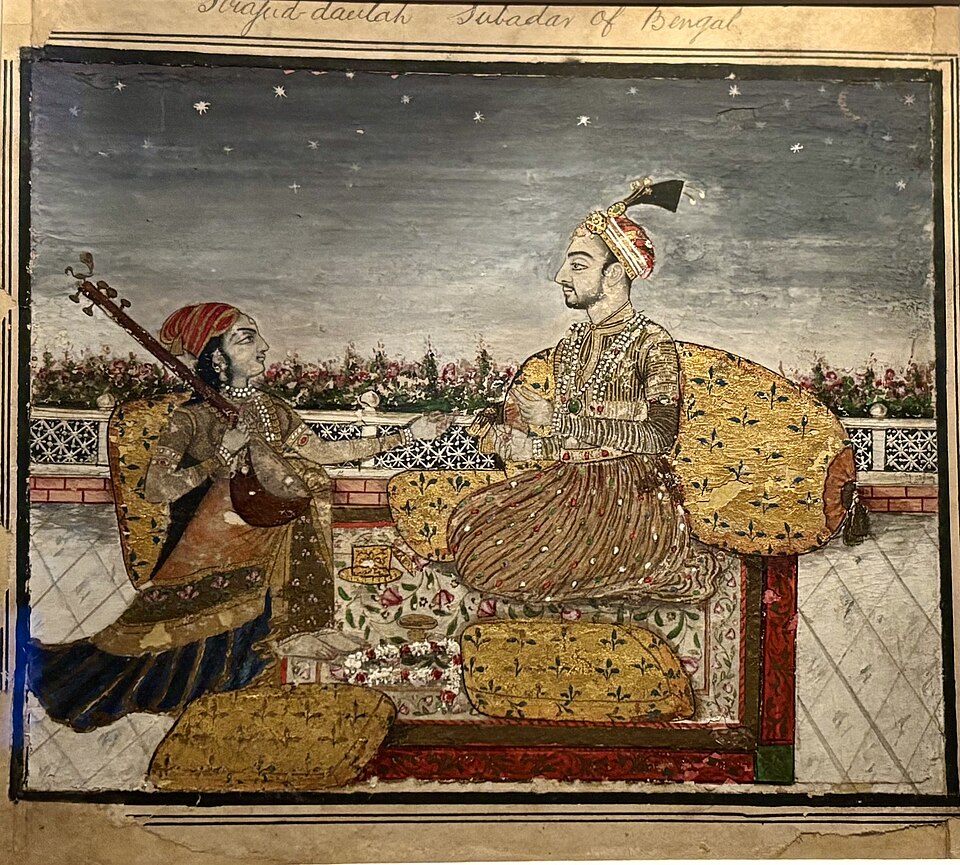
A fear of the French. Company officials also suspected the Nawab of planning an alliance with the French, their great rivals. For the Company, a Nawab friendly to the French was a danger to its whole position in India.
What the farman really allowed. The farman of 1717 gave duty-free status only to the Company's own imports and exports. It never covered the private trade of Company servants, who misused the dastak, the Company's trade permit, for their own business. The Company had also sheltered Krishna Das, son of Raj Ballabh, who had fled with great treasure against the Nawab's will.
From quarrel to war. Things came to a head when Siraj-ud-Daula attacked Calcutta. This led to open conflict between the Nawab and the Company. Notice that the Nawab was defending his rights as a ruler, while the Company was defending privileges it had stretched far beyond what it had been given.
Plassey, 23 June 1757: a battle won before it was fought
The plot. The Company knew that a straight fight with the Nawab's large army was risky. So it plotted with the Nawab's own officers. Among them were Rai Durlabh, Mir Jafar (the Nawab's commander-in-chief) and the great banker Jagat Seth.
Why would the Nawab's own men betray him? Each had his own reason. Some feared the young Nawab, some hoped for higher positions, and the bankers wanted stable conditions for their money. The Company offered each of them something they wanted.
The battle. The two sides met at Plassey on 23 June 1757. Because key commanders had already been won over, much of the Nawab's army did not fight properly. The battle was won through this conspiracy, not through superior military power.
A Nawab made by the Company. After the victory, Clive made Mir Jafar the new Nawab as a reward for his support. Mir Jafar paid the Company the huge sum of Rs 1,77,00,000 and also gave large bribes to Company officers.
After the battle. Before Plassey, Robert Clive had brought a strong force from Madras to Calcutta. After the battle Siraj-ud-Daula fled, but he was caught and murdered on the orders of Miran, Mir Jafar's son. The victory also let the English push aside the French and Dutch companies and win a monopoly over Bengal's trade.
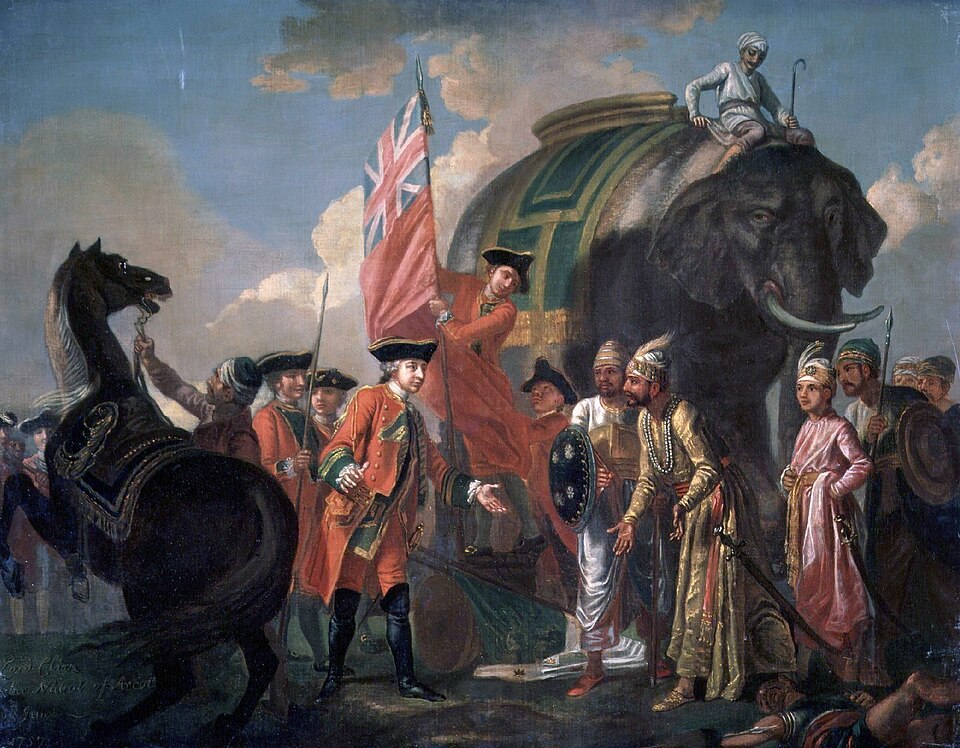
Why is Plassey a turning point? Historians date formal British rule in India from 1757, after Plassey. For the first time a foreign trading company had chosen who would rule a rich Indian province. From now on, the Nawab of Bengal needed the Company more than the Company needed him.
A hidden irony. The Company used force because it could not compete with Asian merchants in business. Yet this use of force led to the decline of the very trade it wanted to control. Bengal's trade suffered, because a province ruled by fear and plunder is not a good place to do business.
Mir Jafar to Mir Qasim: a Nawab who tried to be a real ruler
Trouble from day one. Mir Jafar's problems began at once. Zamindars such as Raja Ram Singh of Midnapore and Hizir Ali Khan of Purnea refused to accept him, his unpaid soldiers were close to revolt, and the Mughal prince who later became Shah Alam tried to seize Bengal. He also distrusted Rai Durlabh, but could not touch him because Rai Durlabh was under Clive's protection.
Mir Jafar falls. A Nawab who has paid a fortune for his throne soon runs short of money. Mir Jafar could not meet the British demands, and the Company also suspected him of dealing with the Dutch company. So in 1760 the British deposed him.
A secret deal. When Mir Jafar's son Miran died, a fight over the succession began between Miran's son and Mir Qasim, Mir Jafar's son-in-law. The new Governor at Calcutta, Vansittart, backed Mir Qasim, who secretly agreed to pay the Company for its support. A mutiny of Mir Jafar's unpaid army then made it easy to push him off the throne.
Mir Qasim's price. The British then placed Mir Qasim on the throne. In return, he assigned Burdwan, Midnapore and Chittagong to the Company, so that their revenue could pay for the Company's army. His money also helped the Company's Calcutta Council fight the French in the south in 1760-61.
A better ruler. Mir Qasim was not a simple puppet. He built a better administration and wanted to run Bengal properly. But that brought him straight into conflict with the Company over the old problem of duty-free private trade.
Two sore points. Ram Narayan, the deputy governor of Bihar, refused to submit his accounts to the Nawab, and the English at Patna openly backed him. Meanwhile Company servants misused the dastak for private trade, paid no duty, ignored the Nawab's officials and forced local people to sell their goods cheap.
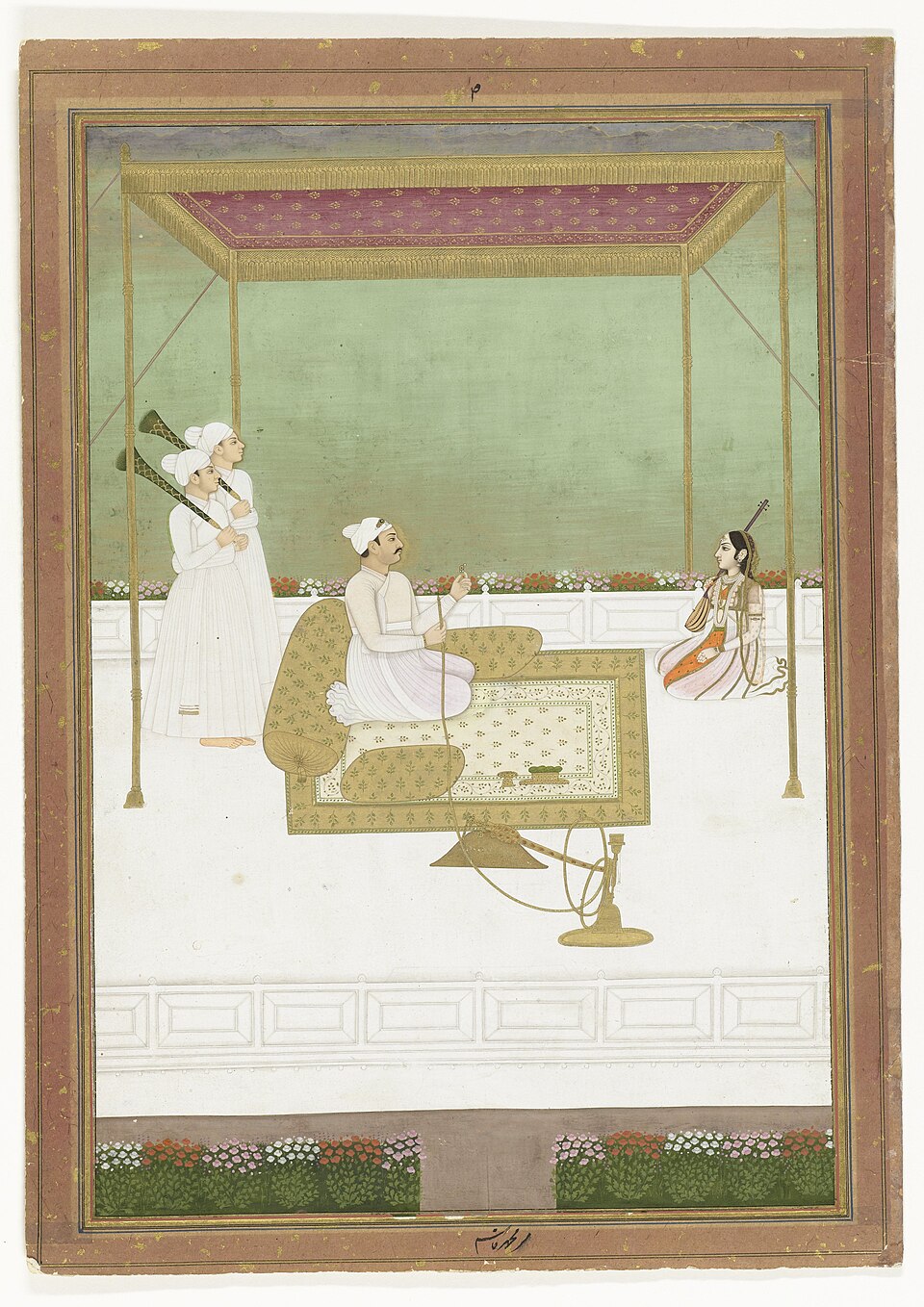
A clever and fair solution. Mir Qasim first proposed equal trade duties for British and Indian traders. The Calcutta Council rejected this. So he did something bold: he removed duties for Indians and British alike for two years.
Why did this anger the Company so much? If nobody paid duties, Company servants no longer had any special advantage over Indian merchants. Mir Qasim's step ended the British private traders' privileged position. In effect, he took away the unfair profit on which many Company officials had grown rich.
Steps that showed independence. Mir Qasim also reformed his army and moved his capital from Murshidabad to Monghyr, further away from Calcutta. The Company treated these as unforgivable offences, because they showed a Nawab trying to become strong and independent.
War again. In June 1763 a British army under Major Adams defeated Mir Qasim. He was a good civil administrator but not a military leader, and his army could not stand up to the Company's forces.
Buxar, 22 October 1764, and the Treaty of Allahabad
Mir Qasim looks for allies. After his defeat, Mir Qasim fled to Patna and asked for help from two powerful men. One was the Mughal emperor Shah Alam II. The other was Shuja-ud-Daula, the Nawab of Awadh and Wazir (chief minister) of the Mughal empire.
A wider war. Fighting came to a head when the Company's factory chief at Patna tried to seize the city. Mir Qasim withdrew to Awadh, and his two allies decided to defend the eastern provinces of the empire. The allied army advanced towards Patna.
The battle. The two sides met at Buxar on 22 October 1764. This time there was no secret deal.
It was a decisive British victory in open battle against the combined forces of a Nawab, the Mughal Wazir and the emperor himself. The British then overran Awadh, Shuja-ud-Daula fled, and Shah Alam II came to terms with the British.
Why is Buxar even bigger than Plassey? At Plassey the Company beat one Nawab with the help of traitors. At Buxar it beat the three most important powers of north India in a straight fight. After Buxar, no Indian power in the region could easily challenge the Company.
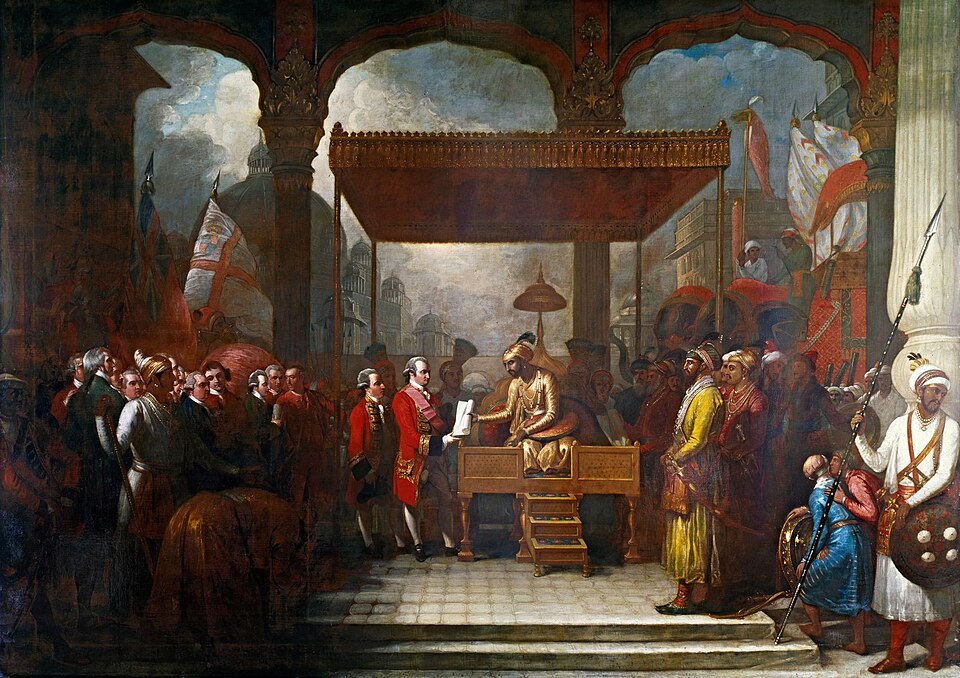
The Treaty of Allahabad: what each side got. Clive then made a settlement known as the Treaty of Allahabad:
- Shuja-ud-Daula got Awadh back. In return he paid Rs 50 lakh for the cost of the war and entered a defensive alliance with the Company.
- Awadh became a buffer state, a friendly kingdom that stood between the Company's Bengal and any enemy further west.
- Shah Alam II, who could not return to Delhi because it was held by the Rohilla chief Najib-ud-daulah, was given Kara and Allahabad.
- In return, Shah Alam II granted the Company the Diwani of Bengal, Bihar and Orissa, for an annual payment of Rs 26 lakh.
Between Buxar and Allahabad. After Mir Qasim's fall, Mir Jafar was put back on the throne. He handed over Midnapore, Burdwan and Chittagong for the Company's army and allowed duty-free trade in Bengal except a 2 per cent duty on salt.
When he died soon after, his minor son Najm-ud-Daula became Nawab, but real power lay with a naib-subahdar whom the English could appoint or dismiss. Clive returned as Governor in 1765 and signed the agreement with Shah Alam in August 1765.
Why did Clive give Awadh back? Holding Awadh would have stretched the Company's army and brought it into conflict with more powers. A friendly, weakened Awadh that paid money and guarded the frontier was cheaper and safer. This choice shows that the Company was thinking carefully about the cost of empire.
Dual government: power without responsibility
How a Mughal province was run. To understand what the Diwani meant, you first need to know how a Mughal province was governed. It had two heads:
- Nizamat: law and order and criminal justice, headed by the nazim.
- Diwani: revenue collection and civil justice, headed by the diwan.
What the Company now held. After the Treaty of Allahabad, the Company became the Diwan of Bengal. So it now had the legal right to collect the province's revenue. Early Company rule in Bengal kept to this Mughal system on paper.
Why didn't Clive rule Bengal directly? Clive chose not to run Bengal directly. Ruling meant paying for police, courts and officials, and taking the blame when things went wrong.
The Company did not want direct responsibility for administration. It was interested in revenue.
The arrangement. So the Company appointed Muhammad Raza Khan to two posts at once: Naib Nazim (deputy for the Nawab's law-and-order side) and Naib Diwan (deputy for the Company's revenue side). The Nawab was formally responsible for justice, but he worked through Raza Khan, who was under Company control. Since the Company nominated the deputy, it controlled the police and courts as well.
"Dual or double government." This arrangement is called dual government. In it, the British had power and resources without responsibility. The Nawab had responsibility without power, and he took the blame for bad governance.
Why is this so harmful? Think about it from an ordinary peasant's side. The one who took the money did not have to care for the people, and the one who had to care for the people had no money or power. Nobody was truly answerable for Bengal's welfare.
Revenue becomes everything. Revenue became the Company's main income, while it paid only a small annual sum to the Mughal emperor. This is the moment when the Company's interest changed from buying Bengal's goods to collecting Bengal's taxes. The next chapters show how this hunger for revenue shaped land settlements across India.
What did Bengal's conquest lead to?
Why did Bengal fall? The historians' debate. Many historians call the events of 1757-65 a "political revolution".
Explaining it by the arrogance of Siraj, the treachery of Mir Jafar or the limits of Mir Qasim alone is not tenable. The deeper causes were the trade interests of the Company and its servants, the Company's drive for a monopoly, and the factions at the Murshidabad court, who hoped to gain by replacing the Nawab with their own man.
1. A new source of money. The Diwani gave the Company a way to tap the wealth of Bengal's rulers, zamindars and merchants. It used this money to buy goods for export to Britain. So the old problem of paying for Indian goods with gold from Europe was solved: Bengal's own taxes now paid for Bengal's exports.
2. Wealth flowing to Britain. Large amounts of wealth, including the illegal income of Company officials, flowed to Britain. Officials who returned home rich were mockingly called "nabobs", a twist on the word "nawab".
3. Fuel for Britain's industry. Much of this wealth helped fuel the Industrial Revolution in Britain. In other words, money taken from Bengal helped build the factories that would later flood India with machine-made goods.
4. A base for further conquest. Bengal's resources had already paid for the war against the French in the south. From now on, Bengal's revenue would pay for the Company's armies across India. A rich province had become the engine of an empire.
5. A decline in the trade itself. As the earlier part of this chapter showed, the Company's use of force led to the decline of the very trade it wanted to control. Bengal had been a rich trading province, but plunder and misrule hurt its merchants and producers.
Mains practice: Bengal 1757-1765
These are practice questions written by us, not past papers. Past questions from your exam appear in the PYQ panel. The main debate here is simple: was Plassey or Buxar the real foundation of British power?
Plassey was the political turning point, because it let the Company make and unmake Nawabs. Buxar was the military and legal turning point, because it defeated the Mughal emperor's allies and brought the Diwani.
| Angle | Question | Key points to cover |
|---|---|---|
| Comparison | "Plassey was a transaction, Buxar was a battle." Compare their significance. | Show that Plassey was won by conspiracy and gave a puppet Nawab. Then show that Buxar beat three powers in open battle and led to the Diwani. |
| Why (causes) | Why did the Company come into conflict with the Nawabs of Bengal? | Explain the farman and its misuse in private trade, the fortification of Calcutta and the fear of the French. Then add Mir Qasim's equal-duty step. |
| System | What was dual government in Bengal? Why was it harmful? | Explain nizamat and diwani and Raza Khan's double role. Then show power without responsibility and the blame on the Nawab. |
| Person | "Mir Qasim was the last real Nawab of Bengal." Comment. | Give his better administration, the equal-duty step, army reform and the move to Monghyr. Then explain why the Company could not accept an independent Nawab. |
| Implication | How did the conquest of Bengal help Britain's economy? | Explain how the Diwani paid for exports, how the nabobs carried wealth home and how it fed the Industrial Revolution. Then add Bengal's money for later wars. |
| Debate | "The fall of Bengal was caused by the weakness of its Nawabs." Critically examine. | Grant the Nawabs' limits, then show the Company's trade interests, the misuse of the 1717 farman and the court factions. End with why Bengal's fall opened India to conquest. |
How to use this table: each answer should explain the what, then the why, and end with what it led to.
Quick revision
- Siraj-ud-Daula became Nawab of Bengal in 1756, after Ali Vardi Khan.
- The Company misused Farrukhsiyar's farman (duty-free trade for Rs 3,000 a year), fortified Calcutta without permission and was suspected of fearing a French alliance.
- The Battle of Plassey (23 June 1757) was won by conspiracy with Rai Durlabh, Mir Jafar and Jagat Seth, and Clive made Mir Jafar Nawab.
- Mir Jafar was deposed in 1760, and Mir Qasim gave the Company Burdwan, Midnapore and Chittagong.
- Mir Qasim removed duties for everyone, reformed his army and moved his capital to Monghyr, and Major Adams defeated him in June 1763.
- At Buxar (22 October 1764) the Company defeated Mir Qasim, Shuja-ud-Daula and Shah Alam II.
- By the Treaty of Allahabad, Awadh became a buffer state after paying Rs 50 lakh, and Shah Alam II granted the Diwani of Bengal, Bihar and Orissa for Rs 26 lakh a year.
- Under dual government, Muhammad Raza Khan was both Naib Nazim and Naib Diwan, and the Company had power without responsibility.
- Bengal's wealth went to Britain through the nabobs and helped fuel the Industrial Revolution.
- The English set up a factory at Balasore (1633) and got the zamindari of Sutanati, Calcutta and Govindpur in the 1690s.
- Siraj was opposed by Ghasiti Begum, Shaukat Jang and a court group including Jagat Seth and Umichand, and was murdered on Miran's orders after Plassey.
- After Mir Qasim, Mir Jafar returned, then Najm-ud-Daula ruled through a naib-subahdar chosen by the English.