

RPSC RAS / RTS · Module 14 · Mains depth · 13 min
Vesara at its finest: the Later Chalukyas and the Hoysalas
What RPSC RAS / RTS asks from this chapter
Syllabus lines this chapter covers:
- General Knowledge and General Science · Art, architecture and scientific development in ancient India; Indian knowledge and value system: Varna Ashram, Purushartha, Sanskara, philosophy and education.
- General Knowledge and General Science · Sultanate period and the Vijayanagara empire; Mughal administration and policies; Marathas; art, architecture, literature, painting and music in the medieval period; Bhakti and Sufi movements.
- General Studies I · Indian heritage: fine art, performing art, architecture and literature from the Indus civilisation to the British era; religious movements and philosophy in ancient and medieval India.
RPSC RAS / RTS questions from this module are being sorted into our bank.
Read at full depth: basics, the standard layer and the Mains analysis.
Start from zero: jewellery in stone
Look closely at a Hoysala temple wall and it seems less like stone and more like jewellery. Every inch is carved: dancers, gods, elephants, horsemen, birds and scrolls, in band after band. How did sculptors carve stone so finely?
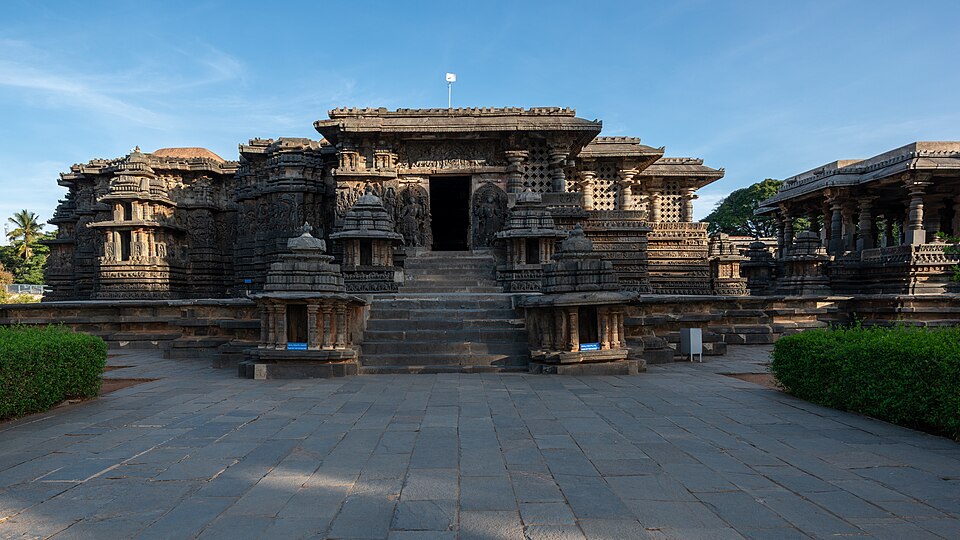
The answer is the stone itself. From the 11th century, builders in Karnataka switched from sandstone to a dark, fine-grained stone called chloritic schist. It is soft when freshly quarried, so it can be carved like wood, and it hardens when exposed to air.
Two dynasties used this stone brilliantly. The Later Chalukyas of Kalyani came first, and the Hoysalas of southern Karnataka followed in the 12th and 13th centuries. Their temples are the finest examples of what exam books call the Vesara style.
This chapter also closes Module 2 with a side-by-side comparison of Nagara, Dravida and Vesara. Use it as your one-page revision of temple styles.
The Later Chalukyas of Kalyani
A new stone. The Later Chalukyas, ruling from Kalyani, built many temples in northern Karnataka. They gave up sandstone for fine-grained, dark chloritic schist. This change of material is the key to everything that followed.
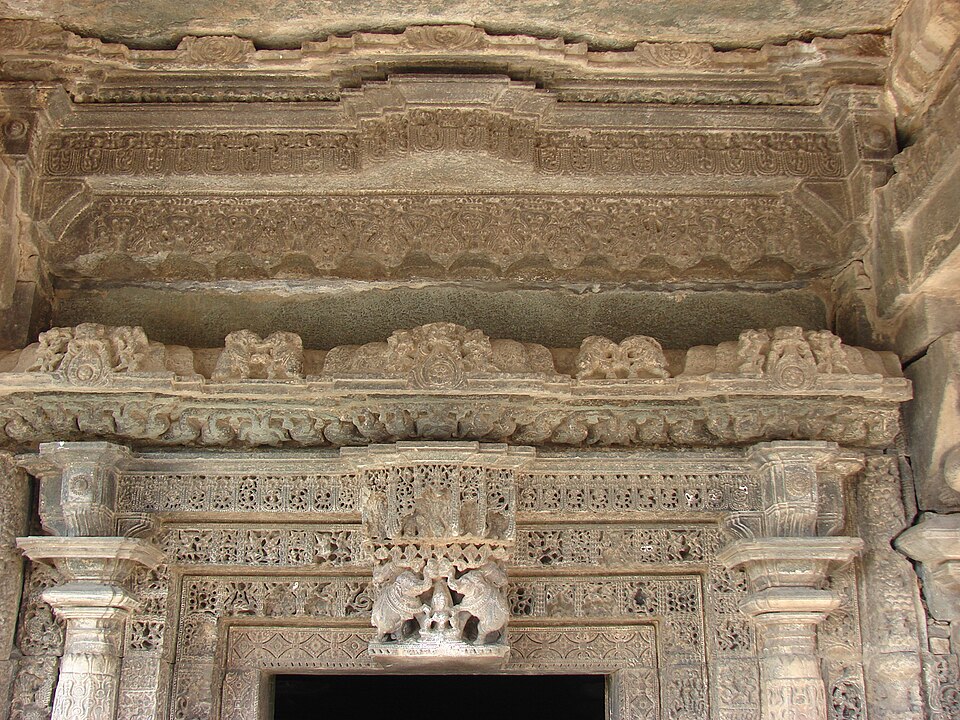
A new plan. Their temples have multi-storeyed vimanas and an oblong layout. There is no inner ambulatory; instead, a wide adhishthana (base) acts as an outer path for circling the shrine. The main entrance is often on the sides of the hall, not only at the front.
Where to see them. Fine examples include the Jain temple and the Kashivishveshvara at Lakkundi, the Kalleshvara at Kukkanur and the Mallikarjuna at Kuruvatti. Temples at Gadag belong to the same tradition. Their doorways and pillars show carving of great delicacy.
A Deccan idiom. These temples fuse northern, southern and local elements into a style of their own. This is the bridge between the early Chalukya experiments and the Hoysala climax.
Why it matters. Questions on Vesara often name Lakkundi or Gadag. Remember the Later Chalukyas as the link between Pattadakal and Belur.
The Hoysala temple: star, platform and bands
The star plan. The most striking Hoysala feature is the stellate, or star-shaped, sanctum. Instead of a plain square, the walls step in and out many times, often forming a 16-pointed star. When sunlight falls on these walls, the many angles create a rich play of light and shadow.
The platform. Hoysala temples stand on a raised platform called the jagati, which follows the star shape of the temple. The jagati is wide enough for devotees to walk around the temple, so it serves as the circumambulatory path. It also lifts the temple up like an object on display.
The bands. The base, or adhishthana, is covered with horizontal friezes, band above band. At Halebidu there are eight tiers.
Why so small? Schist allowed astonishing detail, but it also kept Hoysala temples small compared to Thanjavur. Builders chose richness over height. A typical temple has a sanctum, an antarala, and a pillared hall called the navaranga.
Why it matters. "Star-shaped plan on a jagati" is the quickest way to identify a Hoysala temple in a picture question.
Belur: a victory temple
Why it was built. The Chennakeshava temple at Belur was consecrated in 1117 by the Hoysala king Vishnuvardhana. It commemorated his capture of Talakadu. Like the Virupaksha at Pattadakal, it is a victory temple.
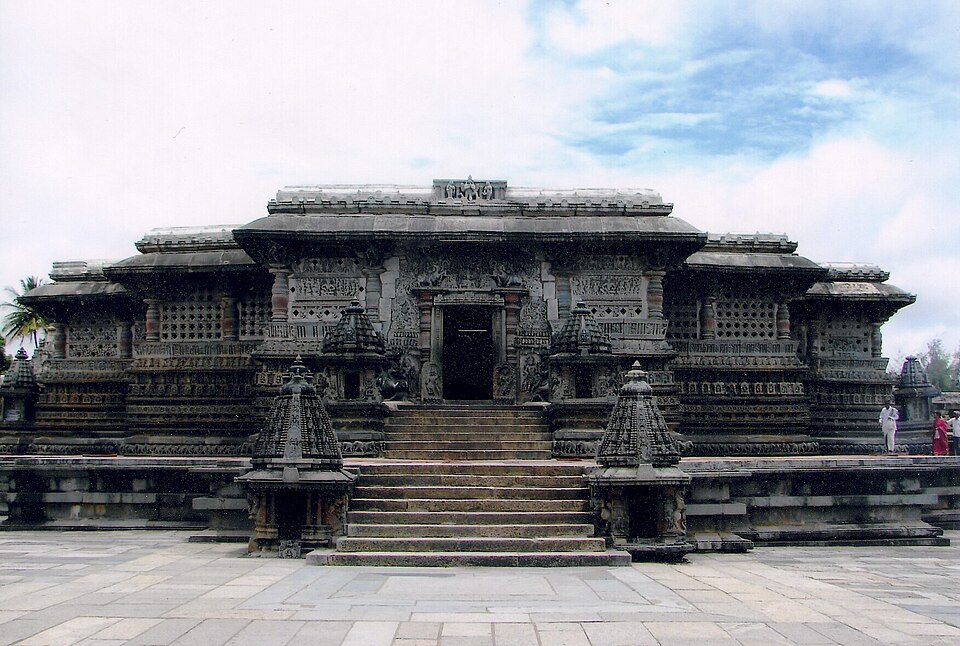
Still alive. Belur is dedicated to Vishnu as Chennakeshava, "the handsome Keshava", and it is still in worship today. Its original tower over the sanctum has been lost, but the walls, hall and gateways survive.
The pillars. Inside, the hall is held up by pillars that look turned on a lathe, with polished rings and bands. Early Pallava pillars were plain oblong shafts; Hoysala pillars are almost like machined metal.
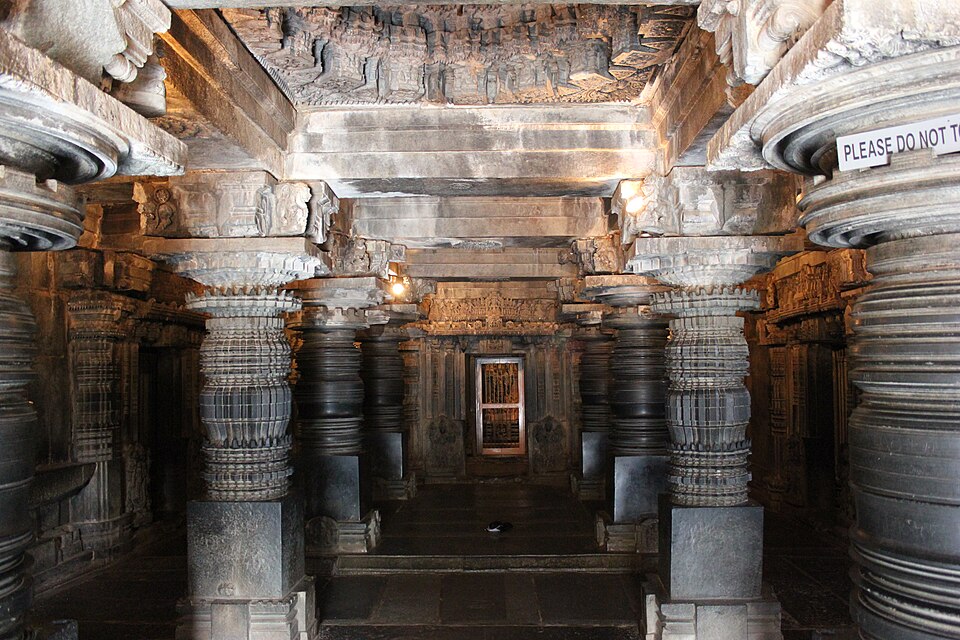
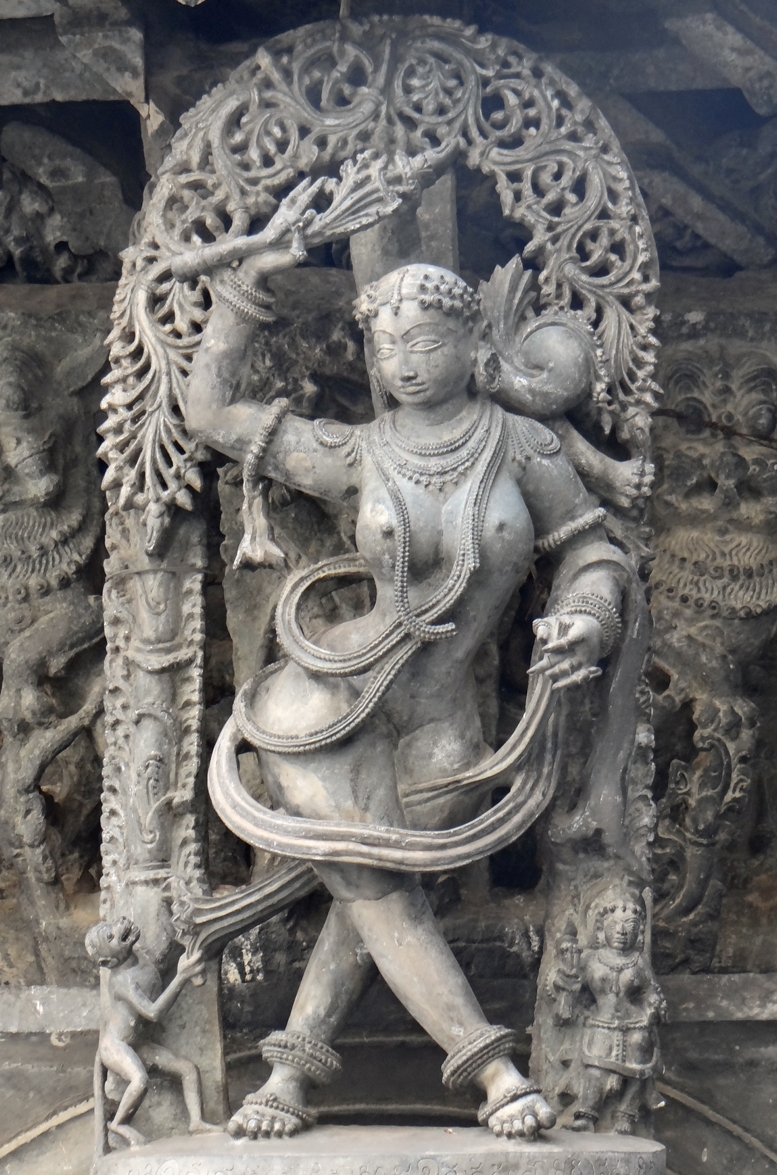
Carving everywhere. Walls, doorways and the hall are covered with figures of gods, dancers and animals. Soft schist made this density of carving possible. It shows the Hoysala love of human grace and ornament.
Why it matters. Belur is the best example for "Hoysala temple" in any answer. Remember: Vishnuvardhana, 1117, Talakadu, still in worship, lathe-turned pillars.
Halebidu and Somanathapura
Halebidu. The Hoysaleshvara temple at Halebidu was consecrated in 1121. It honours King Vishnuvardhana and Queen Shantaladevi, and was sponsored by an officer named Ketamalla. As its name shows, it is dedicated to Shiva.
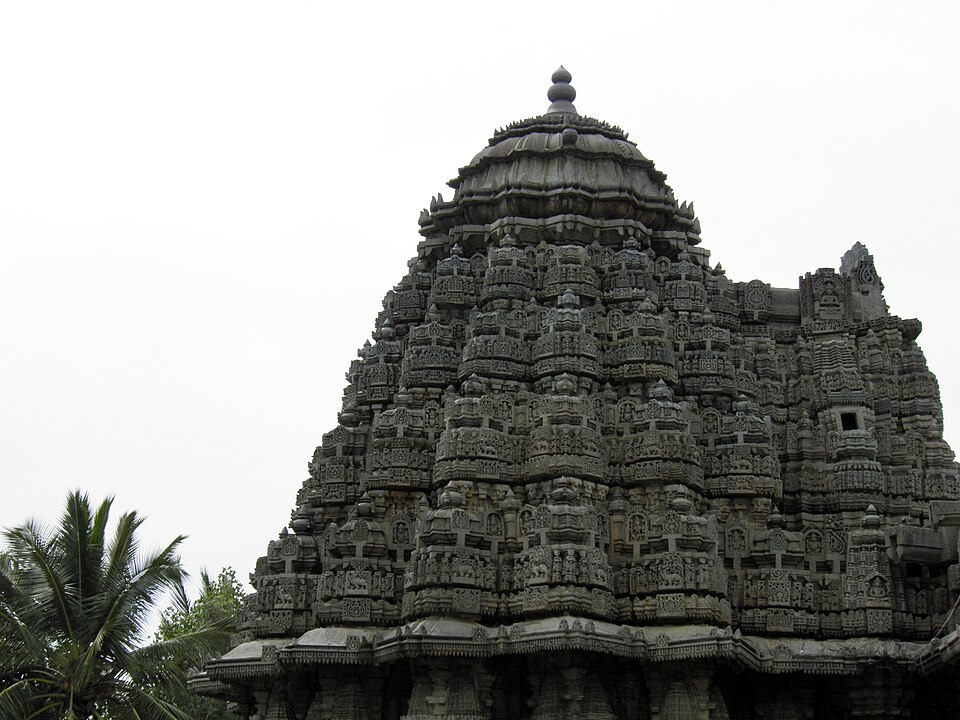
The great frieze. Halebidu is famous for its eight-tiered frieze running round the base. The bands carry an enormous number of carvings, from animals to epic scenes.
Somanathapura. The Keshava temple at Somanathapura was consecrated in 1268. It was funded by King Narasimha III and built by his general Somanatha Dandanayaka. It is the last major Hoysala temple.
A complete example. Somanathapura has a 16-pointed stellate sanctum on its jagati, and it has nearly 200 figures at eye level. Because its superstructure was not demolished like those of Belur and Halebidu, it is the best place to see what a complete Hoysala temple looked like.
Why it matters. The three temples give you a timeline: Belur 1117, Halebidu 1121, Somanathapura 1268. Prelims often matches each temple with its king or deity.
Signed by the sculptors: legacy and losses
Artists with names. Most Indian temple sculptors are anonymous. The Hoysala sculptors are an exception: they signed their work. There are about 21 signature inscriptions at Belur, about 20 at Halebidu and at least 10 at Somanathapura, which UNESCO calls unusual for the subcontinent.
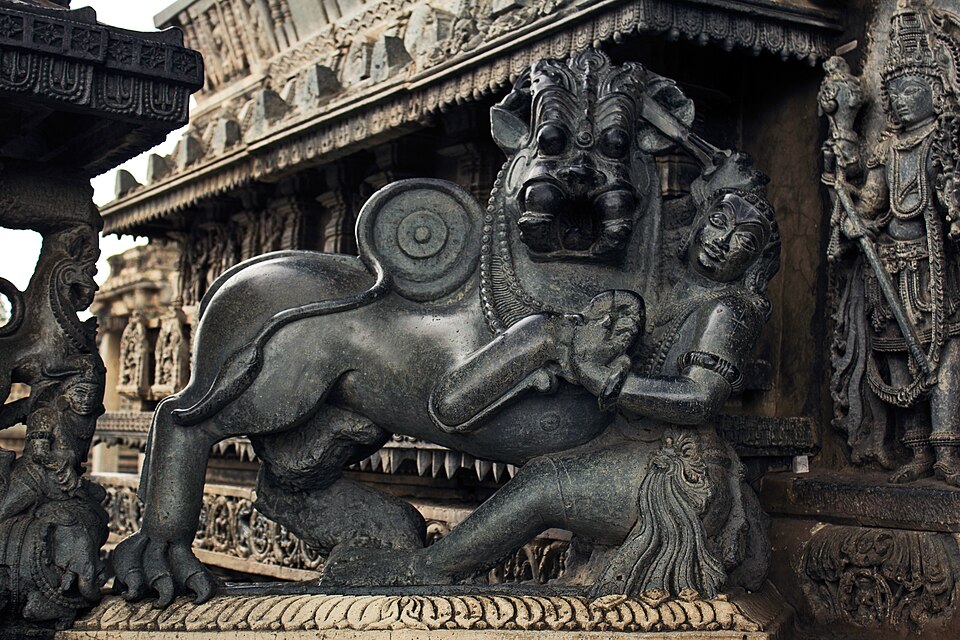
Why signatures matter. Signatures tell us that sculptors were respected professionals with their own reputations. They let historians trace individual artists and workshops across sites. This is rare evidence of the people behind the art.
A royal legend. Hoysala temples carry the Sala legend, the founding story of the dynasty, in which a hero named Sala fights a tiger. It shows how temples also told the story of their kings.
Many built, few left. More than 1,500 Hoysala temples were built, and only about 140 survive. The towers of Belur and Halebidu were demolished, and Halebidu lost its enclosure walls. Worship has stopped at Halebidu and Somanathapura, though it continues at Belur.
World Heritage. The Sacred Ensembles of the Hoysalas, Belur, Halebidu and Somanathapura, are on the World Heritage List. They join Pattadakal and Hampi as Karnataka's great temple sites.
Nagara, Dravida, Vesara: the full comparison
You have now met all three major styles across eleven chapters. The table below puts them side by side, so you can revise Module 2 in one look. Learn it row by row, then test yourself by covering one column.
| Feature | Nagara | Dravida | Vesara |
|---|---|---|---|
| Region | North and central India, Odisha, Gujarat-Rajasthan | Tamil Nadu and the far south | Deccan, especially Karnataka |
| Tower | Curvilinear shikhara | Stepped pyramidal vimana in storeys | A blend of both |
| Crown | Amalaka and kalasha | Dome-like shikhara and stupi | Varies; often stupi or kalasha |
| Plan | Square, with rathas (projections) | Square, inside walled courtyards | Often stellate (star-shaped) |
| Gateways | Rarely dominant | Gopurams, later taller than the vimana | Not a defining feature |
| Examples | Khajuraho, Lingaraja, Konark, Modhera | Shore Temple, Thanjavur, Madurai, Srirangam | Pattadakal (mixed), Lakkundi, Belur, Halebidu, Somanathapura |
One word of caution. These are families, not rigid boxes. Pattadakal has temples of two styles on one site, and Bengal, Kerala and Kashmir developed their own roofs, as you saw in the Himalaya, east and Kerala chapter. Use the table as a guide, and mention exceptions in Mains.
Mains lens: debates and practice
Debate 1: material shapes style. Hoysala art shows that stone choice can transform a style. Granite gave the Cholas height and strength; schist gave the Hoysalas lace-like detail. Good answers link material, technique and form.
Debate 2: artists or patrons? Most histories celebrate kings. The Hoysala signatures remind us that artisans were creators with names and reputations. Mains answers on art can gain depth by mentioning them.
Debate 3: are style labels useful? Nagara, Dravida and Vesara help us organise thousands of temples. But regional variations show that labels simplify a much richer reality.
These are practice questions written by us, not past papers. Past questions from your exam appear in the PYQ panel.
| Angle | Question | Key points to cover |
|---|---|---|
| Style | Bring out the distinctive features of Hoysala temple architecture. | Schist, stellate plan, jagati, friezes, lathe-turned pillars, signatures, Belur-Halebidu-Somanathapura. |
| Comparison | Compare the Nagara, Dravida and Vesara styles of temple architecture. | Tower, crown, plan, gateways, regions, examples, exceptions. |
| Material | How did building materials influence the evolution of south Indian temple styles? | Pallava granite and sandstone, Chola granite, Chalukya sandstone, Hoysala schist. |
| Heritage | Why are so few Hoysala temples intact today? Suggest conservation priorities. | 1,500 built, about 140 survive, lost towers and walls, ceased worship, World Heritage protection. |
Answer plan for the comparison question. Open with one line: Indian temples are usually grouped into three styles by tower form and region. In the body, use a short table or three paragraphs on tower, plan and gateway, with two examples each. Conclude that these are flexible families, with the Deccan as a meeting ground and regions such as Kerala and Bengal as exceptions.
Quick revision
- Later Chalukyas (Kalyani): chloritic schist; multi-storeyed vimanas; no inner ambulatory; Lakkundi, Kukkanur, Kuruvatti, Gadag.
- Schist: soft when quarried, hardens in air; fine detail but small temples.
- Hoysala traits: stellate (often 16-point) sanctum, star-shaped jagati, multi-tiered friezes, lathe-turned pillars, navaranga hall.
- Belur Chennakeshava (Vishnu): Vishnuvardhana, 1117, capture of Talakadu, still in worship.
- Halebidu Hoysaleshvara (Shiva): 1121, Vishnuvardhana and Shantaladevi, Ketamalla, eight-tiered frieze.
- Somanathapura Keshava (Vishnu): 1268, Narasimha III, Somanatha Dandanayaka, last major Hoysala temple, about 200 eye-level figures.
- Signatures: about 21 (Belur), 20 (Halebidu), 10+ (Somanathapura). 1,500 built, about 140 survive.
- Nagara = curved shikhara + amalaka; Dravida = stepped vimana + stupi + gopuram; Vesara = Deccan blend.