

RPSC RAS / RTS · Module 25 · Mains depth · 16 min
El Niño, La Niña, the Indian Ocean Dipole and coral reefs
What RPSC RAS / RTS asks from this chapter
Syllabus lines this chapter covers:
- General Knowledge and General Science · World geography: mountains, plateaus, plains and deserts; major rivers and lakes; natural vegetation; agriculture and crops; industrial regions; transport; desertification, deforestation, climate change and ozone depletion.
- General Studies II · World: interior of the earth and geological time scale; mountains, plateaus, plains and deserts; earthquakes and volcanoes; insolation, atmospheric circulation, humidity and precipitation; environmental issues.
RPSC RAS / RTS questions from this module are being sorted into our bank.
Read at full depth: basics, the standard layer and the Mains analysis.
Start from zero: when the ocean changes the weather
Every year, millions of Indian farmers watch the sky, hoping for a good monsoon. Surprisingly, one of the strongest clues to whether the rains will be good comes from the Pacific Ocean, thousands of kilometres away. The ocean and the air above it behave like a coupled machine: warm water heats the air and drives winds, and winds in turn move the warm water.
When this machine shifts out of its usual pattern, rainfall and temperature change across much of the world. The best-known shifts are El Niño and La Niña in the Pacific, and the Indian Ocean Dipole closer to home.
The same warm tropical seas host coral reefs, among the richest ecosystems on Earth. Reefs are also among the first to suffer when the oceans become too warm, which is why they belong in this chapter.
Why it matters. Monsoon forecasts, drought planning, food prices and even global temperature records depend on these ocean patterns. Coral reefs protect coasts, feed millions and are an early warning of ocean warming.
El Niño and the Southern Oscillation
First picture a normal year in the tropical Pacific. Steady trade winds blow from east to west and push warm surface water towards Indonesia and Australia, where a deep "warm pool" builds up. Warm, moist air rises there and gives heavy rain, while off Peru the departing surface water is replaced by cold, nutrient-rich water upwelling from below, supporting one of the world's richest fisheries.
Every few years, the trade winds weaken or even reverse. The warm water then sloshes back eastward across the Pacific, and the central and eastern Pacific become unusually warm. This is El Niño. Upwelling off Peru weakens, fish move away or die, and the heavy rain shifts east with the warm water.
The name comes from Peruvian fishermen, who noticed warm water arriving around Christmas and called it El Niño, "the boy child" in Spanish, after the Christ child. Today the term means the large-scale warming that recurs irregularly, roughly every two to seven years, and usually lasts for about a year.
El Niño changes weather far beyond the Pacific. Indonesia, Australia and India often get weak rains and droughts, while Peru and Ecuador get heavy rain and floods. Because the ocean releases extra heat into the air, El Niño years also tend to be among the warmest years globally.
The rising air over the warm pool and sinking air over the cool eastern Pacific form a huge loop of air in the atmosphere called the Walker circulation. During El Niño, this loop weakens and shifts east, which reduces rising air and rain over the Indian region.
Why it matters. El Niño affects India's rainfall, crop output, inflation and power demand. It also cuts fish catches in South America and is linked to mass coral bleaching across the tropics.
The Southern Oscillation, ENSO and La Niña
In the 1920s, Sir Gilbert Walker, then head of the India Meteorological Department, was searching for ways to forecast the monsoon after disastrous droughts. Studying weather records from around the world, he found a giant see-saw of air pressure across the tropical Pacific. When pressure was high in the east, it was low in the west, and vice versa, and he called this the Southern Oscillation.
Decades later, scientists realised that the Southern Oscillation in the air and El Niño in the ocean are two sides of the same event. Together they are called ENSO, the El Niño–Southern Oscillation. The pressure see-saw is often measured as the difference between Tahiti in the central Pacific and Darwin in northern Australia.
ENSO has three states. Besides the neutral state and El Niño, there is La Niña, "the girl child", the opposite phase. In La Niña, the trade winds blow stronger than usual, more warm water piles up in the west, and the central and eastern Pacific become unusually cool.
La Niña often brings good or excess monsoon rain to India, heavy rain and floods to Australia and Indonesia, and drought to Peru and parts of the Americas. Weather agencies track the sea temperature in the central Pacific: a sustained rise of about 0.5 °C or more above normal signals El Niño, and a similar fall signals La Niña.
Why it matters. ENSO forecasts made months ahead help India plan crops, water releases from dams, food stocks and power supply. Walker's work shows how the search for an Indian monsoon forecast led to a discovery of global importance.
The Indian Ocean Dipole and India's monsoon
The Indian Ocean has its own see-saw, the Indian Ocean Dipole (IOD), described by scientists only in 1999. It is a difference in sea-surface temperature between the western Indian Ocean, near East Africa and the Arabian Sea, and the eastern Indian Ocean, near Sumatra and Java.
In a positive IOD, the western Indian Ocean is warmer than usual and the eastern side cooler. Air rises and rain increases over the west, which tends to strengthen the Indian monsoon and bring heavy rain to East Africa, while Indonesia and Australia turn dry. In a negative IOD, the pattern reverses, and it tends to weaken monsoon rain over India.
The IOD helps explain why El Niño does not always mean drought in India. In some years, a positive IOD has offset the drying effect of El Niño, giving near-normal monsoon rain despite a strong El Niño. The opposite combination, El Niño with a negative IOD, raises the risk of severe drought.
Other ocean–air patterns also matter. The Madden–Julian Oscillation (MJO) is a pulse of clouds and rain that travels eastward along the equator every month or two, and it can trigger active spells and breaks in the monsoon and help cyclones form. How these signals together shape the monsoon is covered in why some years are wet and others dry.
Why it matters. India's monsoon forecasts now track ENSO, the IOD and the MJO together. Understanding these links helps explain good and bad years and reduces the shock of droughts and floods.
Coral reefs: cities built by tiny animals
A coral may look like a rock or a plant, but it is actually a colony of tiny animals called polyps, each only a few millimetres across. Each polyp takes calcium from sea water and builds a hard calcium carbonate skeleton around itself. Over thousands of years, countless skeletons pile up into massive reefs.
Inside the polyps live microscopic algae. Using sunlight, the algae make food that they share with the coral, and they give corals their bright colours; in return, the coral gives the algae shelter. Because the algae need sunlight, reef-building corals live in shallow, clear water.
Corals are fussy about where they live. They need warm water, roughly between 20 and 29 °C, normal sea salinity, plenty of oxygen and little silt, since muddy water blocks light and smothers polyps. That is why reefs are mostly found in tropical seas within about 30° of the equator, and rarely near the mouths of large, muddy rivers.
Reefs take three main forms. Fringing reefs grow close to the shore, barrier reefs lie farther out, separated from land by a lagoon, and atolls are ring-shaped reefs enclosing a lagoon with no central island. The Great Barrier Reef off north-east Australia is the largest reef system in the world.
Charles Darwin explained atolls in his subsidence theory (1842). A fringing reef grows around a volcanic island; as the island slowly sinks, the reef keeps growing upward and becomes a barrier reef; when the island disappears below the sea, only the ring-shaped atoll remains. Drilling on Pacific atolls later found volcanic rock deep below the coral, supporting his idea.
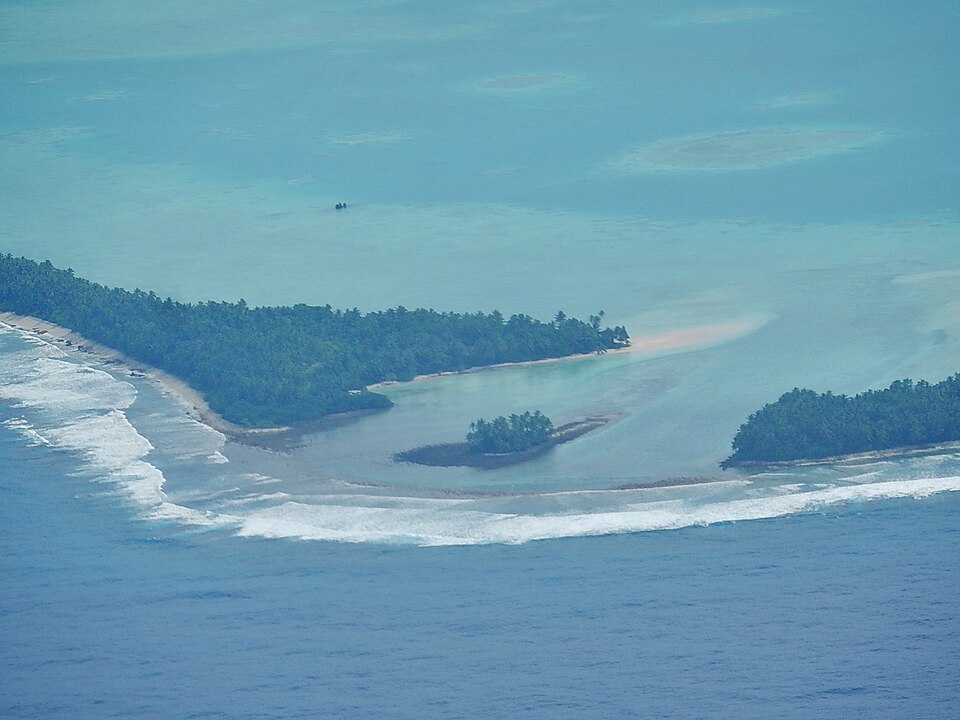
India has four main reef areas: the Gulf of Kachchh, the Gulf of Mannar, Lakshadweep, whose islands are mostly atolls, and the Andaman and Nicobar Islands. Small patches also occur at a few other places along the coasts.
Why it matters. Reefs cover only a tiny part of the sea floor but shelter a very large share of marine species. They break waves and protect coasts, feed coastal communities through fishing and draw tourists.
Coral bleaching and threats to reefs
When sea water stays unusually warm for weeks, even by 1 or 2 °C above the normal summer maximum, the partnership between coral and algae breaks down. The stressed corals expel their algae and turn ghostly white, which is called bleaching. Bleached corals are not dead yet, but without their food supply they starve, and if the heat lasts too long, they die.
Mass bleaching has struck reefs worldwide in strong El Niño years and in recent record-warm years, including reefs in Lakshadweep, the Gulf of Mannar and the Andamans. As oceans warm, such events are becoming more frequent, leaving reefs less time to recover.
Warming is not the only threat. As the ocean absorbs more carbon dioxide, it becomes more acidic, making it harder for corals to build their skeletons, a process called ocean acidification. Silt from deforestation, sewage and fertiliser run-off, destructive fishing, coral mining and careless tourism damage reefs further.
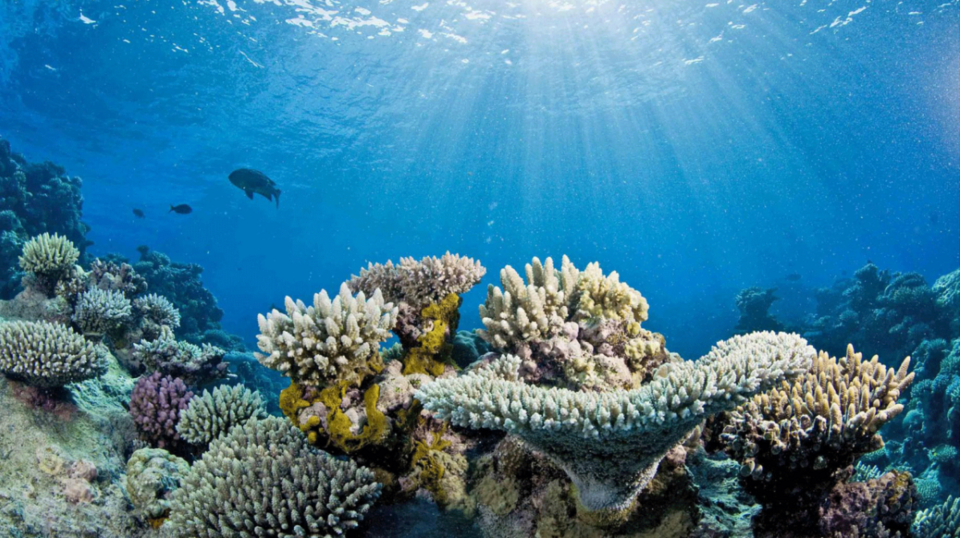
Protection includes marine protected areas such as the Gulf of Mannar Marine National Park, controls on coastal pollution and mining, and reef restoration by transplanting coral fragments. But scientists agree that reefs can survive in the long run only if global warming is limited.
Why it matters. Losing reefs would mean losing fisheries, coastal protection, tourism income and a huge store of biodiversity. Reefs show how ocean warming, ENSO and human pressure combine, which makes them a strong example in answers on climate change.
Mains lens: what, why, where and so what
This chapter supports GS Paper I (climatology and oceanography) and links to agriculture, disasters, environment and climate change in GS Paper III. Here are four angles.
1. Teleconnections. Answers can show how warming in the Pacific changes rain in India through the Walker circulation, with El Niño and La Niña years as examples.
2. Beyond ENSO. The IOD and MJO explain why El Niño does not always cause drought, which supports a balanced answer on monsoon forecasting.
3. Economy and policy. ENSO forecasts guide crop contingency plans, reservoir operations, food stocks and inflation management.
4. Reefs and climate change. Coral bleaching, acidification and local pressures show the impact of warming oceans on biodiversity and coastal livelihoods.
Mains lens: practice questions and answer plans
Now turn this understanding into written answers. The four questions below are written in the UPSC style, but they are our own practice questions, not previous-year questions. The real previous-year questions of your exam appear in the "Previous year questions" box once we have matched them with the official papers.
Q1. "What is ENSO? Explain how El Niño and La Niña influence the Indian monsoon." (250 words)
- Introduction: Describe normal conditions in the tropical Pacific.
- Body: El Niño, Southern Oscillation, Walker circulation, La Niña, effects on India.
- Conclusion: Note that El Niño does not always mean drought.
Q2. "Explain the Indian Ocean Dipole and its role in modifying the impact of El Niño on India." (150 words)
- Define positive and negative IOD.
- Explain how a positive IOD can offset El Niño.
Q3. "What conditions are required for the growth of coral reefs? Describe the types of reefs with Indian examples." (150 words)
- Cover temperature, light, salinity and silt.
- Describe fringing, barrier and atoll with India's reef areas.
Q4. "Coral reefs are the rainforests of the sea, and they are in danger. Discuss the causes of coral bleaching and measures to protect reefs." (150 words)
- Explain bleaching, acidification and local stresses.
- End with protection and the need to limit warming.
Useful keywords: trade winds, warm pool, upwelling, El Niño, La Niña, Southern Oscillation, Tahiti–Darwin, ENSO, Walker circulation, Gilbert Walker, teleconnection, Indian Ocean Dipole, MJO, polyp, symbiotic algae, fringing reef, barrier reef, atoll, Darwin's subsidence theory, bleaching, ocean acidification, marine protected area.
Quick revision
- Normal year: trade winds push warm water west; rain over Indonesia; upwelling off Peru.
- El Niño: trades weaken, central and eastern Pacific warm; every 2–7 years; name from Peruvian fishermen (Christmas).
- Effects: drought risk in India, Indonesia, Australia; floods in Peru, Ecuador; fish catch falls; warm global years.
- Southern Oscillation: pressure see-saw (Tahiti–Darwin), found by Gilbert Walker (IMD, 1920s). El Niño + SO = ENSO. Walker circulation weakens in El Niño.
- La Niña: stronger trades, cool eastern Pacific; often a good Indian monsoon.
- IOD (1999): positive (warm west) supports the monsoon and can offset El Niño; negative weakens it. MJO pulses eastward every month or two.
- Corals: polyps + algae; warm (about 20–29 °C), clear, shallow, salty, low silt.
- Reefs: fringing, barrier (Great Barrier Reef largest), atoll; Darwin's subsidence theory (1842).
- India: Gulf of Kachchh, Gulf of Mannar, Lakshadweep (atolls), Andaman and Nicobar.
- Bleaching: heat makes corals expel algae; also acidification, silt, pollution.