

RPSC RAS / RTS · Module 10 · Mains depth · 18 min
Early associations and the birth of the Congress
What RPSC RAS / RTS asks from this chapter
Syllabus lines this chapter covers:
- General Knowledge and General Science · Cultural foundations of India: Indus and Vedic age; religious ideas of the 6th century BC (Ajivakas, Buddhism, Jainism); achievements of the Maurya, Kushan, Satavahana, Gupta, Chalukya, Pallava and Chola rulers.
- General Knowledge and General Science · Sultanate period and the Vijayanagara empire; Mughal administration and policies; Marathas; art, architecture, literature, painting and music in the medieval period; Bhakti and Sufi movements.
- General Knowledge and General Science · The freedom struggle and Indian National Movement: stages and major events, revolutionary and regional movements, partition.
- General Studies I · British policies and their impact; the Indian National Movement, its stages, streams and contributors; socio-religious reform movements of the 19th and 20th century.
RPSC RAS / RTS questions from this module are being sorted into our bank.
Read at full depth: basics, the standard layer and the Mains analysis.
Start from zero: how does a feeling become an organisation?
Imagine people in many towns who all feel cheated by the same company. Each town writes its own letters of complaint, and each is ignored. Only when they form one association, meet every year and speak with one voice does the company start to listen.
That is what happened to Indian nationalism between the 1830s and 1885. As shown in the chapter on why nationalism grew, educated Indians had come to feel that they formed one nation with common grievances. But their early bodies were regional, based in Calcutta, Bombay, Madras or Poona, and they mostly sent petitions.
This chapter traces how those regional bodies grew more political after 1858, how the harsh rule of Lytton and the Ilbert Bill row pushed Indians towards all-India action, and how the Indian National Congress met for the first time in 1885. It also weighs the debate on who really founded the Congress and why.
Keep one question in mind as you read. Was the Congress a British safety valve, or the natural result of Indian efforts to organise?
Key milestones at a glance
This table lists the milestones on the road to the Congress. Each one is explained in the sections that follow.
| When | What happened | Why it matters |
|---|---|---|
| 1852 | British Indian Association of Calcutta petitions Parliament; Bombay Association active | Indians begin to use petitions and associations. |
| Late 1860s | Naoroji founds the East India Association in London | India's case is argued in Britain itself. |
| 1876–80 | Indian Association founded (1876); Lytton's unpopular measures | More openly political bodies; anger across India. |
| Late December 1883 | First National Conference at Calcutta after the Ilbert Bill row | A step towards an all-India body. |
| 28 December 1885 | First session of the Indian National Congress, Bombay (72 delegates) | Nationalism gets an all-India platform. |
| December 1886 | Second session at Calcutta under Naoroji (434 delegates) | The Congress grows and plans provincial committees. |
Notice the direction of travel in this table. It moves from regional bodies to an all-India body, and from petitions by a few to an annual national meeting. That shift is the core of this chapter.
Early associations: from petitions to a national conference
Regional bodies first. Before there was an all-India party, educated Indians formed associations in their own cities. In 1852 the British Indian Association of Calcutta petitioned the British Parliament about how India was governed. In the same year Dadabhai Naoroji was a member of the Bombay Association, and similar groups grew in other cities.
Why petitions? These early bodies believed that the British Parliament would correct injustice if it was properly informed. So they collected facts, wrote memorials and sent them to London. This method seems mild today, but it trained Indians in organisation, public argument and political work.
Taking the case to Britain. In the late 1860s Naoroji founded the East India Association in London, where he read a paper called 'England's Duties to India'. The idea was to win over British public opinion in Britain itself. It shows that early nationalists saw the struggle as one of persuasion as much as protest.
A small place in the councils. After 1858 a few Indians began to be nominated to legislative councils. In 1862 Lord Canning nominated three Indians, all princes or nobles, and between 1862 and 1892 the 45 Indians nominated were mostly princes, chiefs and zamindars. Educated Indians noticed that men like themselves were left out, and the demand for elected members grew.
The very first bodies. Even before 1852 there were associations in Bengal: the Landholders' Society (late 1830s), the Bengal British India Society (1843) and the British India Association (1851). In 1852 the Bombay Association appeared, along with the Madras Native Association. They acted through petitions and the courts and hoped to win reforms in the Company's Charter of 1853, but the Charter disappointed them.
Hope after 1858, then a sharper politics. When the Crown took over in 1858, educated Indians hoped that exploitation would end, but they soon saw that it continued. More openly political bodies now appeared, such as the Poona Sarvajanik Sabha (1870), the Indian Association (1876) and the Madras Mahajan Sabha. They held public meetings as well as sending petitions, and they prepared the ground for an all-India body.
A cheaper, broader body. The Indian Association, founded in Calcutta in 1876, charged only five rupees a year, against fifty for the British Indian Association, so the middle class could join. Surendranath Banerjea, ejected from the Indian Civil Service on doubtful grounds, was its moving spirit. Its aims were strong public opinion, Hindu-Muslim friendship and contact with the masses, and Surendranath drew his idea of a united India from Mazzini.
Lytton's measures in detail. Lytton sent a costly expedition to Afghanistan paid from Indian revenues and removed import duties on cotton textiles to help British mills. He cut the maximum age for the civil service examination from 21 to 19, and the Arms Act made Indians, but not Europeans, pay a licence fee for weapons. To escape the Vernacular Press Act, Amrita Bazar Patrika turned from Bengali into an English paper overnight.
The first all-India campaign. The Indian Association fought the civil service age cut with an all-India agitation. Surendranath toured the country in 1877-78 and became a national figure, and protest meetings in district towns drew ten to twenty thousand people. So strong was the reaction that on 12 June 1880 the paper Bengalee wrote, with irony, that Lytton deserved the nation's gratitude for stimulating its public life.
Ripon and the Ilbert Bill. Lord Ripon (from 1880) repealed the Vernacular Press Act, promoted local self-government and ended the Afghan war. The Ilbert Bill, named after the Law Member, would have let qualified Indian judges in the mofussil try Europeans for criminal offences. An angry Anglo-Indian campaign forced amendments that defeated its purpose.
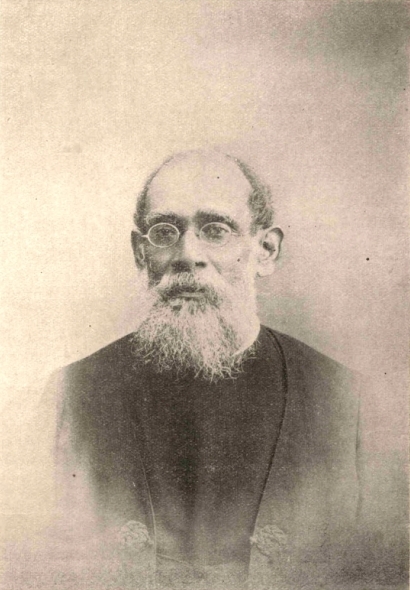
Lessons drawn. It is often said that Indians learnt political agitation from the Anglo-Indians in this row, but they had already run the civil service campaign. What the row taught them was that Anglo-Indians would never share power with them. In July 1883 a meeting of about 10,000 launched a national fund, which raised only Rs 20,000 but set the press debating a single national body.
The dress rehearsal. In reply to the Ilbert Bill row, the first National Conference met at Calcutta in late December 1883, with Surendranath Banerjea and Ananda Mohan Bose among its leading organisers, and brought together educated Indians from about forty-five places. Its programme was very close to the one the Congress later adopted. Historians call it the precursor, or 'dress rehearsal', of the Congress.
The birth of the Indian National Congress, 1885
Who founded it? The Indian National Congress was founded in 1885. Its founder was A.O. Hume, a retired British civil servant, and the Viceroy Lord Dufferin supported the idea at first. W.C. Bonnerjee became its first President.
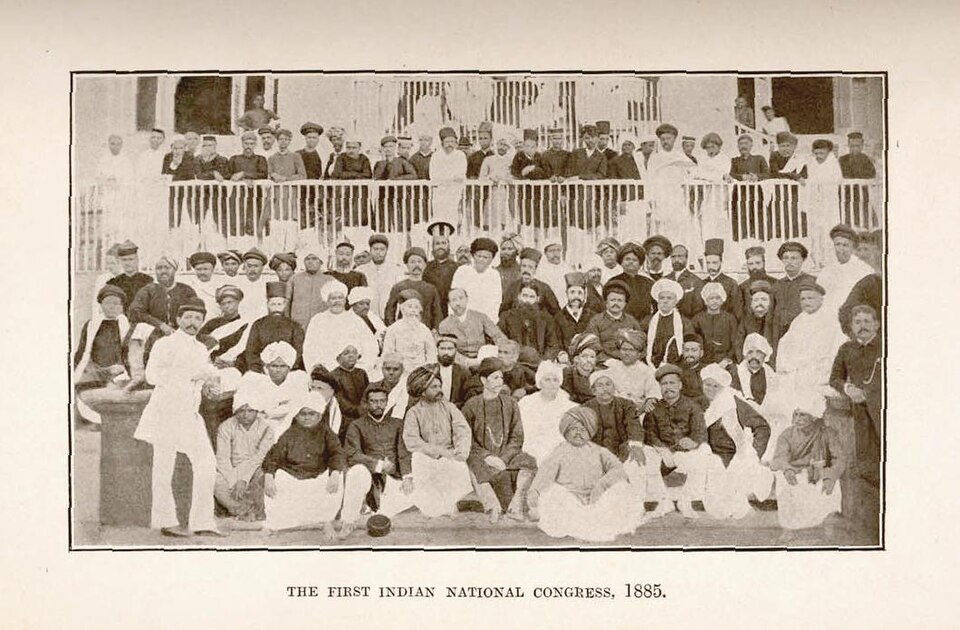
Rapid growth. The second session met at Calcutta in December 1886 under Dadabhai Naoroji, and the number of delegates jumped to 434. This session decided to set up Provincial Congress Committees across the country. In this way the Congress began to build an organisation that reached beyond a few big cities.
Why did the British attitude change? At first the government looked kindly on a body of loyal, educated Indians. But as the Congress began to criticise policy year after year, official warmth cooled, and by 1887 the British attitude had changed. Lord Dufferin later dismissed the Congressmen as a 'microscopic minority', and officials called the British the 'ma-baap' (guardians) of the masses, claims meant to justify continued rule.
From Poona to Bombay. Hume, a retired civil servant close to Ripon, spent three months in Bombay from December 1884 discussing a plan with local leaders. In March 1885 they decided that the Indian National Union, as it was first called, would meet at Poona in Christmas week, where the Poona Sarvajanik Sabha offered to host it. An outbreak of cholera in Poona moved the meeting to the Gokuldas Tejpal Sanskrit College, Bombay, on 28 December 1885, where about 100 people attended and 72 non-officials, mostly lawyers, journalists and social reformers, were recognised as members.
A president from elsewhere. W.C. Bonnerjee of Bengal, one of the first four Indian barristers, presided. His election set the healthy rule that the President should come from a province other than the host's. In his speech he listed the aims: friendship among countrymen, removing prejudices of race, creed or province, consolidating national unity, and recording the views of the educated on pressing problems.
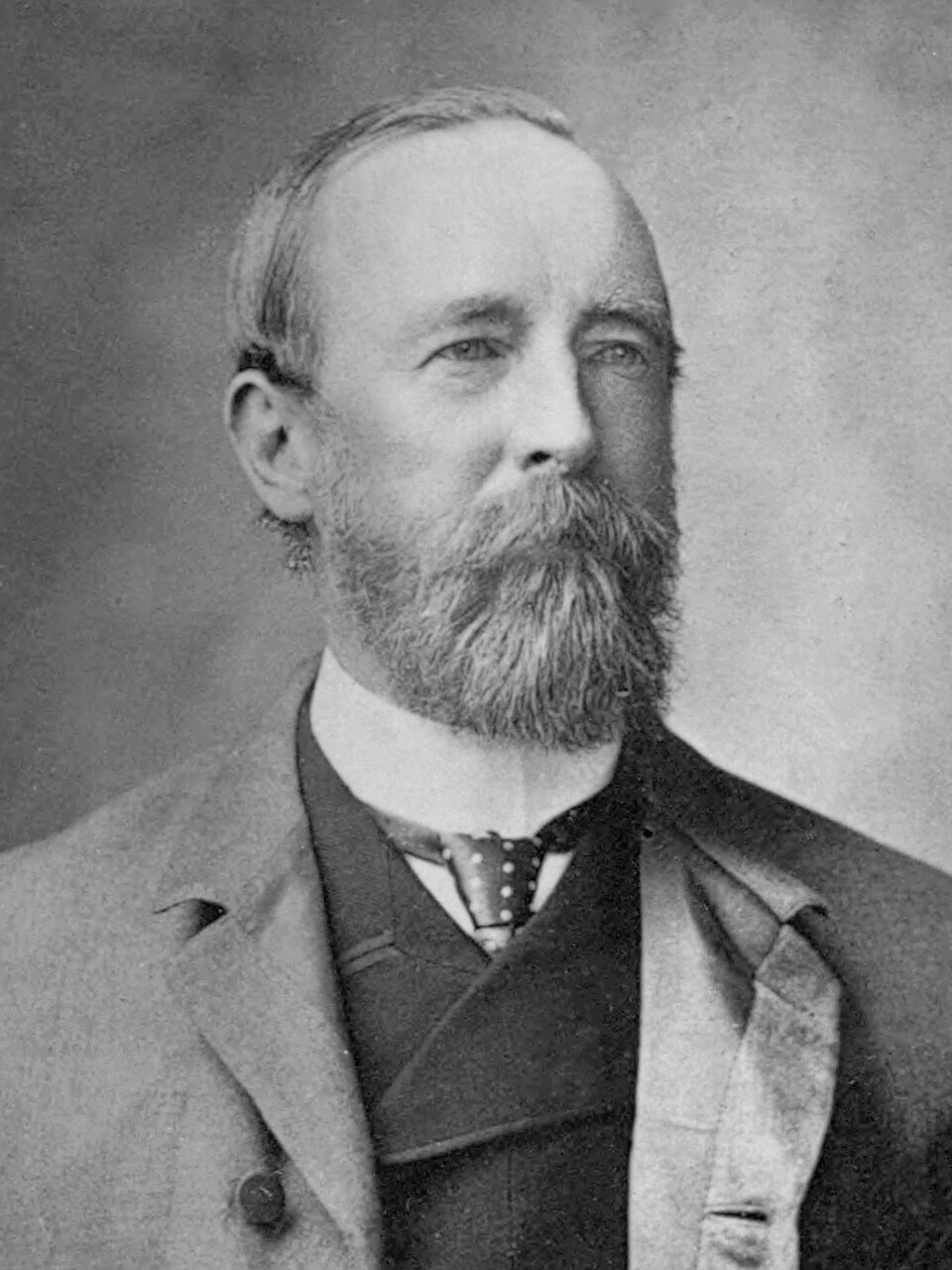
Nine resolutions. The first Congress passed nine resolutions. They asked for a Royal Commission on Indian affairs with Indian members, the abolition of the Secretary of State's India Council, wider legislative councils, simultaneous civil service examinations in Britain and India and lower army spending, and one condemned the annexation of Upper Burma. Each resolution was moved from one province and seconded from another, a deliberate show of all-India unity.
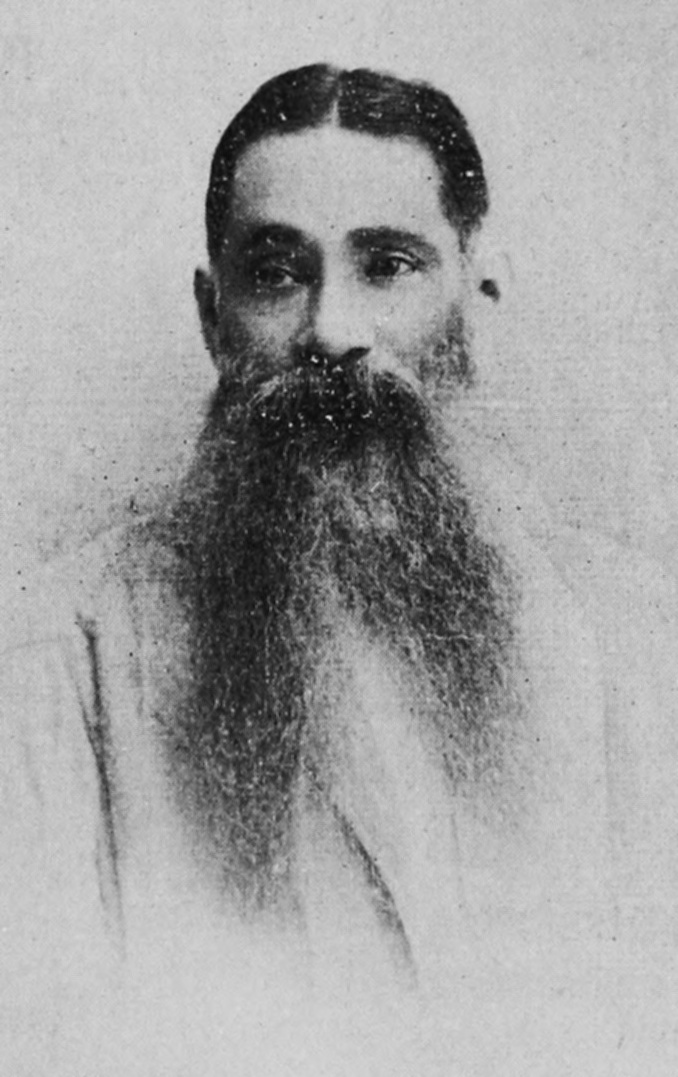
What was left out. Social reform was kept off the agenda because members differed deeply over it; some discussed infant marriage and enforced widowhood at a separate public meeting afterwards. Before dispersing, the delegates asked political associations everywhere to ratify the resolutions and fixed the next session for Calcutta. Hume served as the Congress's general secretary from 1885 to 1906.
What did the Congress offer that earlier bodies did not? It met every year, in a different city, with delegates from many provinces. That rhythm turned scattered regional demands into one national agenda. The next chapter, the Moderates, shows what that agenda was and how the early leaders pursued it.
Mains lens: who founded the Congress, and why?
The limits of early nationalism. From 1885 to 1905 the Congress had a narrow base, drawing mainly on the urban educated classes. Dufferin's jibe of a 'microscopic minority' was unfair as a judgement of its ideas, but it pointed to a real gap between the leaders and the mass of peasants. Closing that gap would become the great task of the movement in the decades that followed.
The 'safety valve' theory. Because an Englishman and former civil servant founded the Congress, some argued it was an official plan. Hume had spoken of a 'safety valve' for the forces British rule had created, and W.C. Bonnerjee said Hume acted on Dufferin's advice. Together these suggested that the Congress was meant to give educated discontent a harmless outlet and protect the Raj.
Why historians reject it. Dufferin's private papers show that Hume's views carried little weight with officials. Hume had genuine sympathy for India and worked for years to keep the Congress alive, and the demand for an all-India body was already strong. As Gokhale put it, no Indian could have started the Congress, because the authorities would at once have found a way to suppress it, which is why Indian leaders accepted an Englishman's lead.
The Cambridge view. Historians of the Cambridge school, most influentially Anil Seal, argued that the Congress was a vehicle for the interests and rivalries of self-seeking elites. Critics in India answer that this ignores racial humiliation, pride in Indian achievement and a growing sense of common national interest. Self-interest existed, but it does not explain why these men subordinated caste and province to the nation.
An idea whose time had come. In the last ten days of 1885 as many as five conferences met across India, including the Madras Mahajan Sabha's and a second National Conference in Calcutta, which merged with the Congress in 1886. A countrywide educated class, shared grievances and two decades of organising made a national body almost inevitable. The Congress was the culmination of a process that had begun in the 1830s.
Why does this matter for today? The early nationalists chose open, legal and argued politics, built on facts and public meetings. That habit of organised public debate, with sessions, resolutions and elected committees, became part of the political culture that independent India inherited. It is worth remembering that India's democratic habits were being learned decades before 1947.
Mains practice: the birth of the Congress
| Angle | Question | Key points to cover |
|---|---|---|
| Organisation | Trace the growth of political associations in India from 1852 to the founding of the Congress. | British Indian Association 1852; Bombay Association; East India Association (late 1860s); Ilbert Bill and National Conference 1883; Congress 1885 and 1886. |
| Viceroys | "Lytton's rule and the Ilbert Bill row did more to unite Indians than any association." Discuss. | Lytton: Afghan war costs, cotton duties, ICS age 19, Press Act; Surendranath's tour; Ripon's reforms and the European backlash; national fund and National Conference 1883; lesson in organised agitation. |
| Origins | Examine the various views on the origin of the Indian National Congress. Which do you find most convincing? | Safety valve (Hume, Dufferin) and its rebuttal; Gokhale's view; Cambridge school (Anil Seal) and Indian critics; need for an all-India body: Indian Association, National Conference 1883, five conferences in 1885. |
| Evaluation | Why did the early Congress remain a body of the educated few, and did that make it ineffective? | Narrow urban base 1885–1905; 'microscopic minority'; yet national agenda, training in politics, economic critique; foundation for later mass phase. |
These are practice questions written by us, not past papers. Past questions from your exam appear in the PYQ panel.
How to use this table: each answer should explain the what, then the why, and end with what it led to.
Quick revision
- Associations: British Indian Association (Calcutta) petition 1852; Bombay Association; East India Association, London, late 1860s.
- Ilbert Bill row → first National Conference, Calcutta, late December 1883 (Surendranath Banerjee, Ananda Mohan Bose).
- Congress 1885: founder A.O. Hume; first President W.C. Bonnerjee; first session 28 December 1885, Bombay, 72 delegates.
- Lytton: Afghan expedition, cotton duties removed, ICS age 21 → 19, Vernacular Press Act, Arms Act; Surendranath's tour 1877-78. Ripon: repealed the Press Act, local self-government, Ilbert Bill.
- Indian Association 1876: fee Rs 5; national fund July 1883 (Rs 20,000); National Conference = Congress's 'dress rehearsal' (~45 places).
- First Congress: planned at Poona as the Indian National Union, moved for cholera; nine resolutions (Royal Commission, abolish India Council, simultaneous ICS exams, Upper Burma); no social reform; Hume general secretary 1885-1906.
- Origin views: safety valve (rejected), Gokhale's view, Cambridge school / Anil Seal, need for an all-India body (five conferences in late 1885).
- Second session Calcutta 1886 under Naoroji, 434 delegates; Provincial Congress Committees.
- Dufferin: 'microscopic minority'; 1885–1905 a narrow, urban educated base.
- Bodies: Landholders' Society (late 1830s), Bengal British India Society 1843, British India Association 1851, Bombay Association 1852; Poona Sarvajanik Sabha 1870, Indian Association 1876, Madras Mahajan Sabha.