

RPSC RAS / RTS · Module 8 · Mains depth · 27 min
The Revolt of 1857: spread, defeat and legacy
What RPSC RAS / RTS asks from this chapter
Syllabus lines this chapter covers:
- General Knowledge and General Science · Cultural foundations of India: Indus and Vedic age; religious ideas of the 6th century BC (Ajivakas, Buddhism, Jainism); achievements of the Maurya, Kushan, Satavahana, Gupta, Chalukya, Pallava and Chola rulers.
- General Knowledge and General Science · Sultanate period and the Vijayanagara empire; Mughal administration and policies; Marathas; art, architecture, literature, painting and music in the medieval period; Bhakti and Sufi movements.
- General Knowledge and General Science · British imperialism and resistance (Maratha, Mysore, Sikh), Revolt of 1857, British policies, rise of nationalism and socio-religious movements.
- General Studies I · British policies and their impact; the Indian National Movement, its stages, streams and contributors; socio-religious reform movements of the 19th and 20th century.
RPSC RAS / RTS questions from this module are being sorted into our bank.
Read at full depth: basics, the standard layer and the Mains analysis.
Where the story stands: May 1857
By May 1857 the dry wood had been piling up for years. Rulers had lost their kingdoms, peasants and craftsmen had lost their livelihoods, and sepoys feared for their faith. Then the greased cartridges became the spark. The full build-up is told in The Revolt of 1857: causes and outbreak.
On 10 May 1857 the sepoys at Meerut rose, marched to Delhi and proclaimed Bahadur Shah II Emperor. So a mutiny in one cantonment now had a symbolic head. This chapter follows what happened next: how far the Revolt spread, who led it, why it failed and how it changed India.
The Revolt spreads: centres and leaders
From Delhi the Revolt spread across the Gangetic plain and central India: to Lucknow, Kanpur, Allahabad, Benaras, Rohilkhand, Bundelkhand, Gwalior, Jhansi and Bihar. In Awadh the sepoys proclaimed that "sepoy Raj" had arrived.
What makes 1857 special is that it was not only soldiers. In each centre, local leaders, many of them rulers and landholders who had lost their thrones or rights to the British, took charge. Learn them as place + person + reason:
| Centre | Leader | Who they were and what they did |
|---|---|---|
| Delhi | Bahadur Shah II; Bakht Khan | The emperor was the symbolic head, and Bakht Khan was commander-in-chief of the rebel armies. |
| Kanpur | Nana Saheb; Tatya Tope | Nana Saheb declared himself Peshwa under the Mughal emperor, and Tatya Tope was another leading rebel commander. |
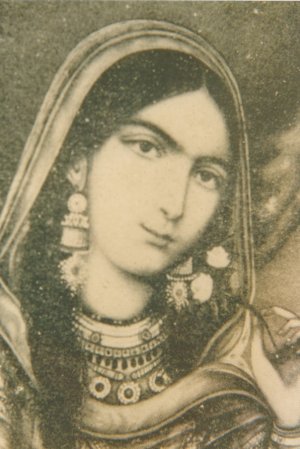
| Lucknow (Awadh) | Begum Hazrat Mahal | She led the rebels of the annexed kingdom, and Lucknow held out for eight months. |
| Awadh (Lucknow, Faizabad) | Birjis Qadr; Maulvi Ahmadullah | The minor Birjis Qadr was crowned after the rebel victory at Chinhat, and Maulvi Ahmadullah fought on around the Awadh-Rohilkhand border until his death in June 1858. |
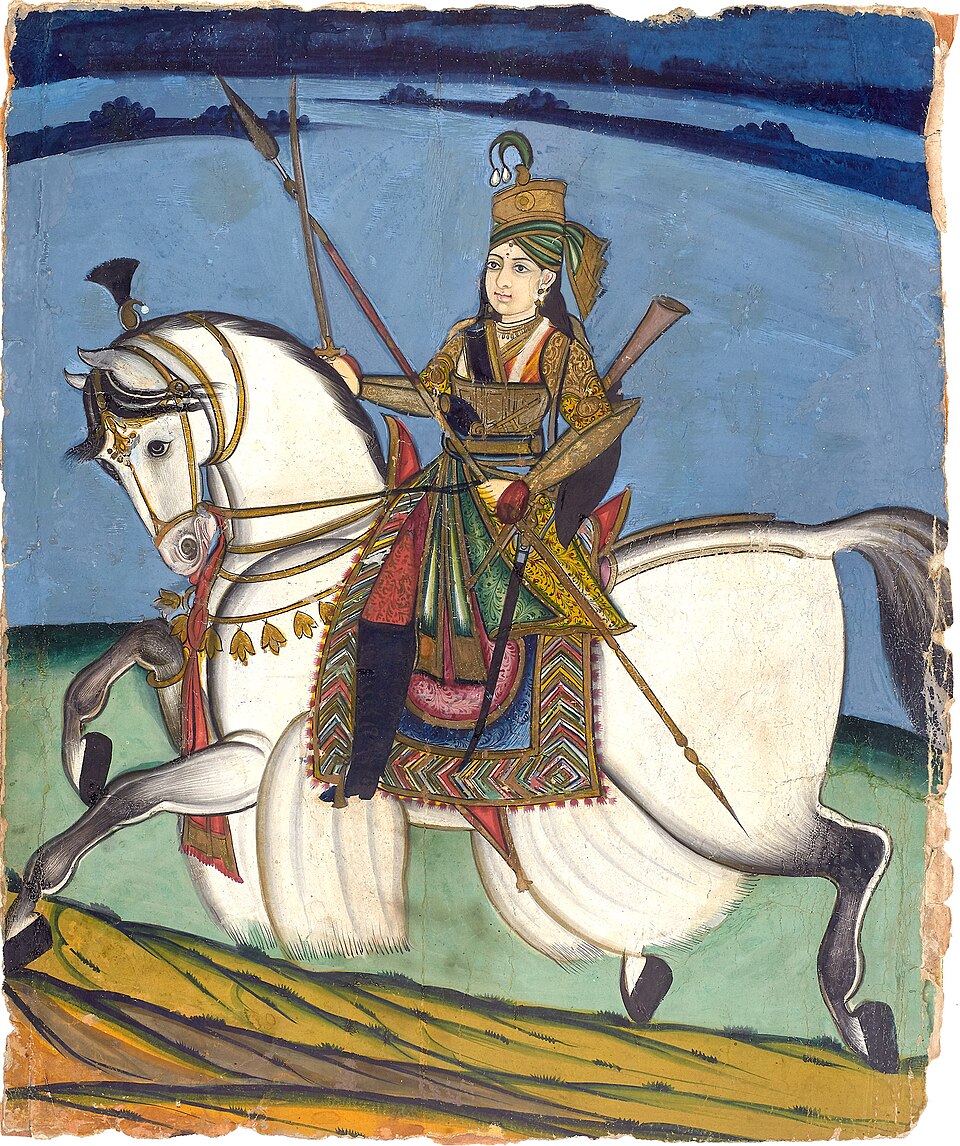
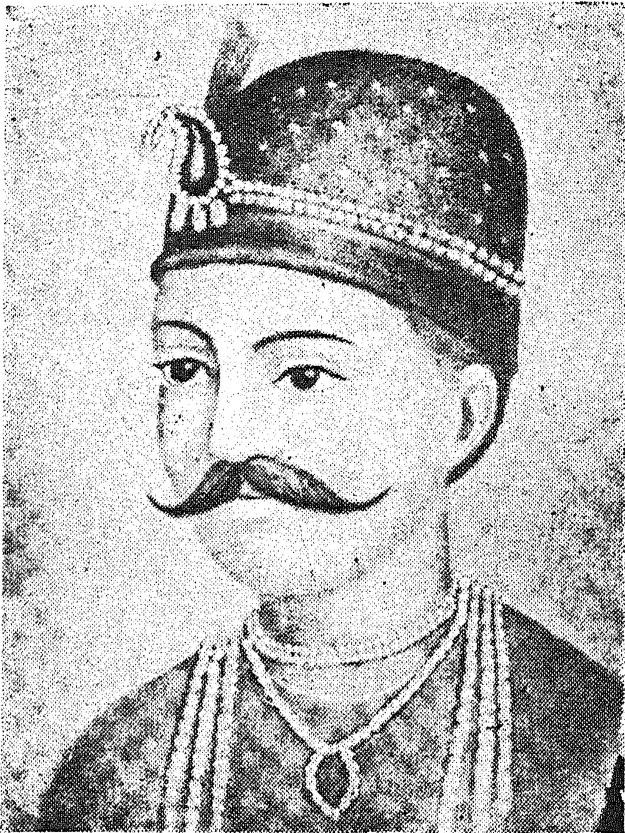
| Jhansi | Rani Lakshmibai | Her state was taken under the doctrine of lapse, and she died fighting. | | Bihar (Arrah, Jagdishpur) | Kunwar Singh | He came from Jagdishpur in Bhojpur and led the fight at about 80 years of age. |
Why the Company was caught short. In 1857 there were about 45,000 European and 2,32,000 regular Indian troops in India. Most European units sat in newly conquered Punjab, so between Calcutta and Delhi there were only five European regiments. The mutinies travelled down the Ganga and the Grand Trunk Road between Delhi and Patna, reaching Bihar stations such as Danapur, Hazaribagh, Ranchi and Bhagalpur, but by October it was clear the Revolt would not cross the Narmada.
The people rise. In the winter of 1856-57 chapatis passed from village to village, a sign read by many as a message of coming upheaval. Once the sepoys rose, people from 30 to 60 villages at a time attacked district headquarters, settled scores with tax collectors, court officials, police and banias, looted treasuries and opened the jails. The British were struck by the rebels' solidarity: rewards rarely bought betrayal, and attempts to set Hindus against Muslims failed.
A rebel government. The rebels did more than destroy. In Delhi they set up a court of administration of ten members, six from the army and four civilians, which decided by majority vote, and wrote to the rulers of Rajasthan for support. In Awadh, after the British defeat at Chinhat on 30 June 1857, the minor Birjis Qadr was crowned, the army chose the wazir, and in July 1857 no taluqdar sat in any important decision-making body.
A few points to understand, not just memorise:
- The emperor's name united them. At Kanpur, Nana Saheb declared himself Peshwa (the title of the old Maratha chief minister), but under Mughal authority: coins were struck and orders issued in the name of the Delhi Badshah. A Maratha title under a Mughal crown shows how the rebels tried to bring old powers together against a common enemy.
- Women led from the front. Rani Lakshmibai of Jhansi is remembered as the most outstanding leader of the Revolt. Under Begum Hazrat Mahal, the rebels of Lucknow, including many women, held the Company's forces at bay for eight months.
- Age was no bar. Kunwar Singh of Jagdishpur in Bihar's Bhojpur district, born on 13 November 1777, took up arms at about eighty. For students of Bihar, he is the central figure of 1857 in the state.
- Peasants were not just followers. In Awadh, taluqdars and peasants fought side by side, and many peasants kept fighting even after their taluqdars made peace with the British. This shows that for ordinary people the Revolt was about their own grievances, not only their lords' orders.
The British strike back
The Company was shaken, but it was not finished. It brought in troops, used the regiments that had stayed loyal, and fought back centre by centre.
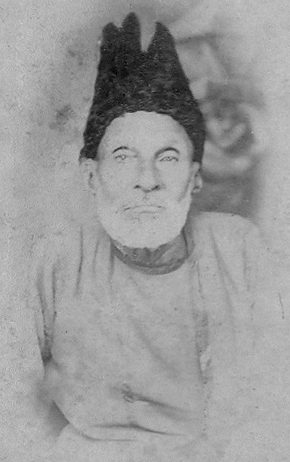
Delhi was the most important target, because it was the symbolic capital of the Revolt. The great Urdu poet Ghalib, who lived in Delhi through these months, kept a diary called Dastanbu. In it he records that the rebels held the city "from 11th May to 14th September" 1857.
The British completed the capture of Delhi on 21 September, after an attack with heavy casualties. Ghalib's diary is valuable because it shows the Revolt through the eyes of a citizen, not a soldier.
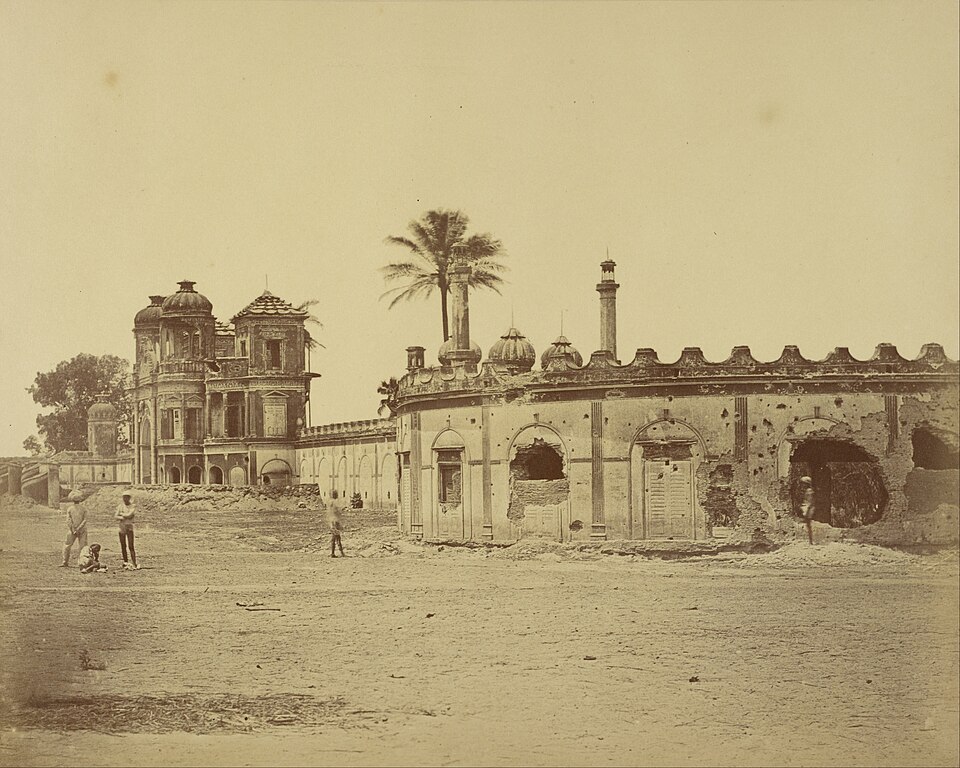
The recapture was followed by harsh punishment. Rulers of nearby states who had joined the rebels were executed after Delhi fell. For example, the Nawab of Jhajjar was hanged in front of the Red Fort. Fighting went on in other centres well into the next year, until the last leaders were defeated, killed or forced to flee.
The Revolt also changed life in other ways:
- Press restrictions were imposed again in 1857 because of the Revolt.
- The crackdown in Delhi ended the intellectual life of Delhi College.
How the British won. On London's orders about 39,000 troops were shipped to India, and by the end of November 1857, 37 troopships crowded the Hughli. Bihar's Arrah, Gaya and Hazaribagh were cleared by mid-August, and after Delhi fell many rebels moved to Lucknow, where a workshop at Faizabad repaired heavy guns. Of the 1,50,000 who died in Awadh, about 1,00,000 were civilians, and Lucknow fell only in March 1858.
What became of the leaders. Rani Lakshmibai died fighting in June 1858, and Maulvi Ahmadullah died the same month. Nana Saheb, adopted son of the last Peshwa Baji Rao II, and Begum Hazrat Mahal escaped to Nepal. Tatya Tope was driven from Kalpi, reached Gwalior, crossed the Narmada and was captured and put to death in 1859, and the Revolt was fully crushed only by the end of 1858.
Why read this section? Prelims rarely asks battle details. But Mains asks why the Revolt was suppressed, and the answer starts here: the British could wait, regroup and strike one centre at a time, while the rebels could not combine.
Why the Revolt failed
Go back to the school story. Suppose all the angry groups rise together, but the teachers in one building do not know what the parents in another building are planning, nobody has agreed who will speak for everyone, and nobody has said what the school should look like afterwards. The manager, meanwhile, has money, a phone line and friends on the school board. Who is likely to win?
The real reasons for the failure of 1857 fit this picture closely:
- Limited arms and ammunition. The rebels had far fewer modern weapons and supplies.
- Poor communication and no centralised leadership. Each centre fought largely on its own. Delhi, Kanpur, Lucknow, Jhansi and Bihar did not act under one plan or one command.
- Superior British resources. The British had more resources and better arms, and could bring in more troops over time.
- No clear political programme. The rebels were united in distrust of foreign rule, but they did not put forward a clear picture of the new order they wanted to build.
- Many Indians stayed away or sided with the British. Merchants, the educated class (intelligentsia) and many local princes did not join, and several princes actively supported the British.
Notice that points 2, 4 and 5 are about unity and ideas, not only guns. This is a lesson that later Indian nationalists took seriously. When the national movement grew later in the century, its leaders worked hard to build an all-India organisation, a clear programme, and support among the educated and the merchants, exactly the things that 1857 lacked.
After 1857: the Company goes, the Crown comes
The Revolt was put down, but the British realised the extent of people's resentment. Ruling India through a trading company now looked too risky. Big changes followed.
Why take India away from the Company? Remember how the anger began. The Company's hunger for revenue and territory had produced the anger of 1857. By putting India directly under the Crown, Britain could blame the old trading company and present a new, more cautious government.
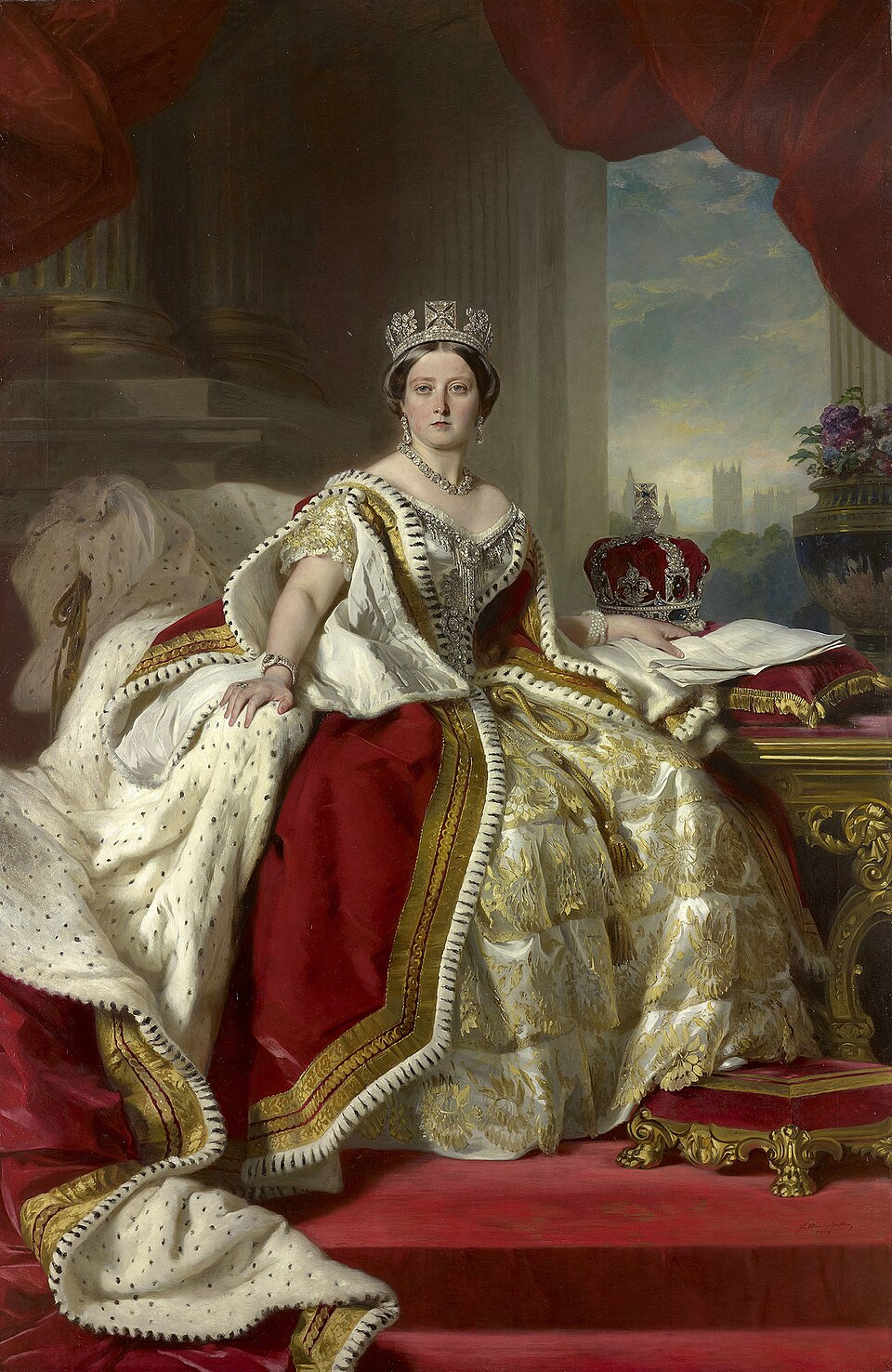
1. End of Company rule. A Royal Proclamation in 1858, together with the Government of India Act 1858, ended the rule of the East India Company and placed India directly under the British Crown. The 1858 Act also created the post of Secretary of State for India in London, so a British minister now answered for India. How this new government worked is explained in the Polity chapter on the British Acts.
2. No more annexations. The British declared that they would no longer expand their territorial possessions in India. The doctrine of lapse, which had angered so many rulers, was effectively over.
3. Princes as partners. Princes who had stayed loyal were given special awards. The British now saw the princely states as a support for their rule, a breakwater against future storms, rather than as territory to be taken.
4. A new kind of army. The army was rebuilt so that a 1857 could not happen again. Recruitment was based on caste, community, tribal and regional loyalties, so that soldiers from different groups would not easily unite. This is why it is called a policy of divide and rule.
The fine print of the Proclamation. The November 1858 royal proclamation pardoned all who laid down arms by 2 January 1859, except those directly involved in killing British subjects. It promised that official service would be open to all and that due regard would be paid to Indian customs. Canning dropped the doctrine of lapse and allowed every ruler the right of adoption.
Princes as breakwaters. Canning admitted that without loyal states like Gwalior, Hyderabad, Patiala, Rampur and Rewa, the "break-waters to the storm", the British might have been swept away. Loyal rulers of Gwalior, Rampur, Patiala and Jind got land and money, and in 1861 the Order of the Star of India was created for princes. But the British kept the right to take charge of a state in case of "misgovernment".
Landlords rewarded, villagers sidelined. In the North-Western Provinces land assessed at about Rs 17 lakh was confiscated, while land worth Rs 9 lakh went as rewards, mostly to large holders. In Awadh, 22,658 of 23,543 villages were restored to the taluqdars in return for loyalty, and village proprietors were pushed down to under-proprietors or tenants-at-will. Unrest in 1859-60 forced a limit on taluqdars' rents in 1866.
"So alien that it would fire into it." In 1861 the Secretary of State Charles Wood wrote that he wanted each regiment to be so alien to the next that it would be ready to fire into it. Soldiers from Awadh, Bihar and central India were called "non-martial" and recruited far less, while Sikhs, Gurkhas and Pathans, who had helped crush the Revolt, were called "martial". Officials also blamed a "Muslim plot" to restore the Mughals, and Saiyid Ahmad Khan wrote a pamphlet, "Who were the Loyal Musalmans?", to answer this suspicion.
Think about the long-term effect of point 4. A deliberate policy of keeping Indians apart became one of the main features of British rule after 1858, and every later national leader had to work against it.
The long shadow of 1857: what it meant for India
The Revolt failed, so why does every syllabus still give it so much space? Because its effects lasted for the next ninety years, on both sides.
1. A first coming-together. For the first time, 1857 brought together people of different ethnic, religious and class backgrounds in a united movement against British rule. Sepoys and peasants, Hindu and Muslim leaders, a Maratha title and a Mughal emperor all stood on the same side. Earlier uprisings had usually been local, while this one spread across a huge region.
2. An inspiration for later nationalists. The spirit of 1857 greatly influenced Indian nationalism in the second half of the 19th century. Its heroes, such as Rani Lakshmibai and Kunwar Singh, became symbols of courage. Later leaders used these memories to show that Indians had resisted foreign rule before.
3. A lesson in what not to repeat. 1857 failed for lack of unity, leadership and a programme. The national movement that followed tried to build exactly these: an all-India organisation, a clear set of demands, and support among educated Indians and merchants.
4. A more careful and more divisive Raj. On the British side, 1857 led to Crown rule, an end to annexations, rewards for loyal princes, and an army recruited to keep groups apart. In the short run this made British rule more secure. In the long run, the habit of ruling by dividing Indians left deep marks that the freedom movement, and India after 1947, had to deal with.
Why this matters for the exam: Prelims asks the facts of rows 1 to 4. Mains asks you to join them up and explain how a failed revolt still changed the course of Indian history.
Mains lens: what kind of revolt was 1857?
Historians have argued about the nature of 1857 for more than 150 years. UPSC likes this debate because there is no single right answer: a good answer shows each view, its evidence and its limits.
View 1: A sepoy mutiny. British historians called it a mutiny of sepoys, engineered by soldiers and by landholders and princes with vested interests. Evidence: it began in the army, over cartridges; many rebel leaders had personal losses (Jhansi, Awadh, Nana Saheb). Limit: it cannot explain why peasants and artisans joined, or why peasants in Awadh kept fighting after their taluqdars made peace.
View 2: The first war of Indian independence. Some historians call it the first war of Indian independence, and many see it as an early expression of nationalism. Evidence: Hindus and Muslims fought together under one emperor; it aimed to drive out foreign rule across a wide region. Limit: it was confined mainly to north and central India; many princes, merchants and the educated class stayed away; and it did not by itself produce an all-India national feeling or unity.
View 3: A restoration of the old order. Others argue that by inviting Bahadur Shah II to lead them, the rebels were trying to bring back the old order, not build a new one. One historian went as far as to say there was "no national revolt in 1857". In his view it was "not revolution but just a restoration".
Evidence: the Mughal emperor, a Peshwa title, coins in the Badshah's name; no new political programme. Limit: it underplays the anger of ordinary people, whose grievances were about land, taxes and dignity, not about who sat on the throne.
View 4: A popular revolt. Recent studies stress popular participation. In Awadh, taluqdars and peasants attacked together, and peasants fought on after the taluqdars gave up.
Evidence: the wide range of people involved. Limit: participation varied greatly from region to region.
How the debate moved on. Nationalists shifted the focus from greased cartridges to British oppression, and V.D. Savarkar's book The Indian War of Independence of 1857 stayed banned almost to the end of British rule. Around the centenary in 1957, some historians replied that the Revolt had no general plan and was "the dying groans of an obsolete aristocracy". Others objected that this played down its anti-imperialist content and the evidence of Hindu-Muslim unity.
"A web of motives." From the 1970s, historians studied 1857 district by district, mostly in Awadh and the North-Western Provinces. Some found that the Thomasonian settlement was only "a single strand in the web of motive", since old caste and family feuds also decided who rebelled. Others linked rebellion to poor, dry soils combined with heavy revenue, or to close-knit groups such as the Gujars of Saharanpur and Rajputs of Etawah, until some concluded that 1857 was "not one movement but many".
Elite-led or popular? One view holds that the taluqdars made the decisions, so the Revolt took shape wherever magnates chose to rebel or hold back. Against this, leaders without land, such as Maulvi Ahmadullah Shah, were accepted, and peasants often fought on after their taluqdars made peace. In Awadh about 60 per cent of the fighting force was ordinary rural people, and perhaps three-quarters of adult men took part.
A balanced conclusion. 1857 was more than a mutiny but less than a modern national movement. It began as a soldiers' revolt, drew in a wide range of people with different grievances, used old symbols because no new ones yet existed, and failed partly because it lacked the unity and programme that nationalism would later provide. Its memory, however, became a powerful inspiration for the freedom struggle.
Mains lens: the many ways 1857 is asked
UPSC rarely asks "write about 1857". It picks one angle and tests whether you can explain why and so what. Here are six common angles, with what the examiner wants in each. These are practice questions written by us, not previous-year questions.
1. Causes. "Examine the causes of the Revolt of 1857. Were they mainly military?"
The examiner wants you to separate long-term causes from the spark. Group the causes as political, economic, social-religious and military, and give one example of each from this chapter. Then argue that military grievances lit the fire, but the fuel came from the whole society, because the sepoy was "a peasant in uniform".
2. Nature. "Was 1857 a sepoy mutiny or a war of independence?" Present all four views (mutiny, war of independence, restoration and popular revolt), each with one piece of evidence and one limit. End with a balanced verdict, such as "more than a mutiny, less than a national movement".
3. Failure. "Why did the Revolt fail despite wide participation?" Put the rebels' weaknesses (arms, communication, leadership, programme, missing allies) against British strengths. Then add the "so what": these were the very gaps the later national movement worked to fill.
4. Consequences. "How did the Revolt of 1857 change the nature of British rule in India?" Use a before-and-after structure.
Before 1857 the Company ruled and annexed; after 1858 the Crown ruled, annexation stopped, princes became allies and the army was recruited to divide. Finish with the long-term implication of divide and rule.
5. People and regions. "Discuss the role of peasants and local leaders in 1857, with reference to Awadh and Bihar." Use the Awadh example of peasants fighting on after the taluqdars made peace. Add Kunwar Singh of Jagdishpur and the women leaders, and conclude that the Revolt had a popular side that the "mutiny" label misses.
6. Legacy. "The Revolt of 1857 failed, but it was not in vain. Comment."
Build the answer on four points: the first coming-together, inspiration for nationalists, lessons learnt, and changes in British policy. For balance, add that it did not by itself create all-India national unity.
For the History optional: expect the same themes with more depth on how different historians have read 1857. Practise comparing the British view, the nationalist view and the newer "people's history" view, and support each with evidence.
Mains lens: writing an answer on 1857
A typical question: "The Revolt of 1857 was more than a sepoy mutiny." Examine. (150 or 250 words)
Introduction (2–3 lines): Begin with the basic facts. The Revolt broke out at Meerut on 10 May 1857, spread across north and central India, and led to the end of Company rule in 1858.
Body: Build the body in five steps, each one leading into the next.
- Causes beyond the army: Show that the anger came from the whole society. Give one line each on the political causes (doctrine of lapse, annexation of Awadh in 1856), the economic causes (land revenue settlements, ruin of artisans) and the social-religious causes (fear of interference and conversion).
- Military cause and spark: Then show how this anger reached the army. Mention low pay and discrimination, the greased cartridges, and the events at Barrackpore and Meerut.
- Who took part: Next, prove that it went beyond soldiers. Princes and queens (Lakshmibai, Hazrat Mahal, Nana Saheb), landholders (Kunwar Singh) and peasants all joined, and in Awadh the peasants fought on even after the taluqdars made peace.
- Both sides of the debate: Now weigh the four views: mutiny, war of independence, restoration and popular revolt. Give one argument and one limit for each.
- Limits: Finally, be fair about its weaknesses. It was limited to some regions, it had no central leadership or programme, and many princes, merchants and educated Indians stayed away.
Conclusion (2 lines): End with a balanced verdict. It was more than a mutiny but not yet a national movement, and both its failure and its memory shaped the freedom struggle that followed.
Useful keywords: long-term vs immediate causes, doctrine of lapse, peasant in uniform, symbolic leadership of the Mughal emperor, Hindu-Muslim unity, popular participation, divide and rule, transfer to the Crown.
Quick revision
- The main leaders were Bahadur Shah II and Bakht Khan at Delhi, Nana Saheb and Tatya Tope at Kanpur, Begum Hazrat Mahal at Lucknow, Rani Lakshmibai at Jhansi and Kunwar Singh of Jagdishpur in Bihar.
- The Revolt failed because the rebels had few arms, no central leadership and no programme, while many princes, merchants and educated Indians stayed away.
- As a result, the Royal Proclamation of 1858 and the Government of India Act 1858 brought Crown rule. Annexations stopped, loyal princes were rewarded, and the army was recruited on divide-and-rule lines.