

TNPSC Group 1 · Module 47 · Mains depth · 18 min
In-situ conservation: protecting life where it lives
What TNPSC Group 1 asks from this chapter
Syllabus lines this chapter covers:
- Part A: General Studies · General science: scientific knowledge, physics, chemistry, biology and environment.
- Paper IV: GS III · Environment, biodiversity and disaster management.
TNPSC Group 1 questions from this module are being sorted into our bank.
Read at full depth: basics, the standard layer and the Mains analysis.
Start from zero: villagers who guarded their birds
For generations, the villagers of Vedanthangal, near Chennai, protected the pelicans, herons and other water birds that nested in their tank every winter. They believed the birds' droppings enriched the water they used for their fields, and they would not let anyone harm the colony. In 1878, this village tradition was given legal shape, and Vedanthangal became the first bird sanctuary in the region.
This small story holds the central idea of this chapter. The best way to save a species is usually to protect it where it already lives, together with everything around it. That is called in-situ, or on-site, conservation.
The story also shows that conservation works best with local people, not against them. Many of India's protected areas grew out of older traditions of sacred groves, temple tanks and community rules.
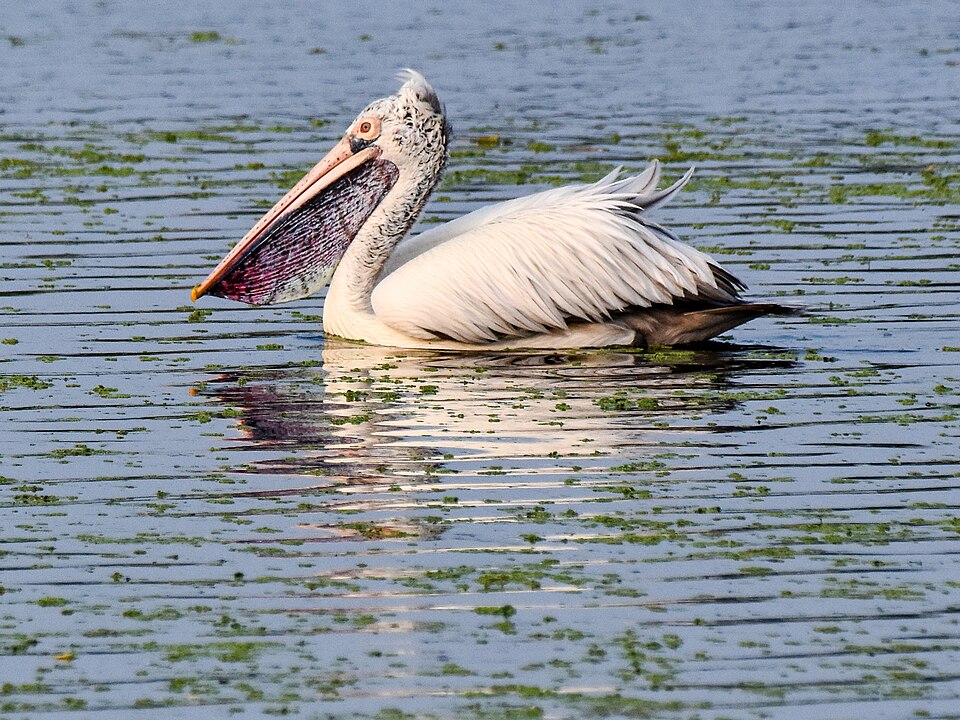
This chapter explains why in-situ conservation is preferred, how a reserve should be designed, and the main kinds of protected areas in India: national parks, wildlife sanctuaries, conservation and community reserves, tiger and elephant reserves, biosphere reserves and wetlands.
Why protect species where they live?
Two strategies. Conservation follows two broad paths. In-situ conservation protects species in their natural habitats, by guarding the habitat, restoring it or defending the species from threats. Ex-situ conservation takes species, or parts of them such as seeds, out of danger and keeps them under human care.
Why in-situ comes first. Keeping a species at home keeps everything it depends on: its food plants, pollinators, prey, partners and the conditions it evolved in. It also lets natural evolution continue, so the species keeps adapting to change. Large wild populations hold far more genetic diversity than any captive group. For all these reasons, protecting species in the wild is considered the best way to conserve biodiversity.
What it demands. In-situ conservation is not just drawing a line on a map. It needs good management, enough land for a viable population and controlled land use around the reserve. A reserve too small to hold a healthy population will slowly lose its species, however well it is guarded.
Why this matters. Most wildlife conservation in India is in-situ, built on a network of protected areas. Ex-situ methods are a back-up and a supplement, not a substitute.
Designing a reserve: size, shape, corridors and buffers
Once a site is chosen, its design decides how well it works. Three features matter most: size, shape and connectivity, with a fourth, the buffer zone, protecting them all.
Size. A bigger reserve holds more species and larger populations. Large animals such as tigers and elephants range over huge areas, and a population needs enough members to keep its genetic diversity.
Shape. A roughly round reserve is better than a long, thin one of the same area. A round shape has less edge compared with its area, so fewer parts of the reserve suffer the heat, light, wind and disturbance that come in from outside.
Connectivity. Strips of habitat called corridors link one reserve or patch to another. They let animals move, find mates and recolonise areas, which prevents inbreeding and local extinction.
Buffer zones. Around the strictly protected core lies a buffer zone of moderately used land. Local people may graze, collect forest produce, farm or run tourism there in a regulated way. The buffer softens pressure on the core and gives local people jobs and income from the reserve, which builds support for conservation.
Why this matters. Many protected areas in India are small and isolated, so corridors and buffers often matter more than adding new reserves. Answers on human-wildlife conflict and linear infrastructure can draw directly on these design principles.
India's protected areas: four kinds
India's law recognises four kinds of protected areas, which differ in how strictly people's activities are controlled.
National Parks. These are areas of high natural value set aside mainly for wildlife and habitat. People may visit to enjoy the scenery and animals, but visits are managed, and no rights of people such as grazing or collecting produce are allowed inside. They are the most strictly protected category.
Wildlife Sanctuaries. These also protect wildlife and habitat, but some human activities and existing rights may be allowed or regulated, so the protection is somewhat less strict than in a national park. Sanctuaries are far more numerous than national parks.
Conservation Reserves and Community Reserves. These newer categories were added to bring in land outside the strict system. Conservation reserves are usually government land, often linking parks and sanctuaries, managed with local involvement. Community reserves are on community or private land, where people volunteer to protect wildlife and habitat. Both show a shift towards working with people rather than keeping them out.
The numbers. As of 27 November 2023, India had 1,014 protected areas: 106 national parks, 573 wildlife sanctuaries, 115 conservation reserves and 220 community reserves. Together they cover about 1,75,169 sq km, roughly 5.32% of the country.
Why this matters. About one-twentieth of the country is formally protected, so most wildlife lives outside protected areas, among farms, villages and forests. This is why community reserves, corridors and coexistence with people matter as much as the parks themselves.
Tiger and elephant reserves: landscapes for flagship animals
Project Tiger. By the early 1970s, India's tigers had fallen to dangerously low numbers. On 1 April 1973, the government launched Project Tiger as a centrally sponsored scheme to keep a viable tiger population and protect its habitat. It began with nine tiger reserves, chosen to represent the different wild landscapes across the tiger's range in India.
The core-buffer strategy. Each tiger reserve has a core, kept free of grazing, forestry, collection of forest produce and other disturbance. Around it is a buffer managed as a multiple-use area: it gives extra habitat to animals spilling over from the core and brings eco-development to nearby villages to ease pressure on the core. In the buffer, people keep their rights in a regulated way, and no relocation is planned there.
The results. By July 2026 India had 58 tiger reserves; when there were 54, they covered more than 78,000 sq km, about 2.30% of the country. The 2022 All India Tiger Estimation counted 3,682 tigers (within a range of 3,167 to 3,925), up from 2,967 in 2018 and 2,226 in 2014. India now holds over 70% of the world's wild tigers, and Project Tiger completed 50 years in 2023.
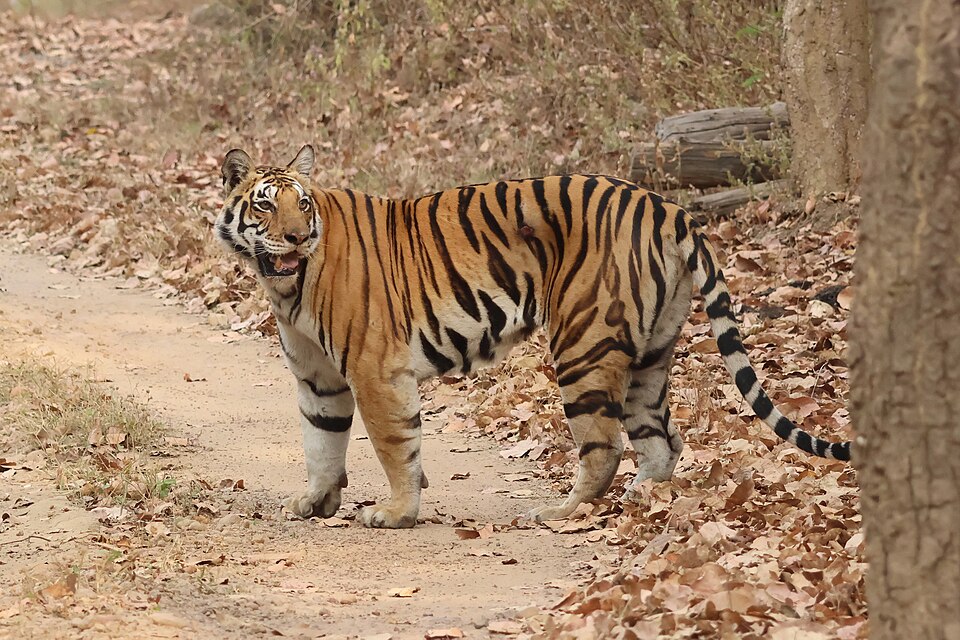
Why tigers? Protecting a tiger means protecting its whole forest, its prey and its water. Tiger reserves therefore guard large gene pools and valuable ecosystem services far beyond the tiger itself, which is why the tiger is often called a flagship for whole landscapes.
Elephant reserves. Elephants need even larger, connected landscapes. India has 33 Elephant Reserves across 14 states, covering about 80,777 sq km. Wild elephant numbers rose from 26,786 in 2018 to 29,964 in 2022.
Biosphere reserves: people and nature in one plan
The idea. National parks and sanctuaries protect species and habitats, often by keeping people out. Biosphere reserves take a different approach: they aim to conserve whole representative ecosystems while showing how people can live alongside them sustainably. The idea comes from UNESCO's Man and the Biosphere (MAB) programme, started in 1971.
Three zones. A biosphere reserve is usually laid out in rings. The core zone is strictly protected and used only for research and monitoring. The buffer zone around it allows research, education and limited, careful use. The outer transition zone holds villages, farms and other activities, where sustainable use of resources is encouraged.
Why it suits India. With a large population depending on forests and other natural resources, it is often impractical to set aside vast areas with no people at all. Biosphere reserves reconcile conservation with sustainable use. They also act as reference sites for monitoring how natural ecosystems change over time.
India's biosphere reserves. India has 18 biosphere reserves covering about 91,425 sq km, and 13 of them are part of UNESCO's world network. The Nilgiri reserve, set up in 1986, was the first; Panna (2011) is the newest. The Great Rann of Kutch in Gujarat is the largest and Nokrek in Meghalaya the smallest. In September 2025, the Cold Desert biosphere reserve in Himachal Pradesh joined the UNESCO network.
Why this matters. Biosphere reserves show a model of conservation that includes people instead of excluding them. In answers on tribal rights, forest-dependent communities and sustainable development, they are a strong example of balancing protection with livelihoods.
Wetlands: protecting the in-between lands
Where they are. India's wetlands are spread across every climate: high-altitude lakes in cold, dry Ladakh, the floating marshes of humid Manipur, salt lakes and seasonal ponds in arid Rajasthan, tanks and floodplains in monsoonal central India and backwaters in the humid south. Mangroves and lagoons line the coasts.
Why they matter. Wetlands store floodwater, recharge groundwater, filter pollution and support fisheries and farming. They are also among the richest habitats for birds, fish and amphibians, and many migratory birds depend on them.
What makes a wetland important. Under the international convention on wetlands, a wetland is considered of international importance if it meets criteria such as these. It is a good representative example of a natural wetland type in its region. It plays a major hydrological or ecological role in a river basin or coastal system. It is a rare or unusual type, or it supports a notable group of rare, vulnerable or endangered species.
Mangroves too. India is also restoring coastal wetlands. Under the MISHTI initiative for mangrove restoration, about 22,561 hectares of mangroves have been restored across 13 states and union territories.
Why this matters. Wetlands are often treated as wasteland and drained or filled for building and farming. Recognising their value, through international designation and local protection, is one of the cheapest ways to protect both biodiversity and water security.
Mains lens: in-situ conservation in answers
Questions on protected areas test both knowledge and judgement. Four arguments are especially useful.
1. Success with limits. Tiger numbers have risen from 2,226 in 2014 to 3,682 in 2022, a clear success. Yet protected areas cover only about 5% of India, and most wildlife lives outside them. Use both facts to argue that the next step is landscapes and corridors, not just more parks.
2. People and parks. Strict exclusion can breed resentment and conflict, while buffer zones, community reserves and biosphere reserves bring people in. Answers on forest rights and tribal welfare can show how sharing benefits builds local support.
3. Design over numbers. Small, isolated reserves lose species even when well guarded. Size, shape, corridors and buffers decide whether a reserve works, so planning must look at connectivity across the landscape.
4. Forgotten habitats. Grasslands, deserts, wetlands and rivers are under-represented compared with forests. A balanced network would use the biogeographic zones to fill these gaps.
Mains practice: six questions, six angles
These are practice questions written by us, not past papers. Past questions from each exam appear in the PYQ panel of this module.
| Angle | Question | Key points to cover |
|---|---|---|
| Concept | Why is in-situ conservation considered superior to ex-situ conservation? Are there situations where ex-situ is necessary? | Explain whole communities, continuing evolution and genetic diversity. Then name cases of tiny wild populations where captive breeding is a back-up. |
| Design | Discuss the principles of reserve design and their relevance to India's protected-area network. | Cover size, round shape and edge effects, corridors and buffer zones. Then apply them to India's small, isolated reserves and linear projects. |
| Categories | Distinguish between national parks, wildlife sanctuaries, conservation reserves and community reserves. | Compare people's rights and land ownership in each, and give the 2023 numbers. Then explain the shift towards community involvement. |
| Project Tiger | Evaluate Project Tiger after five decades. What lessons does it offer for other species? | Give the start in 1973 with 9 reserves, 58 reserves by July 2026 and the 2022 count of 3,682. Then explain the core-buffer model, remaining problems such as conflict and corridors, and lessons for elephants and other species. |
| Biosphere reserves | How do biosphere reserves reconcile conservation with development? Illustrate with Indian examples. | Explain the MAB programme and the core, buffer and transition zones. Then give India's 18 reserves, the 13 in the UNESCO network and examples such as Nilgiri and Cold Desert. |
| Way forward | Protected areas alone cannot save India's wildlife. Discuss. | Note the 5% coverage and the wildlife living outside it. Then propose corridors, community reserves, wetland protection and conflict management, and end with people as partners. |
How to use this table: each answer should first explain the what, then give the why from this chapter, and end with a way forward.
Quick revision
- In-situ = protect species in their natural habitat; it is the primary strategy and lets evolution continue.
- Good reserve design: large, round (less edge), linked by corridors and ringed by a buffer.
- Protected areas (27 Nov 2023): 1,014 in total, with 106 NPs, 573 WLSs, 115 conservation and 220 community reserves, covering about 5.32% of India.
- Project Tiger: began 1 April 1973 with 9 reserves; 58 reserves by July 2026 (54 covered about 2.3% of India); 3,682 tigers in 2022, over 70% of the world's wild tigers.
- 33 elephant reserves in 14 states; 29,964 elephants in 2022.
- Biosphere reserves: UNESCO MAB (1971); core, buffer and transition zones; India has 18, with 13 in the UNESCO network; first Nilgiri (1986), largest Great Rann of Kutch, smallest Nokrek.
- Vedanthangal bird sanctuary (1878) grew from a village tradition of protecting nesting birds.