

TNPSC Group 4 · Module 12 · basic depth · 12 min
Mauryan art: pillars, capitals, yakshas and early stupas
What TNPSC Group 4 asks from this chapter
Syllabus lines this chapter covers:
- Part B: General Studies · History and culture of India.
TNPSC Group 4 questions from this module are being sorted into our bank.
Cut to basic depth for TNPSC Group 4. 12 deeper paragraphs are in the full chapter.
Start from zero: the lions in your pocket
Take any Indian coin or currency note out of your pocket. Somewhere on it you will find three lions standing back to back, with a wheel below them. Most people see this every day without asking where it came from.
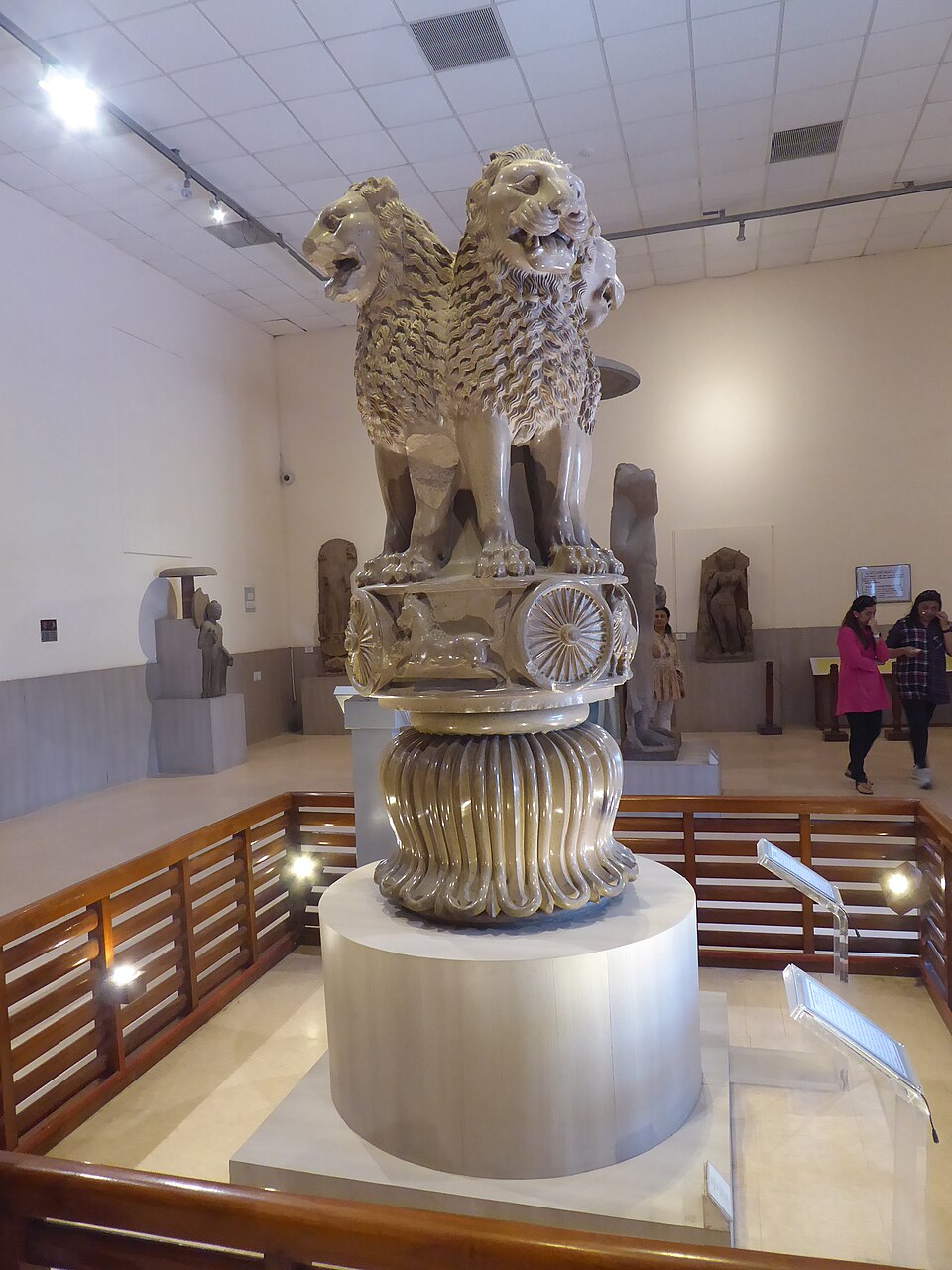
These lions were carved more than 2,200 years ago for the emperor Ashoka. They crowned a stone pillar at Sarnath, near Varanasi, where the Buddha gave his first sermon. When independent India chose its national emblem, it reached back to this sculpture.
Why would a modern republic borrow a symbol from an ancient emperor? Ashoka had used art to spread a message of Dhamma, which meant right conduct, tolerance and care for all living beings. The new republic wanted a symbol of the same ideals.
This chapter explains how, under the Mauryas, Indian art suddenly appeared in stone on a grand scale. It also explains why it looks the way it does and what it meant.
Mauryan art at a glance
Mauryan art falls into two groups. Court art was made for the emperor and carried his message, while popular art grew from local cults and town patrons.
| Type | Example | Material and features | Purpose |
|---|---|---|---|
| Pillars (court art) | Sarnath, Lauriya Nandangarh and Rampurva are the best-known. | They are single blocks of polished Chunar sandstone with animal capitals. | They carried Ashoka's Dhamma messages to the public. |
| Yaksha and yakshi figures (popular art) | The Didarganj Yakshi is the most famous. | They are large, polished stone figures with rich ornaments. | They served local nature and fertility cults. |
| Rock-cut caves | The Lomas Rishi and Sudama caves are in the Barabar hills. | They have polished inner walls and a wooden-style doorway. | They were homes for Ajivika monks. |
| Stupas | The early stupas at Sanchi and Sarnath are examples. | They were brick mounds over relics, later enlarged. | They honoured the Buddha and spread Buddhism. |
Keep the two groups in mind. Court art shows what the State wanted to say, while popular art shows what ordinary people believed.
Why art suddenly appears in stone
A thousand silent years. After the Harappan cities declined, very little art or architecture survives for about a thousand years. People were building, but with wood, bamboo, mud and thatch. Even under the first Mauryas, the Greek envoy Megasthenes described Chandragupta's palace as made of wood, and remains of a huge timber wall have been found around Pataliputra.
The shift to stone. Under Ashoka, builders began to work in stone on a large scale. Stone was costly and needed skilled cutters, transport and polishing. Only a rich, centralised empire could organise such work across a whole subcontinent.
Contact with Persia. The Mauryan empire touched the old Achaemenid (Persian) world in the north-west. Stone masonry and carving are said to have come from Persia in Ashoka's time, and masons' marks look like those at Persepolis. The bell-shaped capitals of Ashoka's pillars also resemble Persepolis pillars.
But not a copy. Mauryan art borrowed techniques and forms, yet its message and subjects were Indian: the Buddhist wheel, Indian animals and Dhamma inscriptions. Greek influence can also be seen in some motifs. The result is a new Indian court style built from local and foreign elements.
Why it matters. This section answers a classic exam question: why does stone art appear so suddenly under Ashoka? The answer combines imperial resources, foreign contact and a new message (Dhamma) that the emperor wanted to last. Stone was chosen because it would carry that message for centuries, and it did.
The Ashokan pillars
What they are. Ashoka set up tall stone pillars across his empire, often along roads and at Buddhist sites. Each shaft is circular and monolithic, which means it was cut from one single block of stone. They are made of sandstone from Chunar, near Mirzapur in Uttar Pradesh, and were carried long distances to their sites.
The famous polish. The pillars were given a high polish that still shines in places today. This polish made the stone look almost like metal. It also shows the skill and patience of Mauryan craftsmen.
The parts of a pillar. A complete pillar has a smooth shaft, a bell-shaped capital that looks like an upside-down lotus, a flat abacus often carved with animals or wheels, and a crowning animal on top. The animals include lions, a bull and other beasts. The shaft often carries an inscription of Dhamma that the people could read or hear read aloud.
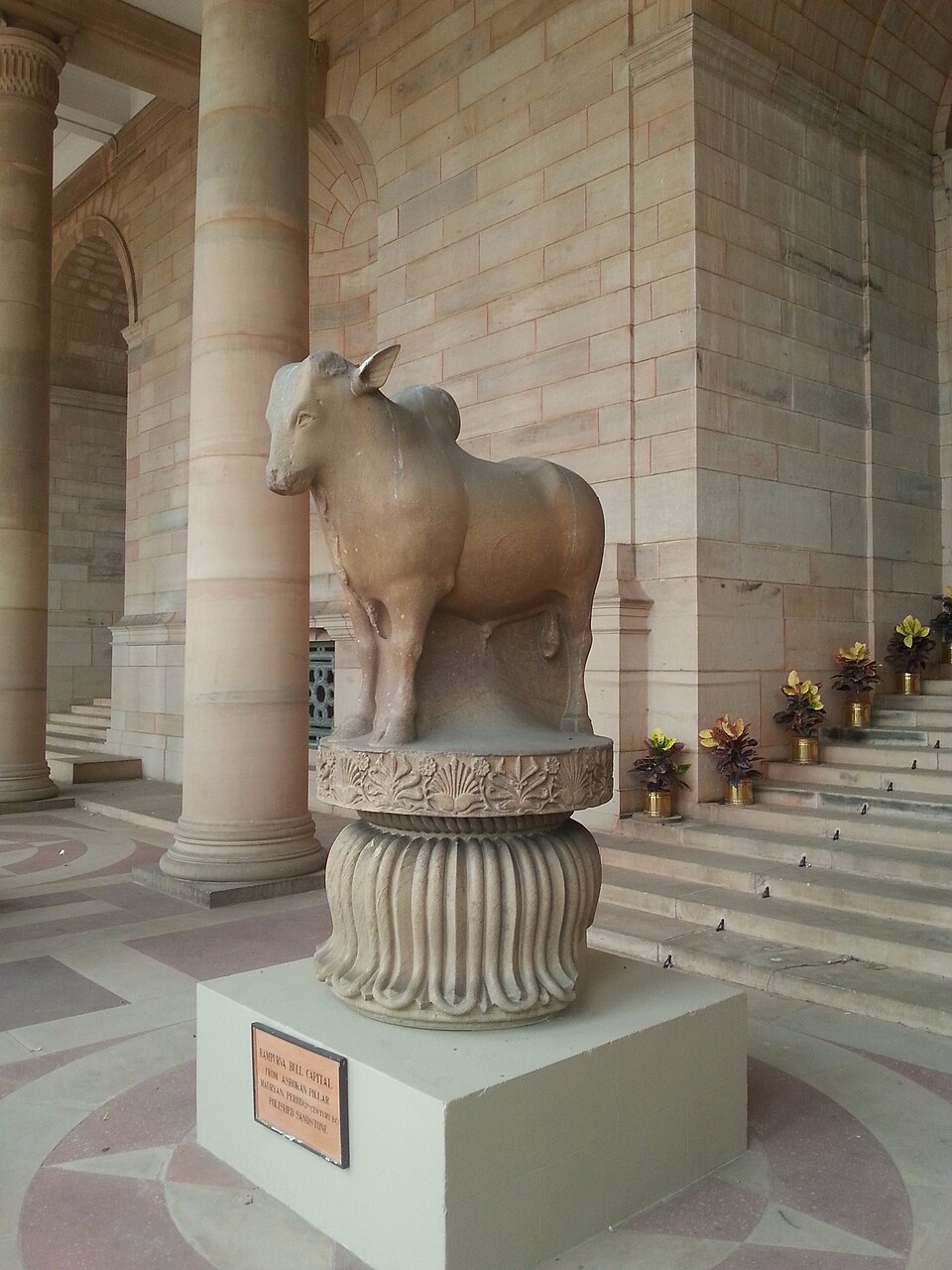
Famous examples. Lauriya Nandangarh in Bihar has a pillar crowned by a seated lion. Rampurva, also in Bihar, gave us a fine bull capital. Sarnath has the most famous capital of all, explained in the next section.
How many survive? Some 30 pillars are known, and about 10 of them are well preserved. Lion capitals also stand at Basarh-Bakhira near Vaishali and at Lauriya Nandangarh, both in Bihar. Their finish was so fine that people long believed the pillars were made of metal.
Why it matters. The pillars were public broadcasting in stone. They marked the emperor's presence, carried his moral teaching and turned sacred sites into landmarks. That is why Mains questions often call them a tool of statecraft as well as art.
The Sarnath capital and the national emblem
Why Sarnath. Sarnath is where the Buddha gave his first sermon, an event called "turning the wheel of the law". So the pillar there carried the most meaningful symbols. Its capital shows four lions seated back to back, and the Dharmachakra, the wheel of law.
Reading the symbols. The lions face four directions, which can be read as the Buddha's message (or the emperor's voice) going out to every side. The wheel stands for the Dhamma and the first sermon. Together, they make a statement about moral authority, not just royal power.
From pillar to republic. India's national emblem comes from this Ashokan pillar at Sarnath. In the emblem, three lions are visible, as only three can be seen from the front. The wheel sits on the base below them.
Sanchi's lions too. Sanchi also has an Ashoka pillar with a lion capital, which UNESCO describes as inspired by Achaemenid art. This supports the point that Mauryan court art drew on Persian models while carrying Indian meaning.
An eyewitness. In the 7th century, the Chinese pilgrim Hiuen Tsang saw the Sarnath pillar still standing. He described it as about 70 feet high, its stone bright as jade and glistening. His account helps us imagine the pillar as Ashoka's subjects saw it.
Why it matters. The emblem links the modern Indian State to ideas of righteous rule, tolerance and peace. Examiners like this link because it shows how heritage is used to build national identity. It also shows that an ancient object can gain new meanings in a new age.
Popular art: yakshas and yakshis
Who were yakshas? Long before temples, villagers worshipped yakshas (male) and yakshis (female). These were local spirits of trees, water, wealth and fertility. People believed they protected a place and its people.
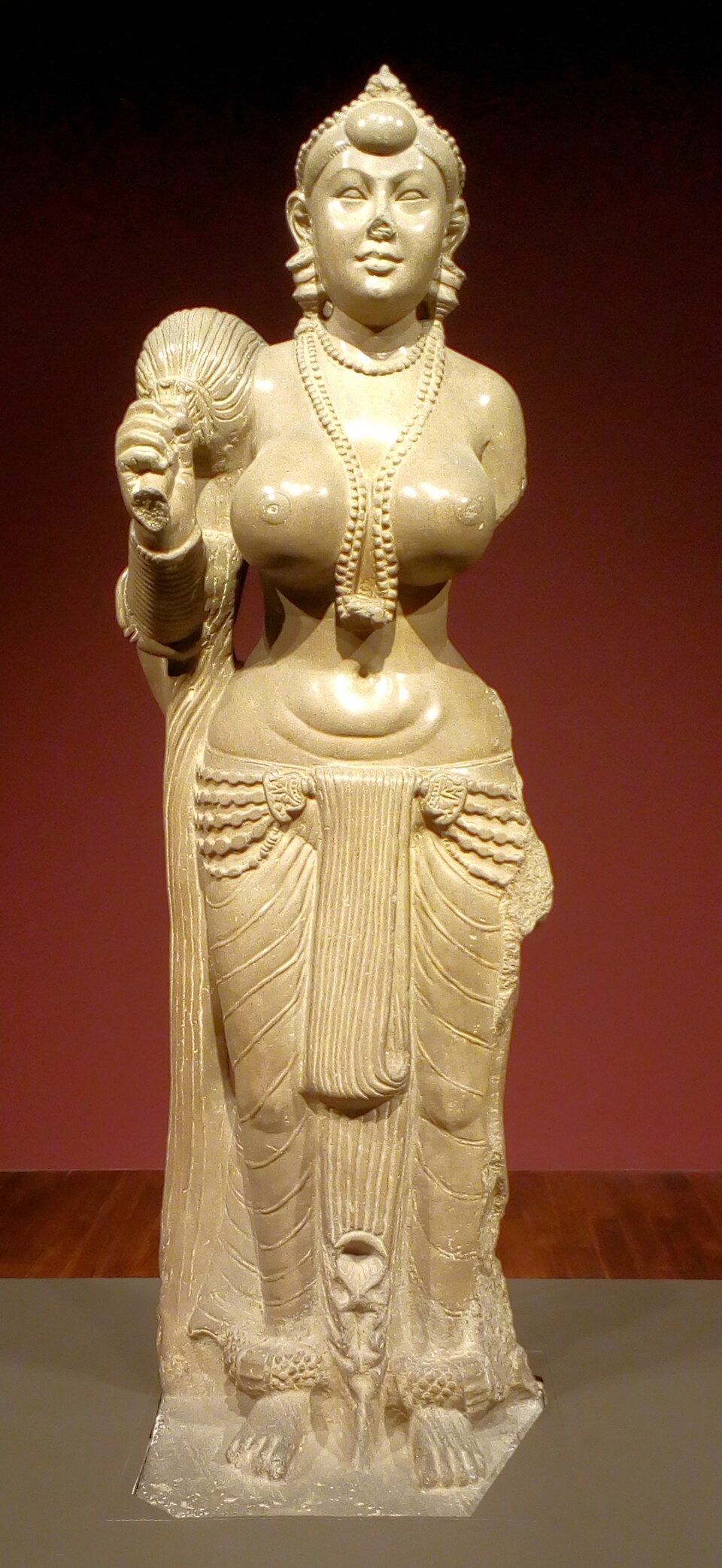
Big stone figures. In the Mauryan age, people began to carve these spirits as large, free-standing stone figures. Unlike the emperor's pillars, they were commissioned by local patrons and communities. They are heavy, frontal and full of earthy strength.
The Didarganj Yakshi. The most famous is the Didarganj Yakshi, found near Patna. She is a chauri (fly-whisk) bearer, carved in polished stone, with heavy ornaments and a confident stance. Her polish and full form make her a showpiece of Mauryan sculpture.
Clay for everyone. Many terracotta figurines have been found at Mauryan levels of excavation. They show that art was made for ordinary homes, not only for the court. Terracotta carried on even after the polished imperial art faded, which is why the court style is often called palace art.
Why it matters. Yaksha and yakshi figures show that Indian sculpture had a popular, local root, not only an imperial one. Later, Buddhist and Hindu art absorbed these figures as guardians and attendants, so they appear again on stupa gateways and temple doors. That absorption is a good example of how Indian religions grew by including older local beliefs.
The first rock-cut caves
Homes cut into hills. The Mauryas also began a new tradition: cutting rooms directly into solid rock. In the Barabar hills near Gaya, they carved cave-homes for monks. Mauryan kings donated caves to Ajivika monks, a sect of ascetics that rivalled Buddhism and Jainism.
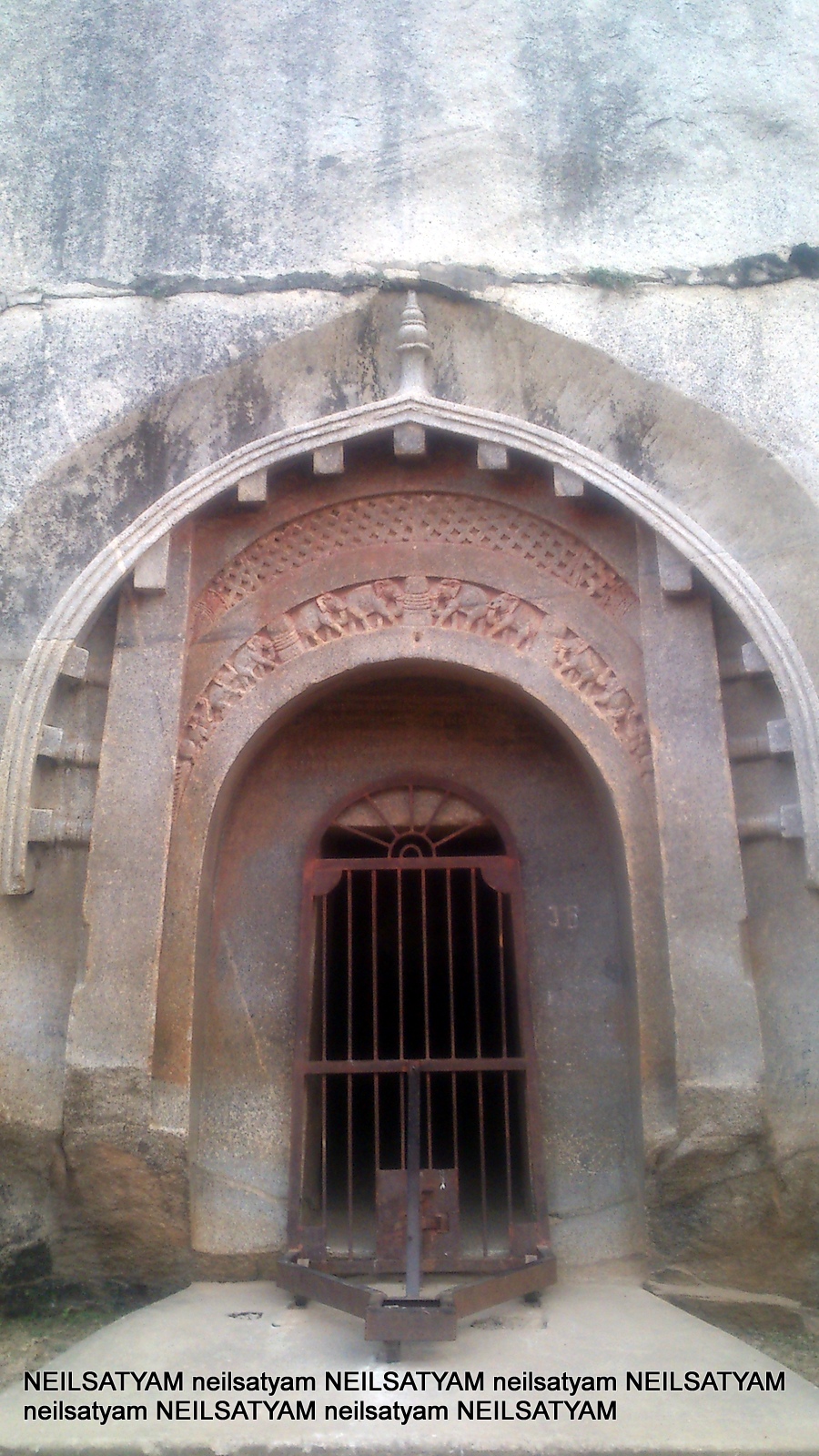
The Lomas Rishi cave. The most famous is the Lomas Rishi cave. Its entrance is a stone copy of a wooden hut, with a curved roof, beam-ends sticking out, a frieze of elephants that copies woodwork and a stone trellis that copies bamboo. The Sudama cave nearby is another Mauryan cave.
Why copy wood? Carvers were used to building in timber. When they moved to stone, they repeated the shapes they knew, much as early cars looked like horse carriages. That is why these caves are the best evidence of the wood-to-stone transition.
Why it matters. These small caves began one of India's greatest art traditions. Over the next thousand years, the idea grew into the huge chaityas and viharas of western India and the carved temples of Ajanta, Ellora and Elephanta. Those are covered in the chapter on stupas, chaityas and rock-cut caves.
Quick revision
- Early Mauryan buildings were of wood; Megasthenes described Chandragupta's palace as wooden, and Pataliputra had a timber wall.
- Ashokan pillars are circular, monolithic and made of Chunar sandstone, with a high polish and animal capitals.
- Bell-shaped capitals resemble the Achaemenid pillars of Persepolis.
- Sarnath has four lions and the Dharmachakra, and it is the source of India's national emblem.
- Lauriya Nandangarh has a seated lion, and Rampurva has a bull capital.
- The Didarganj Yakshi is a polished chauri-bearer.
- The Lomas Rishi and Sudama caves in the Barabar hills were made for the Ajivikas.
- Sanchi begins with Ashoka (3rd century BCE).
- At Bodh Gaya, Ashoka built the first temple and installed the Vajrasana.