

UKPSC Lower PCS · Module 69 · standard depth · 16 min
Hindustani music: dhrupad, khayal, thumri, gharanas and masters
What UKPSC Lower PCS asks from this chapter
Syllabus lines this chapter covers:
- Mains: General Studies Paper I · History, art, culture and society of India.
UKPSC Lower PCS questions from this module are being sorted into our bank.
Cut to standard depth for UKPSC Lower PCS. 6 deeper paragraphs are in the full chapter.
Start from zero: the music of the north
In the foundations chapter, you learnt swara, raga and tala, and saw how one music grew into two classical systems. This chapter is about the northern one: Hindustani music. It is sung and played from Punjab to Bengal and from Kashmir to Maharashtra.
Two makers. Two forces shaped Hindustani music. Courts, from the Delhi Sultans to the Mughals and the Nawabs, gave patronage and brought in Persian ideas. The Bhakti movement, with saint-poets whose songs were set to music, kept it close to people's devotion.
Many forms. Hindustani music is not one style but a family of forms. Dhrupad is grand and old; khayal is free and ornamented; thumri is romantic and light. Each grew at a particular time for a particular reason.
A freer system. Carnatic music follows its texts closely. In the north, there were fewer binding texts, so musicians experimented, mixing ragas and creating new ones. This looser code has continued to the present day.
The Sultanate meeting: Amir Khusrau and Persian music
A meeting of two worlds. When the Delhi Sultanate was founded, Indian music met the music of Persia and Central Asia. Courts enjoyed both Persian and Hindi songs; Sultan Kaiqubad's palace at Kilugarhi was famous for such gatherings. Out of this meeting, the northern style slowly took a new shape.
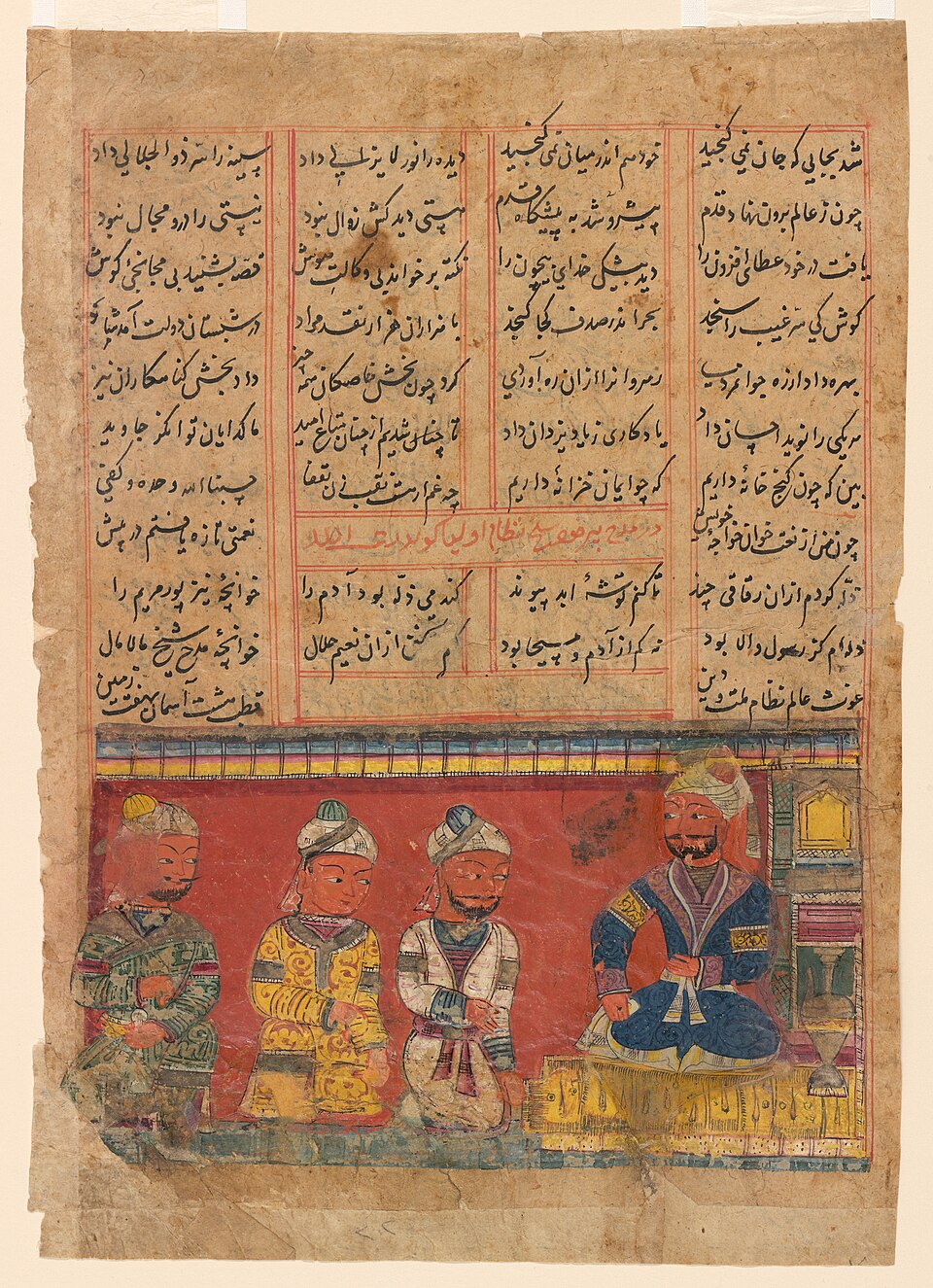
Little evidence. Music is the least documented of the Sultanate's arts. Historians have scattered references and many legends, and much modern writing about this period is guesswork. Keep this in mind when you read claims about who "invented" what.
Amir Khusrau. Amir Khusrau (1253–1325) was a poet, musician and the court poet of Alauddin Khalji, who loved music. He was also a disciple of the Sufi saint Nizamuddin Auliya of Delhi. His genius lay in creating new compositions and in blending the musical forms of his time.
What tradition credits him with. Tradition credits Khusrau with bringing qawwali, the devotional song of Sufi gatherings, to a wider public. He is said to have created ragas such as Zilaf, Sazgiri and Sarparda by mixing Persian and Indian tunes. Tradition also links him with the khayal, the sitar (from the veena and the Persian tambura) and the tabla (by splitting the mridang into two).
A careful view. These claims are not proven, and scholars treat them as tradition rather than fact. What is certain is Khusrau's role in bringing two cultures together through music. In exams, the safe phrase is that he is credited with these innovations.
Dhrupad: the grand old style
What dhrupad is. Dhrupad is the oldest surviving form of Hindustani vocal music. Its name links it to dhruva, the fixed or steady, and to pada, verse. It is serious, grand and meditative, and its poems are mostly devotional, sung in Brajbhasha and other languages.
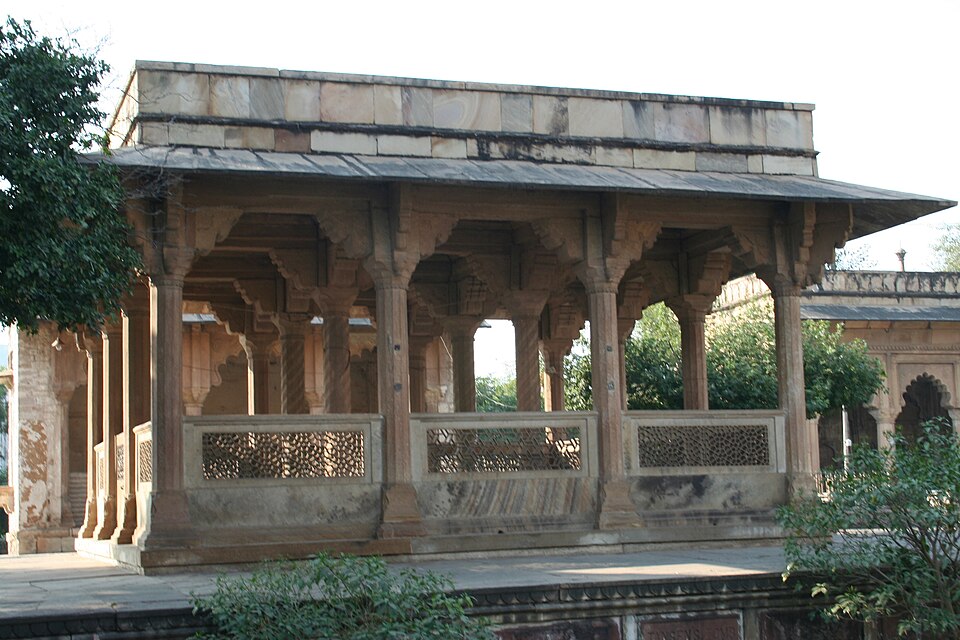
How it sounds. A dhrupad performance begins with a long alap, sung on syllables without words and without drums. The raga is explored slowly, note by note. Only then does the composition begin, with the pakhawaj drum keeping a strict tala and the tanpura giving a steady drone.
Gwalior and Man Singh Tomar. Raja Man Singh Tomar of Gwalior (1486–1517) played a distinguished part in the growth and perfection of dhrupad. His court made Gwalior a great centre of music. The city still holds an annual music festival in Tansen's memory.
Haridas and Tansen. The development of north Indian music was strongly inspired by the Bhakti movement. In Vrindavan, Swami Haridas promoted music and is considered the teacher of Tansen. Tansen, the most famous musician of Akbar's court, is credited with ragas such as Miyan ki Malhar, Miyan ki Todi and Darbari.
Dhrupad today. Dhrupad became rare as khayal grew popular, but it survived in a few families. The Dagar family is the best-known, and the Gundecha Brothers brought it to new audiences. Its slow, deep style still attracts listeners looking for stillness.
Khayal: the music of imagination
The name. Khayal comes from an Arabic word meaning imagination. The name fits: khayal gives the singer far more freedom than dhrupad to improvise, decorate and explore. Today it is the main form of Hindustani vocal music.
From light to classical. In the age of dhrupad, khayal was seen as a lighter, even non-classical style. With new elements and popular support, it rose to full classical status. This is the best example of the desi-to-marga journey you met in the last chapter.
Patrons of khayal. Sultan Hussain Shah Sharqi of Jaunpur (1458–99), himself an expert, promoted a form of khayal and is credited with ragas such as Jaunpuri Todi. In the 18th century, at the court of the Mughal emperor Muhammad Shah, the composers Sadarang and Adarang wrote khayals that are still sung. Their compositions helped make khayal the leading form.
How a khayal is sung. A khayal performance usually has two parts. The bada khayal is in slow tempo (vilambit), where the singer unfolds the raga at length. The chota khayal follows in fast tempo (drut), with quick runs of notes called taans.
Instruments. The tabla accompanies khayal, and the tanpura gives the drone. The harmonium or sarangi often follows the singer's melody. Compared with dhrupad, khayal is lighter, more ornamented and more personal.
Thumri, tappa and the lighter forms
Thumri. Thumri is a semi-classical form, romantic and often devotional, that gives more weight to the words and their feeling than to strict raga grammar. Its name may come from thumak, a graceful dance step, and it grew up together with Kathak, as you saw in the classical dances chapter. Its roots lie in the folk music of eastern Uttar Pradesh and Bihar.
The Awadh court. Thumri flowered at the Lucknow court of Wajid Ali Shah (1847–1856), the last Nawab of Awadh. A poet and composer, he wrote under the name 'Akhtar Piya'. When the British exiled him to Matiaburj near Calcutta, he took his music with him; the famous thumri Babul mora naihar chhooto hi jaye is linked to his parting from Lucknow.
Great thumri singers. Thumri has been carried by great singers, many of them women. Siddheshwari Devi, Rasoolan Bai, Girija Devi and Shobha Gurtu are among the best-known, and Begum Akhtar made both thumri and ghazal famous across India. Bade Ghulam Ali Khan sang thumri with rare beauty.
Tappa. Tappa grew from the songs of the camel drivers of Punjab. It is fast and full of quick, jerky turns of melody. It entered court music in the 18th century.
Tarana, dadra and ghazal. In the 18th century, several new forms took shape: tarana, sung on meaningless syllables at high speed; dadra, a light form close to thumri; and the ghazal, a poem of Persian and Urdu origin set to music. Folk forms such as chaiti and kajri, sung in seasons of spring and rain, also came into the concert hall.
Gharanas: families of style
What a gharana is. A gharana (from ghar, house) is a school of style passed down through families and disciples. Each gharana has its own way of singing: how it opens a raga, how it uses the voice, which compositions it prefers. Students learn by living close to the guru, in the guru-shishya tradition.
Why gharanas formed. Before recordings and music schools, the only way to learn was from a master. Musicians served courts, and each court's musicians developed a distinct style. As families guarded their knowledge, the styles hardened into gharanas. When princely patronage ended, gharanas kept the tradition alive.
| Gharana | Well-known names |
|---|---|
| Gwalior | Often called the oldest khayal gharana |
| Agra | Ustad Faiyaz Khan |
| Kirana | Ustad Abdul Karim Khan, Pandit Bhimsen Joshi |
| Jaipur-Atrauli | Mallikarjun Mansur, Kishori Amonkar |
| Patiala | Ustad Bade Ghulam Ali Khan |
| Indore | Ustad Amir Khan |
Learning across the south. Gharanas also absorbed ideas from Carnatic music. Abdul Karim Khan's famous use of sargam (singing the note names) shows Carnatic influence. This again shows the two systems talking to each other.
Other great voices. Many celebrated singers stand outside a single gharana label in exams, such as Pandit Jasraj. Questions usually pair masters with their gharana or instrument, so learn the table pairs carefully.
Instrumental masters: Maihar and beyond
Instruments take centre stage. In Hindustani music, instruments such as the sitar, sarod, shehnai, flute and santoor came to carry whole recitals on their own. Instrumental music follows the same raga grammar as vocal music. Many instrumental styles are even described as following the singing voice.
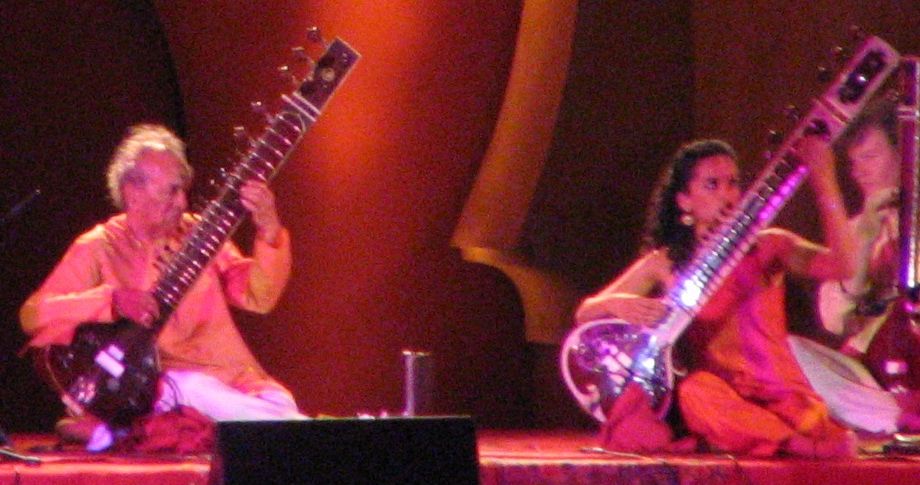
Maihar. Ustad Alauddin Khan lived at Maihar, a small princely state in present-day Madhya Pradesh. He was a master of many instruments and a demanding teacher. His students included two of the brightest stars of Indian music: his son Ali Akbar Khan (sarod) and Ravi Shankar (sitar).
Taking Indian music to the world. Ravi Shankar's concerts and collaborations made the sitar known across the world in the 1960s. Ustad Amjad Ali Khan became famous on the sarod and for blending features of the northern and southern styles. Through such artists, Hindustani music became part of global culture.
Instruments in brief. You will study instruments in detail in the instruments and folk music chapter. For now, link each master to an instrument. Exams often ask exactly this pairing.
| Artist | Instrument |
|---|---|
| Ravi Shankar | Sitar |
| Ali Akbar Khan | Sarod |
| Amjad Ali Khan | Sarod |
| T. R. Mahalingam | Flute (Carnatic) |
From courts to the public: the modern revival
A crisis. By the late 19th century, classical music faced hard times. Courts were losing power, and many people looked down on professional musicians. Music was locked inside families and courts, and ordinary people had little access to it.
Bhatkhande. Vishnu Narayan Bhatkhande travelled across India collecting compositions from gharana musicians. He wrote extensively on music theory and grouped Hindustani ragas into parent scales called thaats. His books made it possible to study music from a page, not only from a guru.
Paluskar. Vishnu Digambar Paluskar worked to bring music to the public and to remove the stigma around it. He set up music schools, the Gandharva Mahavidyalaya, and trained students who spread music across India. He also made devotional songs popular at public gatherings.
Why their work mattered. Together, these two men turned classical music from a private, hereditary art into a public, teachable one. Music schools, notation and public concerts grew from their efforts. Later, radio, recordings and music festivals carried this further.
The north's freer spirit. Throughout this history, Hindustani music kept a freer spirit than Carnatic music. With fewer binding texts, musicians mixed ragas and invented new ones, guided by taste and by their gharana. This openness is both its strength and the reason its rules can seem less fixed.
Quick revision
- Hindustani music shaped by courts (Persian contact) and Bhakti; looser code than Carnatic.
- Amir Khusrau (1253–1325): court poet of Alauddin Khalji, disciple of Nizamuddin Auliya; credited with qawwali, ragas (Zilaf, Sazgiri, Sarparda), khayal, sitar, tabla.
- Dhrupad: oldest; Brajbhasha; alap then composition; pakhawaj, tanpura; Man Singh Tomar of Gwalior (1486–1517); Dagars, Gundecha Brothers.
- Swami Haridas (Vrindavan) -> Tansen (Akbar): Miyan ki Malhar, Miyan ki Todi, Darbari.
- Khayal = imagination; bada (vilambit) and chota (drut); taans; tabla; Hussain Shah Sharqi (Jaunpur); Sadarang, Adarang (Muhammad Shah).
- Thumri: semi-classical; folk of eastern UP and Bihar; Wajid Ali Shah ('Akhtar Piya'), Matiaburj; Siddheshwari Devi, Rasoolan Bai, Begum Akhtar, Girija Devi, Shobha Gurtu, Bade Ghulam Ali Khan. Tappa: camel drivers of Punjab. Tarana, dadra, ghazal (18th c).
- Gharanas: Gwalior, Agra (Faiyaz Khan), Kirana (Abdul Karim Khan, Bhimsen Joshi), Jaipur-Atrauli (Mallikarjun Mansur, Kishori Amonkar), Patiala (Bade Ghulam Ali Khan), Indore (Amir Khan).
- Alauddin Khan (Maihar) -> Ravi Shankar (sitar), Ali Akbar Khan (sarod). Bhatkhande (theory, thaats) and Paluskar (Gandharva Mahavidyalaya).