

UKPSC Lower PCS · Module 11 · standard depth · 15 min
Gandhi's arrival: South Africa, Champaran, Kheda and Ahmedabad
What UKPSC Lower PCS asks from this chapter
Syllabus lines this chapter covers:
- Prelims: General Studies (100) and General Aptitude Test (50) · History of India and Indian National Movement: broad understanding of ancient, mediaeval and modern India's political, social, economic and cultural aspects and India's Freedom movement, growth of nationalism and attainment of Independence.
- Mains: General Studies Paper I · History, art, culture and society of India.
UKPSC Lower PCS questions from this module are being sorted into our bank.
Cut to standard depth for UKPSC Lower PCS. 7 deeper paragraphs are in the full chapter.
Start from zero: what is satyagraha?
Imagine a strong bully who takes your lunch every day. You could fight back, but he is much stronger. You could give in, but then the injustice continues. There is a third way: you refuse to obey, you do not hit back, you accept whatever punishment comes, and you keep refusing until the bully, and everyone watching, can see that he is wrong.
That third way is close to what Mahatma Gandhi called satyagraha, which literally means 'holding on to truth'. It is not weakness. It asks for great courage, because the satyagrahi must face punishment without running away and without using violence.
Gandhi did not invent this method in India. He developed it in South Africa, where he lived for about twenty-one years and led Indians against unjust laws. When he came back to India on 9 January 1915, he brought this new weapon with him.
This chapter follows Gandhi from South Africa to his first struggles in India: Champaran, Kheda and Ahmedabad. In these small, local fights he tested his method on Indian soil before leading the whole nation. Keep one question in mind as you read. Why did a method of non-violent resistance succeed where petitions had failed?
Key events at a glance
This table lists the main events from South Africa to Gandhi's first Indian struggles. Each is explained in the sections below.
| When | What happened | Why it matters |
|---|---|---|
| 1893 | Gandhi goes to South Africa | About twenty-one years of struggle against racial laws begin. |
| 28 October 1913 | March of about 3,000 miners from Newcastle to Volksrust | Mass satyagraha tested on a large scale. |
| 9 January 1915 | Gandhi returns to India | Now marked as Pravasi Bharatiya Divas. |
| April 1917 | Champaran: Gandhi defies an order to leave; Motihari court, 18 April | First satyagraha in India. |
| 4 March 1918 | Champaran Agrarian Act passed | Tinkathia abolished. |
| 15–18 March 1918 | Ahmedabad: Gandhi's fast for mill workers; 35 per cent rise | Satyagraha applied to industrial workers. |
| Kheda | Revenue satyagraha of peasants after crop failure | Peasants of Gujarat join the new politics. |
| 1920 | Gujarat Vidyapith founded | Education as part of the national movement. |
Notice the pattern. Gandhi chose specific, local grievances of indigo peasants, revenue-burdened farmers and mill workers, and won concrete results. That built his reputation before he led any all-India movement.
South Africa: the making of a satyagrahi
Why South Africa? Gandhi went to South Africa in 1893 as a young lawyer and stayed for about twenty-one years. Indians there, many of them labourers and traders, faced laws that treated them as inferior because of their race. Fighting these laws turned Gandhi from a lawyer into a leader.
Developing satyagraha. In South Africa Gandhi developed the method of satyagraha: organised, non-violent refusal to obey unjust laws, with a willingness to accept punishment. On 28 October 1913 he led about three thousand Indian miners on a march from Newcastle to Volksrust, and that satyagraha continued until 21 January 1914. It showed that ordinary workers, not just educated leaders, could be drawn into disciplined protest.
News reaches India. Indians at home followed his struggle closely. In 1911 the Congress congratulated Gandhi and the Transvaal Indian community on the repeal of anti-Asiatic legislation. So when he returned, he was already known as a man who had won battles against a powerful government.
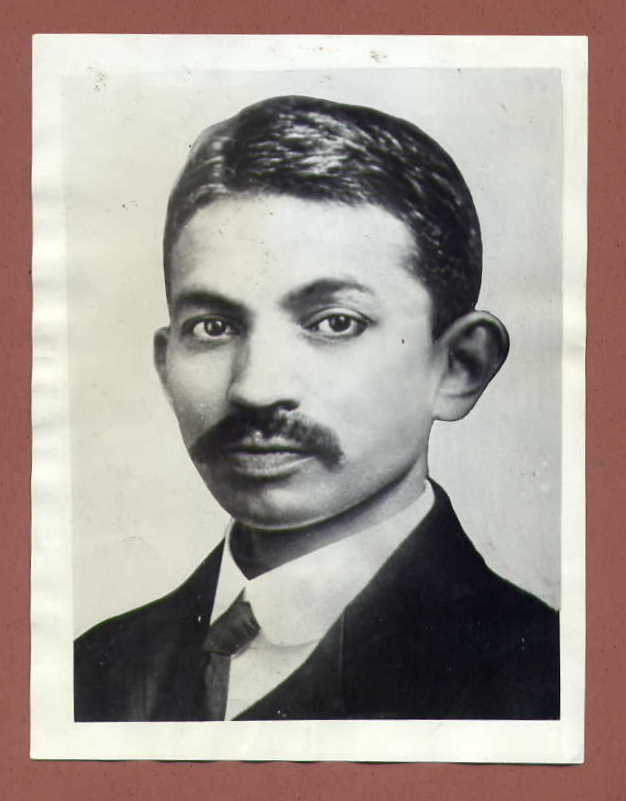
Return and a year of listening. Gandhi returned to India on 9 January 1915, a day now marked as Pravasi Bharatiya Divas. On Gokhale's advice he travelled across India, especially its villages, to understand the country before taking a political stand. Soon after, he set up a Satyagraha Ashram at Ahmedabad, which became the Sabarmati Ashram and the base of his work.
Why does this matter? Gandhi arrived at a moment when the Moderates had lost momentum and the revolutionaries had been crushed, as seen in the chapter on revolutionaries and Home Rule. He offered a method that was neither petition nor violence. That made it attractive to many who had found both roads closed.
Champaran, 1917: the first satyagraha in India
The problem: tinkathia. In Champaran, in north Bihar, planters forced peasants to grow indigo under a system called tinkathia. Under it, three kathas out of every bigha of twenty kathas had to be put under indigo for the planter. Peasants also suffered many illegal levies, and Rajendra Prasad later listed forty-one of them.
Gandhi defies an order. Gandhi reached Champaran in April 1917 to see the conditions for himself. The district authorities ordered him to leave, but he refused. On 18 April 1917 he appeared before the court at Motihari, with about two thousand people present, read a statement and pleaded guilty.
Why was this so powerful? Gandhi did not argue that the law was technically wrong. He openly broke it, accepted punishment and showed the peasants that they need not fear the officials. The government, faced with a calm man and a watching crowd, dropped the case, and the authority of the planters began to crack.
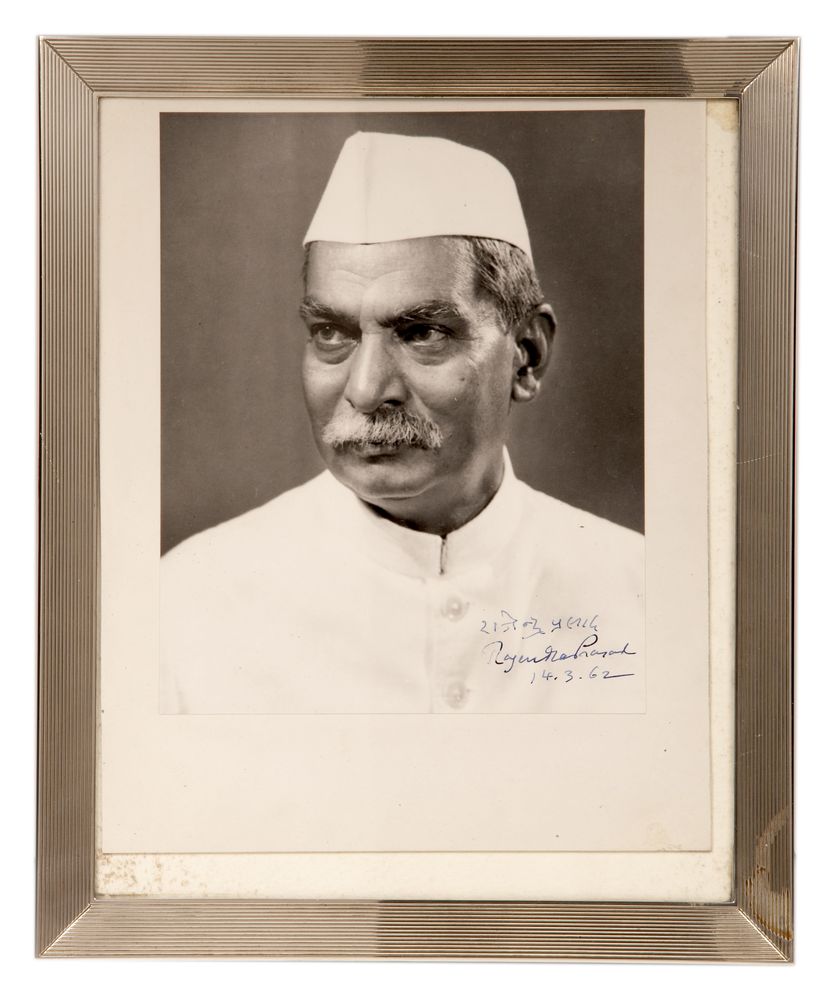
Collecting the truth. Gandhi and his volunteers, including lawyers such as Rajendra Prasad and Brajkishore Prasad, set up centres at Motihari and Bettiah. Within a month they recorded nearly four thousand statements from peasants. This careful gathering of facts made the peasants' case impossible to ignore.
The result. On 4 June 1917 Sir Edward Gait, the Lieutenant Governor of Bihar, announced an inquiry committee with Gandhi as a member, and it first met on 11 July 1917. The Champaran Agrarian Act was passed on 4 March 1918, and the tinkathia system was abolished. Rajendra Prasad wrote that in Champaran the nation got its first lesson and its first modern example of satyagraha.
Kheda: peasants and the land revenue
The grievance. In Kheda, also called Kaira, in Gujarat, the crops failed and epidemics struck. As a result, the peasants could not pay the land revenue demanded from them.
Gandhi's role. Gandhi took up the cause of these peasants and led a satyagraha for relief from revenue. The method was the same as in Champaran: collect facts, make a just and limited demand, and be ready to suffer the consequences of refusing to pay.
Why does Kheda matter? Champaran was about a foreign planter class, but Kheda was a direct dispute with the government over its own revenue demand. It brought Gujarati peasants into organised politics and trained local leaders. Taken together, Champaran and Kheda showed that the peasants, who had been largely outside the Congress, could be mobilised for disciplined, non-violent action.
Ahmedabad, 1918: satyagraha for mill workers
The dispute. Ahmedabad was a centre of cotton mills, and its workers were in a dispute with the mill owners over wages. Gandhi, who had made Ahmedabad his base, took up the workers' cause. This time the opponents were Indian industrialists, not the British government.
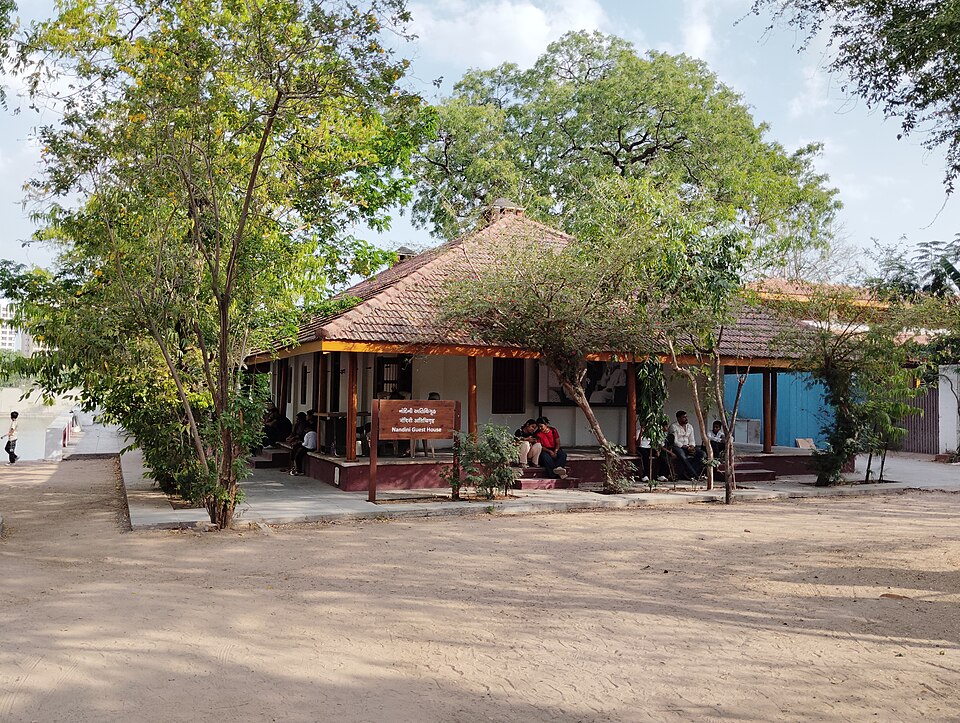
The fast. In support of the workers, Gandhi started a fast on 15 March 1918. On 18 March 1918, the mill owners agreed to arbitration, and the outcome was a thirty-five per cent rise in wages. Gandhi then broke his fast.
Why use a fast? A fast put moral pressure on both sides without any threat of violence. It also showed Gandhi's willingness to suffer personally for the cause he asked others to join. Critics later argued that fasts could become a form of pressure, but in 1918 it helped settle a bitter dispute peacefully.
Building institutions. Gandhi believed that the nation needed its own institutions, not only protests. In 1920 he founded the Gujarat Vidyapith at Ahmedabad to give education in an Indian spirit. Such institutions became part of the constructive work that ran alongside his political campaigns.
Three struggles compared
The three early struggles are easy to mix up in an exam, so it helps to set them side by side. Read the table across each row, and then look down each column to see what changed from one struggle to the next.
| Struggle | Who took part | Against whom | Method | Result |
|---|---|---|---|---|
| Champaran, Bihar (1917) | Indigo peasants, with lawyer volunteers | Planters and the district administration | Defying an order to leave; collecting statements; serving on an inquiry | Champaran Agrarian Act 1918; tinkathia abolished |
| Kheda (Kaira), Gujarat | Peasants hit by crop failure and epidemics | The government's revenue demand | Satyagraha for relief from revenue | Gujarati peasants drawn into organised politics |
| Ahmedabad, Gujarat (1918) | Cotton mill workers | Indian mill owners | Gandhi's fast; arbitration | Wage rise of 35 per cent |
What do the columns show? The participants widened from peasants in one district to industrial workers in a big city. The opponents changed too: planters, then the government, then Indian employers. This shows that Gandhi applied the same method to very different kinds of injustice, which made it a flexible tool for a diverse country.
What stayed the same? In every case Gandhi chose a limited, clearly just demand, gathered facts first, and insisted on non-violence. He was ready to negotiate and to accept a fair settlement rather than demanding total victory. These habits, careful preparation, a limited goal and openness to talks, would mark his later national campaigns as well.
The ideas he brought home: Hind Swaraj and the search for truth
A small book written at sea. In 1909, on a ship from London back to South Africa, Gandhi wrote Hind Swaraj in Gujarati. It is written as a conversation between a Reader, an impatient young nationalist, and an Editor, who is Gandhi himself. The British government in Bombay banned it in 1910, so Gandhi brought out his own English translation.
What the book argued. Many nationalists wanted the British to leave so that Indians could run the same factories, courts and armies. Gandhi called this "English rule without the Englishman", and said it was not real freedom. For him, swaraj meant self-rule in a deeper sense: people learning to govern their own desires, villages and lives, so that no outside power could rule them.
A critique of modern civilisation. Hind Swaraj attacked the blind worship of machines, speed and profit, and was sharply critical of railways, lawyers and doctors as tools that made people dependent. Gandhi did not reject all science, but he judged every invention by whether it served human dignity and simple living. These ideas later grew into his support for khadi, village industries and Sarvodaya, the welfare of all.
Where the ideas came from. Gandhi read widely. Tolstoy taught him non-resistance to evil by force, Ruskin's Unto This Last taught him the dignity of all labour, and Thoreau's essay on civil disobedience showed how a citizen may refuse an unjust law. From the Gita he took the ideal of the person of steady mind who acts without attachment to results, and from Jain thought the idea that truth has many sides.
Means and ends. Gandhi held that means and ends are inseparable: a just goal reached by violent or dishonest means would itself be spoiled. This is why he called off movements that turned violent, a choice many colleagues found hard to accept. It is also why his politics could include peasants, workers, women and the lowest castes, people who had watched politics only from a distance before.
Why it matters: Hind Swaraj explains why Gandhi's movements looked so different from earlier politics. In Mains answers on Gandhi's relevance today, link it to debates on sustainable living, decentralisation and ethics in public life.
Quick revision
- South Africa: from 1893, about 21 years; satyagraha developed; 1913 march of about 3,000 miners, Newcastle → Volksrust.
- Return: 9 January 1915 (= Pravasi Bharatiya Divas); toured India on Gokhale's advice; Satyagraha Ashram at Ahmedabad (Sabarmati).
- Champaran (Bihar), 1917: first satyagraha in India; indigo, tinkathia (3 of 20 kathas); Motihari court 18 April 1917; case dropped.
- Inquiry: announced 4 June 1917 by Sir Edward Gait; Gandhi a member; Champaran Agrarian Act, 4 March 1918; tinkathia abolished.
- Helpers: Rajendra Prasad, Brajkishore Prasad; nearly 4,000 statements; 41 illegal levies listed.
- Kheda (Kaira), Gujarat: revenue satyagraha after crop failure and epidemics.
- Ahmedabad, 1918: mill workers; fast 15–18 March 1918; arbitration; 35 per cent wage rise.
- Gujarat Vidyapith, 1920.