

UKPSC PCS (Upper) · Module 54 · Mains depth · 17 min
Biodiversity: what it is, its three levels and why it is worth saving
What UKPSC PCS (Upper) asks from this chapter
Syllabus lines this chapter covers:
- Prelims Paper I: General Studies · Ecology and environment, agriculture and crops, natural resources, renewable and non-renewable energy, biodiversity, pollution, global warming and climate change, remote sensing and GIS, weather forecasting.
- Mains Paper 5: General Studies III (technology, economy, environment, security, disasters) · Conservation, environmental pollution and degradation, environmental impact assessment.
UKPSC PCS (Upper) has asked 1 question from this chapter (2025); 5 from its whole module.
Read at full depth: basics, the standard layer and the Mains analysis.
Start from zero: why five kinds of rice matter
Walk into a village market in Odisha or Assam and you may still find rice of several colours: white, red, black and brown, each with its own smell and taste. Farmers once grew thousands of such local varieties. Some survived floods, some needed little water, and some resisted pests.
Now look at the pond behind the market. There are frogs, fish, snails, dragonflies, lotus plants and herons, and the forest beyond holds hundreds more kinds of plants and animals. Further away lie grasslands, rivers and perhaps the sea coast, each a different kind of living system.
All of this variety, from the differences between rice grains to the differences between whole forests and coasts, has one name: biodiversity. It is short for "biological diversity", which simply means the variety of life.
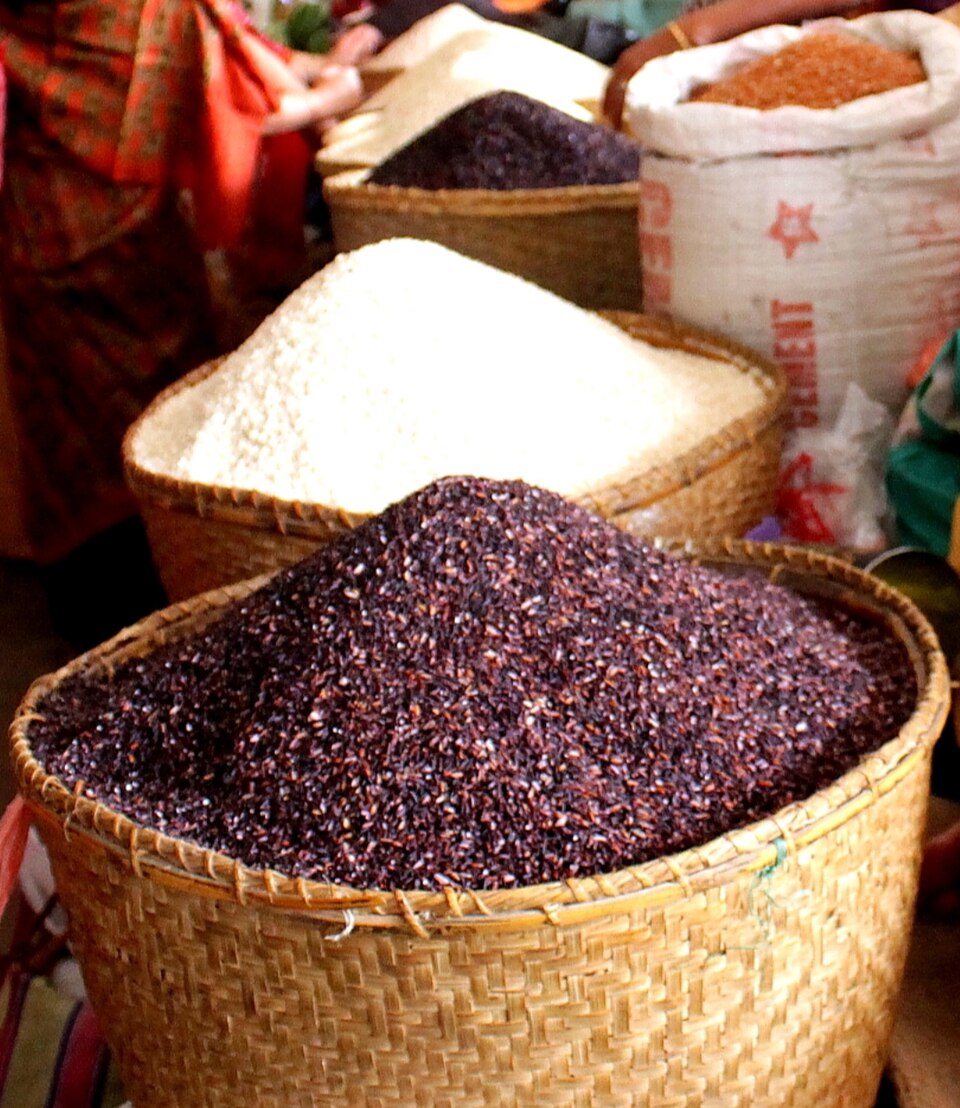
This chapter explains what biodiversity is, the three levels at which we measure it, where on Earth it is richest and why it is worth saving. These ideas are the base for understanding India's own biodiversity, the threats it faces and the ways we protect it.
Level one: genetic diversity
Biodiversity is the variety of living organisms at three levels: genetic, species and ecosystem. Think of it like a library. Genetic diversity is the variety of editions of one book, species diversity is the number of different books, and ecosystem diversity is the number of different libraries.
What genetic diversity means. Genetic diversity is the variation within a single species. No two mango trees, cows or humans are exactly alike, because their genes differ slightly. In crops, this variety shows up as landraces (traditional local varieties that farmers have selected over centuries), cultivars (varieties bred by scientists) and, in animals, as different breeds.
India's special place. In the twentieth century the Russian scientist Nikolai Vavilov identified a handful of regions where many crop plants first arose and still show great variety. India is one of these centres of crop diversity. Rice, many pulses, mango, banana, sugarcane, pepper and several spices have rich wild and local relatives here.
Why genetic diversity matters. A crop with many varieties can survive a new disease, a drought or a flood, because some varieties will carry genes that resist it. When farmers switch to one or two high-yielding varieties over a whole region, that safety net shrinks, and a single pest can destroy the harvest. Wild relatives of crops are therefore a store of genes for the future.
Levels two and three: species and ecosystem diversity
Species diversity is the variety of different species in an area. It is what most people mean when they say "biodiversity". But scientists look at three aspects of it, not just one.
Three ways to measure species diversity. Species richness is simply the number of species present. Abundance is how many individuals of each species there are, so an area dominated by one species is less diverse than one where many species are common. Taxonomic diversity asks how different the species are from one another; a site with a fern, a beetle, a frog and a bird is more diverse than one with four kinds of beetle, even though both have four species.
How many species are there? About 1.7 million species have been described and named by scientists so far. The true total is unknown, and estimates range from about 5 million to 50 million. Most undescribed species are insects, fungi and tiny organisms living in tropical forests, soils and the deep sea.
Ecosystem diversity. At the third level, ecosystem diversity is the variety of ecosystems in a region: forests, grasslands, deserts, lakes, rivers, coasts, estuaries, wetlands, mangroves and coral reefs. Each ecosystem has its own set of species and its own processes. A country with many ecosystems therefore has many more species and services than one with only a few.
Why the three levels go together. The levels are nested. Lose an ecosystem such as a wetland, and you lose its species; lose a species, and you lose all its genetic variety forever. So conservation must work at all three levels at once, protecting landscapes, species and the varieties within them.
Alpha, beta and gamma: diversity at different scales
When ecologists compare places, they need to know whether they are counting species in one small patch or across a whole region. For this they use three terms, named after the first three Greek letters. These terms often appear in Prelims, so learn them with an example.
Alpha diversity. Alpha diversity is the diversity within one community or habitat, such as the number of species in a single grassland or pond. It tells you how rich one place is.
Beta diversity. Beta diversity compares between habitats. It measures how much the list of species changes as you move from one habitat to another, for example from a riverside forest to a nearby dry hill. If the two places share few species, beta diversity is high.
Gamma diversity. Gamma diversity is the total diversity of a whole region or landscape, made up of many habitats. A region with rich individual habitats (high alpha) that are also very different from one another (high beta) will have a very high gamma diversity.
Why the distinction matters. Protecting one rich patch saves alpha diversity, but it may miss many species found only in neighbouring habitats. To save gamma diversity, planners must protect a range of different habitats across a landscape, such as a hill, a valley and a wetland together. This is the logic behind networks of protected areas and wildlife corridors.
Where life is richest: the latitude and altitude pattern
Biodiversity is not spread evenly over the Earth. Species richness is highest near the equator and falls steadily towards the poles. A single hectare of tropical rain forest can hold more tree species than all of Europe's forests.
Why the tropics are so rich. Several reasons work together. The tropics receive plenty of sunlight and rain all year, so plants grow fast and support many animals. Their climate has been fairly stable for a very long time, which has given species time to evolve. And the many layers of a rain forest create a large number of niches for different species.
The altitude pattern. Species richness also falls as you climb a mountain. The air gets colder, the growing season shortens and the soil gets thinner, so fewer species can survive. That is why the lower slopes of the Himalaya are far richer than the alpine meadows near the snow line.
Why this pattern matters for policy. Because the tropics hold so much of the world's biodiversity, losing tropical forests causes a much larger loss of species than losing the same area of forest further north. India lies mostly in the tropics and subtropics, which is one reason its biodiversity is so rich. It also means that India's conservation choices carry global weight.
Why biodiversity is worth saving
It is easy to love tigers and elephants. But why should a government spend money protecting beetles, frogs or wild grasses? The answer is that biodiversity supports human life in at least three big ways.
1. Ecosystem services. Living systems do work for us free of charge. Forests protect water sources and hold soil in place, wetlands clean water, soil organisms recycle nutrients, and plants absorb pollutants and help keep the climate stable. Insects and birds pollinate crops and control pests. If we had to replace these services with machines and chemicals, the cost would be enormous.
2. Biological resources. Biodiversity is the source of our food, medicine, timber, fibre and fuel. About 5,000 plant species have been used as food, yet only about 20 now feed most of the world, which makes our food supply risky. More than 7,000 plant species are used in medicine, and about 40 per cent of modern drugs contain active ingredients from plants or animals.
3. Genes for the future. Wild species are a library of genes that we may need tomorrow. For example, genes from a single wild rice variety have protected cultivated rice against major diseases. Every species lost is a book removed from that library before anyone could read it.
4. Social, cultural and ethical value. Many communities in India hold plants such as tulsi, peepal and khejri sacred, and they protect forests and lakes for religious reasons. Biodiversity also supports tourism, recreation and research. Many people also believe that every species has a right to exist, whether or not it is useful to us.
How economists group these values. A simple way to remember them is to divide them into direct values, the things we use or sell, such as food, medicine and timber, and indirect values, the services we receive without harvesting, such as clean water and pollination. Some people add an option value, the worth of keeping species for possible future uses, and an existence value, the satisfaction of knowing that a species survives. This framework is very useful for Mains answers.
Mains lens: biodiversity in development and food-security answers
Biodiversity questions in Mains rarely ask for definitions alone. They ask why it matters and what policy should do. Four arguments are worth practising.
1. Food security depends on genetic diversity. When a whole region grows one or two crop varieties, a single pest or disease can wipe out the harvest. Saving landraces in farmers' fields and in seed banks keeps the genes needed for future droughts and diseases. Use this argument in answers on agriculture, climate adaptation and the Green Revolution's side effects.
2. Nature's services are undervalued. Pollination, water purification and soil fertility are worth a great deal, but they do not appear in GDP. When a project destroys them, the loss is hidden. Valuing these services helps decision-makers see the real cost of development.
3. Biodiversity and livelihoods. Millions of forest dwellers, fishers and herders depend directly on biodiversity for food, income and medicine. Their traditional knowledge is also a resource, which is why the rules on access and benefit-sharing exist. Conservation that ignores these people is neither fair nor effective.
4. Protecting landscapes, not just spots. The alpha, beta and gamma idea shows that saving one rich site is not enough. Planners must protect different habitats across a landscape and keep them connected. This supports answers on corridors, protected-area networks and land-use planning.
Mains practice: six questions, six angles
These are practice questions written by us, not past papers. Past questions from each exam appear in the PYQ panel of this module.
| Angle | Question | Key points to cover |
|---|---|---|
| Concept | Explain the three levels of biodiversity with Indian examples. | Define genetic, species and ecosystem diversity with rice landraces, the species of a wetland and India's range of ecosystems. Then explain why the levels are nested. |
| Food security | Loss of crop genetic diversity is a threat to food security. Discuss. | Explain landraces, India's role as a centre of crop diversity and the wild rice example. Then suggest seed banks, community seed systems and support for traditional varieties. |
| Values | Classify the values of biodiversity. Why are indirect values often ignored? | Give direct, indirect, option and existence values with examples. Then explain that services such as pollination are free and missing from GDP, and argue for valuing them. |
| Scale | What are alpha, beta and gamma diversity? How do they inform the design of protected areas? | Define each term with an example of habitats in one region. Then argue for networks of different habitats and corridors rather than isolated rich patches. |
| Geography | Why is biodiversity richest in the tropics? What does this imply for India? | Explain stable climate, abundant energy and many niches, and the fall with altitude. Then link India's tropical location to its global responsibility for conservation. |
| Way forward | Biodiversity conservation and livelihoods must go together. Examine. | Show how forest dwellers, fishers and herders depend on biodiversity and hold traditional knowledge. Then argue for benefit-sharing and community participation in conservation. |
How to use this table: each answer should first explain the what, then give the why from this chapter, and end with a way forward.
Quick revision
- Biodiversity is the variety of life at three levels: genetic, species and ecosystem.
- Genetic diversity is variation within a species (landraces, cultivars, breeds); India is a Vavilov centre of crop diversity.
- Species diversity covers richness, abundance and taxonomic difference; about 1.7 million species are described, out of an estimated 5–50 million.
- Ecosystem diversity is the variety of forests, grasslands, deserts, wetlands, mangroves, coral reefs and others.
- Alpha = within a habitat, beta = between habitats, gamma = whole region.
- Richness is highest at the equator and falls towards the poles and with altitude.
- Values: ecosystem services, biological resources, genes for the future, and social and ethical value; about 20 of 5,000 food plants feed most of the world.
UKPSC PCS (Upper) questions from this chapter
The word Bio-diversity was coined by :
- (a) W.G. Rosen
- (b) Tansely
- (c) Darwin
- (d) David
Show answer
(a) W.G. Rosen · our answer; official key awaited