

UKPSC PCS (Upper) · Module 53 · Mains depth · 20 min
Populations, communities and succession: how living groups grow, share and change
What UKPSC PCS (Upper) asks from this chapter
Syllabus lines this chapter covers:
- Prelims Paper I: General Studies · Ecology and environment, agriculture and crops, natural resources, renewable and non-renewable energy, biodiversity, pollution, global warming and climate change, remote sensing and GIS, weather forecasting.
UKPSC PCS (Upper) has asked 1 question from this chapter (2025); 2 from its whole module.
Read at full depth: basics, the standard layer and the Mains analysis.
Start from zero: what happens to a field nobody farms?
Imagine a farmer leaves a field empty for twenty years. In the first year, grasses and weeds spring up. A few years later, shrubs and bushes take over, and after about twenty years young trees begin to shade out the bushes.
Nobody planted any of this. The field changed on its own, step by step, as one group of plants prepared the ground for the next. This slow, orderly change is called ecological succession, and it is one of the three big ideas of this chapter.
The other two ideas are about groups. A population is a group of one species, such as all the deer in a forest, and a community is all the different species living and interacting in one place. Populations grow and shrink, species compete and cooperate, and communities change over time.
These ideas explain everyday puzzles.
Why do locust swarms suddenly explode? Why does a mixed forest survive a pest attack better than a plantation of one tree? And why does a burnt forest recover faster than a lava field? By the end of this chapter, you will be able to answer all three.
What is a population, and how do we describe it?
A population is a group of individuals of the same species that live in a particular area at a particular time and can freely breed with one another. All the tigers of Sundarbans form one population, and all the sal trees of a forest form another. Ecologists study populations because they can be counted, tracked and managed.
Density. The most basic measure is population density, the number of individuals per unit area, such as deer per square kilometre. For plants, ecologists count individuals in small sample squares called quadrats and scale up. For humans, India counts its population in a census, normally held every ten years.
Four forces change numbers. Density rises with births (natality) and with individuals arriving from outside (immigration). It falls with deaths (mortality) and with individuals leaving (emigration). Every population change, from a growing city to a dwindling vulture colony, comes down to these four forces.
Age and sex. A population has three age groups: pre-reproductive (young), reproductive (adults that can breed) and post-reproductive (old). If the young group is large, the population will grow, and if it is small, the population will shrink. The sex ratio, the number of females per thousand males in India's census, also shapes how fast a population can grow.
Other traits. Ecologists also look at biotic potential, the highest rate at which a population could grow under ideal conditions, and dispersion, the way individuals are spread out, whether clumped, even or random. These traits help wildlife managers decide, for example, how many animals a sanctuary can support.
How populations grow: the J-curve and the S-curve
Suppose a few rabbits arrive on an island full of grass and with no predators. Each pair has young, the young grow up and breed, and the numbers go 8, 16, 32, 64 and onward. Plotted on a graph, the line shoots upward like the letter J. This is J-shaped, or exponential, growth.
Why J-growth cannot last. In J-shaped growth, the birth rate does not depend on how crowded the population is, so numbers keep doubling. But no island has unlimited grass. Sooner or later the food runs out, disease spreads in the crowd, and the population crashes. Locust outbreaks and algal blooms follow this boom-and-bust pattern.
The S-curve. More often, growth starts fast and then slows as food, water and space become scarce. The curve bends over and levels off, looking like a stretched letter S; this is S-shaped, or sigmoid, growth. The flat top shows the largest population that the environment can support over time, which ecologists call its carrying capacity.
Why the difference matters. The S-curve is the healthier pattern, because the population matches its resources. Fisheries and forestry try to harvest only what a population can replace while staying below that limit. When we over-fish or over-graze, we push a population off its S-curve and towards collapse.
People too. Human populations are also limited by land, water and food, but technology has repeatedly raised those limits. The debate over how many people the Earth can support is really a debate about where the top of the human S-curve lies.
Communities: layers, diversity and stability
A community is made up of the populations of different species that share a habitat and interact with one another. A pond's community includes its algae, fish, frogs, insects and bacteria. The word reminds us that species do not live alone; they live as neighbours.
Layers. Communities are often arranged in vertical layers, a pattern called stratification. A tropical rain forest can have up to five layers, from the tallest emergent trees, through the canopy and smaller trees, down to shrubs and the forest floor. Each layer has its own light, humidity and animals.
Why layers help. Stratification lets many species share the same patch of ground without competing head-on. A bird that feeds in the canopy does not compete with one that feeds on the forest floor. In the same way, insects feed on different parts of a plant, so more species can fit into the same space.
Diversity. The variety of a community has two parts. Richness is the number of species present. Evenness is how equally individuals are spread among those species, so a forest with ten species in similar numbers is more diverse than one with ten species where a single tree dominates.
Diversity brings stability. Communities with high diversity are generally more stable. If a disease kills one tree species in a mixed forest, others fill the gap, and animals switch to other food. Man-made communities with one or two species, such as a monoculture plantation, are far less stable, which is why a single pest can wipe them out.
How species affect each other: plus, minus or zero
Within a community, species constantly affect one another. Ecologists describe each relationship with two signs, one for each partner: plus (+) if a partner gains, minus (−) if it loses and zero (0) if it is unaffected. Interactions within one species are called intraspecific, and those between different species are interspecific.
When both gain (+/+). In mutualism, both partners benefit. A lichen is a partnership between a fungus, which gives shelter and holds water, and an alga, which makes food. Another example is the sea anemone that rides on a hermit crab's shell, protecting the crab with its stinging cells while getting carried to new food.
When one gains (+/0 and +/−). In commensalism (+/0), one partner gains and the other is unaffected, such as an orchid growing on a tree branch to reach the light. In predation (+/−), a predator kills and eats its prey, as a tiger does with a deer. In parasitism (+/−), a parasite lives on or inside a host and harms it slowly, usually without killing it at once.
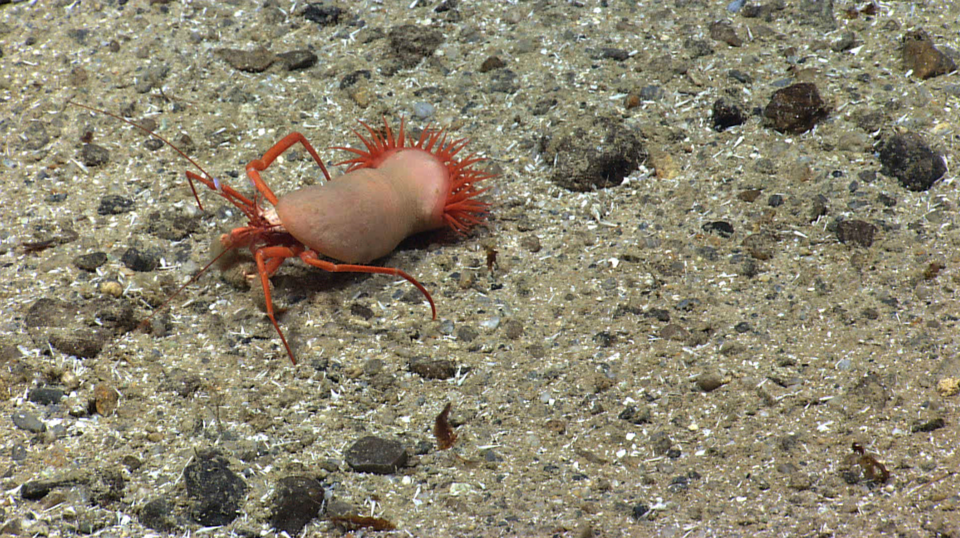
When both lose or one loses (−/− and 0/−). In competition (−/−), both species lose because they need the same limited food, water or space. In amensalism (0/−), one species is harmed while the other is unaffected; the mould Penicillium, for example, releases a substance that stops bacteria growing nearby. Finally, in neutralism (0/0), two species live together without affecting each other.
Why these interactions matter. Predators keep prey numbers in check and so protect vegetation, competition shapes which species can live where, and mutualism underlies pollination and healthy soils. Medicines such as penicillin come from amensalism, and many pests are controlled by their natural predators. Understanding interactions is therefore the basis of biological pest control and conservation planning.
Ecological succession: from bare rock to forest
Let us return to the empty field. The orderly change in a community over time, as one set of species replaces another, is called ecological succession. It continues until the community reaches a stable state that matches the local climate and soil.
The stages. The first species to settle on an empty site are pioneer species. They grow fast but live short lives, and as they die they add organic matter and help build soil. Each intermediate community that follows is a seral community, and the final stable, mature community is the climax community. The whole sequence, from pioneers to climax, is called a sere.
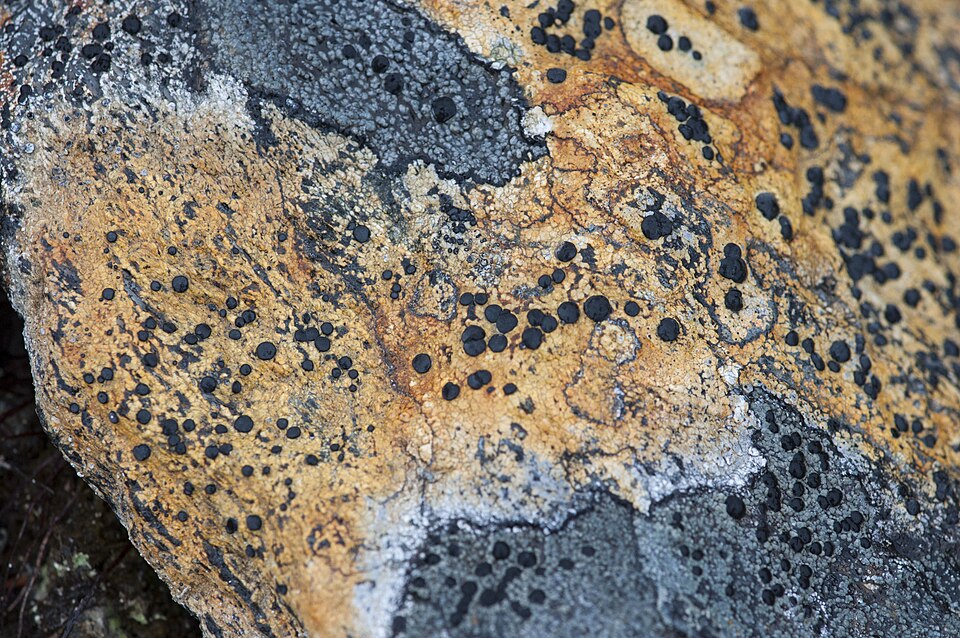
Primary succession. Primary succession begins on bare ground where there is no soil at all, such as rock, sand dunes, cooled lava, newly formed river deltas and moraines left by retreating glaciers. On bare rock, lichens are usually the pioneers, slowly breaking the rock and trapping dust. Because soil must be built from scratch, primary succession is very slow and can take hundreds or thousands of years.
Secondary succession. Secondary succession begins where a community has been removed but the soil remains, as after a forest fire, a hurricane or the abandoning of a ploughed field. Seeds, roots and soil life are already present. That is why it is much faster than primary succession, and why a burnt forest recovers sooner than a fresh lava field.
Wet and dry starts. Succession that begins in water, such as a pond slowly filling with silt and plants until it becomes marsh and then land, is called a hydrarch. Succession that begins in a dry area, such as bare rock, is called a xerarch. Both tend towards a climax community suited to the local climate.
Why succession matters. Succession guides ecological restoration: to heal a mined area, planners first help pioneer species and soil formation instead of planting climax trees directly. It also explains why lakes slowly fill and shrink with silt and why clearing a forest repeatedly keeps the land stuck in early stages. For conservation, it reminds us that a mature forest is the product of centuries and cannot be replaced quickly by planting.
Ecotones and the edge effect: life at the borders
Communities rarely end in a sharp line. Between a forest and a grassland, or between a river and the sea, there is usually a zone where the two blend. This junction zone is called an ecotone.
Examples. An estuary, where a river opens into the sea, is a classic ecotone; fresh and salt water mix there, and the water is rich in nutrients. The fringe where a forest meets a grassland, or where a lake's shallow edge meets the land, are other examples. Mangroves along India's coasts also grow in such a border zone.
The edge effect. Ecotones often hold more species, and more individuals, than either of the communities on each side. This is called the edge effect. It happens because an ecotone contains species from both neighbouring communities as well as some that live only in the border zone.
Why it matters. Because ecotones are so rich, they are important for fisheries and conservation; many fish breed in estuaries and mangroves. But edges created by humans, such as a road cut through a forest, can harm species that need deep, undisturbed interiors. So planners must tell natural ecotones apart from damaging artificial edges.
Mains lens: using population and community ideas in answers
These ideas turn up across GS papers, often without being named. Four arguments are especially useful.
1. Monoculture versus diversity. Diverse communities are more stable, so large single-species plantations are risky. A single pest or disease can sweep through them, and they support far less wildlife. Use this argument in answers on afforestation targets, commercial plantations and crop diversification.
2. Living within limits. The S-curve shows that every population has an upper limit set by its resources. Over-fishing, over-grazing and groundwater over-use push resources past that limit. Sustainable harvesting means staying below it, and this is the scientific core of fishing bans in the breeding season and of grazing rules.
3. Restoration by succession. Damaged land heals fastest when we work with succession, starting with soil and pioneer species. Planting only fast-growing exotic trees can skip these stages and fail. This idea supports answers on mine reclamation, degraded forest restoration and the protection of natural regeneration.
4. Biological control. Predators, parasites and competitors can keep pests in check without chemicals. Using natural enemies reduces pesticide use and protects health. This argument supports integrated pest management and organic farming.
Mains practice: six questions, six angles
These are practice questions written by us, not past papers. Past questions from each exam appear in the PYQ panel of this module.
| Angle | Question | Key points to cover |
|---|---|---|
| Population | Distinguish between J-shaped and S-shaped population growth. Which is more sustainable and why? | Explain doubling growth and boom-and-bust with locusts or algal blooms. Then explain levelling off at the limit set by resources and link it to sustainable harvesting. |
| Stability | Diverse communities are more stable than monocultures. Discuss with examples. | Define richness and evenness and explain stratification. Then contrast a mixed forest with a single-tree plantation hit by a pest. |
| Interactions | Explain the different types of interspecific interactions, with examples. | Use the plus, minus and zero signs for all seven types. Then give lichen, orchid, tiger and deer, and Penicillium as examples, and end with uses in pest control. |
| Succession | Differentiate between primary and secondary succession. Why is secondary succession faster? | Define pioneer, seral and climax stages and give examples of bare sites. Then explain that soil, seeds and roots already exist after a fire or abandonment. |
| Borders | What is an ecotone? Explain the edge effect and its significance for conservation. | Define the ecotone with the estuary example and explain why species are richer there. Then contrast natural ecotones with harmful artificial edges such as roads through forests. |
| Way forward | How can ecological succession guide the restoration of degraded land? | Explain soil building by pioneers and the stages towards climax. Then apply this to mined land and degraded forests, and warn against planting only exotic trees. |
How to use this table: each answer should first explain the what, then give the why from this chapter, and end with a way forward.
Quick revision
- A population is one species in one area at one time; its density changes with natality, mortality, immigration and emigration.
- J-shaped growth is exponential and ends in a crash, while S-shaped growth levels off at the limit set by resources.
- A community is many species sharing a habitat; stratification reduces competition, and diversity (richness + evenness) brings stability.
- Interactions: mutualism +/+, commensalism +/0, predation and parasitism +/−, competition −/−, amensalism 0/−, neutralism 0/0.
- Succession: pioneer → seral → climax; the whole sequence is a sere.
- Primary succession starts without soil and is slow; secondary succession starts with soil and is faster.
- Hydrarch starts in water, and xerarch starts in a dry area.
- An ecotone is a junction zone such as an estuary, and the edge effect means more species there.
UKPSC PCS (Upper) questions from this chapter
The interaction, in which one organism is benefitted and the other is neither harmed nor benefitted, is called :
- (a) Symbiosis
- (b) Commensalism
- (c) Parasitism
- (d) Exploitation
Show answer
(b) Commensalism · our answer; official key awaited